
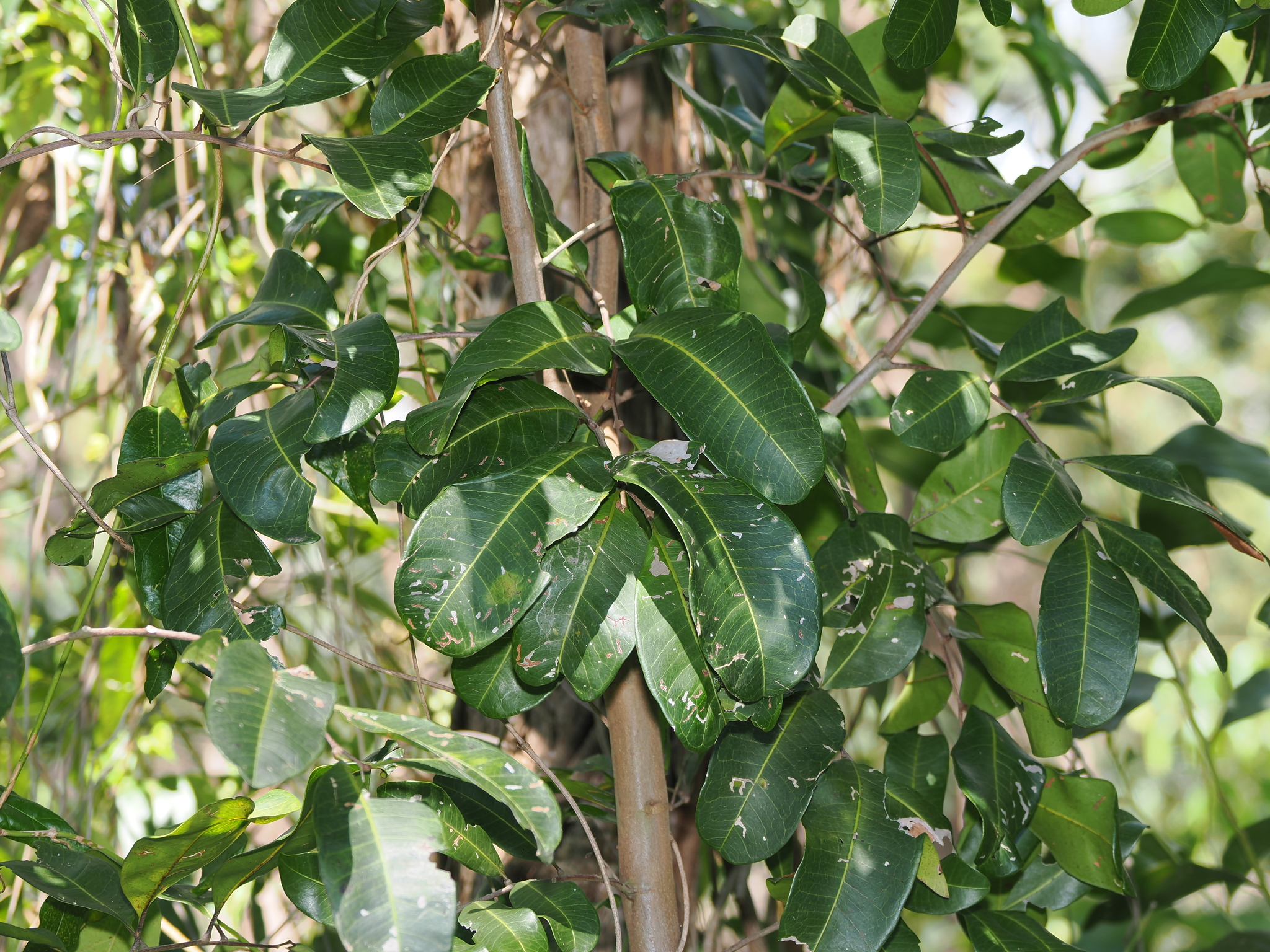
Carrotwood (Cupaniopsis anacardioides) is an evergreen tree in the soapberry family native to coastal eastern and northern Australia. It features a dense canopy of glossy, dark green pinnate foliage and produces woody, three-lobed golden capsules that split open to reveal black seeds encased in orange arils.
While planted as a shade and street tree in Southern California and coastal urban areas, carrotwood is classified as a high-risk invasive pest species in Florida. Its seeds are spread rapidly by birds into native coastal ecosystems, where it displaces indigenous flora.
Key Facts
- Height: 8-12 m (26-39 ft) tall
- Light: Full sun to partial shade
- Hardiness: USDA zones 9b to 11
- Soil: Well-drained sandy, loamy, or clay soils
- Invasive Status: Prohibited Category I invasive in Florida
- Toxicity: Seeds and capsules inedible to humans and pets
Landscape Fit and Pros and Cons of Carrotwood Tree
Choosing a carrotwood tree requires balancing its extreme drought tolerance and salt spray resistance against heavy seed drop and aggressive surface roots. It provides thick, year-round shade in warm coastal climates where high salinity stops other street trees from growing.
Before planting, property owners must consider the maintenance demands and regional legal restrictions. The primary pros and cons include:
- Pro: Tolerates heavy ocean breeze, wind, and airborne salt.
- Pro: Thrives in poor, sandy, or high-pH soils without supplemental feeding.
- Con: Drops thousands of hard yellow fruit capsules every summer, creating sidewalk hazards.
- Con: Surface roots crack driveways and lift concrete pavers within 3 m (10 ft) of the trunk.
- Con: Escapes gardens and invades native wetlands in humid subtropical regions.
How to Identify a Carrotwood Tree
A carrotwood tree is identified by its paripinnate compound leaves with 4 to 8 leathery, oblong leaflets and distinctive orange-pulped seed capsules. The bark remains smooth and greyish-brown on young trees, developing subtle fissures on mature specimens.
Key botanical traits for field identification include:
- Foliage: Alternate compound leaves 10-25 cm (4-10 in) long, with glossy, rounded leaflets measuring 5-10 cm (2-4 in).
- Flowers: Small, 5-petaled greenish-yellow blooms borne on branched clusters up to 30 cm (12 in) long in late winter.
- Fruit: Woody, 3-lobed capsules 1.5-2 cm (0.6-0.8 in) wide that turn bright yellow-orange when ripe in summer.
- Seeds: Glossy black seeds enclosed in a fleshy, bright orange-red aril within each capsule lobe.
How Big Does a Carrotwood Tree Grow
Under typical landscape conditions, a mature carrotwood reaches 8 to 12 m (26 to 39 ft) in height with a canopy spread of 6 to 9 m (20 to 30 ft). It develops a broad, rounded crown supported by a trunk measuring 30 to 50 cm (12 to 20 in) in diameter.
Annual growth rates range from 30 to 60 cm (12 to 24 in) per year during early development. The growth rate slows once the canopy reaches its maximum height, with root growth continuing laterally up to 12 m (39 ft) beyond the drip line.
Sunlight and Soil Requirements for Carrotwood Tree
Carrotwood grows best in full sun to partial shade, requiring at least 6 hours of direct sunlight daily for dense canopy growth. Trees growing in heavy shade develop thin, leggy foliage and sparse branching.
It adapts to diverse soil conditions, accepting sandy dunes, heavy clay, and shallow limestone. Recommended soil parameters include:
- Soil Types: Sand, loam, clay, or crushed shell mix.
- Drainage: Needs free-draining soil; tolerates short periods of brackish flooding.
- pH Range: Slightly acidic to alkaline, from 5.5 to 7.8.
- Salinity: High tolerance to aerosol salt spray and soil sodium levels.
How to Plant Carrotwood Trees
Plant carrotwood in a hole two to three times as wide as the root container and at the exact depth the tree sat in its pot. Set the root flare level with the surrounding grade to prevent trunk rot.
Follow these steps during installation:
- Dig the planting hole with sloping sides to encourage lateral root penetration.
- Backfill using existing native soil without adding compost or potting mixes.
- Saturate the root zone with 38 L (10 gal) of water immediately after planting to settle air pockets.
- Apply a 5-8 cm (2-3 in) layer of wood mulch over the root zone, keeping it 10 cm (4 in) clear of the trunk.
Carrotwood Tree Care and Maintenance
Established carrotwood trees require no routine irrigation except during prolonged droughts lasting over 4 weeks. Young trees need 19 L (5 gal) of water twice weekly for the first 6 months following installation.
Fertilizer is generally unnecessary in urban landscapes. If leaves show chlorosis in infertile sand, apply a balanced 10-10-10 granular fertilizer in early spring at a rate of 450 g (1 lb) per 2.5 cm (1 in) of trunk diameter.
How to Trim Carrotwood Tree
Prune carrotwood in late winter while growth is dormant to establish a strong central leader and clearance under the canopy. Annual structural pruning prevents weak crotches and heavy branch breakage during storms.
Use these pruning techniques:
- Raise the lower canopy to a height of 2.5 m (8 ft) for pedestrian clearance along paths.
- Remove thin, crossing, or interior branches to allow wind to pass through the dense crown.
- Cut back suckers originating from the root collar or lower trunk immediately using bypass hand pruners.
- Avoid removing more than 20 percent of the live foliage in a single season.
Is Carrotwood Invasive and How to Get Rid of It
Carrotwood is an aggressive Category I invasive weed in Florida, where it invades coastal hammocks and displaces native species like red mangrove (Rhizophora mangle). Its seeds are eaten by birds and carried into wild sanctuaries, germinating under dense shade.
To eradicate an unwanted carrotwood tree permanently, follow these removal steps:
- Cut the main trunk flush with the ground line using a chainsaw.
- Apply a concentrated systemic herbicide containing 41% glyphosate or triclopyr ester directly to the exposed cut stump within 5 minutes of cutting.
- Hand-pull wild seedlings from surrounding soil while the ground is moist.
- Monitor the site quarterly and spray any stump resprouts with a foliage herbicide mix.
Cold Hardiness and Winter Care
Carrotwood trees tolerate cold temperatures down to -4 °C (25 °F) without structural timber damage. Extended exposure to temperatures below -5 °C (23 °F) causes tip burn and defoliation on outer branches.
In regions such as San Diego and coastal California (USDA zones 9b to 11), winter care is minimal. Protect young trees under 1.5 m (5 ft) tall with frost cloth if temperatures are forecast to drop below freezing for more than 4 hours.
Landscape Uses and Ecological Impact
In coastal landscapes outside invasive restriction zones, carrotwood serves as a dense shade tree and windbreak along coastal roadsides. Its thick canopy blocks salt spray and provides shelter for local fauna.
However, the ecological impact in sensitive ecosystems is negative. The tree competes directly with native species like glossy privet (Ligustrum lucidum) and Brazilian pepper (Schinus terebinthifolia) for soil nutrients and understory space, altering coastal forest structure.
Frequently Asked Questions
Is carrotwood tree fruit edible?
No, carrotwood tree fruit is not edible for humans or household pets. The woody yellow capsules and seeds contain saponins that cause stomach upset and nausea if ingested, although birds consume the outer orange seed coat.
Is carrotwood invasive in Florida?
Yes, carrotwood is listed as a prohibited Category I invasive species in Florida. Planting, selling, or moving this tree is illegal in the state because bird-dispersed seeds destroy native coastal habitats.
How do you get rid of a carrotwood tree?
To get rid of a carrotwood tree, cut the main trunk down close to the soil level and immediately paint the fresh wood surface with a systemic triclopyr or glyphosate herbicide. Pull up any young seedlings by hand.
Why is my carrotwood tree dropping leaves?
Leaf drop on a carrotwood tree is typically caused by severe drought stress, root damage from soil compaction, or natural foliage renewal during the summer fruit production phase.
Is carrotwood tree poisonous to dogs?
Carrotwood seed capsules contain raw compounds that can cause vomiting, diarrhea, and drooling in dogs if chewed or swallowed. Keep pets away from fallen fruit on lawns.
Sources & Verification
Taxonomy and distribution are checked against the databases below. Care guidance is written for cultivated species only and reviewed by our editor. How We Build Plant Profiles →