
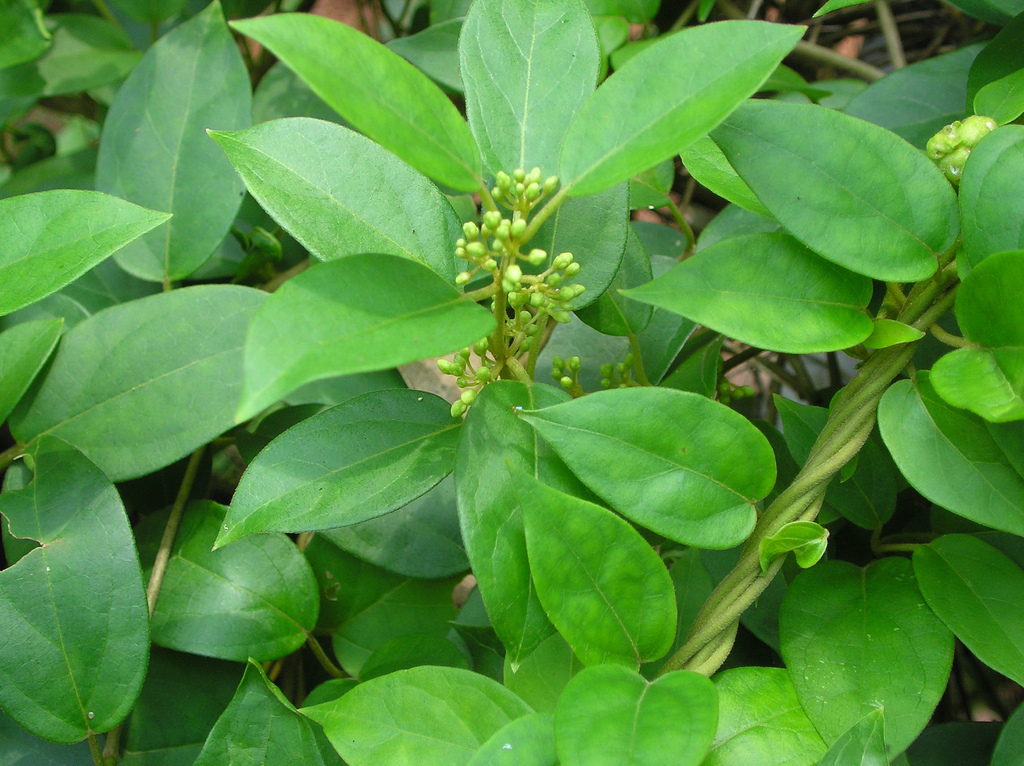
Gurmar (Gymnema sylvestre) is a perennial woody climber belonging to the dogbane family Apocynaceae, originating across tropical forests in Asia, Africa, and Australia. It is widely recognized for its leaves, which temporarily block sweet taste perception when chewed due to bioactive triterpene saponins.
Cultivating this tropical vine requires warm temperatures, vertical support structures, and well-drained soil to prevent root rot. While often grown for traditional herbal use or curiosity, you must provide a frost-free environment since plants perish below 10 °C (50 °F).
Key Facts
- Light: Full sun to bright indirect light
- Water: Allow top 3 cm (1.2 in) of soil to dry
- Soil: Well-drained, sandy loam mix
- Hardiness: USDA Zones 10 to 12
- Growth: Climbing vine up to 3 m (10 ft)
Growing Gurmar in Your Garden or Home
Gurmar suits gardeners in warm tropical climates or indoor growers with south-facing windows who want a unique climbing plant. The single most critical requirement is warmth, meaning you should keep your vine above 15 °C (59 °F) for active growth. It scrambles up trellises or stakes, making it a manageable container specimen if you prune stray runners.
- Provide a sturdy trellis or vertical stake at least 1.5 m (5 ft) tall for climbing support.
- Position pots where they receive 6 hours of direct sunlight daily.
- Bring container-grown vines indoors before autumn temperatures drop below 10 °C (50 °F).
Compared to common houseplants like pothos (Epipremnum aureum), gurmar demands much higher light levels to thrive and produce its characteristic foliage. If you live outside USDA zones 10 to 12, treat it as a conservatory or patio plant that spends winters on a sunny windowsill.
How to Identify Gurmar
Gurmar is a slow-growing woody climber featuring opposite, simple leaves with velvety hairs on the underside. Leaves measure 3 to 6 cm (1.2 to 2.4 in) in length and display an elliptic or ovate shape with smooth margins.
- Stems exude a milky latex when cut or bruised, a classic trait of the Apocynaceae family.
- Flowers are small, yellow, bell-shaped, and cluster in small cymes along the axils during summer.
- Seed pods, or follicles, grow up to 7 cm (2.8 in) long and split open to release flat seeds equipped with silky tufts.
The common name gurmar translates to sugar destroyer because chewing a fresh leaf temporarily neutralizes your tongue’s ability to taste sweetness for up to two hours. This distinct biochemical reaction separates it from look-alike tropical vines.
Ideal Conditions for Gurmar
Gurmar requires well-drained, fertile soil and warm ambient conditions to mimic its native tropical understory habitat. Maintain temperatures between 20 °C and 30 °C (68 to 86 °F) during the growing season for optimal vine extension.
- Mix standard potting compost with 30% perlite or coarse sand to ensure sharp drainage.
- Water thoroughly when the top 3 cm (1.2 in) of soil feels dry to the touch.
- Provide high ambient humidity above 50% if growing the plant indoors during winter heating months.
Avoid heavy clay soils that retain moisture for too long, as soggy substrate quickly induces root rot. Protect outdoor plants from drying winds that tear the tender young leaves.
How to Propagate and Sow Gurmar
You can propagate gurmar from seed or by taking softwood stem cuttings during the warm spring months. Stem cuttings root within 4 weeks when placed in a warm, humid propagation box.
- Take 10 cm (4 in) stem cuttings from healthy, non-flowering lateral shoots.
- Dip the cut end in rooting hormone powder before inserting it into moist perlite or peat.
- Sow seeds in a seed-starting tray at 24 °C (75 °F), covering them lightly with 5 mm (0.2 in) of soil.
Germination typically occurs within 14 to 21 days when soil moisture and bottom heat are kept consistent. Transplant young seedlings into individual 10 cm (4 in) pots once they develop their first three true leaves.
General Care and Feeding Schedule
Gurmar benefits from regular feeding during its active spring and summer growth phases. Apply a balanced liquid fertilizer every 4 weeks to support lush foliage development.
- Withhold all fertilizers completely from November to February when the plant enters semi-dormancy.
- Prune back unruly stems in early spring to encourage bushier lateral growth before the main flush.
- Repot young vines every spring into a pot that is 5 cm (2 in) larger than the previous container.
Overwatering is the fastest way to kill a gurmar plant, so always check the soil moisture depth before reaching for the watering can. Reduce watering frequency by half during the cooler winter months.
How to Harvest Gurmar Leaves and Powder
You can harvest gurmar leaves throughout the growing season once the vine is at least one year old. Pick leaves in the morning after the dew has evaporated for the highest concentration of active compounds.
- Snip mature green leaves gently from the stem using clean pruning shears.
- Dehydrate harvested leaves in a food dehydrator at 40 °C (104 °F) until completely brittle.
- Grind dried leaves into gurmar powder using a clean spice grinder and store in an airtight glass jar.
Store your homemade gurmar powder in a cool, dark cupboard where it remains viable for up to six months. Avoid exposing harvested leaves to direct sunlight during drying, as UV rays degrade the herbal constituents.
Traditional Uses and Benefits of Gurmar
Gurmar has a long history in Ayurvedic traditions where leaves and gurmar powder were utilized for metabolic support. Traditional practitioners valued the plant as a natural approach to balancing blood sugar levels and curbing sugar cravings.
- Chewing raw gurmar leaves temporarily blocks sweet taste receptors on the tongue.
- Brewed herbal tea made from dried leaves was consumed after meals in traditional wellness practices.
- Commercial preparations now package gurmar capsules and gurmar tablets for standardized daily consumption.
While historically celebrated in herbal texts, modern users should consult a qualified healthcare provider before taking gurmar for diabetes or combining it with prescription blood sugar medications.
Troubleshooting Common Gurmar Problems
Gurmar is generally hardy in the right climate, but indoor growing introduces specific pest and cultural challenges. Yellow lower leaves usually indicate overwatering or poor soil drainage.
- Symptom: Sticky residue on leaves. Cause: Aphids or mealybugs. Fix: Wipe stems with insecticidal soap or neem oil.
- Symptom: Leaf drop in winter. Cause: Cold drafts or sudden temperature drops below 10 °C (50 °F). Fix: Move the pot away from drafty windows and maintain stable warmth.
- Symptom: Leggy stems with small leaves. Cause: Insufficient light levels. Fix: Relocate the vine to a sunnier spot or add a full-spectrum grow light.
Inspect the undersides of leaves weekly during the growing season to catch sap-sucking pests before infestations spread across the vine.
How to Store Gurmar Powder and Leaves
Proper storage prevents moisture degradation and preserves the potency of your harvested gurmar powder. Keep containers sealed tightly in a dark pantry away from heat sources.
- Use amber glass jars to block light degradation of active compounds.
- Ensure dried gurmar pata or leaves have zero residual moisture before sealing to prevent mold growth.
- Label containers with the harvest date to track freshness over time.
Properly dried and stored gurmar powder retains its characteristics for approximately six months before flavor and potency begin to fade.
Gurmar Care Through the Seasons
| Spring | Repot rootbound vines into fresh, well-draining soil mix. Begin light fertilizing every 4 weeks as new shoots emerge. |
|---|---|
| Summer | Water thoroughly when the top 3 cm (1.2 in) of soil dries out. Harvest mature leaves in the morning for drying and powdering. |
| Autumn | Bring outdoor container plants indoors before temperatures drop below 10 °C (50 °F). Reduce watering frequency as daylight wanes. |
| Winter | Keep the plant in a bright indoor spot above 15 °C (59 °F). Withhold all fertilizer and water sparingly only when the soil is mostly dry. |
Diagnosing Gurmar Leaf and Growth Problems
| What you see | Likely cause | What to do |
|---|---|---|
| Yellow lower leaves | Overwatering or compacted soil | Allow the soil to dry deeper between waterings and improve drainage. |
| Sticky leaves and fine webbing | Spider mites | Spray the foliage thoroughly with insecticidal soap or neem oil. |
| Vines dropping leaves in winter | Cold drafts or low light | Move the plant away from drafty doors and place it in a bright south-facing window. |
Frequently Asked Questions
How do I take gurmar powder for diabetes?
Gurmar powder is traditionally taken in half-teaspoon doses mixed with warm water, but you should consult a doctor before using it alongside blood sugar medications.
How do I consume gurmar leaves?
You can chew fresh gurmar leaves directly to block sweet tastes, or steep dried leaves in hot water to make a traditional herbal tea.
Where can I buy a gurmar plant online?
Gurmar plants and seeds are available through specialty online tropical plant nurseries and herbal seed suppliers.
How does gurmar stop sugar cravings?
Gymnemic acids in the leaves bind to sweet taste receptors on your tongue, temporarily preventing you from tasting sweetness.
Is gurmar safe for pets?
Gurmar is generally considered non-toxic to cats and dogs, though ingestion of large amounts of raw plant material may cause mild digestive upset.
Information about traditional or historical uses is provided for educational interest only and is not medical advice. Do not use any plant to treat a condition without speaking to a qualified professional.
Sources & Verification
Taxonomy and distribution are checked against the databases below. Care guidance is written for cultivated species only and reviewed by our editor. How We Build Plant Profiles →