
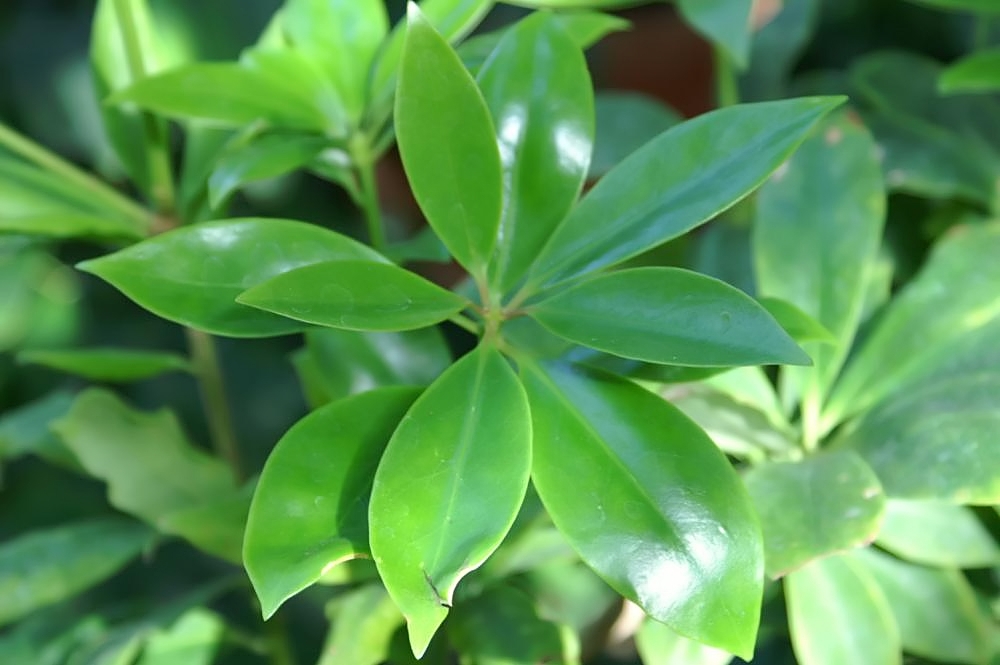
Star anise (Illicium verum) is an evergreen tree native to northeastern Vietnam and southwestern China. It produces star-shaped pericarp fruits containing high concentrations of anethole.
You can grow star anise in frost-free climates or warm greenhouses. The key requirement is maintaining high humidity and sheltered soil above 15 °C (59 °F).
Key Facts
- Light: Partial shade to partial sun
- Hardiness: USDA zones 8 to 11
- Soil: Moist, acidic, well-draining loamy soil
- Water: Keep soil constantly moist but unwaterlogged
- Harvest: Unripe green star pods picked in autumn
Is Star Anise Suitable for Your Garden
Star anise grows best in subtropical climates in USDA zones 8 through 11 where winter temperatures stay above -7 °C (20 °F).
If you live in a cooler region, you must grow star anise in a large pot that moves into a heated glasshouse or sunroom before autumn frosts arrive. Young trees require shade protection and sheltered air to avoid desiccation from dry winds.
This species suits gardeners with space for a tree reaching 5–15 m (16–49 ft) in height, or those willing to keep it container-bound at 2 m (6.5 ft) through summer pruning.
How to Identify Star Anise Trees and Pods
Star anise is identifiable by its lanceolate leaves and eight-pointed woody seed pods that smell strongly of licorice when crushed.
The dark green, glossy leaves measure 5–15 cm (2–6 in) long and grow in whorls of three to six along smooth, pale gray branches. Solitary flowers appear in spring and early summer, ranging from pale yellow to reddish-pink with 7–12 tepals.
Key identification traits include:
- Leaves: Elliptic to lanceolate, leather-like texture, aromatic when bruised
- Flowers: Solitary, 1–1.5 cm (0.4–0.6 in) across, greenish-yellow to dark red
- Fruit: Star-shaped aggregate of 6–10 (usually 8) boat-shaped follicles
- Seeds: Smooth, shiny, light brown seeds inside each follicle star tip
Growing Conditions for the Star Anise Plant
Star anise requires partial shade and rich, acidic soil with a pH between 4.0 and 6.0.
In its native forest habitat in Guangxi and Yunnan, the tree grows in humid understory conditions sheltered beneath higher canopy trees. Direct afternoon sunlight scorches the foliage, while full shade reduces pod production.
Prepare planting beds with organic compost, peat, or leaf mold to maintain low pH and moist retentive structure. Avoid alkaline or heavy clay soils, which trigger leaf chlorosis and root decay.
How to Propagate and Plant Star Anise
Propagate star anise using fresh seeds sown immediately after harvest or semi-ripe stem cuttings taken in summer.
Dried culinary pods sold in grocery stores are non-viable and will not germinate. You must source fresh seeds or live nursery saplings. Seeds lose viability within weeks if allowed to dry out completely.
To plant a young container tree outdoors:
- 1. Site selection: Choose a sheltered spot shielded from northern winds and direct midday sun.
- 2. Soil prep: Dig a hole twice as wide as the root ball and blend acidic peat or pine bark into the backfill.
- 3. Planting depth: Set the tree root crown level with the surrounding soil surface.
- 4. Initial watering: Saturate the soil with 10–15 liters (2.5–4 gal) of water and top with 5 cm (2 in) of bark mulch.
How to Care for a Star Anise Plant
Water star anise whenever the top 2.5 cm (1 in) of soil feels dry to the touch, keeping the root layer consistently damp.
Apply an acidic fertilizer formulated for rhododendrons or camellias twice a year, once in early spring and again in midsummer. Container plants require a balanced liquid fertilizer diluted to half-strength every three weeks during active growth.
Prune in early spring to maintain shape and remove dead or crossing branches. High ambient humidity above 60% prevents leaf margin browning; mist potted trees daily during dry indoor winter spells.
Harvesting Star Anise Pods
Harvest star anise pods while they are green and unripened, roughly 8 to 10 weeks after flowering stops.
Trees begin bearing harvestable fruit after 6 to 8 years of age and continue producing for over 100 years. Pick the intact star-shaped pods by hand using pruners to avoid snapping the delicate leaf spurs.
Lay harvested green pods on drying racks in full sunlight or a well-ventilated dry room for 7 to 10 days. As the fruit dries, it turns reddish-brown, hardens into a woody pericarp, and releases its essential oils.
Culinary Uses, Tea, and Skin Care Applications
Star anise pods provide essential oil containing up to 90% trans-anethole, giving dishes and tea a distinct sweet aniseed flavor.
The spice forms a primary component of Chinese five-spice powder and Vietnamese pho broth. Traditionally used in Asian herbal teas, whole pods are simmered in boiling water for 10 minutes to make star anise tea.
In cosmetic applications and skin care products, star anise extracts and essential oils are added for fragrance and their shikimic acid content. Shikimic acid was historically extracted from star anise for pharmaceutical manufacturing.
- Culinary: Whole pods in soups, braises, mulled wine, and baked goods
- Herbal tea: Steep 1–2 whole stars in hot water for 8–10 minutes
- Skin care: Extract used in soaps and serums for skin conditioning
Storing Dried Star Anise Pods
Store dried star anise in airtight glass jars kept in a cool, dark cabinet for up to 2 years.
Whole star pods retain their potency significantly longer than ground powder, which loses aromatic oils within 3 to 6 months. Keep containers away from stoves, direct light, and heat sources.
Discard pods if they lose their licorice aroma, turn pale gray, or show signs of moisture accumulation inside the glass container.
Star Anise Care Through the Seasons
| Spring | Apply acidic fertilizer around the root zone as new growth emerges. Prune dead or crossing branches before flowering starts. |
|---|---|
| Summer | Maintain deep watering twice weekly during warm dry spells. Shield container plants from scorching afternoon sun. |
| Autumn | Pick green star-shaped fruit pods for drying. Bring potted trees indoors before ambient temperatures fall below 5 °C (41 °F). |
| Winter | Keep indoor container plants near bright windows with high humidity. Reduce watering, allowing soil to dry slightly between irrigations. |
Common Star Anise Growing Problems Solved
| What you see | Likely cause | What to do |
|---|---|---|
| Leaf margins turning brown | Low humidity or dry air | Increase ambient humidity above 60% using misting or a humidifier. |
| Pale yellow foliage | Soil pH too high (alkaline) | Apply elemental sulfur or acidic fertilizer formulated for camellias. |
| Sudden leaf drop | Cold draughts or dry roots | Move plant away from cold winds and keep soil consistently moist. |
| Soft stems and wilting | Waterlogging and root rot | Improve drainage and allow the top layer of soil to dry before watering again. |
Star Anise Species and Related Cultivars
- 'Illicium verum' – standard species grown for commercial spice harvest
- 'Illicium anisatum' – Japanese star anise (ornamental only, highly toxic species)
- 'Illicium floridanum' – Florida anise tree (ornamental native shrub, maroon flowers, unedible)
Pests, Diseases, and Poisonous Lookalikes
Protect star anise from scale insects, spider mites, and dangerous confusion with toxic Japanese star anise (Illicium anisatum).
Pest attacks occur primarily on stressed or indoor potted plants. Root rot develops rapidly if soil drainage is inadequate or containers sit in standing runoff water.
- Toxic lookalike: Japanese star anise (Illicium anisatum) contains severe neurotoxins (anisatin); never consume wild or unidentified star pods.
- Scale insects: Brown bumps along stems; scrape off or apply horticultural neem oil spray.
- Spider mites: Fine webbing under leaves during hot dry weather; raise ambient humidity and rinse foliage.
- Root rot: Yellowing, dropping foliage caused by overwatering; repot into fresh acidic well-draining media.
Frequently Asked Questions
What is star anise called in Bengali?
In Bengali, star anise is commonly known as "anasphal" (আনাশফল) or "anashphool". It is used in traditional spice blends like garama masala and biryani preparations.
How do you pronounce star anise?
Star anise is pronounced "star-AN-iss" or "star-AN-ees". Both pronunciations are widely accepted in English speaking regions.
Can you drink star anise tea?
Yes, you can drink star anise tea by steeping 1 to 2 whole dried pods in boiling water for 8 to 10 minutes. Ensure you are using true star anise (Illicium verum) and not toxic Japanese star anise (Illicium anisatum).
What are the benefits of star anise in skin care?
Star anise contains shikimic acid and antioxidants that are used in skin care cosmetics for fragrance and skin-soothing properties. Always dilution test essential oils before topical use to prevent skin irritation.
What can you substitute for star anise in recipes?
You can substitute anise seed (Pimpinella anisum) or fennel seed (Foeniculum vulgare) at a ratio of 1/2 teaspoon ground seed per whole star anise. Chinese five-spice powder also provides a direct flavor match.
Can you grow a star anise tree indoors?
Yes, you can grow a star anise tree indoors in a large pot placed in bright, indirect sunlight with high humidity. Keep temperatures above 15 °C (59 °F) year-round.
Information about traditional or historical uses is provided for educational interest only and is not medical advice. Do not use any plant to treat a condition without speaking to a qualified professional.
Sources & Verification
Taxonomy and distribution are checked against the databases below. Care guidance is written for cultivated species only and reviewed by our editor. How We Build Plant Profiles →