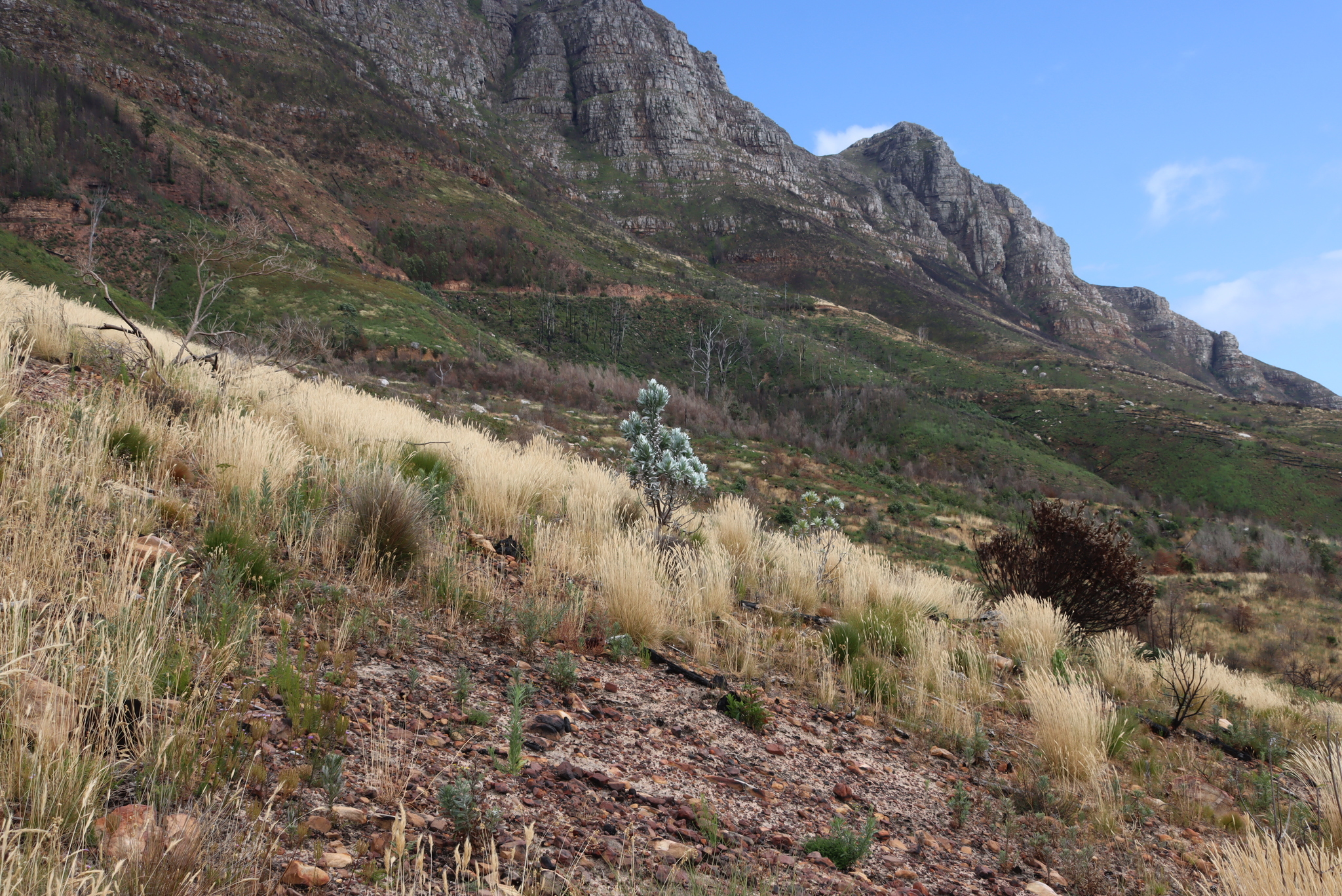
Golden conebush (Leucadendron laureolum) is an evergreen shrub native to the fynbos regions of the Western Cape in South Africa. It belongs to the family Proteaceae and features leathery, paddle-shaped leaves that frame bright yellow leaf bracts in winter.
This species requires strictly phosphorus-free, sandy soil and full sun in frost-free Mediterranean climates. It dies rapidly when planted in heavy clay, overwatered soil, or enriched garden beds.
Key Facts
- Light: Full sun (at least 6 hours direct daily)
- Water: Low; drought-tolerant after root establishment
- Hardiness: USDA zones 9a to 11 (down to -3 °C / 25 °F)
- Soil: Sandy or gritty, low-phosphorus, acidic to neutral
- Height: 1 to 2 m (3.3 to 6.6 ft) tall
- Toxicity: Non-toxic to dogs, cats, and humans
Is Golden Conebush Right for Your Garden?
Golden conebush suits dry, Mediterranean-style coastal or gravel gardens in USDA hardiness zones 9a through 11. It requires full sunlight and low soil fertility, making it ideal if you need a winter-interest focal plant that does not demand frequent irrigation.
You should choose this shrub if your soil is naturally sandy, rocky, or acidic with a pH between 5.5 and 6.8. Avoid planting golden conebush if your garden has heavy clay soil, poor drainage, or receives routine lawn fertilizers containing phosphorus.
How to Identify Leucadendron laureolum
Golden conebush forms a dense, rounded shrub reaching 1 to 2 m (3.3 to 6.6 ft) high and wide with erect, woody stems covered in smooth bark. Its leathery, dark green leaves measure 5 to 9 cm (2 to 3.5 in) in length and feature blunt, rounded tips shaped like laurel leaves.
This species is dioecious, meaning male and female flowers grow on separate individual bushes. During winter, upper leaves surrounding the reproductive cones change from dark green to bright canary yellow, giving the appearance of large flower petals.
- Leaves: Oblanceolate, leathery, 5 to 9 cm (2 to 3.5 in) long, green turning yellow at branch tips
- Male Cones: Soft, yellow, pollen-bearing flower heads measuring 1.5 to 2 cm (0.6 to 0.8 in) across
- Female Cones: Large, woody, green-to-brown cone structures up to 4 cm (1.6 in) long
- Bracts: Broad, leaf-like structures surrounding the cones that turn bright yellow from May to September in South Africa (November to February in the Northern Hemisphere)
Sunlight and Soil Requirements for Leucadendron laureolum
Golden conebush requires a location with at least 6 hours of unshaded, direct sunlight daily to produce bright winter leaf bracts. Planted in partial shade, branches become leggy and leaf tips remain light green instead of turning yellow.
The root system relies on fast water movement through coarse, nutrient-poor soil. Protect roots from pooling water by choosing elevated beds, slopes, or sandy loams mixed with decomposed granite.
- Light exposure: Full sun all day
- Soil texture: Coarse sand, gravel, or decomposed granite
- Soil drainage: Extremely sharp; water must sink within seconds
- Target soil pH: 5.5 to 6.8 (acidic to slightly neutral)
How to Plant Golden Conebush
Plant golden conebush in early autumn or late winter when ambient temperatures stay between 10 and 20 °C (50 and 68 °F). Dig a hole twice as wide as the root ball and equal in depth, ensuring you do not disturb the delicate cluster roots.
Never mix animal manure, compost, or standard slow-release fertilizers into the planting hole. Backfill using the native light soil, tap down lightly without compacting, and apply a 5 cm (2 in) layer of coarse wood chip mulch, keeping it 10 cm (4 in) away from the trunk base.
Watering and Feeding Golden Conebush
Water golden conebush once every 2 to 3 weeks during its first summer, then eliminate supplemental watering once established. Mature plants rely on seasonal natural rain and survive drought periods up to several months.
Proteoid roots absorb phosphorus so efficiently that standard fertilizers cause severe chemical leaf burn and root death. Apply zero synthetic fertilizers, or use a specialized low-phosphorus protea fertilizer with a phosphorus content below 1% if grown in impoverished container media.
- First-year watering: Deep soak every 14–21 days in dry weather
- Established watering: Only during extreme prolonged droughts over 60 days
- Fertilizer rule: 0% phosphorus (N-P-K ratio e.g., 10-0-10 or 12-1-8)
Pruning Leucadendron laureolum for Bushy Growth
Prune golden conebush stems back by 50% immediately after winter bracts fade in early spring. Cutting back stems yearly prevents the inner center of the bush from becoming bare and woody.
Always trim above leafy green stems because old woody stems lack dormant buds to generate new shoots. Cut flower stems for indoor vase arrangements during midwinter, which acts as a partial pre-pruning.
- Pruning timing: Early spring directly following winter color phase
- Cut height: Retain at least 10 to 15 cm (4 to 6 in) of green leafy stem
- Sanitation: Sanitize shears with 70% isopropyl alcohol between plants to stop fungal wilt transmission
Propagating Golden Conebush
Propagate golden conebush by taking 10 to 15 cm (4 to 6 in) semi-hardwood tip cuttings during late summer or early autumn. Select healthy non-flowering shoots from current season growth with firm green bark.
Strip leaves from the bottom half of the cutting, dip the cut end into 3,000 ppm IBA liquid rooting hormone, and insert it into a medium of 70% perlite and 30% coarse peat. Maintain root zone temperatures at 21 to 24 °C (70–75 °F) under intermittent mist for 6 to 10 weeks.
Common Leucadendron laureolum Pests and Diseases
The chief disease threatening golden conebush is Phytophthora cinnamomi root rot, triggered by excess moisture and heavy soil. Infected plants wilt rapidly, leaves turn dry gray-brown, and root systems rot beneath the soil line.
Air movement keeps foliage dry and reduces opportunistic fungal leaf spots. Inspect stem joints during hot summer weather for scale insects and mealybugs, which can be sprayed off with strong water streams or treated with insecticidal soap.
- Phytophthora root rot: Leaves collapse and dry while green; caused by standing water
- Armillaria root rot: White fungal threads beneath bark near soil surface
- Mealybugs: White cottony masses in stem axils; clean with alcohol swabs
Winter Bract Display and Flowering
Golden conebush blooms from May to September in its native habitat (November to February in the Northern Hemisphere), turning branch tips bright yellow. True flowers are small tubular structures crowded inside central floral heads surrounded by colored involucral bracts.
Female flower heads mature into woody cones that store seeds on the plant for years (serotiny). Fire in native fynbos triggers cone opening and seed release onto bare, nutrient-rich ash beds.
Golden Conebush Through the Seasons
| Spring | Prune flowering stems back by 50% right after bract color fades, leaving green leaf stems behind. Apply a fresh 5 cm (2 in) layer of coarse pine bark mulch without touching the main trunk. |
|---|---|
| Summer | Water young shrubs deeply every 2 to 3 weeks during heatwaves above 30 °C (86 °F). Monitor stem bases for mealybug infestations and remove weeds by hand to avoid disturbing roots. |
| Autumn | Take semi-hardwood cuttings for propagation in late summer or early autumn. Clear fallen leaves around the drip line to maintain light soil surface airflow before cool weather arrives. |
| Winter | Harvest yellow bract stems for cut flower displays. Cover young shrubs with frost cloth if local outdoor temperatures are forecasted to dip below -3 °C (25 °F). |
Troubleshooting Common Golden Conebush Problems
| What you see | Likely cause | What to do |
|---|---|---|
| Rapid foliage collapse and brown leaves | Phytophthora root rot caused by wet, slow-draining soil | Improve drainage, lower watering frequency, and avoid planting in clay soil beds. |
| Blackened leaf tips and stem dieback | Phosphorus toxicity from standard garden fertilizer | Flush soil deeply with plain water and stop applying any phosphorus-containing fertilizers. |
| Leggy stems with pale green winter bracts | Insufficient sunlight exposure | Prune adjacent overhanging shade branches or relocate young plants to full sun. |
| Frost scorch and blackened outer branch tips | Freezing air temperatures below -3 °C (25 °F) | Prune off damaged outer foliage in early spring after frost danger passes. |
Popular Leucadendron laureolum Varieties and Hybrids
- ‘Winter Gold’ – direct selection of Leucadendron laureolum featuring wide, intense yellow winter bracts
- ‘Safari Sunset’ – popular hybrid (L. laureolum x salignum) with deep red to plum-colored winter bracts
- ‘Burgundy Sunset’ – hybrid (L. laureolum x salignum) producing dark purple-red bracts that do not fade yellow
- ‘Inca Gold’ – compact hybrid (L. laureolum x salignum) displaying bright yellow bracts edged in red
Best Companion Plants for Golden Conebush
Pair golden conebush with other low-nutrient, acid-loving shrubs from South Africa and Australia that share its sun and soil demands. Outstanding companions include common pincushion (Leucospermum cordifolium), king protea (Protea cynaroides), and heath-leaved banksia (Banksia ericifolia).
Low-growing groundcovers like trailing dusty miller (Jacobaea maritima) or blue chalksticks (Curio repens) fill space beneath golden conebush while providing contrasting blue-gray foliage that highlights the yellow winter bracts.
Frequently Asked Questions
What is the common name for Leucadendron laureolum?
The primary accepted common name for Leucadendron laureolum is golden conebush. It is also frequently sold as laurel-leaf conebush, broad goldtips, or winter gold conebush.
What is the difference between Leucadendron laureolum and Leucadendron salignum?
Leucadendron laureolum grows larger leaves up to 9 cm (3.5 in) long and displays yellow bracts, whereas common sunshine conebush (Leucadendron salignum) has narrow leaves under 5 cm (2 in) long and resprouts from a woody lignotuber after fires.
How do you care for a Leucadendron laureolum hybrid like 'Safari Sunset'?
Care for 'Safari Sunset' by planting in full sun and well-draining, acidic sandy soil without adding phosphorus fertilizers. Water deeply once every 2 to 3 weeks during its first summer, then rely on natural rainfall.
Is Leucadendron laureolum toxic to dogs and cats?
Leucadendron laureolum is non-toxic to dogs, cats, and humans according to poison authority databases. It contains no known saponins or harmful alkaloids that cause animal poisoning.
How cold hardy is golden conebush?
Golden conebush tolerates light frosts down to -3 °C (25 °F) once established in the ground. Prolonged freezes below -4 °C (24 °F) damage leaf bracts and kill young branch tips.
Sources & Verification
Taxonomy and distribution are checked against the databases below. Care guidance is written for cultivated species only and reviewed by our editor. How We Build Plant Profiles →