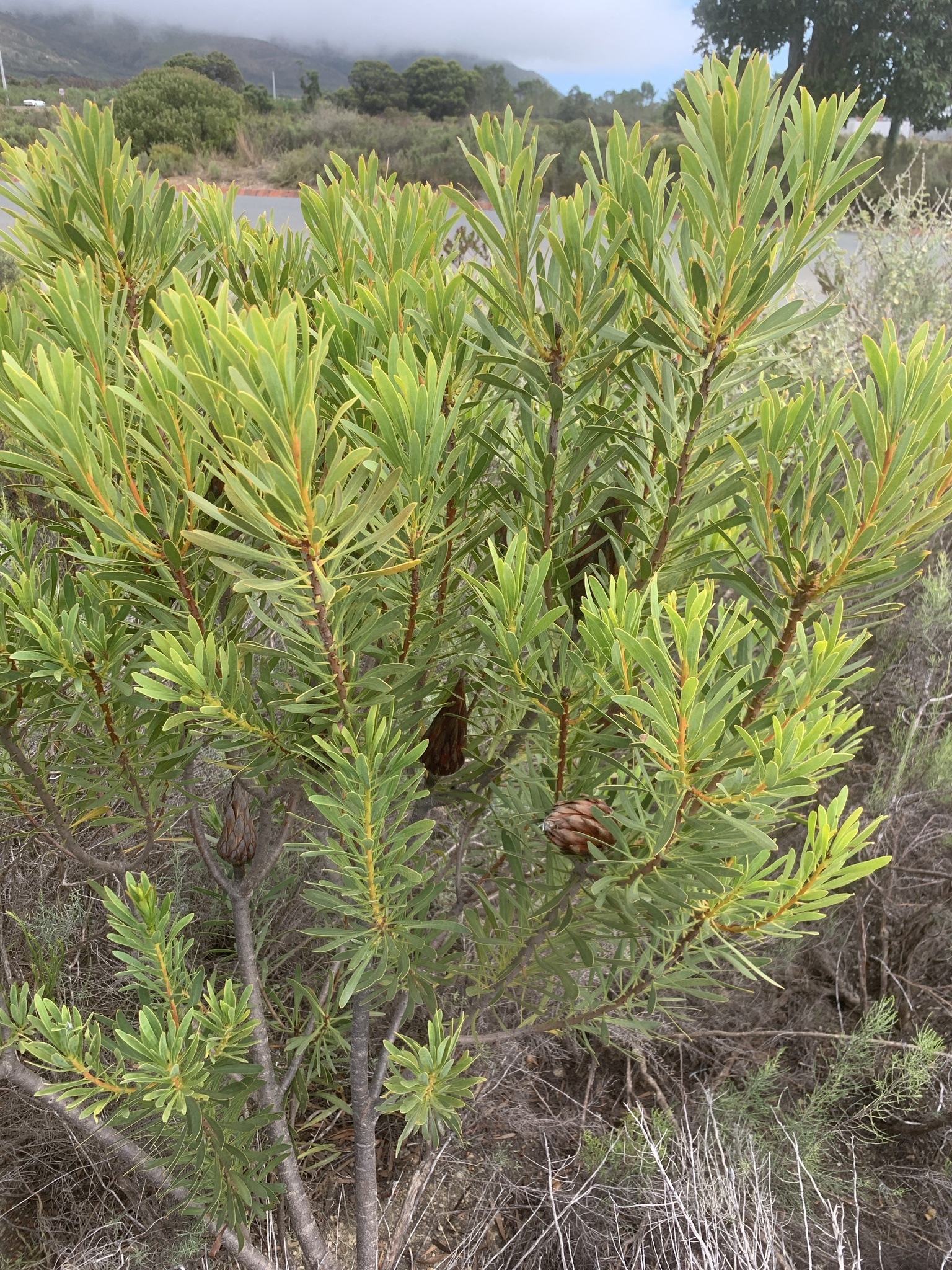
The king protea (Protea cynaroides) is an evergreen woody shrub native to the fynbos region of South Africa, recognized for producing the largest flower heads in its genus. It sprouts from a woody underground lignotuber, allowing stems to regenerate naturally after wildfires.
Standard fertilizers containing phosphorus will kill this plant by toxicity to its specialized root system. It requires coarse, acidic soil with free drainage and maximum air movement.
Key Facts
- Light: Full sun for 6 or more hours daily
- Soil pH: Acidic, 5.5 to 6.5
- Fertilizer: Zero phosphorus formula only
- Hardiness: USDA zones 9 to 11
- Bloom size: 12 to 30 cm (5 to 12 in) wide
Is King Protea Suitable for Your Garden
King protea requires a low-phosphorus, frost-free climate with Mediterranean rainfall patterns and continuous air movement. It thrives in regions with dry summers and cool, wet winters like coastal California, southwestern Australia, and Mediterranean Europe.
Because it sensitive to root disturbance and heavy clay, high rainfall zones with poor drainage cause swift mortality. Gardens with light, sandy slopes or raised gravel beds offer the correct growing environment.
How to Identify King Protea
King protea forms a woody shrub reaching 0.35 to 2 m (1 to 6.5 ft) tall with thick, smooth stems emerging from a subterranean base. Leaves are glossy, dark green, oval to paddle-shaped, measuring 10 to 15 cm (4 to 6 in) long on sturdy red-tinted leaf stalks.
The flower head is a bowl-like flower structure measuring 12 to 30 cm (5 to 12 in) across, surrounded by stiff, pointed bracts ranging from pale pink to deep red or creamy white. True flowers form a dense, woolly mass in the center of the cup, producing sweet nectar that attracts bird pollinators.
Where Does the King Protea Grow Best
King protea grows best in full sun exposed to open breezes and low ambient humidity. Select a planting site clear of tall trees or structures that restrict airflow or block midday light.
In Mediterranean climates like Perth or Cape Town, plant on elevated banks where winter rains drain off quickly. In containers, place pots on raised feet to guarantee rapid water clearance from bottom holes.
Planting Tips for King Protea
Plant king protea into coarse, acidic soil with a pH between 5.5 and 6.5 during autumn or early spring. Excavate a hole twice as wide as the root ball but no deeper, avoiding any addition of compost, manure, or standard potting mix containing embedded phosphate fertilizers.
Carefully set the root ball into position without teasing or loosening the proteoid feeder roots. Firm the surrounding native soil gently, water deeply, and apply a 5 cm (2 in) mulch layer of pine bark or gravel, keeping mulch 10 cm (4 in) away from the main trunk.
Watering Schedule and Fertilizer Requirements
Water young plants once a week during their first summer, reducing irrigation to monthly deep waterings once established. Native fynbos species possess cluster roots tailored to gather nutrients in lean soils, making standing water lethal due to root rot fungi.
Avoid standard garden fertilizers completely, as phosphorus levels above 1 percent cause leaf tip burn and plant death. If feeding is required, apply a specialized low-phosphorus Australian native plant food containing under 1 percent phosphorus or rely on organic fish hydrolysate diluted to quarter-strength in spring.
How to Prune King Protea
Prune king protea stems back by one-half to two-thirds immediately after flowering completes in late spring. Cut spent flower stems down to a point where healthy leaves remain, leaving at least 15 cm (6 in) of leafy growth on each stem.
Remove weak, thin shoots that crowd the center of the bush to maintain air movement. Never cut back into old, leafless woody branches unless harvesting stems close to the base, as new shoots sprout mainly from leafy node tissue or the underground lignotuber.
How to Grow King Protea from Seed and Cuttings
Grow king protea from seed by soaking seeds in smoke-treated water for 24 hours before sowing in autumn. Seeds require alternating temperatures between 10 °C (50 °F) at night and 20 °C (68 °F) during the day to trigger germination, which takes 30 to 90 days in a coarse sand mix.
For vegetative propagation, take 10 to 15 cm (4 to 6 in) semi-hardwood cuttings from non-flowering shoots in late summer. Dip the cut base in liquid indolebutyric acid (IBA) root hormone, insert into a 50:50 coarse perlite and peat mix, and keep under intermittent mist with bottom heat set to 22 °C (72 °F).
King Protea Cut Flower Care
Fresh king protea blooms last 10 to 16 days in a clean vase when stems are recut underwater every three days. Stripping leaves from the bottom half of the stem prevents leaf decay and bacterial contamination in the water.
Fill the vase with cool tap water and replace it completely every 48 hours without adding standard sugar-based flower food packet preservatives. To dry the bloom, strip all leaves, loop wire around the stem base, and hang the flower upside down in a dark, dry room for 3 to 4 weeks.
Winter Care and Hardiness
Protect king protea plants from prolonged frosts below -4 °C (25 °F) using protective frost cloth suspended over wooden frames. Mature specimens withstand brief cold snaps to -5 °C (23 °F), but young foliage and developing flower buds suffer cold burn.
Reduce watering to zero during rainy winter months in Mediterranean regions. Potted plants should be moved under a patio roof or unheated greenhouse if winter rainfall exceeds 100 mm (4 in) per month in heavy soils.
Companion Plants for King Protea
Combine king protea with companion species that share its acidic soil and low-phosphorus feeding requirements. Select low-maintenance plants from similar Mediterranean chaparral or fynbos ecosystems to ensure uniform watering schedules.
- Silver tree (Leucadendron argenteum) – silvery foliage background
- Pincushion protea (Leucospermum cordifolium) – orange spring blooms
- Tree heather (Erica arborea) – fine-textured acidic shrub companion
- Sugarbush (Protea repens) – winter nectar producer
Frequently Asked Questions
Why is the king protea the national flower of South Africa?
The king protea became South Africa's national flower in 1976 because it is native to the Cape floral region and symbolizes transformation and endurance.
What does the king protea flower symbolize?
The king protea symbolizes change, courage, diversity, and resilience due to its ability to survive severe bushfires and regrow from its rootstock.
How long do king protea cut flowers last?
Cut king protea flowers last between 10 and 16 days in water when stems are trimmed and water is changed every two days.
Can you grow king protea in Perth?
Yes, king protea grows well in Perth due to the sandy, free-draining acidic soils and dry Mediterranean summer climate.
Why are my king protea leaves turning black?
Leaves turn black primarily from root rot caused by overwatering or soil high in phosphorus.
Sources & Verification
Taxonomy and distribution are checked against the databases below. Care guidance is written for cultivated species only and reviewed by our editor. How We Build Plant Profiles →