
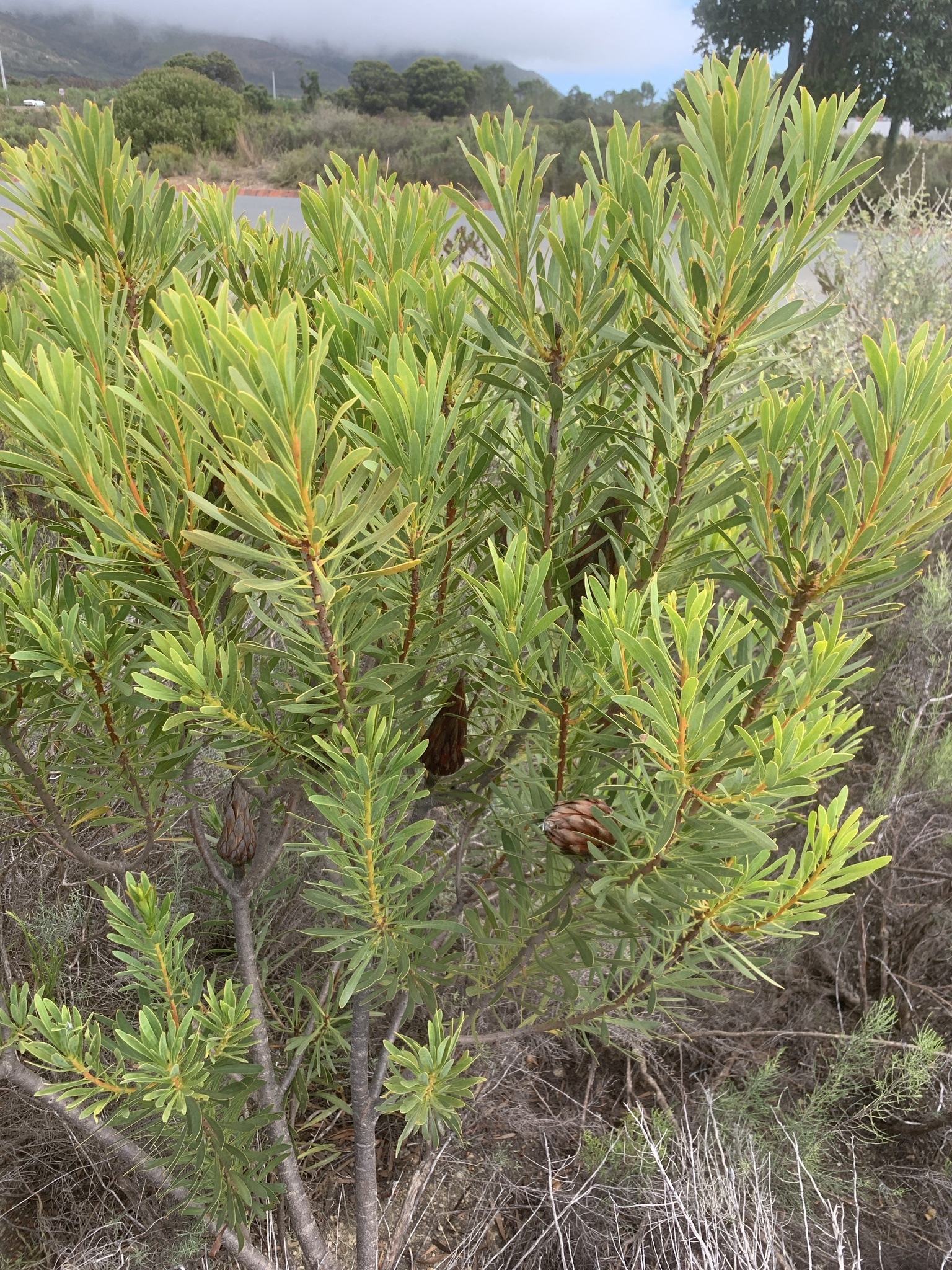
Common sugarbush (Protea repens) is an erect woody shrub native to the Cape fynbos region of South Africa. It features narrow linear leaves and sticky, cone-shaped floral heads that produce high volumes of sweet nectar.
Successful cultivation requires nutrient-poor acidic soil and zero phosphorus fertilizer, as excessive soil nutrients destroy its specialized root system. It flowers from late autumn to spring in Mediterranean climates.
Key Facts
- Light: Full sun (6+ hours daily)
- Water: Low; deeply during first year only
- Soil pH: Acidic (5.5 to 6.5)
- Hardiness: USDA zones 9 to 11
- Bloom Time: Late autumn through spring
Is Common Sugarbush Right for Your Garden?
Common sugarbush requires full sun, acidic well-drained soil, and zero phosphorus fertilizer to thrive outdoors. It suits Mediterranean climates in USDA hardiness zones 9 through 11 with dry summer warmth and steady air circulation.
This evergreen woody shrub reaches a mature height of 1 to 4.5 m (3.3 to 14.8 ft) and spreads 1 to 3 m (3.3 to 9.8 ft) wide. Its specialized proteoid roots absorb phosphorus so efficiently that standard plant food causes root burn and rapid mortality.
If your garden has clay soil, heavy summer rainfall, or severe winter frosts below -4 °C (25 °F), grow this plant in a large container with custom low-nutrient potting mix.
Identifying Protea repens Leaves, Bark, and Flowers
Common sugarbush forms an upright shrub with linear leaves and glossy, cone-shaped floral heads measuring 8 to 15 cm (3 to 6 in) long. The plant exhibits significant color variation across individual wild populations and nursery selections.
The thick foliage features smooth, narrow leaves measuring 5 to 15 cm (2 to 6 in) long and 0.5 to 1.5 cm (0.2 to 0.6 in) wide, arranged spirally along gray woody branches. Floral heads feature overlapping, sticky bracts that range from creamy white to deep red.
- Leaves: Narrow, linear, smooth, 5–15 cm long, pale green to gray-green.
- Flowers: Bowl-shaped heads, 8–15 cm long, filled with clear nectar.
- Bract Colors: White (Protea repens ‘Alba’), pink, or dark crimson red.
- Stems: Thick, erect, smooth gray bark that hardens with age.
Sun and Soil Requirements for Protea repens
Plant Protea repens in full sunlight with coarse, acidic soil having a pH between 5.5 and 6.5. Shaded locations reduce flower yield and increase foliage humidity, triggering fungal disease.
The native South African Cape fynbos habitat features nutrient-poor, sandy, or gravelly soils. Heavy clay traps water around the base, causing fatal root collapse within a few weeks.
- Sunlight: At least 6 hours of direct sun daily.
- Drainage: Coarse sand, disintegrated granite, or sandstone grit.
- Soil pH: Acidic (5.5 to 6.5); avoid lime or alkaline soils.
- Airflow: Open position with steady air movement to prevent foliar blackening.
Planting Protea repens Without Disturbing Roots
Space Protea repens plants 1.5 to 2 m (5 to 6.5 ft) apart and keep the root ball intact during transplanting. Proteoid cluster roots collapse quickly if broken or exposed to air during setting out.
Dig a hole twice as wide as the pot but equal in depth. Fill the planting hole with native sandy soil and coarse grit rather than rich compost or animal manure. Water deeply once at planting to settle soil around the roots without compacting it manually.
How Often to Water and Feed Common Sugarbush
Water young plants deeply once a week during their first summer, then rely on natural rainfall once established. Established shrubs tolerate long dry periods and die when overwatered.
Do not apply fertilizers containing phosphorus or high nitrogen to Protea repens. If leaves yellow from iron deficiency in alkaline conditions, apply low-dose iron chelate diluted to half strength in spring.
- Establishment watering: 5 to 10 L (1.3 to 2.6 gal) per plant weekly in year one.
- Established watering: None required unless dry spells exceed 6 weeks.
- Fertilizer: Zero phosphorus (NPK ratio 10-0-10 or specialized fynbos mix).
- Mulch: Pine needles or gravel; avoid rich compost mulches.
How to Prune Common Sugarbush for Bushy Growth
Prune stems back by one-third immediately after flowering, cutting just above a leaf node on current season growth. Never cut back into old gray wood that lacks green leaves, as older branches do not reshoot.
Harvesting long-stemmed flowers for vases doubles as seasonal pruning. Removing spent flower heads prevents seed head exhaustion and encourages fresh lateral growth for the following autumn bloom cycle.
Growing Protea repens Seeds and Cuttings
Sow Protea repens seeds in autumn using well-draining acidic seed mix treated with plant smoke primer. Seeds germinate in 30 to 90 days when night temperatures drop below 10 °C (50 °F).
Semi-hardwood cuttings taken in late summer root in 6 to 10 weeks under mist systems. Treat 10 cm (4 in) stem tips with IBA rooting powder and insert into a perlite and peat substrate.
- Seed timing: Autumn (April-May in Southern Hemisphere, Oct-Nov in Northern).
- Seed treatment: Soak in smoke-water extract for 24 hours prior to sowing.
- Germination temp: 10–20 °C (50–68 °F) night-to-day fluctuation.
- Cutting timing: Late summer from semi-ripe lateral shoots.
Preventing Root Rot and Common Protea Problems
Phytophthora root rot causes sudden wilting and leaf browning, triggered by warm, wet soil around roots. Avoid irrigation during hot summer months to keep soil fungi inactive.
Nutrient toxicity manifests as blackened leaf tips when soil phosphorus levels rise. Scale insects occasionally feed on young stems; remove them manually or spray with insecticidal soap.
Frost Tolerance and Winter Care for Protea repens
Protea repens tolerates light frosts down to -4 °C (25 °F) once established in dry soil. Prolonged sub-zero temperatures kill stems and freeze fine cluster roots near the surface.
In regions below USDA zone 9, grow the plant in a 30 to 50 L (8 to 13 gal) container and move it into an unheated greenhouse before autumn frosts arrive. Keep winter container soil barely damp.
Protea repens Flower Colours and Blooming Season
Common sugarbush flowers from late autumn through spring, producing nectar-filled cups in shades of pink, white, and red. Flower heads last up to 3 weeks in fresh water cut flower displays.
Varieties like Protea repens ‘Alba’ bear pure creamy white bracts, while wild selections vary from soft pink to intense crimson red. The nectar was traditionally collected in South Africa and boiled down into a sweet syrup known as suikerbosstroop.
Year-Round Care for Common Sugarbush
| Spring | Prune back spent flowering stems by one-third after blooms fade. Apply low-dose iron chelate if foliage shows pale yellowing. |
|---|---|
| Summer | Water young first-year plants deeply once per week during heatwaves. Keep soil around established shrubs dry to prevent root rot. |
| Autumn | Sow smoke-treated seeds in cold frames as night temperatures fall below 10 °C (50 °F). Monitor opening floral buds for nectar-feeding birds. |
| Winter | Protect container-grown specimens from severe frost when temperatures drop below -4 °C (25 °F). Keep winter soil mostly dry. |
Common Protea repens Problems Explained
| What you see | Likely cause | What to do |
|---|---|---|
| Leaves turning brown and wilting rapidly | Phytophthora root rot from overwatering or poorly drained soil | Cease summer watering immediately and improve soil drainage around the plant base. |
| Leaf tips turning black | High soil phosphorus levels or excess nitrogen fertilizer | Flush soil with rainwater and stop applying standard garden fertilizers. |
| Pale yellowing foliage between leaf veins | High soil pH or iron deficiency | Apply iron chelate solution and lower soil pH with elemental sulfur. |
| No flowers produced during autumn or winter | Insufficient sunlight or hard pruning into old woody stems | Relocate the plant to a full-sun site and prune only fresh green shoots post-flowering. |
Popular Protea repens Varieties and Hybrids
- ‘Alba’ – white floral bracts with pale green accents
- ‘Rubra’ – deep crimson red flower heads
- ‘Venus’ – hybrid (Protea repens × Protea aristata) with bright red floral bracts
Best Companion Plants for Common Sugarbush
Pair common sugarbush with low-phosphorus, sun-loving plants that thrive in sandy, acidic soils. Match plants with identical low water needs to prevent overwatering damage.
Good companions include conebush (Leucadendron laureolum), red-hot poker (Kniphofia uvaria), blue African lily (Agapanthus africanus), and heath (Erica cerinthoides). Avoid planting alongside fast-growing surface-rooting trees like blue gum (Eucalyptus globulus).
Frequently Asked Questions
Can you grow Protea repens from seeds?
Yes, you can grow Protea repens from seeds by sowing them in autumn in acidic sandy mix. Soaking seeds in plant smoke extract for 24 hours improves germination rates within 30 to 90 days.
Is common sugarbush frost tolerant?
Common sugarbush tolerates light frosts down to -4 °C (25 °F) when planted in dry, well-drained soil. In colder climates, grow it in containers and protect it indoors during severe freezing weather.
What colors do Protea repens flowers come in?
Protea repens flowers range in color from creamy white (such as 'Alba') to soft pink, salmon, and deep crimson red. Bract colors vary between wild populations and specific cultivated strains.
Why is it called common sugarbush or suikerbossie?
It earned the name common sugarbush (suikerbossie in Afrikaans) because its flower cups yield large amounts of sweet, clear nectar. Early South African settlers harvested this nectar to boil into syrup.
What is the difference between Protea repens and Protea cynaroides?
Protea repens forms an erect shrub with narrow, linear leaves and cone-shaped flower heads 8–15 cm long. King protea (Protea cynaroides) has broad, rounded leaves and massive, plate-like flower heads measuring up to 30 cm across.
Is common man sugarbush the same plant as common sugarbush?
Yes, common man sugarbush is an informal regional variant of the common name for Protea repens. Both refer to the same South African shrub known for its sticky, nectar-rich flowers.
Information about traditional or historical uses is provided for educational interest only and is not medical advice. Do not use any plant to treat a condition without speaking to a qualified professional.
Sources & Verification
Taxonomy and distribution are checked against the databases below. Care guidance is written for cultivated species only and reviewed by our editor. How We Build Plant Profiles →


