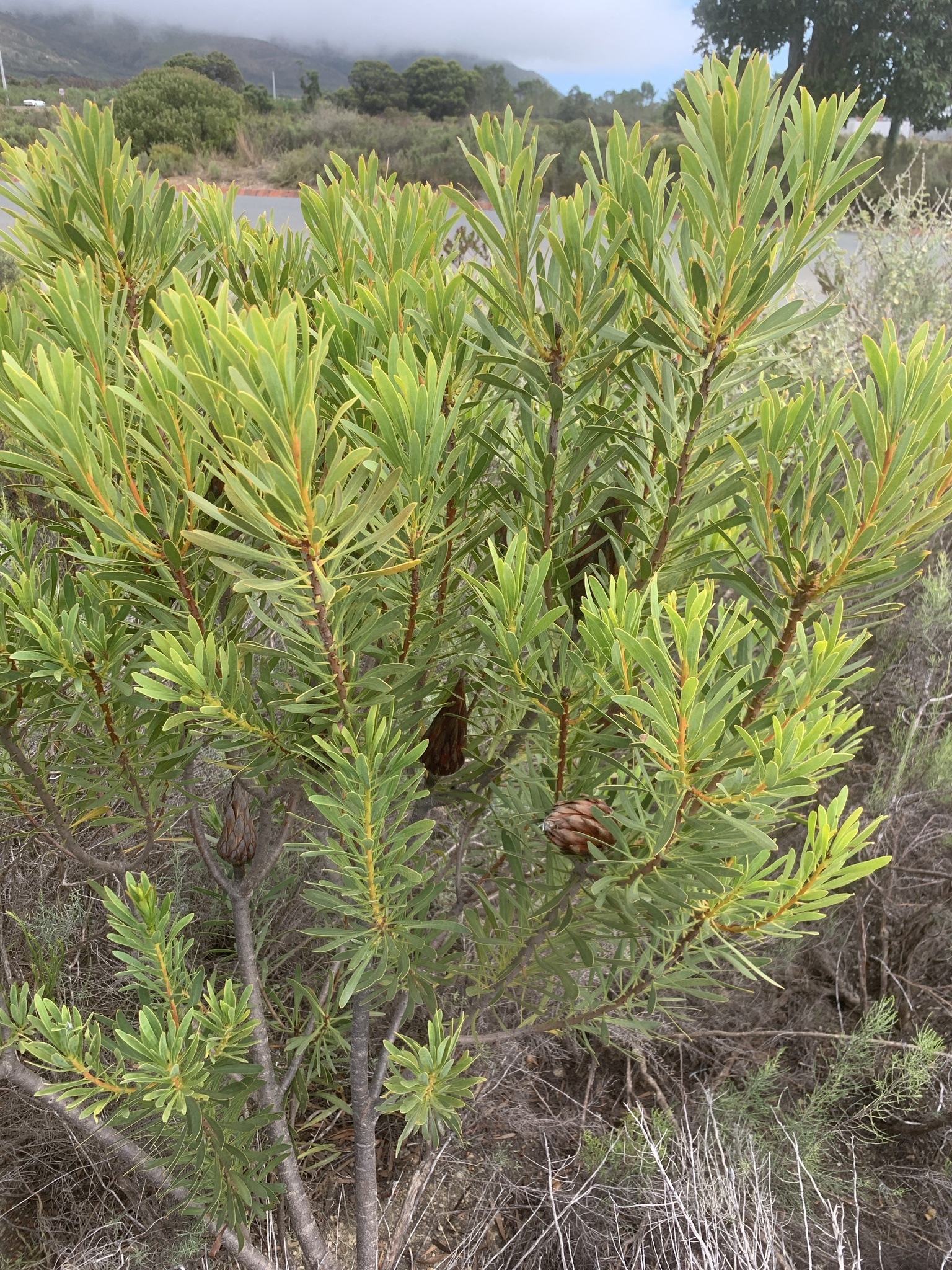
The broad-leaf sugarbush (Protea eximia) is a woody shrub or small tree native to the mountain fynbos of South Africa. It is easily recognized by its large terminal flower heads surrounded by rose-colored bracts tipped with purple-black velvety hairs.
Cultivating this species requires strict attention to soil chemistry, as it demands exceptionally sharp drainage and acidic, nutrient-poor conditions. If you plant it in heavy clay or apply high-phosphorus fertilizers, the plant will decline rapidly.
Key Facts
- Type: Evergreen shrub or small tree
- Height: Up to 4 m (13 ft) tall
- Soil: Acidic, sandy, very well-drained
- Sun: Full sun
- Hardiness: USDA zones 9 to 11
Is Broad-Leaf Sugarbush Right for Your Garden
Growing Protea eximia suits gardeners in Mediterranean climates who have sloping, sandy ground and mild winters. It fits well into native fynbos displays, coastal gardens, and wildlife-friendly landscapes that attract nectar-feeding birds.
You should avoid growing this shrub if your soil stays wet during winter or if your local temperatures regularly drop below -3 °C (26 °F). It also performs poorly in small containers because its sensitive root system requires room to spread.
What Broad-Leaf Sugarbush Looks Like
Protea eximia grows as an upright, branching shrub or small tree reaching 2 to 4 m (6.5 to 13 ft) in height with a similar spread. The leathery, stiff leaves are ovate, grey-green, and clasp the stem tightly.
- Leaves: Oval shape, up to 10 cm (4 in) long, with a smooth waxy coating.
- Flowers: Terminal heads measuring 10 to 12 cm (4 to 4.7 in) across.
- Bracts: Rose-pink to red, edged with distinctive purple-black velvety hairs.
- Habit: Open, woody canopy that becomes slightly untidy as old blooms dry on the branches.
How Big Does Broad-Leaf Sugarbush Get
Mature specimens typically reach 3 m (10 ft) tall and wide after about five to seven years of growth. Left unpruned in ideal conditions, older plants can eventually stretch up to 4 m (13 ft) with a thick, gnarled trunk.
Space individual plants at least 2.5 m (8 ft) apart to ensure adequate air circulation around the canopy. Proper spacing prevents fungal leaf spots and reduces competition for root moisture.
Choosing the Right Site for Protea eximia
Select a planting location that receives at least 6 hours of direct sunlight daily and sits on a slope or raised bed. Poor air movement or shaded corners will cause weak stem growth and sparse flowering.
- Sunlight: Full, unshaded sun all day.
- Drainage: Absolute priority; water must drain away within minutes of heavy rain.
- Wind: Tolerates coastal breezes but benefits from staking when young in gale-prone areas.
Planting Protea eximia
Plant your broad-leaf sugarbush in spring or early autumn when soil temperatures are moderate and rainfall is steady. Dig a hole twice as wide as the root ball but no deeper, keeping the top of the root mass slightly above the surrounding soil level.
- Never add compost, manure, or high-phosphorus fertilizers to the planting hole.
- Tamp the sandy soil gently around the roots to eliminate large air pockets.
- Water thoroughly once after planting to settle the soil, then withhold irrigation until the surface dries.
How to Care for Protea eximia
Water young plants deeply once a week during their first dry summer, reducing irrigation to once a month once established. Mature plants survive largely on natural rainfall in Mediterranean zones.
- Fertilizing: Never feed this species; native proteas absorb phosphorus efficiently and high nutrient levels will kill them.
- Mulching: Apply a shallow layer of coarse pine bark or gravel to suppress weeds and keep roots cool.
- Weeding: Pull weeds by hand near the trunk to avoid damaging the surface-hugging proteoid roots.
Pruning and Maintenance
Prune your broad-leaf sugarbush immediately after the main flowering season finishes in late spring by removing spent flower heads down to strong side shoots. Never cut back into bare, leafless wood because the stems lack dormant buds and will not resprout.
- Remove the lower branches as the plant matures to improve airflow beneath the canopy.
- Cut stems for fresh floral arrangements just above lower leaf nodes to encourage bushier branching.
- Discard diseased or dead wood promptly to prevent fungal pathogens from spreading through the shrub.
Winter Care for Protea eximia
Protect plants from hard frosts by wrapping the canopy in horticultural fleece if temperatures drop below -3 °C (26 °F). Potted specimens should be moved onto a bright, covered porch or frost-free greenhouse for the coldest winter months.
Reduce watering to a bare minimum during winter dormancy. Wet, cold soil combined with freezing air is the primary cause of root rot in temperate gardens.
Troubleshooting Broad-Leaf Sugarbush Problems
Spotting early warning signs helps you correct environmental stress before permanent damage occurs. Most issues stem from incorrect soil moisture or poor drainage.
- Yellow leaves: Usually caused by phosphorus toxicity from fertilizer or overwatering.
- Sudden wilting: Phytophthora root rot triggered by heavy, poorly drained soil.
- Black spots on leaves: Fungal leaf spot caused by high humidity and stagnant air around the canopy.
Propagation from Protea eximia Seeds
Propagate Protea eximia from seed sown in autumn when night temperatures drop to 10-15 °C (50-59 °F). Germination improves if seeds are treated with smoke water or specific primers used for fynbos species.
- Sow seeds in pots filled with sterile, acidic, sandy seed-starting mix.
- Cover lightly with a 5 mm (0.2 in) layer of coarse sand.
- Keep the medium evenly moist in a bright, well-ventilated cold frame until seedlings emerge in 30 to 50 days.
Broad-Leaf Sugarbush Through the Seasons
| Spring | Prune back spent flower heads as blooms fade. Check young plants for soil moisture and apply coarse mulch if needed. |
|---|---|
| Summer | Provide deep weekly irrigation to newly planted shrubs. Keep surrounding soil free of weeds without disturbing shallow roots. |
| Autumn | Sow seeds in cool, sandy frames. Monitor established plants as flower buds begin to swell for the upcoming blooming season. |
| Winter | Withhold supplemental water unless rainfall is absent for over six weeks. Protect tender plants from severe freezes with fleece. |
Common Protea eximia Growing Problems
| What you see | Likely cause | What to do |
|---|---|---|
| Brown leaf tips and leaf drop | Overwatering or fertilizer burn | Stop all fertilizing immediately and improve soil drainage around the root zone. |
| Plant collapses suddenly | Phytophthora root rot | Remove and destroy the affected plant; do not replant proteas in that exact spot. |
| Lack of flowers | Insufficient sunlight or heavy shade | Prune surrounding tree branches or transplant the shrub to an unshaded location. |
Popular Protea eximia Cultivars and Hybrids
- Protea eximia ‘Sylvia’ – hybrid selection with deep pink bracts
- Protea eximia ‘Duchess’ – compact habit with large silvery-pink flower heads
- Protea eximia ‘Australis Pink’ – floriferous selection suited to milder climates
Frequently Asked Questions
How do I grow protea eximia from seeds?
Sow seeds in autumn using a sterile, sandy, acidic potting mix in well-ventilated containers. Keep the trays cool and moist, as germination typically takes between four to eight weeks.
What is the difference between Protea eximia and Protea susannae hybrids?
Protea eximia features distinct oblong leaves and velvety purple-black hair on the floral bracts, whereas hybrids like Protea eximia x susannae often show altered leaf shapes and different pest resistance profiles inherited from the parent plant Protea susannae.
Can I grow Protea eximia in a pot?
Yes, you can grow it in a large terracotta container of at least 45 cm (18 in) diameter filled with an acidic, sandy soil mix. Ensure the pot drains freely and receives full sun all day.
Why is my broad-leaf sugarbush turning brown?
Brown foliage usually indicates root damage caused by phosphorus fertilizers, heavy clay soil, or root rot from overwatering. Ensure the plant is growing in lean, sandy, fast-draining earth.
Sources & Verification
Taxonomy and distribution are checked against the databases below. Care guidance is written for cultivated species only and reviewed by our editor. How We Build Plant Profiles →