
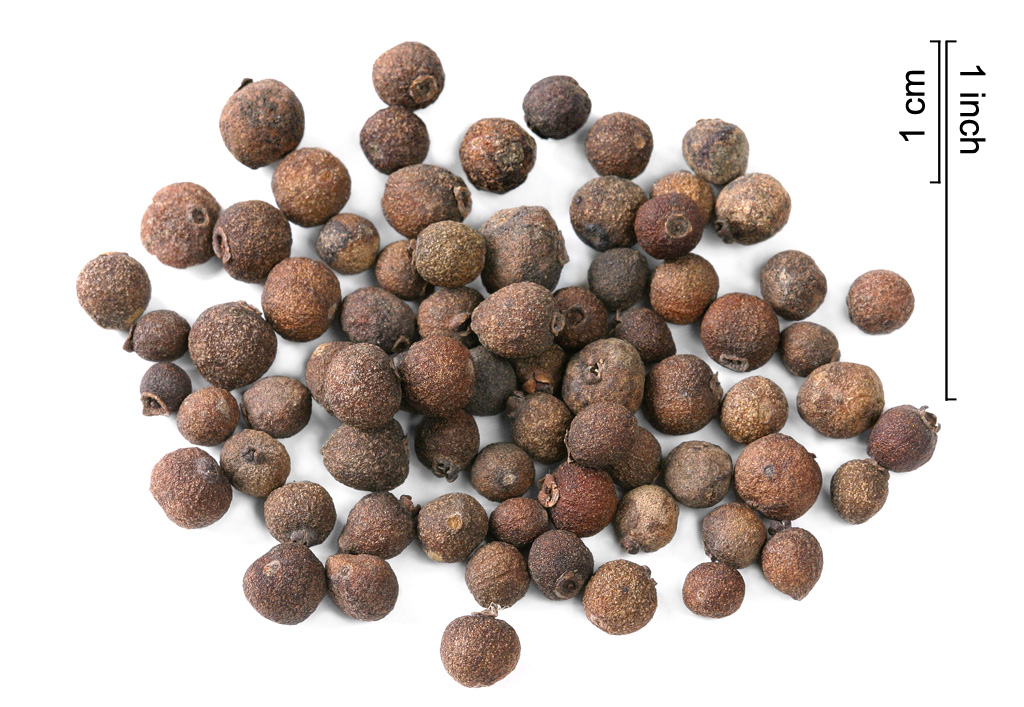
Allspice (Pimenta dioica) is a tropical evergreen canopy tree native to southern Mexico, Central America, and the Greater Antilles, recognized for foliage and berries that emit a combined scent of cinnamon, nutmeg, and cloves. The dried, unripe berries form the familiar brown kitchen spice.
Trees are functionally dioecious and require both male and female specimens within pollination range to set fruit. Outdoor cultivation succeeds only in warm, frost-free regions or in heated conservatories where temperatures remain steadily above 15 °C (59 °F).
Key Facts
- Hardiness: USDA Zones 10 to 11
- Mature height: 9–12 m (30–40 ft) outdoors; 1.8–3 m (6–10 ft) in containers
- Sun exposure: Full sun to partial sun
- Soil moisture: Moderate, evenly moist with sharp drainage
- Time to harvest: 4 to 6 years from seed
Is the Allspice Tree Right for Your Garden?
Growing allspice requires a strictly frost-free tropical climate or a heated winter greenhouse. The plant thrives in ground soil across USDA Zones 10 through 11, but gardeners in cooler zones must maintain it as a large container specimen brought indoors whenever autumn temperatures decline.
Because Pimenta dioica produces functionally unisexual flowers, a solitary potted plant will produce fragrant leaves for cooking but will rarely set berries. Growers seeking a crop of berries must grow at least two trees to ensure cross-pollination between male and female blooms.
- Requires minimum winter temperatures above 10 °C (50 °F) to prevent leaf drop
- Needs a container volume of at least 75 L (20 gal) for mature indoor growth
- Produces culinary leaves continuously, with berry crops beginning around year five
Identifying Allspice Leaves, Bark, and Berries
An allspice tree forms a slender, upright crown with smooth, pale grey bark that peels away in thin, paper-like sheets. The aromatic, leathery leaves are arranged oppositely along the branches, measuring 10–15 cm (4–6 in) in length and 3–5 cm (1.2–2 in) in width, with glossy dark-green topsides and visible oil glands beneath.
Clusters of small, 8 mm (0.3 in) white flowers appear in axillary cymes during late spring. Once pollinated, female blooms yield subglobose berries measuring 5–8 mm (0.2–0.3 in) across that mature from green to dark purple-black, each enclosing two flat seeds.
Sunlight, Temperature, and Soil Requirements
True allspice requires full sun to partial shade and rich, free-draining soil with a pH between 6.0 and 7.5. Established outdoor trees in Jamaica and Central America thrive in full overhead sun, while young saplings and indoor container plants perform best with shelter from harsh midday rays.
Soil drainage must remain unobstructed to prevent root decline. A potting mix composed of two parts quality potting soil, one part coarse perlite, and one part composted pine bark provides adequate structure and aeration for container specimens.
- Optimal growing temperatures range between 20–32 °C (68–90 °F)
- Sustained cold below 4 °C (40 °F) causes leaf blackening and twig dieback
- Clay soils require amendment with compost and grit to prevent saturation
Sowing Allspice Seeds and Propagation
Propagate allspice by sowing fresh, fully cleaned seeds at 24–28 °C (75–82 °F) within days of removal from ripe berries. Seed viability drops rapidly once dried, so store-bought whole allspice berries cannot be germinated.
Remove the outer fruit pulp completely, as it contains germination inhibitors. Sow seeds 1 cm (0.4 in) deep in a moist, sterile seed-starting mix, maintaining high humidity under a propagation dome. Germination typically occurs within 15 to 30 days.
- Soak fresh seeds in tepid water for 24 hours prior to sowing to soften the coat
- Take semi-hardwood tip cuttings treated with rooting hormone during early summer
- Graft selected female scions onto seedling rootstocks to guarantee fruit-bearing trees
Watering and Feeding Allspice Plants
Water mature allspice trees when the top 5 cm (2 in) of soil feels dry, soaking the root ball thoroughly. Container plants demand consistent moisture throughout the active summer growth period, but the saucer should never hold standing water.
Feed established trees three times per year in spring, midsummer, and early autumn with a balanced granular fertilizer, such as an 8-8-8 or 10-10-10 blend containing micronutrients like iron and magnesium. Container specimens benefit from a dilute balanced liquid feed applied once every three weeks between April and September.
When and How to Harvest Allspice Berries
Harvest allspice berries while they are still green and firm, just before full ripeness. Fully ripe, purple-black berries lose their volatile essential oils and turn unpleasantly sweet and fermented during the drying process.
Clip entire fruit clusters from the branches using clean shears. Spread the green berries across drying racks or tarps in direct sun for 4 to 10 days, turning them daily until the shells turn wrinkled, brittle, and dark reddish-brown.
- Pick berries when they reach 5–7 mm (0.2–0.28 in) in diameter
- Discard any soft or split fruit before spreading the harvest to dry
- Dried berries are ready when the seeds rattle inside the outer husk
- Fresh leaves can be clipped year-round and used like bay leaves in simmering broths
Culinary Uses and Allspice Substitutes
Ground allspice forms the backbone of traditional Jamaican jerk seasoning, pickling brines, spiced curries, and holiday baking. In mixology, the dried berries are steeped in high-proof rum with brown sugar to produce allspice dram (pimento dram), a staple liqueur in classic tiki cocktails.
If you run out of allspice powder in the kitchen, blend equal parts ground cinnamon, ground nutmeg, and ground cloves as a direct replacement. Do not confuse Pimenta dioica with Carolina allspice (Calycanthus floridus), an unrelated North American shrub whose seeds contain calycanthine and are toxic to humans and livestock.
Common Pests and Growing Problems
Allspice rust (Puccinia psidii) is the most destructive disease, causing bright yellow pustules on tender shoots and young foliage. Good air movement and avoiding overhead watering limit rust spore germination on greenhouse and outdoor foliage.
Indoor and sheltered container trees occasionally attract scale insects, mealybugs, and spider mites. Treat early infestations with horticultural oil or insecticidal soap, coating both the tops and undersides of the leaves.
- Yellowing lower leaves usually indicate waterlogged roots or prolonged chill
- Brown, brittle leaf tips stem from low atmospheric humidity below 40%
- Sudden leaf drop occurs when container plants are moved into dry, dim indoor rooms
How to Store Whole Allspice and Ground Powder
Store whole dried allspice berries in airtight glass jars placed in a cool, dark cupboard. The intact outer berry wall protects the internal volatile oils from oxidation and light degradation.
Whole allspice berries retain peak flavor for 3 to 4 years when stored away from heat and moisture. Once ground into allspice powder, the oils disperse rapidly; ground allspice loses its pungent aroma within 6 to 12 months, making small-batch grinding in a spice mill preferable.
Allspice Tree Care Through the Seasons
| Spring | Move potted specimens outdoors once night temperatures consistently clear 13 °C (55 °F). Apply a slow-release balanced fertilizer and prune dead branch tips to encourage new aromatic growth. |
|---|---|
| Summer | Water thoroughly during hot, dry weeks, checking container moisture every two days. Harvest green berries as they reach mature size and dry them on screens in full sun. |
| Autumn | Bring container plants inside before nighttime temperatures drop below 10 °C (50 °F). Reduce fertilizer applications and taper watering frequency as active growth slows. |
| Winter | Place indoor plants near a bright, south-facing window with room temperatures above 16 °C (60 °F). Mist foliage or run a humidifier to keep relative humidity near 50%, and water only when the top 5 cm (2 in) of soil dries. |
Diagnosing Common Allspice Growing Problems
| What you see | Likely cause | What to do |
|---|---|---|
| Yellow, powdery pustules on young leaves | Allspice rust (Puccinia psidii) caused by prolonged wet foliage | Prune affected shoots, dispose of infected debris, and switch to drip irrigation to keep leaves dry. |
| Mass drop of green leaves in autumn | Sudden temperature drop or moving the plant abruptly indoors | Acclimate plants gradually to indoor conditions over two weeks and keep away from cold drafts. |
| Sticky residue and black soot on stems | Scale insect or mealybug infestation | Wipe affected stems with 70% isopropyl alcohol and spray thoroughly with insecticidal soap. |
| Tree blooms heavily but sets no berries | Lack of cross-pollination from an opposite-sex specimen | Grow a second allspice tree of the opposite sex nearby to enable wind and insect pollination. |
Frequently Asked Questions
What is allspice made of?
Allspice is not a mixture of spices; it is made solely from the dried, unripened berries of the tree Pimenta dioica. It earned its common name because its natural aroma combines the scents of cinnamon, nutmeg, and cloves.
What is the best allspice substitute?
The best substitute is an equal blend of ground cinnamon, ground nutmeg, and ground cloves. Ground mace or pumpkin pie spice also works well in baking recipes at a 1:1 ratio.
How long does whole allspice last?
Whole dried allspice berries last 3 to 4 years when stored in an airtight container in a cool, dark pantry. Ground allspice begins losing its volatile oils and aroma after roughly 6 to 12 months.
What is the difference between allspice and Carolina allspice?
True allspice is the tropical tree Pimenta dioica used for edible spice, whereas Carolina allspice is the temperate ornamental shrub Calycanthus floridus. Carolina allspice seeds contain toxic calycanthine and must never be consumed.
What are the traditional benefits of allspice?
Fresh allspice leaves and berries have traditionally been brewed into teas in Caribbean folk medicine to ease digestive gas, soothe menstrual cramps, and relieve toothache due to the presence of eugenol.
Information about traditional or historical uses is provided for educational interest only and is not medical advice. Do not use any plant to treat a condition without speaking to a qualified professional.
Sources & Verification
Taxonomy and distribution are checked against the databases below. Care guidance is written for cultivated species only and reviewed by our editor. How We Build Plant Profiles →
- Kew Plants of the World OnlineTaxonomic status and native distribution of Pimenta dioica
- University of Florida IFAS ExtensionLandscape specifications and cultural requirements for allspice
- Missouri Botanical GardenHorticultural description and growing zones
- GBIF — Global Biodiversity Information Facilitytaxonomy, synonyms, occurrence records
- Wikipediageneral reference