
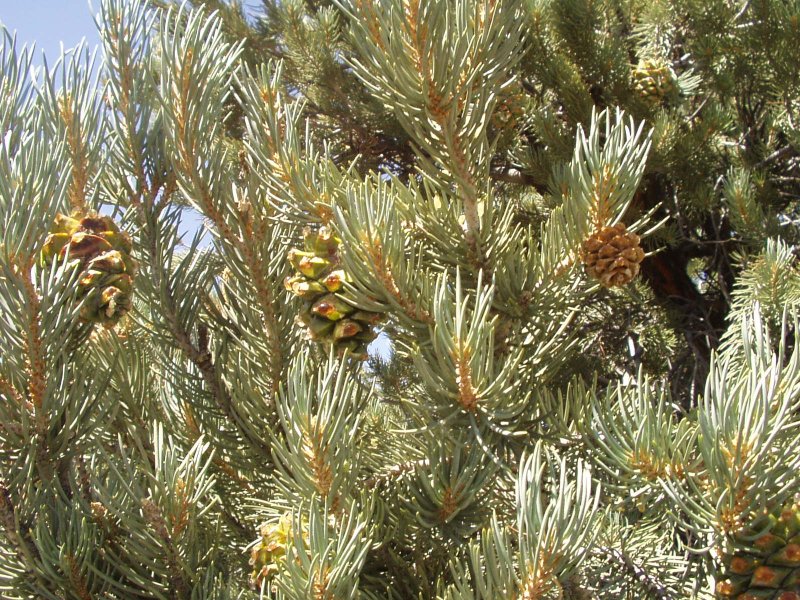
Single-leaf pinyon (Pinus monophylla) is an evergreen conifer native to the Great Basin and desert mountain ranges of western North America, unique among all pines for bearing solitary needles instead of bundled clusters.
It produces large, thin-shelled edible seeds known commercially as pinyon pine nuts. The tree demands arid conditions and sharp soil drainage, perishing quickly when planted in heavy, waterlogged garden soils.
Key Facts
- Needles: Single cylindrical needle per sheath, 2.5–6 cm long
- Mature height: 6–12 m (20–40 ft) with slow growth
- Water: Low; deeply drought-adapted once established
- Sun: Full sun (minimum 6 hours daily)
- Soil: Coarse, rocky, well-drained with neutral to alkaline pH
- Seed harvest: Edible kernels mature in late summer to autumn
Is Single-Leaf Pinyon Right for Your Garden?
Single-leaf pinyon suits arid, cold-winter climates with rocky or gravelly ground where most garden trees fail. Its slow growth rate of 5–15 cm (2–6 in) per year requires patience if you intend to harvest nuts or develop a windbreak.
This species is unsuited to regions with humid summers, high rainfall, or heavy clay soil. If your site stays boggy after rain or receives less than 6 hours of direct sun, select a different evergreen.
How to Identify Single-Leaf Pinyon Pine
You can identify Pinus monophylla by checking its foliage: it is the only pine species that holds one round needle per sheath rather than bunches of two to five.
The grey-green needles measure 2.5–6 cm (1–2.4 in) long, feel stiff and sharp, and curve inward toward the stem. The bark starts smooth and ash-grey on young trees, developing deep red-brown furrows and scaly plates as the trunk thickens.
Female seed cones measure 4–8 cm (1.6–3.1 in) across, maturing from green to tawny yellow-brown. Inside the thick cone scales sit large, wingless seeds measuring 10–17 mm (0.4–0.7 in) long, each enclosed in a thin shell.
Single-Leaf Pinyon Size and Growth Rate
A mature single-leaf pinyon reaches 6–12 m (20–40 ft) in height with a spread of 4–9 m (13–30 ft). Exceptional wild specimens occasionally reach 15 m (50 ft) over several centuries.
The tree develops a rounded, compact crown rather than the narrow spire of montane pines. Expect a growth rate of merely 7–12 cm (3–5 in) per year under domestic cultivation.
Light and Soil Requirements
Plant single-leaf pinyon in full sun where the foliage receives unobstructed light all day. Shaded saplings grow spindly and suffer severe dieback.
Soil drainage determines survival: the roots rot rapidly in soils that retain moisture.
- Drainage: Sharp, coarse gravel or decomposed granite
- Texture: Sandy loam to rocky scree
- Soil pH: 6.5 to 8.5 (neutral to naturally limestone-rich soils)
- Tolerance: Extreme heat, winter cold, and salt spray in dry air
How to Plant Nut Pine from Seed or Saplings
You can plant single-leaf pinyon by sowing unroasted, viable pine seeds 2 cm (0.8 in) deep in autumn, or by planting containerized saplings in early spring. Nursery saplings must have an intact taproot to establish properly.
Dig a hole as deep as the rootball and twice as wide, keeping native mineral soil without adding rich compost or peat moss. Water thoroughly at planting to settle the ground, then construct a wide mineral-gravel mulch ring 8 cm (3 in) deep around the base, keeping the mulch 10 cm (4 in) clear of the trunk.
Single-Leaf Pinyon Care and Water Schedule
Established trees survive entirely on natural precipitation, needing supplemental water only during extended winter or summer droughts. Overwatering is the most frequent cause of tree decline in residential settings.
- First two years: Water deeply every 2–3 weeks during dry summer stretches.
- Established trees: Provide 1 deep soaking per month only during severe drought.
- Fertilizer: Zero chemical fertilizer required; added nitrogen causes weak, disease-prone growth.
Pruning and Maintenance
Pruning should be limited to removing dead, broken, or crossed branches in late winter while the tree remains dormant. Single-leaf pinyon does not regenerate foliage from bare wood, so avoid cutting branches back past living green needles.
Never top a pinyon pine or sheer it into formal shapes. Sterilize pruning saws with 70% rubbing alcohol between cuts to prevent spreading pitch canker or fungal spores.
Pests, Diseases, and Tree Problems
The most destructive pest of this species is the pinyon ips bark beetle (Ips confusus), which targets trees stressed by drought or trunk damage. Healthy trees produce heavy pitch flows that push invading beetles out of entry holes.
- Ips beetle attack: Fine reddish boring dust in bark crevices; prune and burn infested wood immediately.
- Needle cast fungi: Yellow-brown banding on old needles; improve air circulation and eliminate overhead irrigation.
- Pinyon needle scale: Black, bean-shaped scales causing needle yellowing; apply horticultural oil in late winter before bud burst.
- Root rot (Phytophthora): Wilting crown caused by overwatering; eliminate supplemental irrigation and amend drainage.
Winter Hardiness and Cold Protection
Single-leaf pinyon withstands freezing conditions down to -29 °C (-20 °F) without foliage burn, matching USDA Hardiness Zones 5 through 9. Its rigid, waxy needles resist moisture loss during sub-zero winds.
Heavy, wet snow loads can bend young lateral limbs. Gently brush accumulated wet snow upward with a broom to relieve branch weight before wood splits occur.
Harvesting Pine Nuts and Edible Uses
The seeds inside mature cones are sweet, high-protein nut kernels traditionally eaten raw, roasted, or ground into meal by Indigenous peoples across the Great Basin. Bumper cone crops occur naturally every 3 to 7 years.
Harvest cones in late August or September when the scales turn yellowish-tan but have not fully opened to shed their kernels. Place closed cones in burlap sacks or shallow trays in a warm, dry room until the scales flare open, allowing the dark, thin-shelled seeds to fall out freely.
Frequently Asked Questions
Can you grow a pine tree from a pine nut?
Yes, you can sprout an unroasted, fresh pine nut by cold stratifying it in damp sand at 1–4 °C (34–40 °F) for 30–60 days before sowing in well-drained grit. Commercial grocery store pine nuts that have been roasted or shelled will not germinate.
Can you eat pine nuts from any pine tree?
No, not all pine seeds are edible; while about 20 pine species produce seeds large enough and palatable for human consumption, some pines contain bitter resins or toxic compounds. Single-leaf pinyon produces some of the largest, sweetest edible pine nuts in North America.
What is the closest nut to pine nut for cooking?
Raw cashews or blanched almonds provide the closest match in texture and mild, buttery sweetness when making pesto or baked goods. Walnuts and sunflower seeds are common budget substitutes, though they taste significantly more earthy.
What is pine nut syndrome and how do you treat it?
Pine nut syndrome (also known as pine mouth) is a temporary taste disturbance caused primarily by imported seeds of Pinus armandii, resulting in a bitter, metallic taste that lasts 2 to 14 days after eating. There is no medical cure, but the condition is harmless and resolves on its own without lingering health effects.
What are the benefits of eating roasted pine nuts?
Roasted pine nuts provide concentrated amounts of monounsaturated fats, dietary protein, magnesium, zinc, and vitamin E. Toasting them in a dry skillet at 160 °C (325 °F) for 3–5 minutes brings out their natural oils and aromatic qualities.
How does single-leaf pinyon differ from two-needle pinyon?
Single-leaf pinyon carries exactly one needle per sheath, whereas two-needle pinyon (Pinus edulis) bears pairs of needles. Single-leaf pinyon also exhibits superior drought tolerance and dominates the drier western Great Basin, while Pinus edulis thrives further east in Utah, Colorado, and New Mexico.
Information about traditional or historical uses is provided for educational interest only and is not medical advice. Do not use any plant to treat a condition without speaking to a qualified professional.
Sources & Verification
Taxonomy and distribution are checked against the databases below. Care guidance is written for cultivated species only and reviewed by our editor. How We Build Plant Profiles →
- Kew Plants of the World OnlineTaxonomy, distribution, and native range records.
- USDA Forest Service Fire Effects Information SystemBotanical description, ecology, soils, and growth habits.
- IUCN Red List of Threatened SpeciesConservation status listing as Least Concern.
- GBIF — Global Biodiversity Information Facilitytaxonomy, synonyms, occurrence records
- Wikipediageneral reference


