
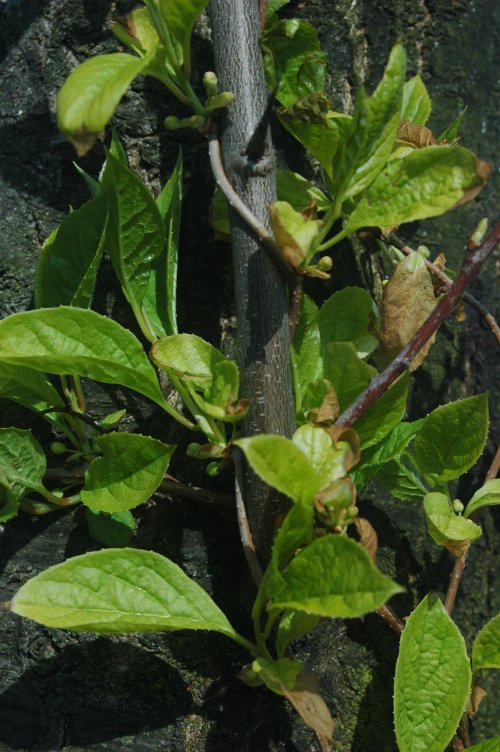
Five-flavor berry (Schisandra chinensis) is a deciduous woody vine native to the cool forest understories of Northern China, Korea, Japan, and the Russian Far East. It is recognized by its pendulous clusters of bright red berries that combine sweet, sour, salty, bitter, and pungent tastes.
Gardeners cultivate this perennial climber for its edible fruit and attractive foliage. Successful growth requires a sturdy trellis, consistent soil moisture, and protection from intense afternoon sun.
Key Facts
- Light: Partial shade or morning sun with shaded roots
- Hardiness: USDA Hardiness Zones 4 to 8
- Moisture: Constant moisture without waterlogging
- Harvest: Late summer to early autumn
- Yield: Production starts 3 to 4 years post-planting
Is Five-Flavor Berry Right for Your Garden?
Five-flavor berry grows best in cool temperate regions across USDA Hardiness Zones 4 through 8. This vine reaches 4 to 8 m (13 to 26 ft) in height and requires a sturdy support structure like a trellis, arbor, or chain-link fence.
Most wild vines are dioecious, meaning you need both male and female plants to set fruit. Selecting self-fertile cultivars ensures a single vine produces berries without a separate pollinator.
Identifying Schisandra chinensis Features
Schisandra chinensis stems are dark reddish-brown, woody twining shoots that climb without tendrils. The leaves are alternate, simple, elliptic to obovate, measuring 5 to 11 cm (2 to 4.3 in) long with finely dentate margins and light pink petioles.
In late spring, fragrant creamy white to faint pink flowers open in leaf axils, measuring 1 to 1.5 cm (0.4 to 0.6 in) across. Fertilized female flowers develop into hanging clusters 7 to 10 cm (2.8 to 3.9 in) long containing 20 to 40 round, bright red berries measuring 6 to 8 mm (0.24 to 0.31 in) in diameter.
Ideal Soil and Sun Exposure for Magnolia Vine
Plant five-flavor berry in a site that receives morning sun with afternoon shade to mimic its native forest edge habitat. The vine requires soil rich in organic matter with a pH between 5.5 and 6.5.
Root systems are shallow and sensitive to drying out or overheating. Apply mulch around the base to keep root zones cool and evenly moist throughout summer.
Planting and Propagating Magnolia Vine
Plant nursery-grown vines in early spring after hard frosts pass, placing root crowns 5 cm (2 in) deep into amended soil. Space individual vines 1.5 to 2 m (5 to 6.5 ft) apart along a support line.
Propagate five-flavor berry using softwood cuttings or seeds:
- Softwood cuttings: Take 10 to 15 cm (4 to 6 in) stem tips in early summer and root in humid sand-perlite media.
- Layering: Bend low stems to the ground in spring and cover with 5 cm (2 in) of soil until rooted.
- Seed propagation: Seeds require 120 days of cold stratification at 4 °C (39 °F) to break dormancy.
When planning a fruit garden, growers often pair five-flavor berry with other climbing crops such as hardy kiwi (Actinidia arguta), chocolate vine (Akebia quinata), or American bittersweet (Celastrus scandens).
Watering, Pruning, and Trellising Five-Flavor Berry
Provide 2.5 cm (1 in) of water weekly throughout the growing season whenever rainfall falls short. Never allow the upper soil layer to dry out completely.
Prune during dormant winter months (January to February):
- Remove thin, tangled, or damaged shoots near the base.
- Maintain 4 to 6 main structural stems per trellis section.
- Shorten lateral fruiting branches to 30 cm (12 in) length.
- Apply a 5 cm (2 in) layer of well-rotted manure or compost each spring.
Harvesting Schisandra Berries
Harvest red berries in late August to September when entire clusters turn uniform deep red and yield slightly to thumb pressure. Cut whole clusters off the stem using sharp hand shears to avoid tearing the skin.
Established vines aged 4 to 5 years yield 2 to 5 kg (4.4 to 11 lbs) of fruit per plant annually. Process or dry berries within 48 hours of picking to preserve quality.
Traditional Uses, Extracts, and Schisandra Tea
The Chinese name wu wei zi translates to five-flavor fruit because the skin is sweet, the flesh sour, the seeds bitter and pungent, and overall extracts leave a salty aftertaste. In Traditional Chinese Medicine (TCM), dried berries were traditionally used as an adaptogenic tonic to reduce fatigue and support organ function.
In Korea, the fruit is known as omija and traditionally steeped in cold water to make a tart tea or sweetened syrup. Modern preparations include liquid schisandra chinensis extract, dietary supplements, and fruit powder derived from concentrated berries.
Pests and Diseases Affecting Schisandra chinensis
Five-flavor berry has few pest problems in North America and Europe, but environmental stress causes leaf drop or poor fruiting. Monitor for common issues:
- Powdery mildew: Appears as white powder on upper leaf surfaces during humid summer months; space stems to improve air circulation.
- Root rot: Caused by heavy, saturated clay soils; construct raised beds if drainage is poor.
- Sunscald: Leaves scorch brown along edges when exposed to high noon heat; provide shade cloth or plant near eastern walls.
Drying and Storing Five-Flavor Berries
Dehydrate fresh berries at 60 °C (140 °F) for 12 to 18 hours until the flesh turns dark red, wrinkled, and leathery. Store dried berries in airtight glass jars away from direct light for up to 2 years.
Freshly picked fruit stores in sealed containers in a refrigerator at 2 to 4 °C (35 to 39 °F) for 3 to 5 days. For long-term storage, freeze intact clusters on flat trays before transferring them to freezer bags.
Year-Round Care for Five-Flavor Berry
| Spring | Apply 5 cm (2 in) of compost mulch around root zones and train new leader stems onto trellis wires as growth begins. |
|---|---|
| Summer | Water weekly with 2.5 cm (1 in) of water and monitor foliage for signs of afternoon heat stress or powdery mildew. |
| Autumn | Harvest full clusters of mature red berries in September and clear dropped foliage from around the base. |
| Winter | Prune dormant stems in January or February, removing weak shoots and heading back lateral fruit branches. |
Five-Flavor Berry Troubleshooting Guide
| What you see | Likely cause | What to do |
|---|---|---|
| Leaves scorching and turning brown at tips | Excessive direct afternoon sun or dry soil | Provide shade cloth during mid-day heat and maintain 2.5 cm of weekly water. |
| White powdery spots on leaf surfaces | High humidity combined with poor airflow | Prune crowded interior stems in winter and avoid overhead foliage watering. |
| Vine flowering but producing no fruit | Lack of male pollinator or unpollinated female vine | Plant a known self-fertile cultivar like 'Eastern Prince' or add a male plant nearby. |
| Yellowing lower leaves and weak growth | Waterlogged soil or nitrogen deficiency | Improve soil drainage and apply a balanced organic compost in early spring. |
Popular Schisandra chinensis Cultivars
- 'Eastern Prince' – self-fertile cultivar with heavy yields of large fruit
- 'Sadova No. 1' – Ukrainian selection known for cold hardiness and high sugar content
- 'Elegans' – compact vine cultivar suited for smaller trellises
Frequently Asked Questions
What is the common name for Schisandra chinensis?
The primary common name for Schisandra chinensis is five-flavor berry or Chinese magnolia-vine. In East Asia, it is known as wu wei zi in China and omija in Korea.
What are the benefits of Schisandra chinensis?
Five-flavor berry has traditionally been used as an adaptogen to help the body respond to stress and support liver health. Modern research explores its high antioxidant concentration, though consult a medical professional before taking supplements.
How do you make Schisandra chinensis tea?
Steep 1 to 2 tablespoons of dried berries in cold or hot water for at least 30 minutes, then strain out the fruit. Cold steeping for 12 hours yields a bright red tea with less bitterness than hot water extraction.
What are the side effects of Schisandra chinensis extract?
Schisandra extracts may cause minor digestive upset, heart burn, or decreased appetite in sensitive individuals. Pregnant women should avoid using schisandra supplements because it may stimulate uterine contractions.
How do Five-flavor berry and Japanese honeysuckle differ?
Five-flavor berry (Schisandra chinensis) produces heavy clusters of bright red spherical berries from creamy white spring flowers. Japanese honeysuckle (Lonicera japonica) produces dark purple to black berries and fragrant tubular flowers that turn yellow with age.
Information about traditional or historical uses is provided for educational interest only and is not medical advice. Do not use any plant to treat a condition without speaking to a qualified professional.
Sources & Verification
Taxonomy and distribution are checked against the databases below. Care guidance is written for cultivated species only and reviewed by our editor. How We Build Plant Profiles →