
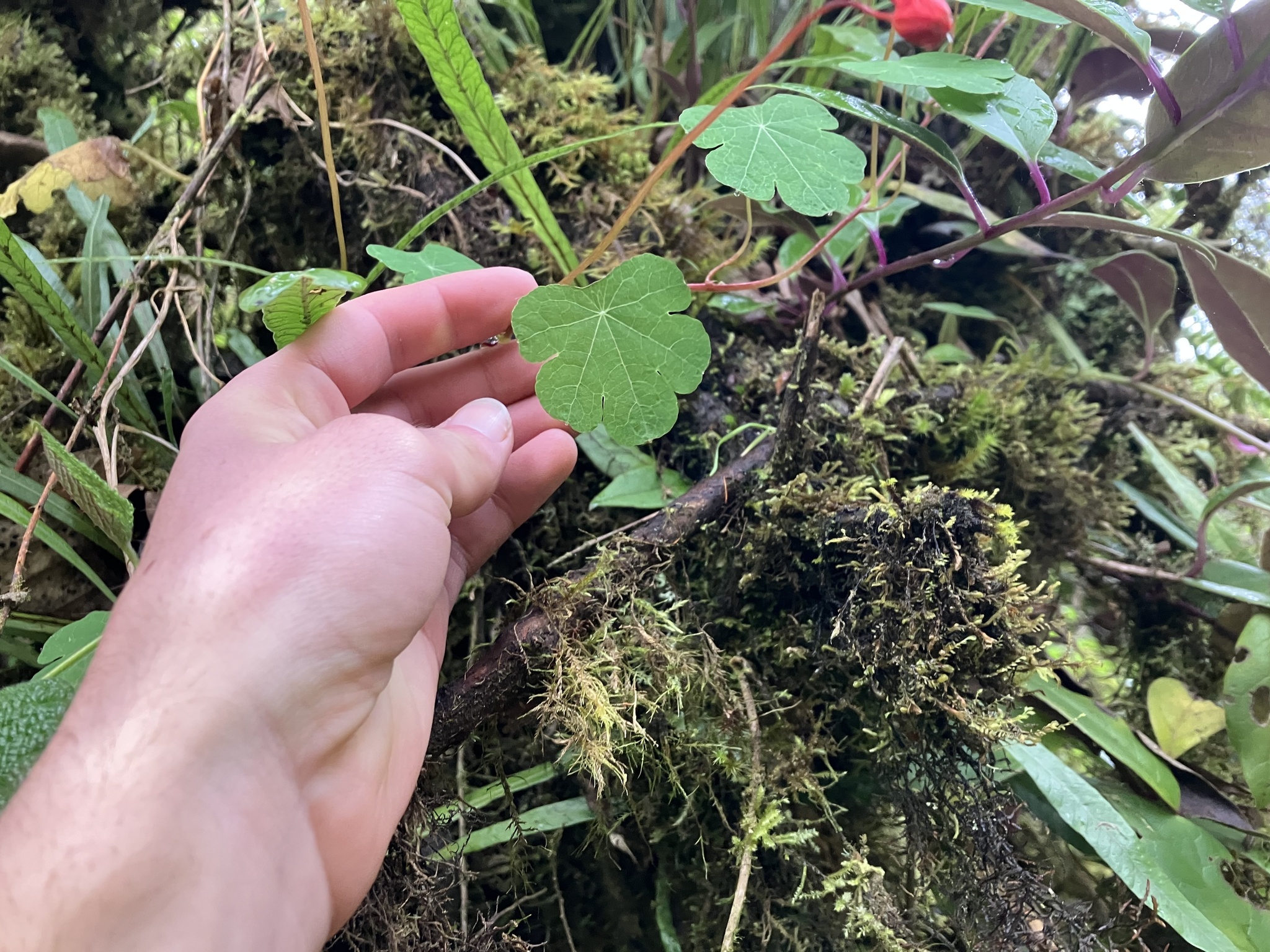
Mashua (Tropaeolum tuberosum) is a perennial scrambling vine native to high-altitude valleys in the Andes, grown for its high-yielding, edible tubers and spicy foliage. The plant belongs to the nasturtium family and shares the same pungent, peppery mustard oil profile across its stems and roots.
Because mashua initiates tuber production strictly under short day lengths in autumn, growers in temperate climates must keep vines frost-free until late November to secure a harvest.
Key Facts
- Planting time: plant tubers outdoors in spring after last frost
- Tuber initiation: begins when day length drops below 12 hours
- Harvest window: November to December following first light frosts
- Height: 2–4 m (7–13 ft) climbing habit needing support
- Hardiness: foliage dies at 0 °C (32 °F); tubers hardy to -5 °C (23 °F)
Growing Mashua in Temperate Gardens
Mashua yields reliably if you provide a frost-free growing window through late autumn. Because it originates at elevations of 2,500 to 4,000 m (8,200 to 13,100 ft) in the Andes, the crop thrives in cool, mild summers and struggles when daytime temperatures consistently exceed 28 °C (82 °F).
Unlike standard root crops, tuberization does not start in mid-summer. Swelling begins only after the autumn equinox when day lengths dip below 12 hours, meaning the final two months of the season dictate your entire yield.
- Requires 6 to 8 months of cool, frost-free weather from sprout to harvest.
- Tolerates partial afternoon shade better than intense, dry heat.
- Natural glucosinolates in the foliage repel common cabbage caterpillars and nematodes.
Identifying Mashua Vines, Leaves, and Tubers
A mature mashua plant forms a 2 to 4 m (7 to 13 ft) twining vine with smooth, circular peltate leaves divided into 3 to 5 shallow lobes. The leaf petioles coil around wire supports or neighbouring brush, functioning like climbing tendrils.
From August through October, long-stalked solitary flowers emerge from leaf axils. Each bloom measures 3 to 5 cm (1.2 to 2.0 in) long, featuring a deep scarlet or fiery orange calyx with a straight backward spur and bright yellow or orange inner petals.
The underground tubers grow 5 to 15 cm (2 to 6 in) long with prominent, sunken buds resembling eyes. Skin colours vary by variety from pale ivory and yellow to dark violet, crimson, or nearly black, often splashed with contrasting purple streaks around the eyes.
Soil and Sunlight Requirements
Mashua requires fertile, moisture-retentive soil with a pH between 5.5 and 7.0 and full sun in cool climates. In regions with baking summer heat, plant it in east-facing positions that catch morning sun but stay protected from midday scorching.
Incorporate generous amounts of well-rotted compost or leaf mould prior to planting, but avoid fresh manure or excessive synthetic nitrogen. Surplus nitrogen forces vigorous foliage growth up to 5 m (16 ft) at the expense of root bulking in autumn.
- Prefers loose loam or sandy loam that allows clean tuber expansion without clods.
- Requires uninterrupted drainage; soggy, waterlogged soil rots the seed tubers in spring.
- Maintain steady root moisture throughout July and August to prevent premature heat dormancy.
How to Plant Mashua Tubers
Plant dormant tubers 8 to 10 cm (3 to 4 in) deep horizontally after all risk of spring frost has passed. For an earlier start in colder climates, pot tubers indoors in April using 2-litre pots and plant them out in late May.
Space individual planting sites 60 to 90 cm (24 to 36 in) apart in rows spaced 1 m (3.3 ft) apart. As the young shoots reach 20 cm (8 in) tall, mount sturdy canes or trellising immediately.
- Select firm seed tubers showing tiny emerging pink or purple eyes at the crown.
- Lay the tuber flat on its side in the furrow to encourage shoots from multiple nodes.
- Hill soil around the base of the stems twice in summer, similar to potato cultivation, to shelter expanding tubers.
Watering and Climbing Support
Provide climbing trellises at least 2 m (6.5 ft) tall and deliver 25 mm (1 in) of water per week during the summer months. Without vertical support, the brittle stems scramble along the ground, rooting at nodes and producing hundreds of pencil-thin, unmarketable tubers.
Keep the root zone consistently moist but never waterlogged through the peak summer heat. If dry spells cause leaves to wilt or drop, growth stalls and delays the onset of flowering and subsequent tuber development.
- Use pea netting, wire stock fencing, or hazel pole wigwams to carry the heavy autumn vine canopy.
- Apply a 5 cm (2 in) mulch of straw, wood shavings, or bark around the base to insulate shallow roots from summer heat.
- Cease overhead irrigation by mid-autumn to reduce the risk of botrytis in dense foliage.
When and How to Harvest Mashua
Harvest tubers in November or December, roughly 2 to 3 weeks after the first frost has killed the top foliage. Light frosts blacken the leaves, signalling the plant to transfer all remaining sugars from the vines into the tubers.
Use a flat-tined garden fork, inserting it at least 30 cm (12 in) away from the base of the stems to avoid piercing the tender skins. Lift the central clump gently; high-performing plants yield between 1.5 and 3 kg (3.3 to 6.6 lb) of tubers per station.
- Leave the tubers in the ground during light autumn frosts; cold weather sweetens the flesh.
- Cut off the blackened vines at soil level before digging to clear working space.
- Handle freshly dug tubers with care, as their skins are thin, crisp, and easily bruised.
How to Eat and Cook Mashua
Cook mashua tubers by roasting them at 200 °C (400 °F) for 35 to 45 minutes or boiling them in stews to mellow their strong isothiocyanate compounds. Raw tubers have an intense, peppery, turnip-like bite that softens significantly into a smooth, slightly anise-scented texture upon heat exposure.
In the Andes, farmers expose harvested tubers to sunlight for 3 to 7 days before cooking. This curing step hydrolyses starches into sugars, dramatically decreasing sharpness and enhancing sweetness.
- Roast whole with olive oil, garlic, and thyme until the skin blisters and the interior turns buttery.
- Dice and simmer in hearty vegetable or meat soups alongside Andean roots like oca (Oxalis tuberosa).
- Harvest the young green leaves and edible flowers throughout summer to add peppery heat to fresh salads.
- Pickle young, crisp tubers in spiced cider vinegar for a sharp condiment similar to capers.
How to Store Mashua Tubers Over Winter
Store cured, unwashed tubers in boxes of dry sand or peat at 2 to 5 °C (36 to 41 °F) in a dark, frost-free location. Under these conditions, sound tubers remain dormant for 4 to 6 months until spring replanting.
Discard any tubers cut by tools or damaged by slugs before packing, as fungal rots can spread through winter storage boxes within weeks.
- Dry the tubers in a shaded, well-ventilated area for 48 hours to dry surface moisture.
- Layer them in crates with dry wood shavings, sawdust, or clean sand so they do not touch.
- Check the boxes monthly, removing any shrivelling or decaying specimens immediately.
- Reserve your best, medium-sized tubers showing vibrant markings to serve as seed tubers for the following spring.
Mashua in Companion Planting and Pest Control
Intercropping mashua alongside potatoes (Solanum tuberosum) provides natural biocidal protection against root-knot nematodes and fungal blights. Andean farming systems have paired these crops for centuries to reduce pest pressure without commercial sprays.
The plant releases glucosinolates and sulfur metabolites into the surrounding soil and air, deterring many generalist insects. Garden pests that normally decimate brassicas, such as the white butterfly, rarely damage mashua foliage.
Plant mashua around the perimeter of brassica beds or close to climbing runner beans (Phaseolus coccineus). Avoid planting it directly under the dense shade of sweetcorn (Zea mays), which restricts the daylight hours needed for summer vegetative growth.
Frequently Asked Questions
What is mashua in English?
Mashua is the common English and Spanish name for Tropaeolum tuberosum, occasionally referred to as the tuberous nasturtium. It is an edible Andean root crop belonging to the same botanical genus as garden nasturtiums.
Is mashua perennial?
Yes, mashua is a botanical perennial that survives winter via underground tubers. In zones where the ground freezes deeply, growers treat it as an annual crop by lifting the tubers each autumn and replanting them in spring.
How to grow mashua in the UK?
Plant tubers in 2-litre pots indoors in April, then transplant them outside into full sun in late May after the final frost. Provide strong 2 m (6.5 ft) climbing supports and harvest tubers in late November or December once the initial frosts kill back the vines.
What is mashua negra?
Mashua negra is a dark-skinned, purple-to-black landrace prized in Andean folk medicine and cuisine. It contains elevated levels of anthocyanins and glucosinolates, giving it a deeper colour and bolder, more pungent flavour than yellow varieties.
Does mashua suppress libido?
Historically, Spanish chroniclers recorded that Inca emperors fed mashua to their soldiers to suppress sexual desire during long military campaigns. Laboratory studies on male rodents have observed temporary decreases in testosterone and sperm counts, though it is not a medical treatment.
Information about traditional or historical uses is provided for educational interest only and is not medical advice. Do not use any plant to treat a condition without speaking to a qualified professional.
Sources & Verification
Taxonomy and distribution are checked against the databases below. Care guidance is written for cultivated species only and reviewed by our editor. How We Build Plant Profiles →
