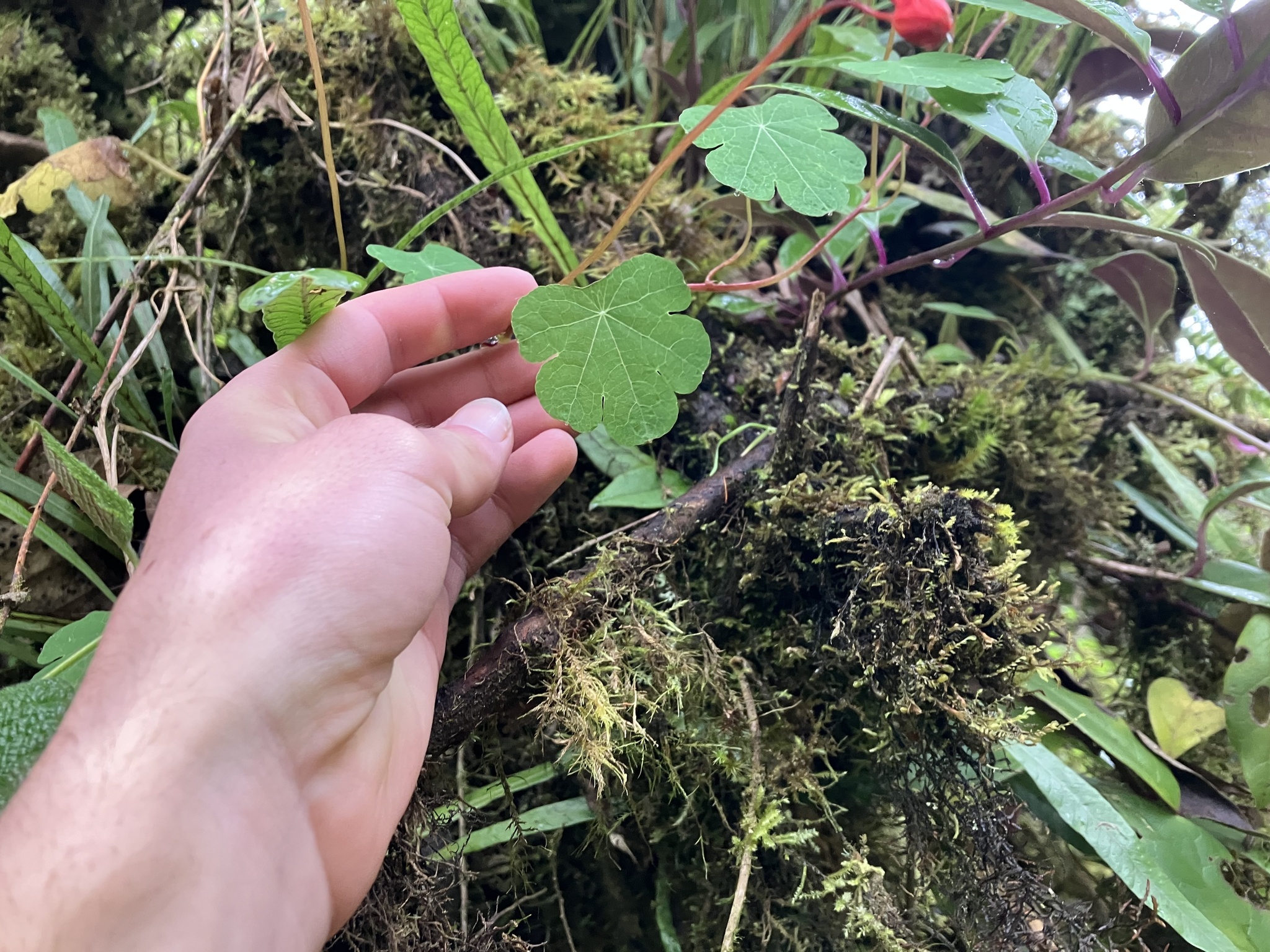
Garden nasturtium (Tropaeolum majus) is a tender annual native to the Andes, known for its round, shield-shaped leaves and bright, spurred blossoms. Every part of the plant above the soil line is edible, offering a crisp texture and a peppery mustard flavour.
Sow this plant in poor, unfertilised soil for heavy flowering. Rich soil and nitrogen fertilisers stimulate abundant green foliage while halting flower bud development.
Key Facts
- Light: Full sun (at least 6 hours daily)
- Water: Soak deeply once soil dries 5 cm (2 in)
- Soil: Low-fertility, well-draining sandy or loamy soil
- Edibility: Leaves, petals, nectar spurs, and green seeds
- Sowing Depth: 1.5 cm (0.6 in) deep after final frost
Growing Nasturtium: What to Expect
Nasturtium grows rapidly from large seeds into a sprawling ground cover or climbing vine within 50 to 60 days of germination. It fits raised beds, rockeries, boundary fences, and patio containers where it can spill over edges.
The plant thrives on minimal intervention, requiring sparse watering and zero fertilisation once established in garden soil. Gardeners frequently use it in vegetable allotments as an sacrificial trap crop that lures sap-feeding insects away from vulnerable brassicas.
Nasturtium Plant and Flower Identification
A nasturtium is identified by its orbicular, peltate leaves measuring 5-15 cm (2-6 in) across with the stalk joined directly to the centre of the blade. The foliage resembles miniature water lily pads with pale veins radiating from the centre.
The flowers measure 3-6 cm (1.2-2.4 in) across and feature five rounded petals, with the lower three often marked by darker claw marks or hairs near the throat. At the rear of the flower, an elongated, tubular nectar spur extends 2.5-4 cm (1-1.6 in). Stems are succulent, pale green, and either semi-erect (dwarf cultivars reaching 30 cm / 12 in) or trailing (climbing up to 3 m / 10 ft using twisting petioles).
Ideal Sunlight and Soil Conditions
Position nasturtiums in a location receiving at least 6 hours of direct sunlight per day to encourage maximum flower production. Plants grown in partial shade produce large, pale green foliage but very few blossoms.
The planting substrate must be porous and lean.
- Texture: Gritty, sandy loam with low organic matter.
- Drainage: High porosity; standing water rots the fleshy stem bases.
- Fertility: Unamended soil; added compost or manures causes lush leaf growth and no flowers.
- pH level: Neutral to slightly acidic between 6.0 and 7.5.
Nasturtium Planting Guide from Seed
Direct sow nasturtium seeds 1.5 to 2 cm (0.6 to 0.8 in) deep outdoors two weeks after your region’s last spring frost date. Nasturtium seeds require total darkness to break dormancy and will germinate within 7 to 14 days at soil temperatures around 15-20 °C (59-68 °F).
Soak the wrinkled, chickpea-sized seeds in tepid water for 8 to 12 hours before sowing to soften their hard outer seed coat. Space bush varieties 20 to 30 cm (8 to 12 in) apart, and space trailing varieties 40 to 60 cm (16 to 24 in) apart to give their spreading vines adequate airflow.
Nasturtium Care Instructions: Water, Feeding, and Pots
Water nasturtiums deeply only when the top 5 cm (2 in) of soil feels dry to the touch. The fleshy stems store modest water reserves, making established plants tolerant of short drought periods in open ground.
For container cultivation:
- Pot sizing: Use a container at least 25 cm (10 in) wide with multiple base drainage holes.
- Potting mix: Blend two parts standard peat-free potting compost with one part coarse perlite or horticultural grit.
- Nutrient management: Do not apply all-purpose liquid fertilizers; apply a half-strength high-potassium tomato feed once in midsummer only if blooming stalls.
- Indoor care: Keep indoor pots on a south-facing windowsill at 16-21 °C (60-70 °F) with fresh air movement.
Pruning and Harvesting Nasturtium Leaves and Flowers
Pinch out the terminal growing tips when seedlings reach 15 cm (6 in) tall to force compact, multi-branched growth. Snip spent flowers back to the main stem every few days to prevent early seed formation and prolong the bloom window until autumn.
Harvest leaves and flowers in the cool morning using clean scissors. Both young leaves and petals can be eaten immediately or stored in the refrigerator between damp paper towels for up to 4 days.
Nasturtium Care for Yellow Leaves and Pests
Yellow foliage on nasturtium indicates waterlogged soil or nitrogen excess, which smothers the tender root system and damages the succulent stems. Relocate container plants out of heavy rainfall areas and let the topsoil dry completely between watering cycles.
Garden pests target nasturtium foliage regularly:
- Black bean aphids: Form dense clusters beneath leaves; blast them off with a sharp water spray or pinch off infested shoot tips.
- Caterpillars: Large and small cabbage white butterflies lay egg clusters on the leaf undersides; handpick caterpillars at dusk.
- Flea beetles: Chew tiny shot-holes through juvenile leaves; keep soil around seedlings damp to deter them.
- Bacterial wilt: Causes rapid daytime wilting and stem collapse in heavy, hot soils; discard infected plants into household waste.
Managing Nasturtium Through Winter and Frost
Nasturtiums collapse and die at temperatures below 0 °C (32 °F), as their succulent tissues cannot survive freezing. In temperate regions, clear the blackened vines after the first autumn freeze and add them to the compost bin.
In frost-free zones (USDA zones 9 to 11), garden nasturtium behaves as a short-lived perennial, continuing through mild winter months before declining during hot, humid summer spells. In cold climates, allow late-season flowers to drop seed onto bare soil; viable seeds regularly self-sow and emerge unassisted the following spring.
Nasturtium Through the Seasons
| Spring | Sow seeds directly into garden beds 1.5 cm (0.6 in) deep two weeks after the final frost. Water regularly until seedlings emerge, then thin dwarf types to 25 cm (10 in) apart. |
|---|---|
| Summer | Inspect leaf undersides weekly for black bean aphids and cabbage white caterpillars. Deadhead fading blossoms twice a week and harvest peppery flowers for salads. |
| Autumn | Gather plump green seeds for pickling as faux capers, or allow them to dry on the vine to save for spring. Pull down frost-killed vines after the first freezing night. |
| Winter | Store thoroughly dried seeds in paper envelopes in a dark place at 10-15 °C (50-59 °F). Clean and disinfect outdoor pots and trellises before spring sowing. |
Common Nasturtium Problems and Solutions
| What you see | Likely cause | What to do |
|---|---|---|
| Rapidly yellowing lower leaves | Overwatering or poorly draining soil | Cease watering until the top 5 cm (2 in) of soil dries out, and ensure container drainage holes are clear. |
| Huge green foliage but no flowers | High nitrogen soil or fertiliser application | Stop all fertilisation and flush container soil with clear water to leach out excess nitrates. |
| Clusters of tiny black insects coating stems | Black bean aphid infestation | Dislodge colonies with a strong jet of water from a garden hose or prune heavily infested branch tips. |
| Skeletonised foliage with chewed margins | Cabbage white butterfly caterpillars | Inspect the undersides of leaves and handpick the green and yellow caterpillars into soapy water. |
Distinct Nasturtium Cultivars to Grow
- ‘Alaska’ – cream-marbled foliage with mixed bright flowers
- ‘Empress of India’ – compact mounding habit, dark blue-green leaves, crimson flowers
- ‘Black Velvet’ – rare deep mahogany-black blooms on tidy dwarf mounds
- ‘Jewel of Africa’ – vigorous climbing vine with variegated leaves and mixed blooms
- ‘Tom Thumb’ – miniature bush type reaching only 20 cm high
Companion Planting with Garden Nasturtium
Plant nasturtium adjacent to crops prone to insect damage to serve as a biological barrier and trap crop. Its peppery volatile oils confuse airborne pests, while its stems draw sap-suckers away from crop canopies.
Common companion species include:
- Cabbage (Brassica oleracea): Absorbs the bulk of cabbage white butterfly eggs, keeping brassica heads clean.
- Zucchini (Cucurbita pepo): Provides living ground cover beneath large squash leaves to shade soil and conserve moisture.
- Tomato (Solanum lycopersicum): Deters whiteflies and masks tomato foliar scent.
- Common bean (Phaseolus vulgaris): Traps black aphids along row ends before they colonise bean vines.
Frequently Asked Questions
What is the difference between Tropaeolum majus and Nasturtium officinale?
Garden nasturtium (Tropaeolum majus) belongs to the Tropaeolaceae family and grows as a terrestrial garden annual, whereas watercress (Nasturtium officinale) belongs to the Brassicaceae family and grows as a semi-aquatic plant in flowing streams. Both share a peppery mustard flavour due to glucosinolate compounds, but they have distinct foliage, flowers, and growing conditions.
Can you grow nasturtium indoors?
Yes, you can grow dwarf nasturtium indoors on an unshaded south-facing windowsill that provides at least 6 hours of direct sun. Ensure the room stays cool, around 15-18 °C (59-65 °F), as dry indoor heating and poor ventilation encourage rapid aphid attacks.
Are nasturtiums completely edible?
Yes, all parts of the plant growing above ground are edible, including leaves, flowers, nectar spurs, and unripe seeds. They carry a peppery radish taste that intensifies as plants receive stronger sun and less water.
Why is nasturtium mentioned in skin care?
Nasturtium extracts have traditionally been used in topical rinses and tonics for oily skin and hair due to their high vitamin C content and antimicrobial glucotropaeolin compounds. Modern cosmetic preparations sometimes incorporate the leaf extract into balancing skin cleansers and scalp washes.
How do you harvest nasturtium seeds to pickle?
Pick the seeds while they are still plump, firm, and bright green, before they turn pale yellow or drop to the ground. Submerge these fresh green seeds in an 8% salt brine for 24 hours, rinse, and jar them in hot vinegar spiced with dill and peppercorns as caper substitutes.
Information about traditional or historical uses is provided for educational interest only and is not medical advice. Do not use any plant to treat a condition without speaking to a qualified professional.
Sources & Verification
Taxonomy and distribution are checked against the databases below. Care guidance is written for cultivated species only and reviewed by our editor. How We Build Plant Profiles →
- Kew Plants of the World OnlineTaxonomy, distribution, and native status.
- Royal Horticultural SocietyCultivation data, soil requirements, and garden pests.
- North Carolina State Extension Plant ToolboxEdibility, physical characteristics, and sun tolerance.
- GBIF — Global Biodiversity Information Facilitytaxonomy, synonyms, occurrence records
- Wikipediageneral reference