Custard Apple Family Plants: Annonaceae Examples and Identification
11 plant profiles · Explore the Annonaceae family, including soursop, cherimoya, and ylang-ylang. Learn identification traits, fruiting habits, and warm-climate growing needs.
The Annonaceae family, commonly known as the custard apple family, consists of tropical and subtropical trees, shrubs, and lianas native primarily to lowland tropical regions in Africa, Asia, and the Americas. Members of this family share key structural traits, including aromatic crushed foliage, alternate simple leaves with smooth margins, and trimerous flowers featuring petals arranged in multiples of three. Most species require warm ambient temperatures above 15 °C (59 °F) and well-draining soil to establish.
Fruiting species in this family produce aggregate berries or soft syncarps with sweet, custard-like pulp. If you want edible fruit for orchard or container planting, option choices include the cherimoya (Annona cherimola), sugar apple (Annona squamosa), soursop (Annona muricata), and custard apple (Annona reticulata). Cherimoya adapts best to cooler subtropical upland zones, whereas soursop demands high tropical humidity. In flooded or coastal soils where other fruit trees fail, alligator apple (Annona glabra) provides extreme water tolerance.
Beyond edible fruit production, the family contains major ornamental and spice plants. Ylang-ylang (Cananga odorata) produces scented yellow blossoms harvested for essential oils, reaching mature heights up to 12 m (40 ft). False ashoka (Polyalthia longifolia) grows in a tall columnar shape commonly selected for privacy screens, while African nutmeg (Monodora myristica) produces aromatic seeds used historically as a spice. Selecting the correct plant depends on your local frost risk, ambient humidity, and available root depth.

African Nutmeg
Monodora myristica
Alligator Apple
Annona glabra
💧 High

Biriba
Annona mucosa
☀️ Full Sun 💧 High
Cherimoya
Annona cherimola
☀️ Full Sun 💧 Moderate
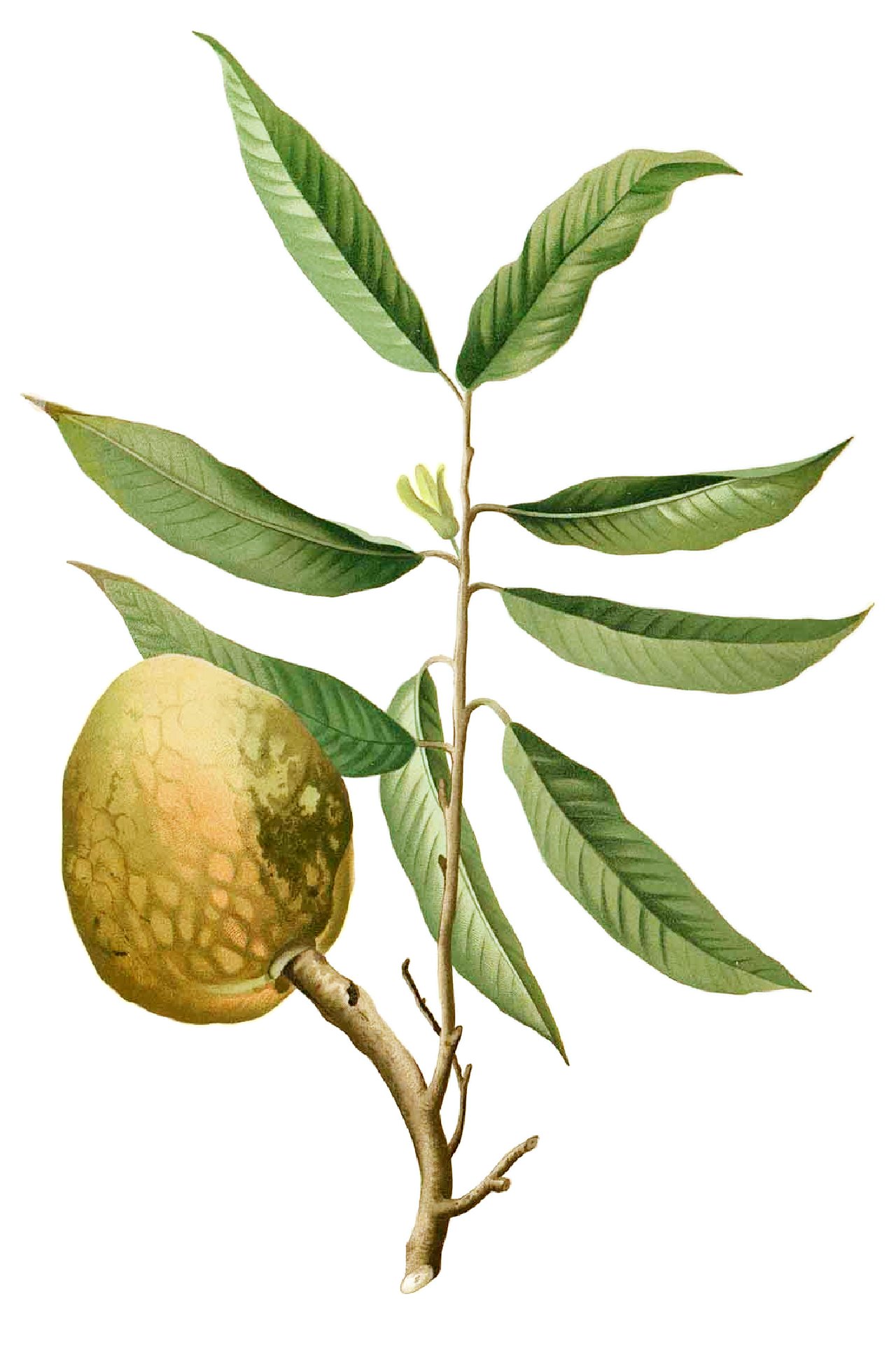
Custard Apple
Annona reticulata
☀️ Full Sun 💧 Moderate

Ethiopian Pepper
Xylopia aethiopica
☀️ Partial Sun 💧 High
False Ashoka
Polyalthia longifolia
☀️ Full Sun 💧 Moderate

Soursop
Annona muricata
☀️ Full Sun 💧 Moderate

Sugar Apple
Annona squamosa
☀️ Full Sun 💧 Moderate

Wild Custard-Apple
Annona senegalensis
☀️ Full Sun 💧 Low

Ylang-Ylang
Cananga odorata
☀️ Full Sun 💧 High
Common Questions
What plants belong to the Annonaceae family?
The Annonaceae family includes tropical trees and shrubs such as soursop, cherimoya, sugar apple, ylang-ylang, and false ashoka.
What are the key identification features of Annonaceae?
Plants in this family feature three-part flowers, crushed leaves with a distinct aromatic scent, and fleshy aggregate fruits containing dark seeds.
Can Annonaceae trees tolerate freezing temperatures?
Most Annonaceae species suffer severe foliage damage below 0 °C (32 °F), though high-altitude species like cherimoya survive short light frosts.
Are Annonaceae seeds safe to eat?
Seeds of Annonaceae fruits are inedible and toxic due to high concentrations of neurotoxic acetogenins, though the surrounding pulp is edible.