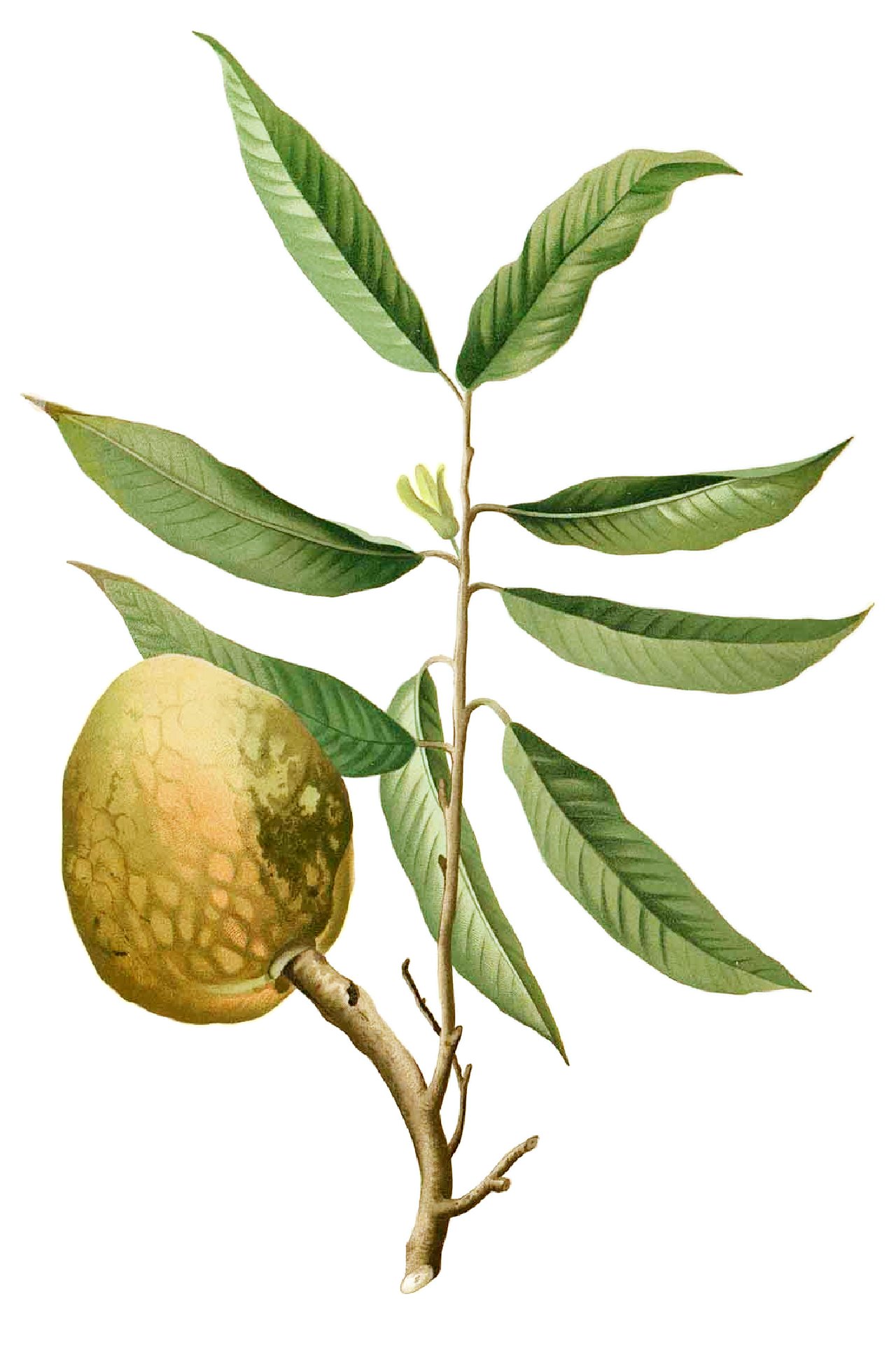
Cherimoya is a fast-growing, semi-deciduous tree native to the high-altitude Andean valleys of Ecuador, Peru, and Bolivia. It is known for its large fruit with green, scaly skin and a white, creamy flesh that tastes like a blend of pineapple, banana, and strawberry. Annona cherimola belongs to the Annonaceae family and thrives in Mediterranean climates where summers are cool and winters are frost-free.
Successful fruit production requires specific conditions, as the flowers rarely self-pollinate effectively without human intervention. This tree fails in areas with high tropical humidity or extreme desert heat, preferring coastal influences and well-drained soil. It serves as a productive fruit crop for patient growers who can manage its unique pollination schedule.
Key Facts
- Hardiness: USDA zones 9b to 11
- Light: Full sun with protection from hot winds
- Water: Regular deep watering, especially during fruit set
- Soil: Well-drained, sandy loam with pH 6.5-7.5
- Fruit: Ripens 5-8 months after pollination
- Pollination: Often requires manual hand-pollination
Is Cherimoya the Right Tree for Your Garden?
Cherimoya requires a specific microclimate that mimics the cool highland tropics, characterized by moderate daytime temperatures and cool nights. It is best suited for coastal California, parts of the Mediterranean, and high-altitude tropical regions. The tree is sensitive to frost, which kills young saplings, and extreme heat above 35 °C (95 °F), which causes fruit to drop or fail to set.
You should choose this tree if you have the time to perform hand-pollination, as natural pollinators like nitidulid beetles are often absent in domestic gardens. It is a semi-deciduous species, meaning it may drop its leaves briefly in early spring before new growth begins. Do not plant it in heavy clay or areas prone to flooding, as the root system is highly susceptible to rot.
Identifying the Cherimoya Tree and Fruit
The Cherimoya tree is identifiable by its large, velvety leaves and green, heart-shaped fruit with distinctive scale-like patterns. Leaves are ovate and measure 7-25 cm (3-10 in) long, with a dull green upper surface and a pale, fuzzy underside. The bark is grey-brown and relatively smooth, while the young branchlets are covered in reddish-brown hairs.
The flowers are inconspicuous, appearing as 2-3 cm (1 in) long, fleshy, drooping tubes with three outer greenish petals. The fruit is a collective syncarp, weighing between 250 g and 2 kg (0.5-4.5 lbs). Inside, the flesh is snowy white and contains 20-40 hard, black, bean-like seeds that are approximately 1-2 cm (0.5 in) long. The skin texture varies by cultivar:
- Smooth: showing only faint U-shaped outlines
- Impressa: covered in “fingerprint” indentations
- Tuberculata: featuring conical or wart-like protrusions
- Umbonata: having rounded protuberances
Ideal Site and Climate Requirements
Cherimoya trees need a sheltered location protected from strong, dry winds which can desiccate the foliage and bruise the heavy fruit. They thrive in maritime climates where the temperature remains between 7-27 °C (45-80 °F) for most of the year. While they can tolerate brief drops to -1 °C (30 °F), sustained freezing will kill the tree.
Choose a site with deep, well-draining soil at least 1.5 m (5 ft) deep. The tree has a shallow root system, so it benefits from a thick layer of organic mulch to keep the soil temperature stable. Avoid planting near pavement or walls that radiate excessive heat, as this can cause the pollen to dry out before fertilization occurs.
How to Plant and Space Cherimoya
Plant Cherimoya trees in the late winter or early spring while they are semi-dormant or just beginning to show new buds. Space trees at least 6-8 m (20-26 ft) apart to allow for their wide, spreading canopy and to ensure adequate air circulation. If you are growing from a container, ensure the graft union remains at least 5-10 cm (2-4 in) above the soil line to prevent rot.
Follow these steps for successful planting:
- Dig a hole twice as wide as the root ball but no deeper.
- Loosen the soil on the sides of the hole to help roots penetrate.
- Fill the hole with native soil mixed with a small amount of compost.
- Water deeply immediately after planting to settle the soil.
- Apply a 10 cm (4 in) layer of wood chips or straw mulch, keeping it away from the trunk.
Watering and Fertilizing Cherimoya Trees
Maintain consistent soil moisture from flowering through harvest to prevent fruit cracking and drop. During the active growing season (spring through autumn), water deeply every 7-14 days depending on soil type and temperature. Mature trees require more water than younger ones, but the soil must never be waterlogged, which invites Phytophthora root rot.
Fertilize three times a year in mid-winter, early summer, and late summer using a balanced 10-10-10 NPK fertilizer. A mature tree should receive approximately 2 kg (4.5 lbs) of fertilizer per year, split across these applications. Supplement with micronutrients like zinc and manganese if leaves show signs of chlorosis (yellowing between the veins).
Pruning and Hand-Pollination for Fruit
Pruning should be done in late winter during the dormant period to maintain an open-center shape and keep the tree under 4 m (13 ft) for easier harvesting. Remove any dead or crossing branches and thin out the center of the canopy to allow light to reach the interior. This also makes the flowers more accessible for hand-pollination.
Hand-pollination is necessary because the flowers are protogynous, meaning the female parts are receptive before the male parts release pollen. Follow this process:
- Collect pollen in the late afternoon (4:00 PM – 8:00 PM) from flowers in the male stage (petals wide open).
- Store pollen in a small vial in the refrigerator if needed, or use immediately.
- Apply the pollen the next morning (8:00 AM – 11:00 AM) to flowers in the female stage (petals only slightly open).
- Use a small camel-hair brush to transfer the pollen onto the central cone of the flower.
Common Pests and Fruit Problems
The most frequent pests for Cherimoya are mealybugs and ants, which often work together to damage the fruit. Ants protect the mealybugs from predators while the mealybugs suck sap and excrete honeydew, leading to sooty mold. Use sticky bands around the trunk to prevent ants from climbing and apply neem oil for minor mealybug infestations.
Fruit-specific problems include:
- Fruit Spotting: Caused by anthracnose fungi during wet weather; thin the canopy for airflow.
- Seed Chalcid: A small wasp that lays eggs in the fruit; remove and destroy mummified fruit.
- Splitting: Occurs when heavy rain follows a dry spell; maintain consistent irrigation.
- Internal Browning: Usually caused by over-ripening or calcium deficiency in the soil.
How to Eat Cherimoya and Culinary Uses
Wait until the fruit yields slightly to gentle thumb pressure, similar to a ripe avocado, before eating. The skin will often turn from a bright green to a dull, slightly brownish-green when fully ripe. Chill the fruit in the refrigerator for 1-2 hours before serving to enhance the custard-like experience.
To eat, cut the fruit in half lengthwise and scoop out the white flesh with a spoon, being careful to spit out and discard the toxic black seeds. The flesh can be eaten raw, blended into smoothies, or used to make sorbets and ice creams. In the Andes, it was traditionally used as a digestive aid and a source of Vitamin C, though the seeds were historically used as an insecticide when crushed.
Year-Round Cherimoya Tree Management
| Spring | Prune the tree while dormant in early spring. Begin hand-pollination as soon as the first flowers appear in mid-to-late spring. |
|---|---|
| Summer | Apply the second dose of fertilizer. Maintain consistent deep watering and check for mealybugs under the leaves. |
| Autumn | Apply the final fertilizer dose. Harvest early-ripening varieties as the skin color shifts from dark green to light green. |
| Winter | Protect young trees from frost with burlap or frost blankets. Apply the first dose of balanced fertilizer in late winter. |
Why Is My Cherimoya Not Fruiting? Quick Diagnosis
| What you see | Likely cause | What to do |
|---|---|---|
| Flowers drop without setting fruit | Lack of pollination or low humidity | Perform hand-pollination and mist the flowers during the morning. |
| Leaves turning yellow between veins | Iron or manganese deficiency | Apply a chelated micronutrient foliar spray or soil drench. |
| Fruit skin turns black and shrivels | Anthracnose fungus | Prune for better airflow and remove infected fruit immediately. |
| Sudden leaf drop in late winter | Natural semi-dormancy | Do nothing; this is normal before the spring growth flush. |
Popular Cherimoya Cultivars for Home Orchards
- ‘Fino de Jete’ – high yield, common in Spain, smooth skin.
- ‘Honeyhart’ – excellent flavor, smooth skin, very sweet.
- ‘El Bumpo’ – large fruit with many protrusions, soft skin.
- ‘Pierce’ – small fruit, very creamy, high sugar content.
- ‘Knight’ – thick skin, good for transport, resists bruising.
Frequently Asked Questions
What is the difference between Cherimoya and Soursop?
Cherimoya is a subtropical fruit with scaly or smooth skin and a sweet, creamy taste, while Soursop (Annona muricata) is a tropical fruit with spiky skin and a much more acidic, tangy flavor.
How do you grow Cherimoya from seed?
Clean the seeds and plant them 2 cm (1 in) deep in well-drained potting mix; they typically germinate in 3-5 weeks at 25 °C (77 °F). Note that seed-grown trees may take 5-7 years to fruit and will not be identical to the parent.
Are Cherimoya seeds poisonous?
Yes, Cherimoya seeds contain acetogenins which are neurotoxic if crushed or chewed. Always discard the seeds and ensure children and pets do not ingest them.
What are the health benefits of Cherimoya?
The fruit is high in Vitamin C, potassium, and dietary fiber, and it has been traditionally used in the Andes to support digestive health. It also contains antioxidants like carotenoids and flavonoids.
Is Cherimoya used in nail or hair care?
No, the botanical tree is not used for these purposes; 'Cherimoya' is the name of a popular cosmetic brand that produces nail polish and hair products, which is unrelated to the fruit tree.
Information about traditional or historical uses is provided for educational interest only and is not medical advice. Do not use any plant to treat a condition without speaking to a qualified professional.
Sources & Verification
Taxonomy and distribution are checked against the databases below. Care guidance is written for cultivated species only and reviewed by our editor. How We Build Plant Profiles →