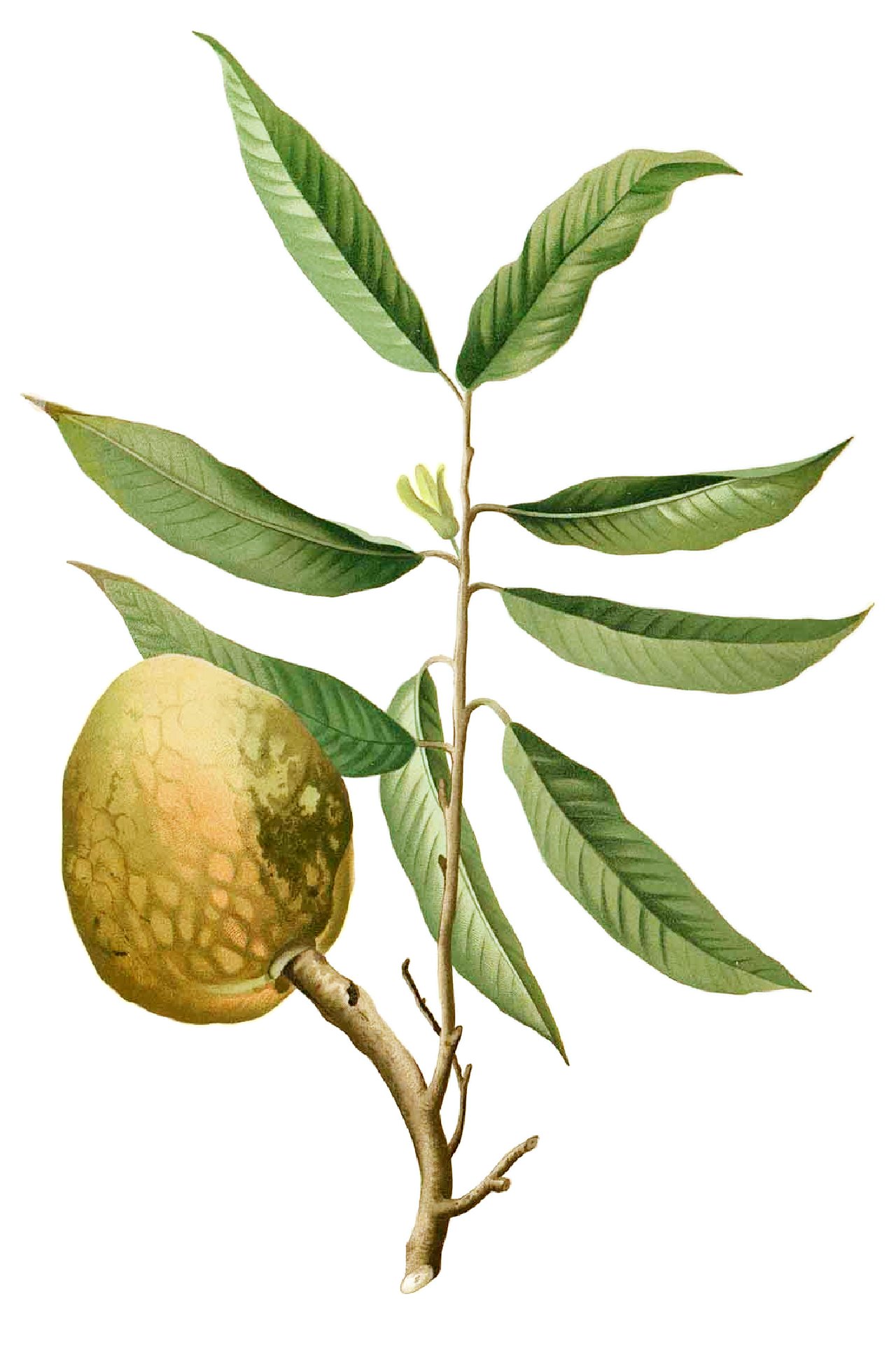
Wild Custard-Apple (Annona senegalensis) is a suckering shrub or small tree native to the tropical and subtropical regions of Africa. You can recognize it by its blue-green, leathery foliage and the distinctive yellow-orange fruit that resembles a smaller, bumpy version of a commercial custard apple.
While it is frequently harvested from the wild for its edible pulp and medicinal bark, it remains less common in formal cultivation than its relative, the soursop (Annona muricata). It thrives in savanna woodlands and coastal scrub, often surviving annual bushfires due to its thick, fire-resistant bark.
Key Facts
Is Wild Custard-Apple Right for Your Landscape?
Wild Custard-Apple is best suited for large, tropical gardens or restoration projects in frost-free climates. You will find it most successful in areas that mimic the African savanna, where it can enjoy high heat and distinct wet and dry seasons. Because it has a suckering habit, it can spread to form small thickets if not managed, making it a functional choice for natural privacy screens or windbreaks.
This species is exceptionally drought-tolerant once established, requiring almost no supplemental water in zones 10 and 11. It is a practical choice for sandy soils where other fruit trees might struggle with nutrient retention. You should avoid planting it in heavy clay or waterlogged sites, as the root system is prone to rot in standing water.
How to Identify Annona senegalensis
You can identify Wild Custard-Apple by its ovate, leathery leaves that measure 8 to 15 cm (3 to 6 in) in length. The upper surface is typically a dull green or blue-green, while the underside is paler with prominent veins. A key field mark is the scent; when you crush a fresh leaf, it releases a strong, fruity aroma reminiscent of pineapple or apricot.
The flowers are small and inconspicuous, appearing in groups of 1 to 3 on long stalks. Each flower has three thick, fleshy outer petals that are cream or greenish-yellow. The fruit is the most recognizable feature:
- Diameter: 2.5 to 5 cm (1 to 2 in)
- Color: Turns from green to yellow-orange when ripe
- Texture: Bumpy or “tessellated” surface with small rounded segments
- Pulp: Soft, white to pale orange, containing many hard brown seeds
Where Does African Custard-Apple Grow?
Wild Custard-Apple grows primarily in semi-arid to sub-humid savanna woodlands across Sub-Saharan Africa. You will find it at altitudes ranging from sea level up to 2,400 m (7,875 ft). It is a common sight in the transition zones between forests and grasslands, where it can access full sunlight while benefiting from the shelter of larger trees.
The species is highly adaptable to soil types but shows a strong preference for well-drained, sandy soils. In coastal regions of East Africa, it often grows in coral rag or stabilized sand dunes. It is also found along the margins of riverine forests, provided the ground does not remain saturated for long periods during the rainy season.
The Role of Wild Soursop in the Ecosystem
Wild Custard-Apple serves as a critical food source for African wildlife, including baboons, monkeys, and various bird species. These animals eat the pulp and disperse the seeds across the savanna, aiding in the plant’s natural regeneration. The flowers are protogynous, meaning the female parts mature before the male parts, a strategy that encourages cross-pollination.
Pollination is primarily carried out by nitidulid beetles, which are attracted to the fruity scent of the flowers at night. The plant also hosts several species of butterflies and moths in its native range. Because it is fire-resistant, it provides essential cover and nesting sites for birds in areas where frequent bushfires strip away less hardy vegetation.
Conservation Status and Threats
The Wild Custard-Apple is currently listed as Least Concern (LC) on the IUCN Red List. It is widespread across the African continent and remains common in many protected areas. Its ability to resprout from the base after fire or grazing makes it more resilient than many other woody species in the savanna ecosystem.
However, local populations face threats from over-harvesting for medicinal bark and habitat conversion for agriculture. In some regions, the expansion of charcoal production has led to the removal of mature specimens. While the species is not at risk of extinction globally, maintaining genetic diversity requires the preservation of its varied habitats from Senegal to South Africa.
Traditional Benefits and Uses of Annona senegalensis
The fruit of the Wild Custard-Apple is traditionally used as a seasonal food source with a flavor similar to pineapple or apricot. The pulp is rich in vitamin C and dietary fiber, though the high seed count makes it less efficient to eat than commercial custard apples. In many cultures, the fruit is eaten raw or used to flavor drinks and porridges.
Beyond its edible fruit, the plant has extensive history in traditional medicine. The leaves, bark, and roots have been used for:
- Treating respiratory complaints through steam inhalation
- Managing digestive issues and stomach aches
- Creating poultices for skin infections and wound healing
- Dyeing textiles, using the bark to produce yellow or brown pigments
Similar Species and Look-Alikes
Wild Custard-Apple is most often confused with the custard apple (Annona reticulata), which is an introduced species in Africa. You can tell them apart by the fruit; the Wild Custard-Apple has a much bumpier, segmented surface and turns a brighter orange when ripe, whereas Annona reticulata is smoother and often reddish-brown. The native species also has much thicker, more leathery leaves.
Other similar species include:
- Sugar apple (Annona squamosa): Has much larger, more distinct fruit segments and thinner leaves.
- Soursop (Annona muricata): Easily distinguished by its large, spiny green fruit and glossy dark leaves.
- Cherimoya (Annona cherimola): Found at higher, cooler elevations and has velvet-like hairs on the leaf undersides.
Frequently Asked Questions
What are the benefits of Annona senegalensis?
The plant provides edible fruit rich in vitamins and has been traditionally used to treat respiratory and digestive issues. Its bark and leaves contain compounds that have been studied for their antimicrobial and antioxidant properties.
What is the common name of Annona senegalensis?
It is most commonly known as the Wild Custard-Apple or African Custard-Apple. In various African languages, it is called Mulembe (Luhya), Abo Ibobo (Yoruba), or Gwandan Daji (Hausa).
Is the African Custard-Apple edible?
Yes, the ripe fruit pulp is edible and has a sweet, pleasant taste similar to apricot or pineapple. You should avoid eating the seeds, as they are hard and can be toxic if crushed and consumed in large quantities.
What is the Yoruba name for Annona senegalensis?
In the Yoruba language of Nigeria, this plant is known as Abo ibobo. It is highly valued in the region for both its fruit and its use in traditional herbal preparations.
What is the difference between Mulembe the plant and Mulembe FM?
Mulembe is the name for Annona senegalensis in the Luhya language, but 'Mulembe FM' is a popular Kenyan radio station. The station uses the name because 'Mulembe' also serves as a greeting and a symbol of peace and identity for the Luhya people.
Information about traditional or historical uses is provided for educational interest only and is not medical advice. Do not use any plant to treat a condition without speaking to a qualified professional.
Sources & Verification
Taxonomy and distribution are checked against the databases below. Care guidance is written for cultivated species only and reviewed by our editor. How We Build Plant Profiles →