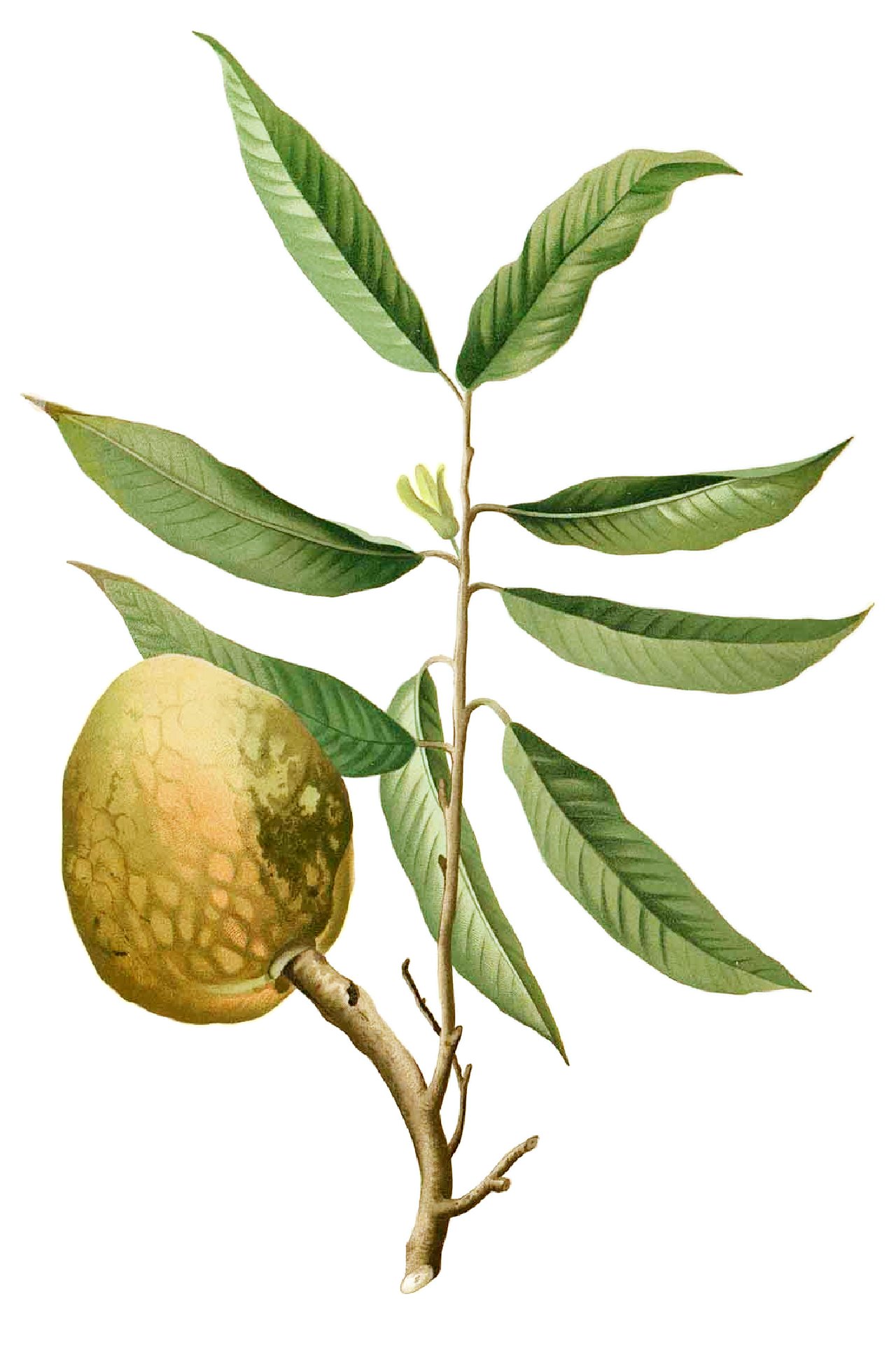
Annona glabra is a tropical wetland tree native to southern Florida, the Caribbean, Central and South America, and West Africa. It belongs to the Annonaceae family and grows up to 12 m (40 ft) high in flooded freshwater swamps and brackish estuaries.
Unlike cultivated fruit trees, alligator apple relies on floating seeds that survive submersion in salt water for up to 3 months. The fruit is technically edible, though the yellow flesh is dry, fibrous, and resinous.
Key Facts
- Native range: Florida, Caribbean, Central and South America, West Africa
- Height: 3 to 12 m (10 to 40 ft)
- Habitat: Freshwater swamps, mangrove margins, brackish waterways
- Salt tolerance: Tolerates brackish water up to 15 ppt salinity
- Edibility: Non-toxic but resinous and unpalatable raw
- Invasive status: Class 3 weed in Australia and Sri Lanka
What Is Alligator Apple?
Alligator apple is a tropical semi-evergreen tree reaching mature heights of 3 to 12 m (10 to 40 ft) in flooded coastal wetlands. It forms a swollen trunk base with light brown, corky bark and dense foliage along tropical waterway margins.
The tree thrives in saturated ground where standard orchard trees fail to survive. Key physical traits include:
- Trunk base: Swollen or buttressed lower stem expanding to 50 cm (20 in) in diameter
- Bark thickness: Soft, cork-like outer layer measuring up to 2 cm (0.8 in) thick
- Foliage size: Alternate, leathery leaves measuring 8 to 15 cm (3 to 6 in) long
- Lifespan: Perennial wetland tree living 30 to 50 years in flooded soils
How to Identify Alligator Apple
Alligator apple features cream to pale yellow flowers with six fleshy petals measuring 2 to 3 cm (0.8 to 1.2 in) across, marked by a distinct dark red spot at the interior base. Leaves are oval to oblong, glossy dark green on upper surfaces, and emit an aromatic scent when crushed.
The fruit resembles a smooth spherical or egg-shaped apple that turns from green to yellow as it ripens between July and October. Diagnostic features include:
- Flower structure: Three outer thick cream petals and three inner smaller petals with red interior spots
- Fruit dimensions: Spherical structure measuring 5 to 12 cm (2 to 4.7 in) in diameter
- Fruit skin: Smooth yellow surface without the soft spines of soursop (Annona muricata)
- Seed count: Contains 100 to 200 light brown seeds embedded in orange pulp
Native Habitat and Saltwater Tolerance
Alligator apple grows in coastal habitats where ground remains flooded for 6 to 12 months of the year. The species occurs naturally in Florida’s Everglades, coastal marshes across Central America, and tropical West African estuaries.
It tolerates soil salinity up to 15 parts per thousand, allowing it to colonize zones alongside red mangrove (Rhizophora mangle). Environmental requirements across its wild range include:
- Substrate: Saturated muck, peat, and muddy river banks
- Water depth: Standing freshwater or brackish water up to 1 m (3.3 ft) deep
- Minimum temperature: Frost-sensitive, suffering branch dieback below 0 °C (32 °F)
- pH range: Neutral to mildly acidic wetland soils ranging from 5.5 to 7.5 pH
Ecological Role: Do Alligators Eat Apples?
American alligators do not eat alligator apples as a primary food source, though they frequently consume fallen fruit incidentally while snapping at prey in shallow swamp waters. The common name arose because ripe fruits drop into alligator-inhabited waterways and float in clusters.
Various wild animals interact with the tree across its native ecosystem:
- Seed dispersers: Mammals such as raccoons and wild pigs eat the pulp and spread seeds
- Aquatic transport: Buoyant seeds float in salt water for up to 90 days while remaining viable
- Nesting habitat: Wading birds use the dense upper canopy for roosting
- Pollinators: Nitidulid beetles pollinate the aromatic cream flowers during spring blooms
Conservation Status and Invasive Threat
Alligator apple is classified as Least Concern globally, but it is ranked as a high-risk invasive weed in Australia and Sri Lanka. In tropical Queensland, it smothers native wetland vegetation and forms dense monotypic stands along river basins.
Control programs utilize physical and chemical management strategies to curb its spread:
- Fecundity: A single mature tree produces up to 3,000 seeds annually
- Germination speed: Seeds germinate within 14 to 30 days on damp soil
- Manual control: Seedlings pulled before developing deep taproots
- Herbicide control: Basal bark application applied during dry season water drawdowns
Is Alligator Apple Edible? Uses and Grafting
Alligator apple fruit is edible but unpalatable raw, featuring dry pulp with a resinous, turpentine-like scent and bitter undertone. It can be cooked into jellies or preserves where added sugar masks the pungent flavor.
The species serves specific horticultural and material functions outside of direct human consumption:
- Rootstock utility: Used as a flood-tolerant rootstock for grafting soursop (Annona muricata) and sugar apple (Annona squamosa)
- Wood density: Lightweight wood with high buoyancy, historically used for net floats and stoppers
- Cork substitution: Swollen trunk bark harvested as a natural cork alternative
- Erosion control: Root systems stabilize soft stream banks against wave action
Alligator Apple vs Soursop and Other Annonas
Alligator apple differs from soursop (Annona muricata) by having smooth yellow skin without fleshy spines and growing exclusively in flooded soils. Cherimoya (Annona cherimola) thrives in cool highland climates, while alligator apple requires lowland tropical heat.
Key comparative traits among related species include:
- Fruit texture: Smooth skin on alligator apple vs bumpy skin on custard apple (Annona reticulata)
- Flavor profile: Resinous pulp vs sweet subacid flavor of sugar apple (Annona squamosa)
- Habitat preference: Flooded swamps vs well-drained upland soils required by cherimoya (Annona cherimola)
- Leaf texture: Leathery, glabrous leaves vs soft, downy foliage found on cherimoya
Alligator Apple Benefits and Historical Uses
Historical records document that native populations used extracts from alligator apple bark and leaves in traditional folk remedies. Leaves were prepared into hot decoctions, while crushed seeds were applied topically.
Documented traditional applications include:
- Traditional teas: Leaf decoctions used in historic folk medicine for internal parasites
- Pest control: Crushed seeds traditionally used as a natural insecticide against lice
- Tanning material: Tannin-rich bark processed for curing animal hides
Frequently Asked Questions
Is an alligator apple edible?
Yes, alligator apples are non-toxic and technically edible raw or cooked, but they have a dry, pungent, resinous flavor. They are most commonly processed into jellies or jam rather than eaten fresh.
Do alligators eat apples or fruit?
Alligators are carnivores and do not actively seek out fruit as a dietary staple, but they occasionally ingest fallen alligator apples floating in swamps while snapping at swimming prey. Research indicates wild crocodilians periodically consume fallen fruit as supplementary nutrition.
What is the difference between alligator skin and crocodile skin for wallets?
Alligator leather features smooth, symmetrical square scales with small umbilical scars, while crocodile leather has distinct sensory pore pits near the edge of each scale. Alligator leather is generally softer and more pliable, making it popular for premium watch bands and wallets.
Why is Annona glabra called an alligator apple?
The plant earned its common name because its apple-sized yellow fruits drop into coastal swamps where American alligators reside. The fruit's skin also vaguely resembles alligator hide.
What are the main benefits and uses of the alligator apple plant?
Alligator apple provides stream bank stabilization in wetland ecosystems and serves as a flood-tolerant rootstock for grafting commercial crops like soursop (Annona muricata). Historically, extracts from its leaves and seeds were used in local folk remedies and natural pest control.
Is alligator apple related to Cirkul or Apple Watch bands?
No, online searches for alligator apple watch bands refer to watch straps made from genuine alligator leather, while Alligator Apple Cirkul refers to a fruit-flavored beverage cartridge. Neither product is derived from the Annona glabra tree.
Information about traditional or historical uses is provided for educational interest only and is not medical advice. Do not use any plant to treat a condition without speaking to a qualified professional.
Sources & Verification
Taxonomy and distribution are checked against the databases below. Care guidance is written for cultivated species only and reviewed by our editor. How We Build Plant Profiles →