
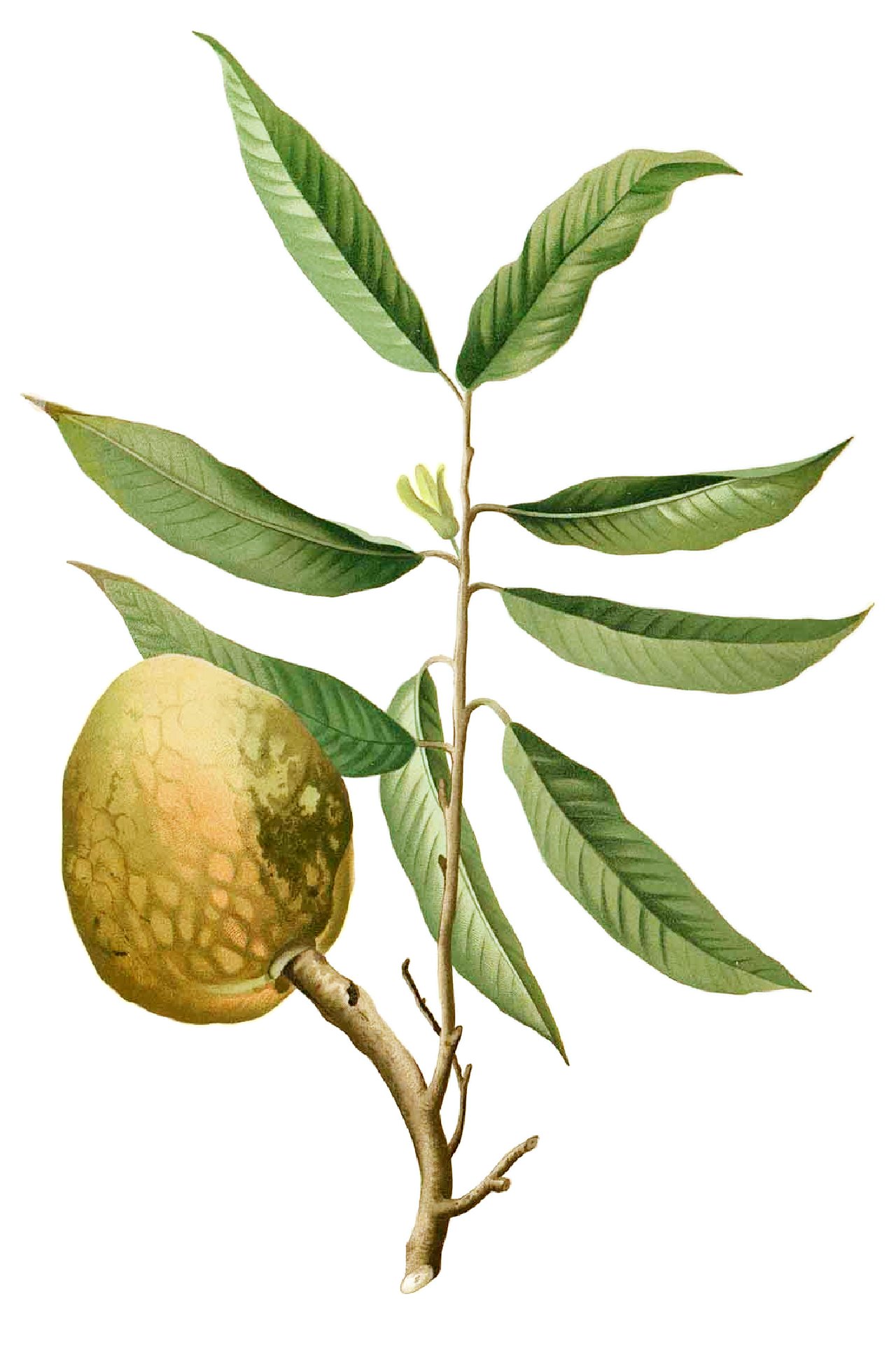
Annona reticulata is a semi-deciduous tropical tree native to the Caribbean and Central America, easily recognized by its large, heart-shaped fruit. It is widely cultivated across South Asia, particularly in Bangladesh and India, where the fruit is a seasonal staple in local markets.
This species requires a frost-free environment to produce its characteristic “bullock’s heart” fruit, which matures in late winter. Unlike its relative the sugar apple (Annona squamosa), the custard apple has a smoother, reticulated skin and a denser, more custard-like interior.
Key Facts
- Light: Full sun for at least 8 hours daily
- Water: Deeply once a week during fruit development
- Soil: Rich, well-drained loam with pH 5.5-6.5
- Temperature: Minimum 10 °C (50 °F) for healthy growth
- Harvest: Late winter to early spring
Is Custard Apple Right for Your Garden?
You need a consistently warm, frost-free climate to grow custard apple successfully. This tree is best suited for tropical and subtropical regions where temperatures rarely dip below 10 °C (50 °F). It is a long-term commitment, as trees grown from seed can take 3-5 years to produce their first significant crop.
The tree is relatively low-maintenance once established but requires significant space due to its 6-10 m (20-33 ft) height. It is an excellent choice for home orchards in South Asia or Florida where humidity is high. If you live in a dry or cold region, the tree will likely drop its leaves and fail to set fruit.
Identifying the Bullock’s Heart
The fruit of Annona reticulata is 8-16 cm (3-6 in) in diameter and shaped like a lopsided heart. The skin is thin but tough, ranging from yellow-green to a brownish-red or pinkish hue when fully ripe. Unlike the segmented sugar apple, the surface is covered in a faint, net-like (reticulated) pattern.
Leaves are alternate, oblong-lanceolate, and measure 10-20 cm (4-8 in) long by 2-5 cm (0.8-2 in) wide. They emit a distinct, somewhat unpleasant odor when crushed. The flowers are inconspicuous, drooping in clusters of 2-10, with three long outer petals that are yellowish-green with a purple spot at the base.
Mature Size and Growth Habit
A healthy custard apple tree typically reaches a height of 6-10 m (20-33 ft) with a similar spread. It develops a short trunk and a spreading, irregular crown that provides dense shade. In its native habitat, it can occasionally reach 12 m (40 ft) if soil nutrients are abundant.
The growth rate is moderate, adding roughly 30-50 cm (12-20 in) of height per year under ideal conditions. Because the wood is somewhat brittle, the tree should be protected from strong winds which can snap heavy, fruit-laden branches. The root system is relatively shallow, so avoid deep tilling near the base of the trunk.
Choosing the Best Planting Site
Select a location that receives full sun for at least 8 hours a day to ensure high sugar content in the fruit. The tree is sensitive to waterlogging, so avoid low-lying areas where water collects after rain. A site with protection from prevailing winds is necessary to prevent fruit scarring and limb breakage.
While the tree adapts to various soil types, it performs best in deep, rich loam with good drainage. It can tolerate slightly alkaline soils but prefers a pH between 5.5 and 6.5. Ensure there is at least 6 m (20 ft) of clearance from buildings or other large trees like mango (Mangifera indica) to allow for canopy expansion.
How to Plant Custard Apple Seeds and Saplings
For the best results, plant grafted saplings rather than seeds to ensure fruit quality and earlier harvests. If planting from seed, use fresh seeds from a ripe fruit and sow them 2 cm (0.8 in) deep in a sandy potting mix. Germination usually occurs within 3-5 weeks if kept at 25-30 °C (77-86 °F).
- Dig a hole twice as wide as the root ball and just as deep.
- Space multiple trees 6-8 m (20-26 ft) apart to prevent crowding.
- Water the sapling immediately after planting to settle the soil.
- Apply a 5 cm (2 in) layer of organic mulch, keeping it away from the trunk.
Watering and Feeding for Better Fruit
Water the tree deeply once a week during the flowering and fruiting season to prevent fruit drop. While the tree is somewhat drought-tolerant during its dormant winter phase, inconsistent watering during fruit development causes the fruit to crack. Ensure the water reaches at least 30 cm (12 in) into the soil profile.
Apply a balanced 10-10-10 NPK fertilizer every three months during the first two years of growth. For mature trees, increase the potassium ratio to support fruit production. Avoid high-nitrogen fertilizers once the tree begins to bloom, as this encourages leaf growth at the expense of fruit set.
Pruning for Shape and Yield
Prune your custard apple tree in late winter or early spring before the new growth flush begins. Focus on removing dead, diseased, or crossing branches to improve light penetration and airflow through the center of the canopy. This reduces the risk of fungal infections on the fruit.
Maintain the tree at a manageable height of 4-5 m (13-16 ft) to make harvesting easier. Tip-pruning young branches can encourage lateral growth, leading to more flowering sites. Always use sharp, sterilized shears to make clean cuts at a 45-degree angle just above a leaf node or lateral branch.
Common Pests and Fruit Problems
The most frequent issue for custard apple growers is mealybug infestation, which appears as white, cottony masses on the fruit and stems. These pests excrete honeydew, leading to sooty mold growth. Treat small infestations with a strong blast of water or insecticidal soap.
- Fruit Fly: Larvae tunnel into ripening fruit; use pheromone traps.
- Anthracnose: Causes black spots on leaves and fruit; improve airflow.
- Bacterial Wilt: Sudden wilting of leaves; ensure soil is well-drained.
- Seed Borer: Small holes in the fruit; remove and destroy affected fruit.
Harvesting and Using the Fruit
Harvest the fruit when the skin changes from green to a dull brownish-red and the fruit gives slightly to gentle thumb pressure. Do not wait for the fruit to become soft on the tree, as it will likely fall and bruise. Cut the fruit from the branch with a small piece of stem attached to prevent rot at the base.
The white pulp is traditionally eaten fresh with a spoon, discarding the toxic black seeds. It is also used to make ice cream, milkshakes, and custards. In traditional medicine, the bark and leaves were used in decoctions for their astringent properties to treat diarrhea, though these uses are not supported by modern clinical data.
Year-Round Custard Apple Tree Care
| Spring | Apply a balanced fertilizer and increase watering as new leaves emerge. Inspect for aphids and mealybugs on new growth. |
|---|---|
| Summer | Provide deep weekly watering during the heat. Monitor for fruit fly activity and hang traps if necessary. |
| Autumn | Reduce fertilizer application. Apply a fresh layer of mulch to retain moisture as the weather cools. |
| Winter | Harvest ripe fruit carefully. Prune the canopy for shape and remove any mummified fruit left on the branches. |
Why Is My Custard Apple Tree Struggling?
| What you see | Likely cause | What to do |
|---|---|---|
| Fruit cracking before ripe | Inconsistent watering | Maintain a regular deep-watering schedule during fruit development. |
| Yellowing leaves in winter | Natural dormancy | No action needed; the tree is semi-deciduous and will regrow leaves in spring. |
| Small, hard black fruit | Mummification/Fungus | Remove and destroy affected fruit and prune to improve air circulation. |
Popular Custard Apple Varieties
- ‘Tikal’ – A high-quality selection from Florida with reddish skin.
- ‘Canul’ – Known for medium-sized fruit with very sweet, white flesh.
- ‘Sartenaya’ – A variety with attractive red-tinted skin and good flavor.
- ‘San Pablo’ – A vigorous variety often used in tropical commercial orchards.
Frequently Asked Questions
What is the difference between custard apple and soursop?
Custard apple (Annona reticulata) has smoother, reticulated skin and sweet pulp, while soursop (Annona muricata) has prickly skin and a distinctly tart, acidic flavor.
How do you ripen custard apple at home?
Place firm, harvested fruit in a brown paper bag at room temperature for 2-4 days until it softens slightly to the touch.
Can you grow custard apple from seed?
Yes, but seeds must be fresh; however, seed-grown trees may take 5 years to fruit and the fruit quality can be unpredictable compared to grafted trees.
Are custard apple seeds poisonous?
Yes, the seeds contain annonacin, a neurotoxin, and should never be swallowed or crushed into food.
What are the benefits of custard apple fruit?
The fruit is high in dietary fiber, Vitamin C, and potassium, which support digestive health and immune function when eaten as part of a balanced diet.
Information about traditional or historical uses is provided for educational interest only and is not medical advice. Do not use any plant to treat a condition without speaking to a qualified professional.
Sources & Verification
Taxonomy and distribution are checked against the databases below. Care guidance is written for cultivated species only and reviewed by our editor. How We Build Plant Profiles →


