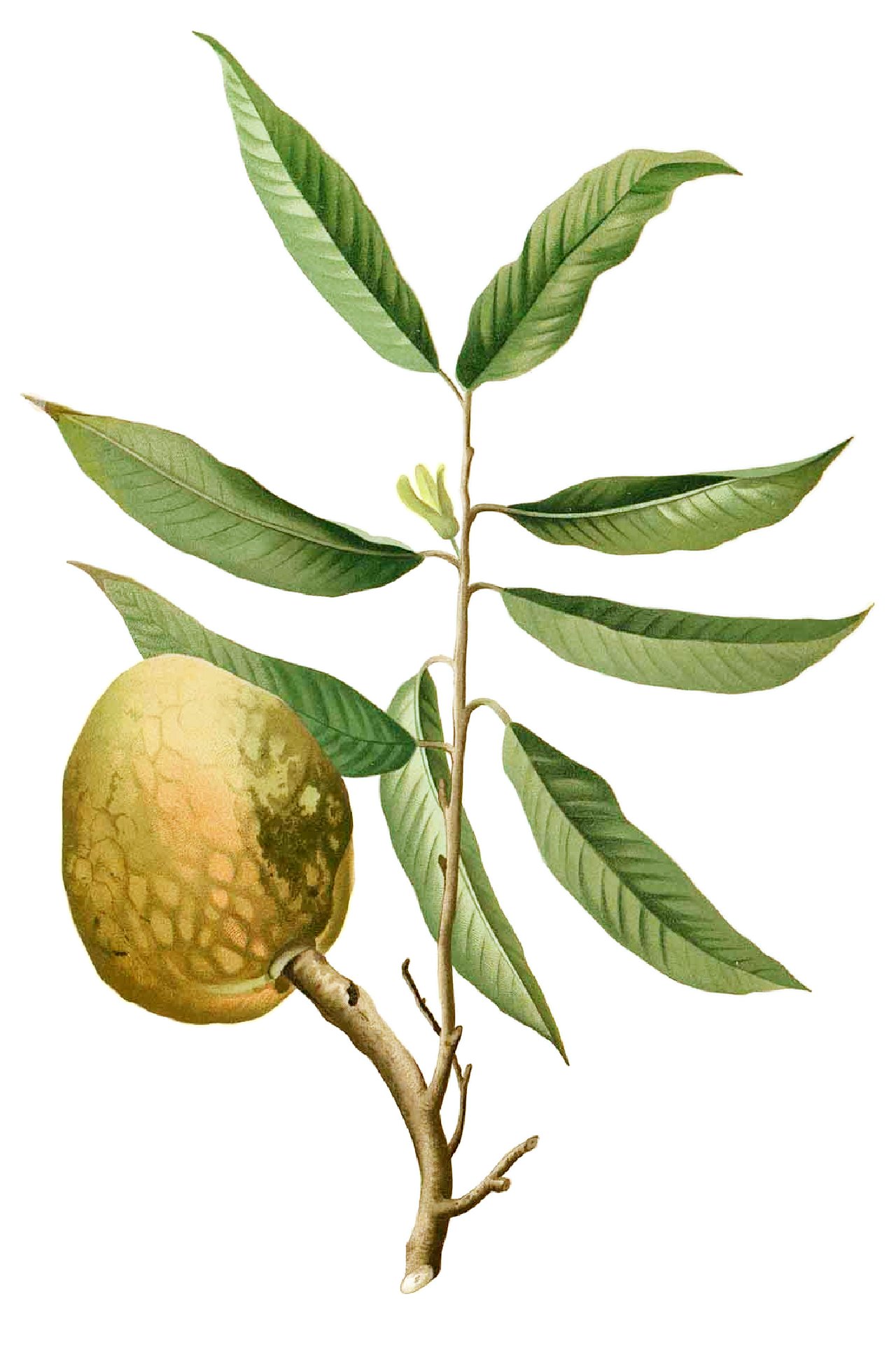
Biriba (Annona mucosa) is a fast-growing tropical fruit tree native to the Amazon basin and tropical regions of South America. It is recognized by its large, heart-shaped yellow fruit covered in soft, blunt protuberances that resemble spines.
This species requires high humidity and consistent warmth to produce its characteristic creamy pulp. It fails in dry climates and will not survive even a light frost, making it a specialist crop for the deep tropics or large heated greenhouses.
Key Facts
- Hardiness: USDA zones 10 to 12 only
- Water: High; requires consistently moist soil
- Mature Height: 4-15 m (13-50 ft)
- Fruit Flavor: Sweet, creamy, citrus-like lemon meringue
- Growth Rate: Fast, reaching fruiting age in 3-4 years
Growing Biriba for Tropical Fruit
Biriba is best suited for tropical gardens where the temperature stays above 10 °C (50 °F) year-round. It requires significant space due to its rapid growth and spreading canopy, which can reach 8 m (26 ft) in width. Because the tree is sensitive to dry air, it performs best in regions with high annual rainfall or near water features that boost local humidity.
You should choose a site that is protected from strong winds, as the large leaves are prone to shredding and the heavy fruits can be blown off the branches before they ripen. Growers in marginal climates often use windbreaks or plant Biriba in the sheltered center of a food forest.
- Provide at least 6 hours of direct sun daily
- Ensure humidity levels remain above 60%
- Avoid sites with standing water or poor drainage
- Space trees 5-8 m (16-26 ft) apart
How to Identify Biriba Trees
Biriba is identified by its alternate, oblong-elliptical leaves that reach 10-25 cm (4-10 in) in length. The leaves have a distinct pointed tip and a slightly fuzzy underside when young. The flowers are unusual, featuring three large, fleshy exterior petals that are green or yellow with a maroon base.
The fruit is the most distinguishing feature, measuring 10-20 cm (4-8 in) in diameter and weighing up to 1 kg (2.2 lbs). It is covered in soft, fleshy conical spines that turn from green to bright yellow as the fruit ripens. Inside, the white, translucent pulp is divided into segments, each containing a single dark brown seed.
Size and Growth Habit
In cultivation, Biriba typically reaches a height of 4-10 m (13-33 ft), though wild trees in the Amazon can exceed 15 m (50 ft). It develops a broad, open crown that provides dense shade. The trunk is generally straight with greyish-brown bark that remains relatively smooth even as the tree matures.
This species is known for its extreme vigor, often growing 1-2 m (3-6 ft) in a single year under ideal conditions. This fast growth means the wood can be somewhat brittle, requiring regular maintenance to prevent large branches from breaking during heavy fruiting periods or storms.
Selecting the Best Planting Site
The ideal site for Biriba has deep, fertile soil with a slightly acidic pH between 5.5 and 6.5. While it can tolerate a variety of soil types, including sandy loams, it will show signs of nutrient deficiency in alkaline soils. The site must be well-drained, as the roots are susceptible to rot in waterlogged conditions.
Because the tree is a heavy feeder, the soil should be enriched with organic matter prior to planting. Avoid planting Biriba near structures or walkways, as the falling fruit is soft and can create a significant mess if not harvested promptly.
How to Plant Biriba
Plant Biriba during the early rainy season to allow the root system to establish before any dry periods. Dig a hole twice the width of the root ball and just as deep, ensuring the soil at the bottom is loosened. If planting from seed, soak the seeds for 24 hours to improve germination rates, which usually occur within 3 to 8 weeks.
When transplanting a sapling, keep the soil level of the tree consistent with the level in its nursery pot. Mulch heavily around the base with organic material to retain moisture, but keep the mulch 10 cm (4 in) away from the trunk to prevent fungal infections.
- Water immediately after planting with 10-20 liters (2-5 gallons)
- Apply a layer of compost 5 cm (2 in) thick
- Stake young trees in windy areas for the first year
Watering and Feeding Requirements
Biriba requires regular, deep watering to maintain its fast growth and fruit production. During dry spells, the tree may drop its leaves as a survival mechanism, which significantly delays the harvest. You should water the tree whenever the top 2 cm (1 in) of soil feels dry to the touch.
Apply a balanced organic fertilizer every 3 to 4 months during the growing season. Mature trees benefit from additional potassium to support fruit development. If leaves turn yellow while veins remain green, apply a chelated iron supplement to correct pH-induced chlorosis.
Pruning for Better Fruit
Prune Biriba trees to maintain a maximum height of 3-4 m (10-13 ft) for easier harvesting. The best time to prune is immediately after the main harvest period has ended. Focus on removing vertical water sprouts and any branches that cross through the center of the canopy.
Thinning the fruit can also be necessary if the tree overproduces, as the weight of multiple 1 kg fruits can snap branches. Removing the smallest fruits when they are the size of a golf ball allows the tree to direct energy into larger, higher-quality specimens.
Common Biriba Problems and Pests
The most common pest for Biriba is the mealybug, which hides in the crevices between the fruit’s spines. These insects secrete honeydew, which leads to the growth of black sooty mold on the leaves and fruit. You can manage small infestations with a strong spray of water or horticultural oil.
Anthracnose is a fungal disease that can cause black spots on the leaves and fruit, leading to premature rot. This is most prevalent during periods of high rainfall and poor air circulation. Ensure the canopy is kept open through pruning to allow leaves to dry quickly after rain.
Winter Care and Temperature Limits
Biriba will suffer significant damage if temperatures drop below 5 °C (41 °F) for more than a few hours. It has zero frost tolerance and will die back to the ground in a freeze. In subtropical climates, you must provide overhead protection or use heat lamps during cold snaps.
If growing Biriba in a container, move it indoors or into a heated greenhouse when night temperatures consistently fall below 12 °C (54 °F). Reduce watering during the cooler months, but do not allow the root ball to dry out completely, as the tree does not have a true dormant period.
Harvesting and Using the Fruit
Harvest Biriba fruit when the skin turns bright yellow and the spines begin to soften. Do not wait for the fruit to fall, as the soft pulp will bruise or burst upon impact. The fruit ripens very quickly after harvest and will usually turn black and ferment within 2 to 3 days at room temperature.
To eat, cut the fruit in half and scoop out the white pulp with a spoon, discarding the seeds. The flavor is often described as a mix of banana, pineapple, and lemon cream. In traditional medicine, infusions of the leaves were used to treat digestive issues, though these uses are not clinically proven.
- Use a sharp knife to cut the stem; do not pull the fruit
- Store ripe fruit in the refrigerator for up to 5 days
- Avoid eating the seeds, which contain toxins
Year-Round Biriba Management
| Spring | Apply a balanced fertilizer and increase watering frequency as new growth appears. Prune any winter-damaged branch tips. |
|---|---|
| Summer | Monitor for mealybugs on developing fruit. Ensure the tree receives at least 25 mm (1 in) of water per week during heatwaves. |
| Autumn | Harvest yellowing fruit daily to prevent over-ripening. Apply a final round of compost to the root zone. |
| Winter | Protect young trees from temperatures below 5 °C (41 °F). Reduce supplemental watering if growth slows, but maintain humidity. |
Solving Common Biriba Growing Problems
| What you see | Likely cause | What to do |
|---|---|---|
| Fruit turning black and shriveling | Anthracnose fungus or fruit fly damage | Remove affected fruit and improve air circulation through pruning. |
| Yellow leaves with green veins | Iron or magnesium deficiency | Apply a chelated micronutrient spray and check soil pH. |
| Sudden leaf drop | Drought stress or cold shock | Increase watering consistency and protect the tree from winds. |
| White cottony spots on fruit | Mealybugs | Apply neem oil or wash off with a high-pressure water stream. |
Popular Biriba Selections
- ‘Regnard’ – known for larger fruit and better shelf life.
- ‘Brazilian’ – a common seedling type with high vigor.
- ‘Prolific’ – selected for its heavy and consistent fruit set.
Frequently Asked Questions
What is biriba?
Biriba is a tropical fruit tree, Annona mucosa, known for its yellow spiky fruit that tastes like lemon meringue pie. It is native to South America and grows rapidly in hot, humid climates.
How do you plant biriba?
Plant biriba in rich, well-drained soil in a sunny, wind-protected spot. Use seeds soaked for 24 hours or nursery-grown saplings, ensuring they are watered heavily during establishment.
Is biriba a card game?
Yes, Biriba is a popular card game in Greece and Brazil, but it is also the common name for the fruit tree Annona mucosa. This guide focuses on the botanical species.
Can you grow biriba in a pot?
You can grow biriba in a large container (at least 50-100 liters) for several years, but it will eventually need significant pruning to manage its fast growth. It requires a heated greenhouse in non-tropical zones.
How long does biriba take to fruit?
Seed-grown biriba trees are very fast and can begin producing fruit within 3 to 4 years if they are grown in a consistently warm and humid environment.
Information about traditional or historical uses is provided for educational interest only and is not medical advice. Do not use any plant to treat a condition without speaking to a qualified professional.
Sources & Verification
Taxonomy and distribution are checked against the databases below. Care guidance is written for cultivated species only and reviewed by our editor. How We Build Plant Profiles →