Guide to Convolvulaceae Plants and Morning Glories
13 plant profiles · Learn how to identify and grow plants in the Convolvulaceae family, including morning glories, sweet potatoes, moonflowers, and groundcovers.
The Convolvulaceae family, commonly known as the morning glory family, contains over 1,900 species of mostly twining vines, herbs, and woody shrubs distributed across warm temperate and tropical regions worldwide. Most members share alternate leaves, milky latex sap, and distinctive funnel-shaped flowers that open during specific hours of the day. They thrive in full sun, requiring at least 6 hours of direct light daily, and prefer well-draining soil with a pH between 6.0 and 7.5.
Choosing the right plant depends on your garden space and harvest goals. For edible crops, sweet potato (Ipomoea batatas) produces nutrient-dense tubers under warm summer soils, while water spinach (Ipomoea aquatica) grows rapidly in moist, semi-aquatic beds. If you want vertical coverage for fences or trellises, morning glory (Ipomoea tricolor), common morning glory (Ipomoea purpurea), and Japanese morning glory (Ipomoea nil) produce daily flushes of blooms in temperatures between 18-29 °C (65-85 °F).
For alternative landscape uses, night-blooming species like moonflower (Ipomoea alba) unfurl 15 cm (6 in) white flowers at dusk. Compact groundcovers include blue daze (Evolvulus glomeratus), which tolerates hot, dry borders, and kidney weed (Dichondra repens), which creates low-maintenance lawn alternatives in frost-free zones. Note that seeds of several ornamental vines, such as elephant creeper (Argyreia nervosa), contain ergoline alkaloids and are toxic if ingested by pets.

Blue Daze
Evolvulus glomeratus
☀️ Full Sun 💧 Low
Blue Morning Glory
Ipomoea indica
☀️ Full Sun 💧 Moderate

Common Morning Glory
Ipomoea purpurea
☀️ Full Sun 💧 Moderate

Elephant Creeper
Argyreia nervosa
☀️ Full Sun 💧 Moderate
Hedge Bindweed
Calystegia sepium

Japanese Morning Glory
Ipomoea nil
☀️ Full Sun 💧 Moderate

Kidney Weed
Dichondra repens
☀️ Partial Shade 💧 Moderate
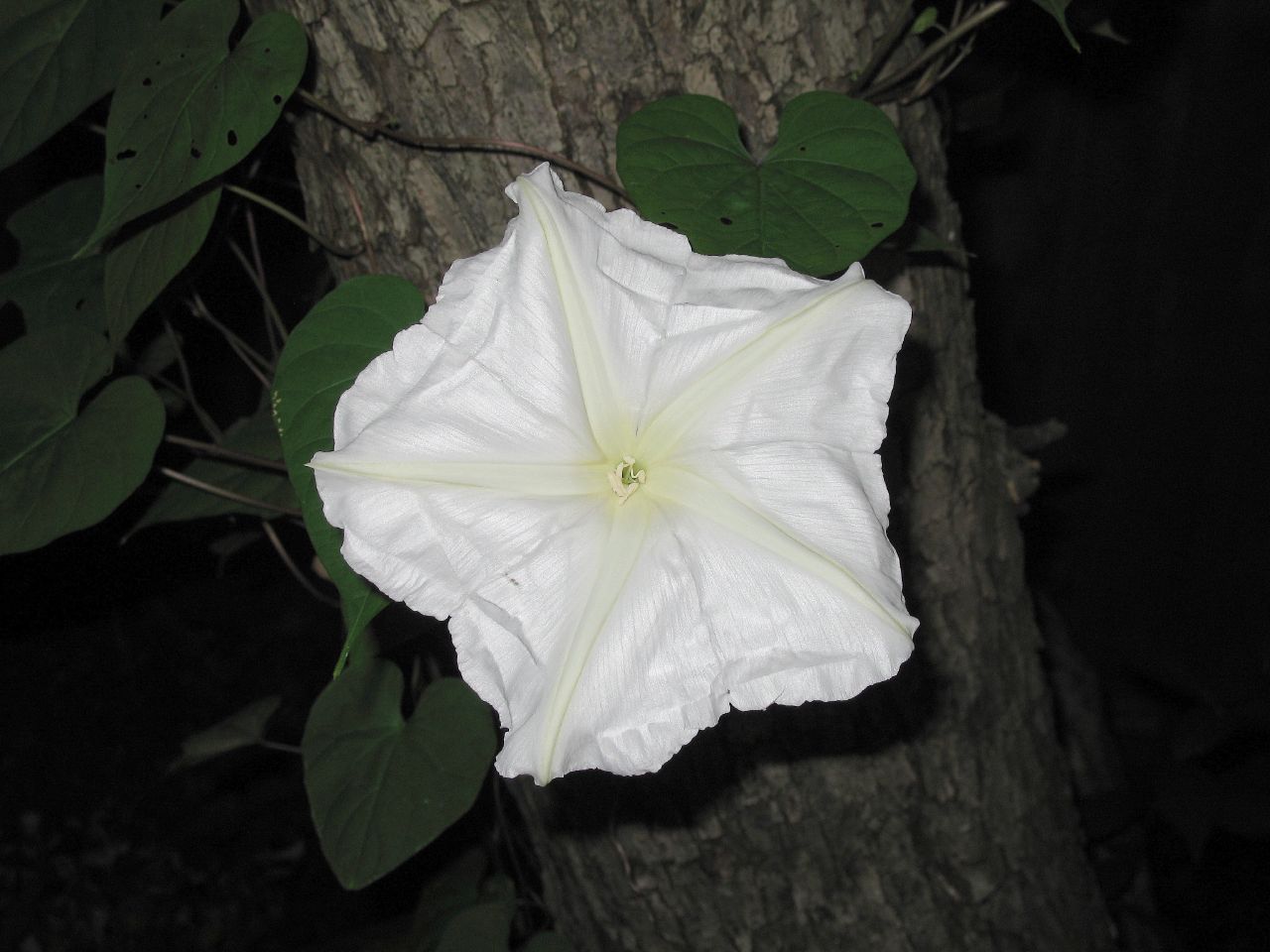
Moonflower
Ipomoea alba
☀️ Full Sun 💧 Moderate

Morning Glory
Ipomoea tricolor
☀️ Full Sun 💧 Moderate
Silver Falls
Dichondra argentea
☀️ Full Sun 💧 Low

Slender Dwarf Morning Glory
Evolvulus alsinoides
☀️ Full Sun 💧 Low

Sweet Potato
Ipomoea batatas
☀️ Full Sun 💧 Moderate

Water Spinach
Ipomoea aquatica
☀️ Full Sun 💧 Aquatic
Common Questions
Are all plants in the Convolvulaceae family climbing vines?
No, not all Convolvulaceae species are vines. While many members are twining climbers, the family also includes trailing groundcovers like kidney weed, compact low-growing shrubs like blue daze, and tuberous root crops like sweet potato.
Why do morning glory flowers close in the afternoon?
Morning glory flowers close in the afternoon because their thin petals react to rising temperatures and sunlight intensity. Most blooms open at dawn and wilt within 6 to 8 hours once midday heat exceeds 27 °C (80 °F).
Are morning glory plants invasive?
Several morning glory species self-seed aggressively and can become invasive in mild climates. Species like common morning glory drop hundreds of hard-coated seeds per plant each autumn, which survive soil freezes down to -15 °C (5 °F) and germinate early the following spring.
Is the Convolvulaceae plant family toxic to pets?
Yes, seeds from many ornamental Convolvulaceae plants are toxic to dogs and cats if ingested. Vines such as common morning glory and elephant creeper produce seeds containing indole alkaloids that cause gastrointestinal upset, lethargy, and disorientation.