

Japanese morning glory (Ipomoea nil) is a twining annual climber native to tropical regions of the Americas and Asia, recognized by its three-lobed pubescent leaves and large, funnel-shaped flowers. Cultivated for centuries in Japan into distinctive forms called asagao, it produces saucer-sized blooms that open at dawn and close by afternoon.
Vines stretch 2.5 to 5 m (8 to 16 ft) in a single warm summer and require sturdy vertical netting or bamboo trellises to climb. Direct seeding fails in cold ground, requiring soil temperatures above 18 °C (64 °F) before planting.
Key Facts
- Light: Full sun (at least 6 hours daily)
- Water: 2.5 cm (1 in) weekly
- Soil: Moist, well-draining loam
- Growth rate: Fast (up to 5 m per season)
- Toxicity: Seeds contain toxic ergot alkaloids
Growing Japanese Morning Glory: What to Expect
Japanese morning glory is an aggressive climber that needs a sturdy trellis or vertical netting ready from the day it sprouts. In warm weather, stems extend up to 15 cm (6 in) per week, winding counterclockwise around any support narrower than 5 cm (2 in) in diameter.
This plant suits gardeners who want rapid summer coverage on arbors, fences, or container obelisks. It requires daily morning sun to trigger flowering and will stall if planted outdoors before nights stay reliably above 13 °C (55 °F).
Identifying Japanese Morning Glory Leaves and Flowers
Japanese morning glory has distinct three-lobed leaves with dense, upright hairs that feel velvety to the touch. The foliage measures 8 to 15 cm (3 to 6 in) across with heart-shaped bases and pointed lobes.
Flowers are broad funnels spanning 8 to 15 cm (3 to 6 in) wide, supported by narrow, bristly green calyx lobes that reach 1.5 to 2.5 cm (0.6 to 1 in) long. Colors range across sky blue, purple, magenta, white, and red-brown, often displaying white picotee borders or split petal edges.
Sun and Soil Requirements
Plant Japanese morning glory in a location receiving at least 6 to 8 hours of direct sunlight every day. Shaded positions produce elongated vines with sparse leaf coverage and significantly fewer morning blossoms.
Soil should be fertile, loose, and well-draining, with a pH between 6.0 and 7.5. Heavy clay holds cold water in spring, rotting tender seedlings, so amend outdoor beds with compost or grow vines in 20-liter (5-gallon) containers filled with coarse potting mix.
How to Sow Japanese Morning Glory Seeds
Sow seeds only after nicking the hard outer coat and soaking them in warm water for 12 to 24 hours. This scarification breaks seed dormancy and improves germination rates from under 40% to over 90%.
Plant seeds 1.5 cm (0.6 in) deep in warm soil held at 20–25 °C (68–77 °F):
- Sow indoors 3 to 4 weeks before the last spring frost in biodegradable peat or paper pots.
- Keep soil consistently moist but never waterlogged during the 5 to 10 day germination period.
- Transplant outdoors without disturbing the taproot once nighttime temperatures exceed 13 °C (55 °F).
- Direct sow outdoors 2 weeks after the last frost date if garden soil has warmed to at least 18 °C (64 °F).
Watering and Fertilizer Needs
Provide 2.5 cm (1 in) of water per week, increasing moisture during dry, hot midsummer stretches. Allow the top 2.5 cm (1 in) of potting mix or topsoil to dry before watering again to prevent fungal root rot.
Avoid fertilizers high in nitrogen, which force excess vine and foliage growth while suppressing flower formation. Apply a balanced 5-10-10 or low-nitrogen organic fertilizer every three weeks once lateral shoots begin developing flower buds.
Pinching and Pruning Vines
Pinch out the central growing tip when your seedling reaches 15 to 20 cm (6 to 8 in) tall to trigger productive lateral branching. Unpinched vines produce a single thin runner that blooms later and displays fewer flowers overall.
Pruning tasks during the growing season remain straightforward:
- Pinch secondary side shoots once they produce three to four leaves to encourage bushy flower spurs.
- Cut back rogue shoots that wander away from the support trellis using clean shears.
- Snip off dead or yellowing base foliage to maintain airflow around the lower stem.
- Deadhead faded blooms daily to prevent premature seed production and prolong the flowering season.
Managing Japanese Morning Glory Blooms
Individual blossoms open around dawn and wilt by midday or early afternoon as heat and light intensity rise. Cloudy or cool autumn days will keep individual corollas open into late afternoon.
The species reacts to shortening day lengths, forming its densest flower clusters from late summer into early autumn. Extreme heat above 35 °C (95 °F) can cause buds to drop before opening, which you can mitigate by misting nearby hardscaping or shielding container roots from hot afternoon sun.
Winter Care and End-Of-Season Cleanup
Clear and compost all vegetative top growth immediately after the first autumn frost kills the vines. In USDA zones 8 and colder, the entire root system dies in freezing ground, making overwintering outdoors impossible.
Before the first freeze strikes your area, harvest dry, straw-colored seed pods from your best vines for next year. Open the capsules indoors, dry the black seeds on paper towels for one week, and store them in paper envelopes in a dark cupboard held at 10–15 °C (50–59 °F).
Pests, Diseases, and Invasiveness Concerns
Check the undersides of leaves weekly during dry spells for two-spotted spider mites and whiteflies, which cause fine yellow stippling. Wash them off using a firm spray of water or apply insecticidal soap to the leaf undersides.
Fungal issues like white rust and powdery mildew appear in crowded, stagnant air. While common morning glory (Ipomoea purpurea) self-seeds aggressively enough to become troublesome in farmland, Japanese morning glory is generally less invasive in temperate climates, though spent capsules should still be removed to prevent unwanted garden spread.
Companion Plants for Japanese Morning Glory
Combine morning glory on trellises with sun-loving climbers and base plantings that thrive in the same warm, well-draining soil. Because morning glory stems tend to lose their lowest leaves late in the season, pair them with medium-height annuals that mask bare lower stems.
Good companions include:
- Garden nasturtium (Tropaeolum majus) to cover soil around container bases.
- Common zinnia (Zinnia elegans) to fill foreground space with upright flowers.
- Black-eyed Susan vine (Thunbergia alata) for intertwined climbing foliage and contrasting yellow blooms.
- French marigold (Tagetes patula) to provide continuous low-level color until frost.
Frequently Asked Questions
What is the difference between Japanese morning glory and regular morning glory?
Japanese morning glory (Ipomoea nil) has lobed, velvety hairy leaves and larger flowers up to 15 cm (6 in) across. Common morning glory (Ipomoea purpurea) has smooth, heart-shaped leaves without lobes and slightly smaller flowers.
Is Japanese morning glory poisonous?
Yes, all parts of the plant are mildly toxic, and the seeds are significantly poisonous. The seeds contain ergot alkaloids such as d-lysergic acid amide, which cause nausea, vomiting, abdominal cramps, and disorientation if ingested by humans or pets.
Is Japanese morning glory invasive?
Japanese morning glory can self-seed freely in warm, frost-free regions, but it is less aggressively invasive in temperate zones than common morning glory (Ipomoea purpurea) or field bindweed (Convolvulus arvensis). Removing seed pods before they split prevents self-seeding.
What is the meaning and symbolism of Japanese morning glory?
In Japanese tradition and visual art, the flower (known as asagao) symbolizes the fleeting, impermanent nature of life and beauty because blooms open at dawn and wither by afternoon. In the Victorian language of flowers, it represents brief affection or mortality.
What are the traditional benefits of Japanese morning glory?
In traditional East Asian herbal medicine, the seeds were historically used under the name qian niu zi as a potent purgative and diuretic to expel fluids. Modern medical sources strongly warn against ingesting them due to dangerous toxicity.
Information about traditional or historical uses is provided for educational interest only and is not medical advice. Do not use any plant to treat a condition without speaking to a qualified professional.
Sources & Verification
Taxonomy and distribution are checked against the databases below. Care guidance is written for cultivated species only and reviewed by our editor. How We Build Plant Profiles →
More in Ipomoea
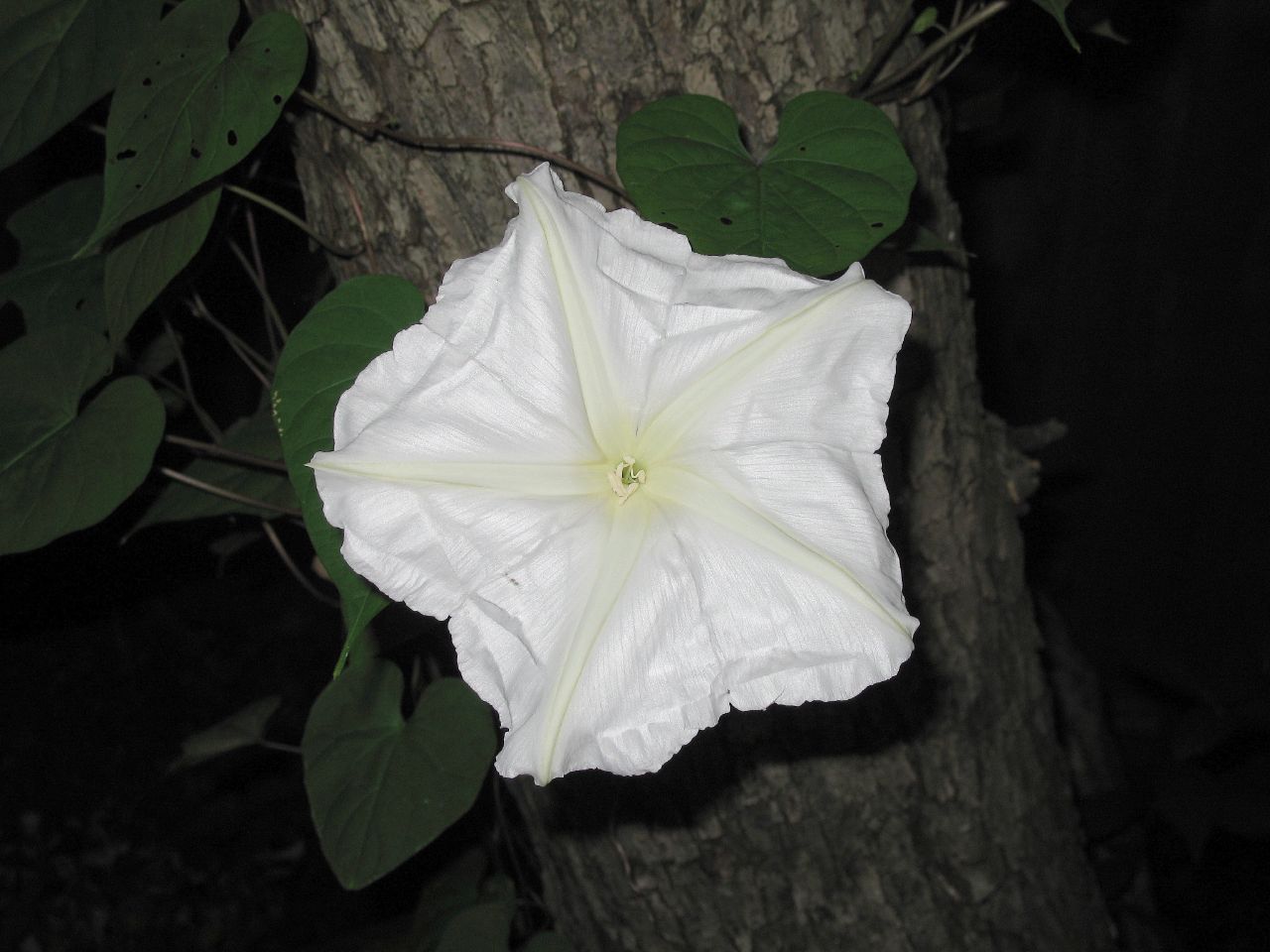
Moonflower
Ipomoea alba
☀️ Full Sun 💧 Moderate
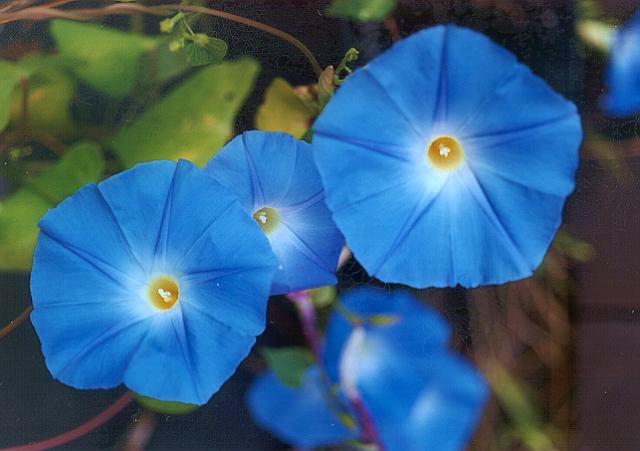
Morning Glory
Ipomoea tricolor
☀️ Full Sun 💧 Moderate

Common Morning Glory
Ipomoea purpurea
☀️ Full Sun 💧 Moderate

Sweet Potato
Ipomoea batatas
☀️ Full Sun 💧 Moderate
Blue Morning Glory
Ipomoea indica
☀️ Full Sun 💧 Moderate

Water Spinach
Ipomoea aquatica
☀️ Full Sun 💧 Aquatic