
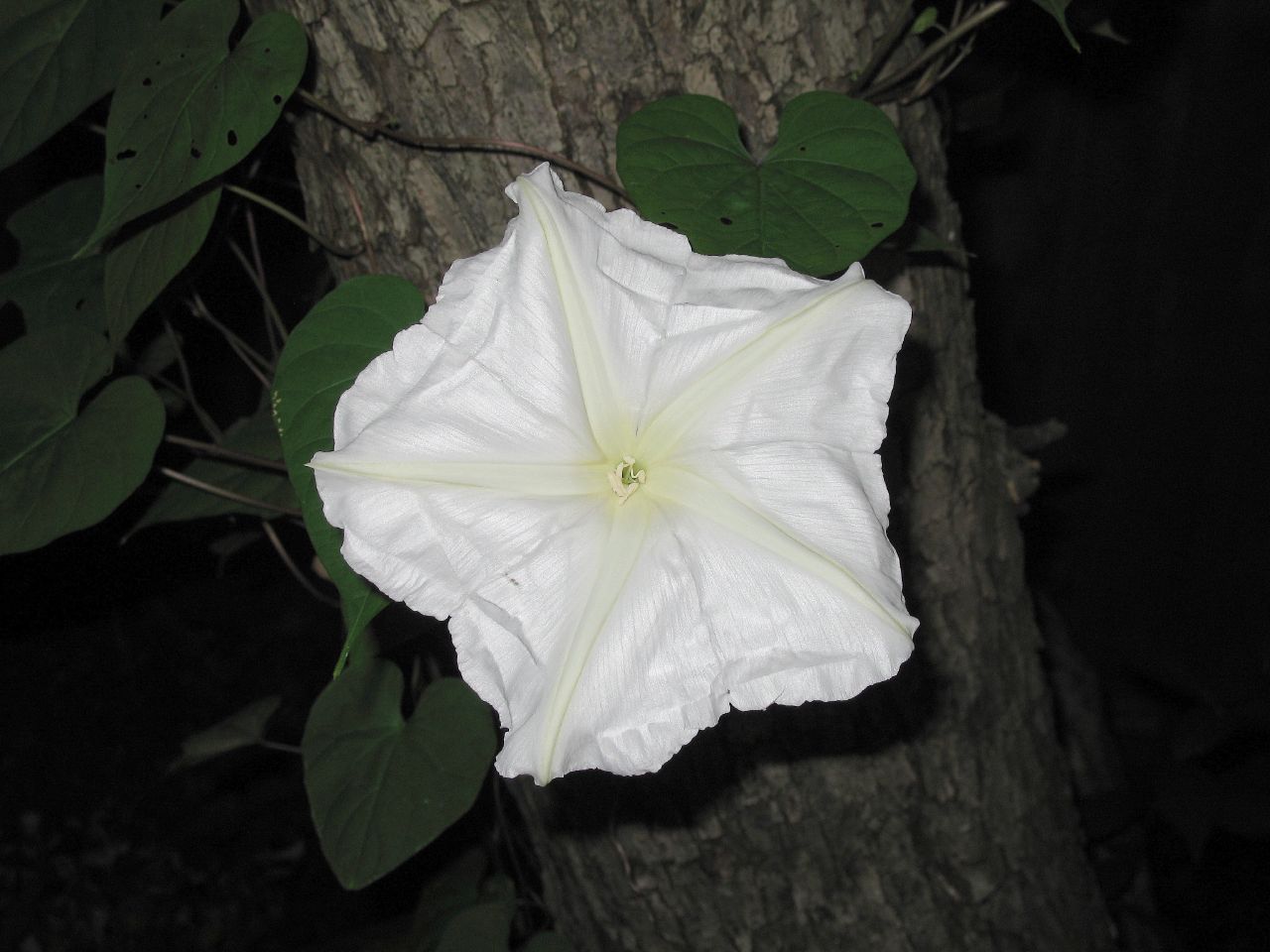
Moonflower (Ipomoea alba) is a twining perennial vine native to tropical and subtropical regions of the Americas, recognised by its fragrant white flowers that unfurl at dusk. In temperate zones, cold winters kill the roots, making it an annual climber that reaches 3 to 6 m (10 to 20 ft) in a single season.
Sowing requires hot summer nights above 15 °C (59 °F) and pre-soaking the rock-hard seeds to ensure bloom production before the autumn frosts arrive.
Key Facts
- Light: Full sun, minimum 6 hours direct light daily
- Water: 2.5 cm (1 in) weekly during active growth
- Bloom time: Mid-summer to late autumn, opening at twilight
- Growth rate: Fast, reaching 3 to 6 m (10 to 20 ft)
- Toxicity: Toxic to humans and pets if ingested
Growing Moonflower: What to Expect
Moonflower requires sturdy structural support and hot summer nights to climb effectively and produce flowers before autumn frosts arrive. A single plant can put on 4 to 6 m (13 to 20 ft) of vine growth between June and September when temperatures remain warm. Gardeners in short-summer areas must start seeds indoors, as the plant demands 80 to 100 warm days from germination to produce its first floral display.
Because the blooms open exclusively in the late afternoon or evening, position this vine near patios, porches, or bedroom windows where the scent and nocturnal flowering can be observed up close.
What Does Moonflower Look Like?
Moonflower produces pure white, saucer-shaped flowers measuring 10 to 15 cm (4 to 6 in) across with long floral tubes extending 7 to 12 cm (3 to 5 in) from the base. Buds are tightly twisted like long pale screws before opening rapidly at sundown to reveal five fused petals with faint greenish throat markings.
The foliage features alternate, dark green, heart-shaped leaves measuring 10 to 20 cm (4 to 8 in) in length. Leaf margins are typically entire, though some specimens develop shallow lobes near the base of the leaf blade.
- Stems: Green, twining, smooth or prickled with soft tubercles
- Fruit: Pointed oval capsules roughly 2.5 cm (1 in) long
- Seeds: Large, hard, ivory-to-tan or black seeds, 8 to 10 mm (0.3 to 0.4 in) across
Where to Plant Moonflower Vines
Plant moonflower in a site receiving at least 6 to 8 hours of direct sunlight each day and sheltered from high winds. Strong sunlight drives the bud development required for evening opening, while shade results in sparse flowering and excessive stem elongation.
Choose an area with well-drained soil rich in organic matter. Avoid soil locations that hold standing water after rainfall, as cool, saturated soil slows root development and invites rot during early spring growth.
How to Plant Moonflower Seeds
Moonflower seeds must be nicked with a file and soaked in warm water for 12 to 24 hours before planting to penetrate their tough outer coats. Sow scarified seeds 1.5 cm (0.6 in) deep directly outdoors only after soil temperatures remain consistently above 18 °C (64 °F).
For indoor starts in northern zones:
- Sow into biodegradable peat or coir pots 4 to 6 weeks before your last frost date
- Maintain soil heat between 21 and 26 °C (70 and 78 °F) using a germination mat
- Plant out entire biodegradable pots to avoid disturbing the sensitive taproots
- Space seedlings 30 to 45 cm (12 to 18 in) apart along fences or trellises
Watering and Feeding Moonflower Vines
Water moonflower with 2.5 cm (1 in) of water per week and limit high-nitrogen fertilisers to prevent dense foliage that suppresses flower bud formation. Soil should remain evenly moist but never waterlogged throughout the hot summer months.
If your garden soil is poor, apply a balanced fertiliser with a ratio such as 5-10-10 or 10-20-10 once when the vine reaches 1 m (3.3 ft) in length. High nitrogen feeds produce massive stems and large leaves but cause flower buds to abort before opening.
Trellising and Pruning Moonflower
Pinch the terminal growing tips when young moonflower stems reach 1.2 to 1.5 m (4 to 5 ft) in height to stimulate multiple lateral branches and more flower sites. Unlike tendril-climbing plants like sweet peas, this vine climbs by twining its main stems tightly around upright posts, strings, or wires.
Provide netting, wire mesh, or a lattice trellis with vertical components no thicker than 5 cm (2 in) in diameter. Heavier wooden fence posts require supplemental wire guides, as thick lumber exceeds the winding grip of young moonflower shoots.
How to Propagate Moonflower
Propagate moonflower using mature seeds collected in autumn or semi-ripe stem cuttings taken in late summer before frost. Seeds remain the standard and most reliable method for home gardeners.
To root stem cuttings:
- Cut a 15 cm (6 in) stem tip just below a leaf node in late summer
- Strip the bottom two leaves, leaving two sets of upper foliage
- Dip the cut end into rooting hormone powder
- Insert into moist perlite or coarse seed-starting mix
- Maintain high humidity under a clear cover at 21 to 24 °C (70 to 75 °F) until roots form in 2 to 3 weeks
Common Moonflower Pests and Growing Problems
Inspect moonflower foliage regularly for spider mites, whiteflies, and fungal rust, which proliferate in hot, dry, or overcrowded conditions. Red spider mites spin fine webbing on leaf undersides during mid-summer heat waves, causing foliage to stipple and turn bronze.
Combat pests and disease with these steps:
- Blast undersides of leaves with a sharp spray of water to dislodge mites
- Spray insecticidal soap on stems colonized by whitefly nymphs
- Water exclusively at soil level to prevent fungal leaf rust (Coleosporium ipomoeae)
- Space vines adequately to ensure constant air circulation around dense foliage
Winterizing and Overwintering Moonflower
In USDA zones below zone 10, moonflower vines die completely at the first frost and must be pulled up and composted. In frost-free subtropical climates, cut old stems back to 30 cm (12 in) from the base in late winter to stimulate fresh spring shoots.
Container-grown plants can be brought indoors before outdoor night temperatures drop below 10 °C (50 °F). Place the pot in a warm, sunny south-facing window, cut water by half, and halt feeding until active spring growth resumes.
Managing Moonflower Night Blooms
Moonflower buds burst open within 2 to 3 minutes during dusk and release an intense, sweet fragrance that lasts until mid-morning sunlight hits the petals. Individual blossoms last only a single night, collapsing into limp purple-tinted spirals as daylight increases.
Large hawk moths and sphinx moths (family Sphingidae) serve as the primary night-time pollinators, drawn to the pale white petals and deep nectar tubes. On overcast or rainy mornings, blooms may remain open until midday before wilting.
Year-Round Moonflower Care
| Spring | Nick and soak seeds overnight. Start seeds indoors 4 to 6 weeks before your last frost, or sow directly into warm garden soil after all danger of frost has passed. |
|---|---|
| Summer | Direct young twining shoots onto your trellis. Provide 2.5 cm (1 in) of water weekly and monitor leaf undersides for spider mites during dry spells. |
| Autumn | Collect brown, dried seed pods before the first freeze to store for next season. Cut down and discard frost-killed annual vines. |
| Winter | Store harvested seeds in a cool, dry, dark envelope. In USDA zones 10 to 12, prune dormant woody base stems back to 30 cm (12 in). |
Common Moonflower Problems and Fixes
| What you see | Likely cause | What to do |
|---|---|---|
| Vines grow vigorously but produce no flowers | Excess soil nitrogen from fertiliser or manure | Stop all fertilising and apply a high-phosphorus bloom booster if necessary. |
| Yellow, stippled leaves with fine webbing underneath | Two-spotted spider mites during hot, dry weather | Rinse leaf undersides thoroughly with cold water or apply insecticidal soap. |
| Seeds fail to germinate after two weeks in soil | Seed coat was not nicked, or soil temperature is below 18 °C (64 °F) | Scarify new seeds with a file, soak 24 hours, and keep soil above 21 °C (70 °F). |
| Orange or yellow powdery pustules under leaves | Rust fungus caused by wet foliage and poor air circulation | Remove diseased leaves and switch to drip irrigation at the soil line. |
Companion Plants for Moonflower
Pair moonflower with day-blooming climbers and evening-scented perennials to maintain visual interest and scent across the full 24-hour cycle. The classic partnership interplants moonflower on the same trellis with morning glory (Ipomoea purpurea), giving sky-blue blooms by day and white flowers by night.
Effective companion plants include:
- Morning glory (Ipomoea purpurea) for day-long trellis coverage
- Night-scented stock (Matthiola longipetala) beneath the vine for layered evening perfume
- Flowering tobacco (Nicotiana alata) to attract nocturnal moth pollinators to the border
- Four o’clock (Mirabilis jalapa), opening its flowers in late afternoon just before moonflower
Frequently Asked Questions
What is the difference between moonflower vine and bush moonflower?
Moonflower vine is Ipomoea alba, a twining climber in the morning glory family, while bush moonflower refers to Datura inoxia or Datura stramonium, which are upright woody shrubs in the nightshade family. Datura produces erect, spiky seed pods and contains lethal tropane alkaloids, whereas Ipomoea alba produces smooth pods on climbing stems.
Can you grow moonflower in pots outdoors?
Yes, moonflower grows well in outdoor containers holding at least 20 to 30 litres (5 to 7.5 gallons) of potting mix. You must insert a sturdy 1.5 to 2 m (5 to 6.5 ft) trellis directly into the pot and water frequently, as container soil dries out rapidly in summer heat.
Can moonflower be grown indoors?
Moonflower rarely thrives indoors long-term because it requires high light levels and sprawling space to climb. It can, however, be started indoors as a seedling under grow lights or overwintered in a sunny conservatory kept above 15 °C (59 °F).
Are moonflower seeds poisonous?
Yes, moonflower seeds are toxic to humans, dogs, and cats if swallowed. They contain indole alkaloids that induce vomiting, diarrhea, dilated pupils, and disorientation, so keep stored seeds and seed pods out of reach of children and pets.
Why do my moonflower blooms only open at night?
Moonflower evolved to attract nocturnal pollinators like sphinx and hawk moths, which feed on nectar during twilight and darkness. The flowers are triggered to unfurl as daylight diminishes and light levels drop, closing once bright sunlight hits the petals the next morning.
Sources & Verification
Taxonomy and distribution are checked against the databases below. Care guidance is written for cultivated species only and reviewed by our editor. How We Build Plant Profiles →
- Missouri Botanical GardenHorticultural care, hardiness, and botanical characteristics.
- NC State Extension Gardener Plant ToolboxPlant identification, vine habits, and cultural requirements.
- Kew Plants of the World OnlineNative distribution and accepted taxonomy.
- GBIF — Global Biodiversity Information Facilitytaxonomy, synonyms, occurrence records
- Wikipediageneral reference
More in Ipomoea
Blue Morning Glory
Ipomoea indica
☀️ Full Sun 💧 Moderate

Water Spinach
Ipomoea aquatica
☀️ Full Sun 💧 Aquatic

Sweet Potato
Ipomoea batatas
☀️ Full Sun 💧 Moderate
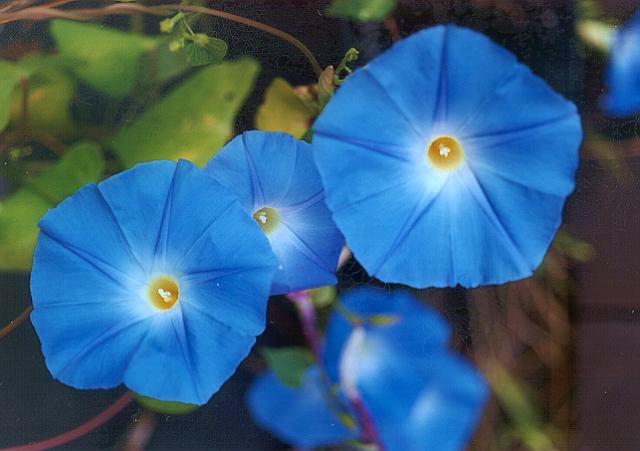
Morning Glory
Ipomoea tricolor
☀️ Full Sun 💧 Moderate

Common Morning Glory
Ipomoea purpurea
☀️ Full Sun 💧 Moderate

Japanese Morning Glory
Ipomoea nil
☀️ Full Sun 💧 Moderate