

Common Morning Glory (Ipomoea purpurea) is a vigorous annual climbing vine native to Mexico and Central America, recognized by its large heart-shaped leaves and trumpet-like flowers. In a single growing season, this vine can reach lengths of 3 m (10 ft) or more, making it a frequent choice for covering fences and trellises.
While this species provides rapid vertical growth, it is a prolific self-seeder that can become aggressive in warm climates. It is often confused with the blue morning glory (Ipomoea tricolor), but can be identified by the fine hairs on its stems and sepals.
Key Facts
- Growth Habit: Climbing vine reaching 2-4 m (6-13 ft)
- Light: Minimum 6-8 hours of direct full sun
- Water: Keep soil moist but never waterlogged
- Toxicity: Seeds are toxic to humans and pets
- Sowing: Soak seeds for 24 hours before planting
Is Common Morning Glory Right for Your Garden?
Common Morning Glory is best suited for gardeners who need rapid vertical coverage on a budget. Because it grows from seed to 3 m (10 ft) in just a few months, it effectively hides chain-link fences or unsightly walls during the summer. You should choose this plant only if you are prepared to manage its self-seeding habit, as dropped seeds will sprout the following spring.
This vine is an annual in temperate zones, meaning it will die with the first hard frost. In tropical regions, it may behave as a short-lived perennial. It thrives in containers on sunny balconies provided it has a sturdy trellis or twine to grip.
Identifying Ipomoea purpurea
You can identify Common Morning Glory by its broad, heart-shaped leaves and stems covered in downward-pointing hairs. The leaves typically measure 7-12 cm (3-5 in) in length and are arranged alternately along the twining stems. Unlike some other climbing vines, it lacks tendrils and climbs by wrapping its entire stem around a support.
The flowers are trumpet-shaped, 5-8 cm (2-3 in) wide, and appear in clusters of one to five. They open in the early morning and usually wither by mid-afternoon. The seeds are held in rounded capsules that turn brown and papery when mature, each containing 4-6 dark, wedge-shaped seeds.
Choosing the Best Planting Site
Common Morning Glory requires full sun and shelter from strong winds to bloom effectively. If the site receives less than six hours of direct sunlight, the vine will produce lush green foliage but very few flowers. Because the stems are thin, a location protected from high winds prevents the vine from being torn off its support.
The soil should be moderately fertile but well-drained. Surprisingly, soil that is too rich in nitrogen will encourage leaf growth at the expense of flowers. Avoid areas where water pools after rain, as the roots are prone to rot in soggy conditions.
How to Plant Common Morning Glory Seeds
Sow seeds directly outdoors after the last frost when soil temperatures reach at least 18 °C (65 °F). Because the seed coat is very hard, you must nick the seeds with a file or soak them in warm water for 24 hours to improve germination. Plant them 1 cm (0.5 in) deep and space them 15-30 cm (6-12 in) apart.
Germination typically occurs within 7-14 days. Once the seedlings are 10 cm (4 in) tall, provide a support system immediately. If you start them indoors, use peat or paper pots to avoid disturbing the sensitive taproot during transplanting.
Watering and Feeding Requirements
Water the vine once or twice a week to keep the soil consistently moist but not saturated. During peak summer heat, container-grown plants may require daily watering to prevent the large leaves from wilting. Applying a 5 cm (2 in) layer of mulch around the base helps retain moisture and keeps the roots cool.
Avoid high-nitrogen fertilizers which stimulate excessive vine growth. Instead, use a phosphorus-rich fertilizer (like a 5-10-5 NPK ratio) once a month during the growing season to promote flower production. If your soil is already healthy, the plant often requires no supplemental feeding at all.
Managing and Pruning the Vines
Pruning is mostly used to control the spread and prevent self-seeding rather than to shape the plant. If the vine reaches the top of its support, you can pinch off the growing tips to encourage lateral branching and more flowers. To prevent the plant from becoming invasive in your garden, remove faded flowers before they develop into seed pods.
In late autumn, the entire vine will turn brown and die. You should pull the dead vines down and dispose of them to prevent disease buildup. Do not compost the vines if they have mature seed pods, as the seeds may survive the composting process and sprout where you spread the mulch.
Common Morning Glory Problems and Pests
The most frequent issue is yellowing lower leaves, often caused by overwatering or poor drainage. Spider mites may also attack during hot, dry spells, causing the foliage to look stippled or bronzed. You can manage these pests by spraying the undersides of the leaves with a strong stream of water or using insecticidal soap.
Leaf miners can create winding white trails inside the leaf tissue. While unsightly, they rarely kill the plant. Fungal diseases like rust or leaf spot can occur in humid weather; ensure good airflow between plants and avoid overhead watering to keep the foliage dry.
Year-Round Care for Common Morning Glory
| Spring | Soak seeds for 24 hours and sow directly outdoors after the last frost. Install trellises or netting before seedlings emerge. |
|---|---|
| Summer | Water deeply twice a week and deadhead spent blooms daily to prolong flowering and prevent unwanted seed dispersal. |
| Autumn | Collect dried seed pods for next year’s planting. Pull down dead vines after the first frost kills the foliage. |
| Winter | Store collected seeds in a cool, dry place. Plan new support structures for the following season. |
Common Morning Glory Growing Problems
| What you see | Likely cause | What to do |
|---|---|---|
| Lush leaves but no flowers | Excess nitrogen in soil | Switch to a phosphorus-heavy fertilizer and stop using manure. |
| Sticky residue on stems | Aphid infestation | Spray the vine with a mixture of water and a few drops of dish soap. |
| Wilting despite wet soil | Root rot | Reduce watering frequency and ensure the pot or garden bed has better drainage. |
Popular Ipomoea purpurea Cultivars
- ‘Grandpa Ott’s’ – deep purple with a red star center
- ‘Kniola’s Black’ – dark violet, almost black flowers
- ‘Milky Way’ – white petals with five purple stripes
- ‘Crimson Rambler’ – bright red flowers with white throats
- ‘Star of Yelta’ – deep purple with a rose-colored star
Best Companion Plants
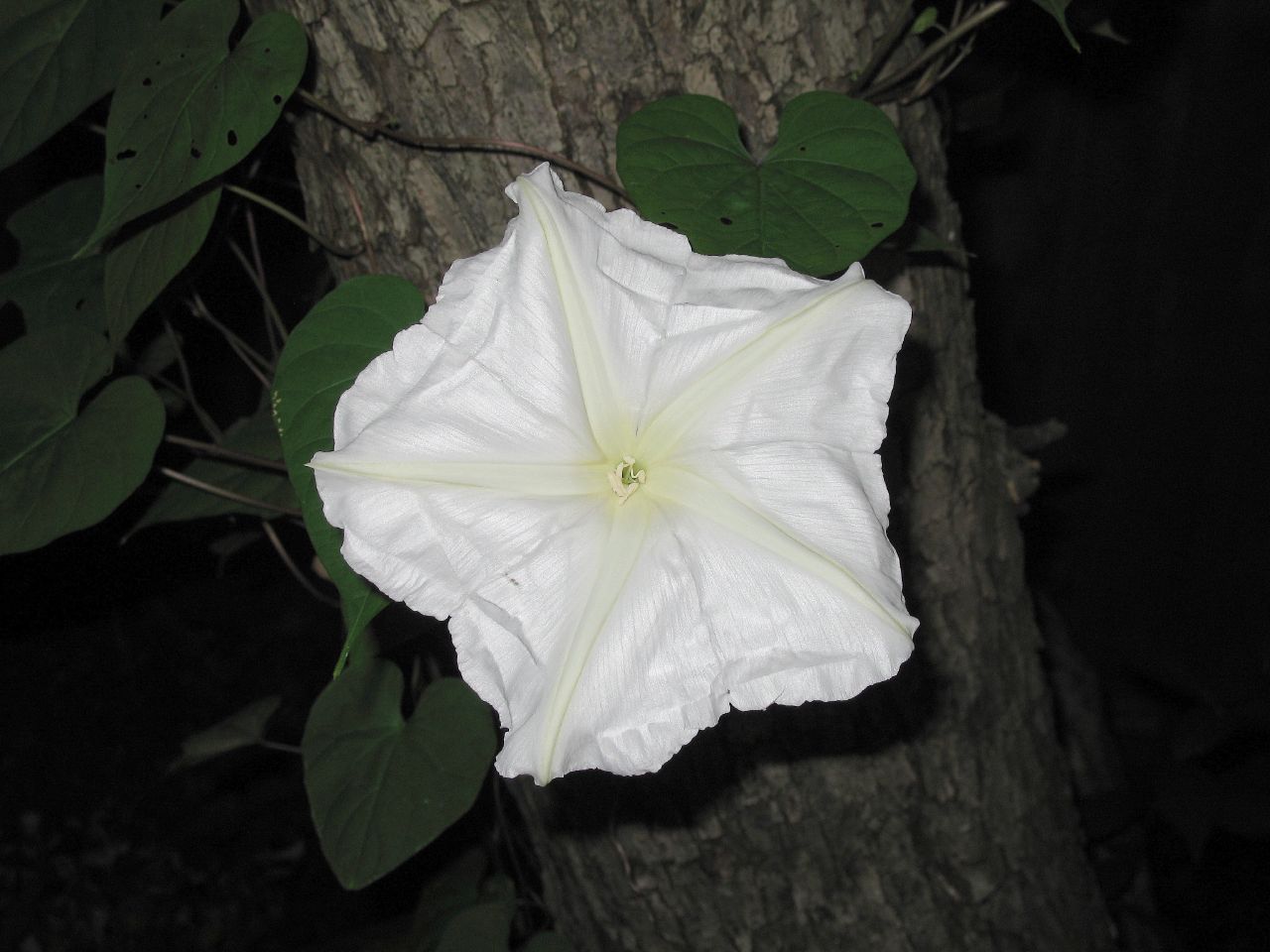
Common Morning Glory pairs well with other sun-loving climbers and tall annuals that share its growth rate. Planting it alongside Moonflower (Ipomoea alba) provides a 24-hour floral display, as the morning glory opens at dawn and the moonflower opens at dusk. Tall sunflowers (Helianthus annuus) can even serve as living trellises for the vines.
- Moonflower (Ipomoea alba) – for evening fragrance and white blooms
- Black-eyed Susan vine (Thunbergia alata) – for contrasting yellow flowers
- Purple top vervain (Verbena bonariensis) – to attract more pollinators to the area
Frequently Asked Questions
Is common morning glory invasive?
Yes, it is considered a noxious weed in some regions, including parts of the United States and Australia, because it self-seeds aggressively. Check local regulations before planting and always remove seed pods before they drop.
Are common morning glory seeds poisonous?
Yes, the seeds of Ipomoea purpurea contain ergoline alkaloids and are toxic if ingested by humans, dogs, or cats. Ingestion can cause nausea, vomiting, and in large amounts, hallucinations.
What is common morning glory syndrome?
Common morning glory syndrome is a rare congenital eye deformity and is completely unrelated to the plant species. It is named only because the optic nerve looks like the flower's shape under examination.
Why do my morning glory flowers close so early?
It is natural for the flowers to close by midday, especially in high heat or direct afternoon sun. On cloudy or cool days, the blooms may stay open until late afternoon.
Common morning glory vs Heavenly Blue: what is the difference?
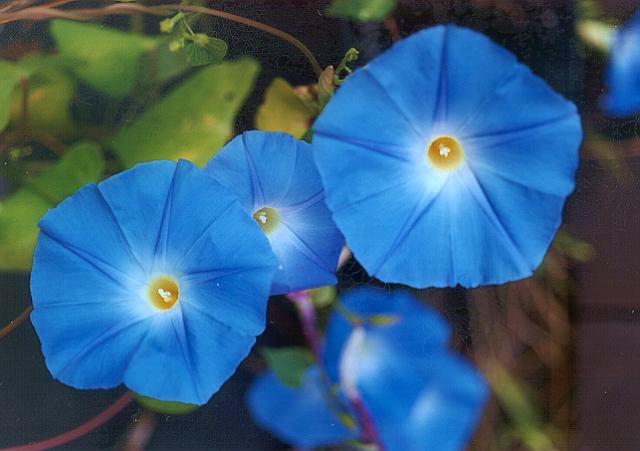
Common morning glory (Ipomoea purpurea) has hairy stems and sepals, while 'Heavenly Blue' belongs to a different species (Ipomoea tricolor) which has smooth, hairless stems.
Information about traditional or historical uses is provided for educational interest only and is not medical advice. Do not use any plant to treat a condition without speaking to a qualified professional.
Sources & Verification
Taxonomy and distribution are checked against the databases below. Care guidance is written for cultivated species only and reviewed by our editor. How We Build Plant Profiles →
More in Ipomoea

Water Spinach
Ipomoea aquatica
☀️ Full Sun 💧 Aquatic
Moonflower
Ipomoea alba
☀️ Full Sun 💧 Moderate
Morning Glory
Ipomoea tricolor
☀️ Full Sun 💧 Moderate

Sweet Potato
Ipomoea batatas
☀️ Full Sun 💧 Moderate

Japanese Morning Glory
Ipomoea nil
☀️ Full Sun 💧 Moderate
Blue Morning Glory
Ipomoea indica
☀️ Full Sun 💧 Moderate