
Ipomoea indica is a fast-growing, perennial climbing vine in the Convolvulaceae family, native to tropical regions. It is widely recognized for its large, funnel-shaped flowers that transition from blue to purple throughout the day.
You will need a sturdy support structure to manage its aggressive, twining stems. It thrives best in warm climates where it can grow several meters in a single season.
Key Facts
- Light: Full sun for at least 6 hours daily
- Water: Keep soil consistently moist but not waterlogged
- Hardiness: Zones 9-11; protect from frost
- Growth: Can reach 3-6 m (10-20 ft) in height
- Bloom: Spring through autumn
Is Blue Morning Glory Right for Your Garden
This vine is best suited for gardeners who have ample space and a strong trellis or fence. It grows rapidly and can quickly overwhelm smaller plants or structures if left unmanaged.
You will enjoy this plant if you want a reliable screen of green foliage and frequent blooms. It is not a plant for containers unless you provide a very large pot and constant pruning. Its aggressive nature means it is best kept away from delicate shrubs that might be smothered by its twining stems.
How to Identify Blue Morning Glory
You can identify Ipomoea indica by its heart-shaped or three-lobed leaves and large, funnel-shaped flowers. The blooms typically measure 6-8 cm (2-3 in) in diameter.
The flowers open in the morning and often fade to a reddish-purple hue by the evening. The stems are covered in fine, soft hairs, which help the vine grip onto supports as it climbs upwards. Unlike some other species, this plant rarely sets seed in many garden environments, relying instead on vegetative spread.
Where to Plant Blue Morning Glory
Choose a site that receives at least 6 hours of direct sunlight every day to ensure maximum flowering. The soil must be well-drained, as the roots will rot in heavy, waterlogged clay.
Prepare your planting area by incorporating organic matter into the soil to improve moisture retention. Ensure the location has a sturdy structure nearby, such as a pergola, fence, or wire mesh, for the vine to climb. Avoid planting it near native habitats where it might escape and become invasive.
Watering and Feeding Requirements
Maintain consistent soil moisture throughout the growing season, especially during hot, dry spells. Young plants require more frequent watering until they establish a deep root system.
Apply a balanced, slow-release fertilizer once in early spring to encourage vigorous growth. Avoid high-nitrogen fertilizers, which promote excessive leaf growth at the expense of flower production. If you are growing it in a container, you may need to apply a liquid fertilizer every 4 weeks during the peak summer months.
Pruning and Maintenance
Prune your vine at least twice a year to keep its size under control and encourage new growth. You can cut back overgrown stems in late winter or early spring before the main growth flush begins.
Regularly remove dead or damaged stems to improve air circulation and reduce the risk of fungal infections. If the vine becomes too dense, thin out the interior branches to allow light to reach the center of the plant. Always use clean, sharp shears to ensure clean cuts that heal quickly.
Propagating Blue Morning Glory
You can easily propagate this vine using stem cuttings taken during the active growing season. Select a healthy, non-flowering stem about 15 cm (6 in) long for the best results.
- Remove the lower leaves from your cutting.
- Place the stem in a glass of water or a pot of moist potting mix.
- Keep the cutting in a warm, bright spot out of direct sun.
- Roots usually appear within 2-3 weeks.
Winter Care for Blue Morning Glory
Protect your plant from temperatures below 5 °C (41 °F), as it is not frost-tolerant. In colder regions, you should treat it as an annual or move container-grown plants into a greenhouse.
If you live in a climate with mild winters, the vine may remain evergreen. In areas with light frost, the foliage may die back to the ground, but the root system can often survive if mulched heavily. Trim away any frost-damaged growth once the danger of freezing has passed in the spring.
Common Problems and Pests
Watch for aphids and spider mites, which are the most common pests affecting this species. These insects typically congregate on the undersides of leaves or around new flower buds.
- Use a strong stream of water to dislodge aphids from the stems.
- Apply insecticidal soap if you notice a heavy infestation.
- Improve air circulation to prevent powdery mildew on the leaves.
- Yellowing leaves often indicate overwatering or poor drainage.
Blue Morning Glory Through the Year
| Spring | Apply a balanced fertilizer and prune back any winter-damaged stems. Ensure the plant has a sturdy trellis to begin its new growth phase. |
|---|---|
| Summer | Water regularly to keep the soil moist during high heat. Monitor for aphids and spider mites, treating them promptly if spotted. |
| Autumn | Reduce watering as temperatures drop. If you live in a frost-prone area, prepare to move containers indoors or mulch the base of the plant. |
| Winter | Keep the plant dry and protected from frost. Prune back overgrown or tangled stems to prepare for the spring growth cycle. |
What Is Wrong With My Blue Morning Glory
| What you see | Likely cause | What to do |
|---|---|---|
| Yellowing leaves | Overwatering or poor drainage | Reduce watering frequency and ensure the soil drains freely. |
| No flowers | Too much nitrogen or insufficient light | Switch to a low-nitrogen fertilizer and move the plant to a sunnier spot. |
| Stunted growth | Root-bound container | Repot into a larger container with fresh, nutrient-rich soil. |
Companions for Blue Morning Glory
Pair this vine with other vigorous climbers or sturdy shrubs that can withstand its growth habit. Good companions include plants that enjoy similar sun and moisture levels.
- Passion flower (Passiflora caerulea)
- Jasmine (Jasminum officinale)
- Clematis (Clematis viticella)
- Climbing roses (Rosa spp.)
Frequently Asked Questions
Is Blue Morning Glory toxic to cats and dogs?
Yes, all parts of the plant are toxic to pets if ingested. Keep it out of reach of curious animals.
How does Blue Morning Glory differ from the common morning glory?
Blue Morning Glory (Ipomoea indica) is a perennial vine, whereas the common morning glory (Ipomoea purpurea) is typically grown as an annual. Ipomoea indica also rarely sets seed, unlike the prolific seeding habit of Ipomoea purpurea.
Does this plant have any medicinal uses?
There are no established or safe medicinal uses for this plant. It is primarily grown for its ornamental value.
Why is my Blue Morning Glory not blooming?
Lack of blooming is usually caused by too little sunlight or an excess of nitrogen in the fertilizer. Ensure it receives at least 6 hours of full sun daily.
Sources & Verification
Taxonomy and distribution are checked against the databases below. Care guidance is written for cultivated species only and reviewed by our editor. How We Build Plant Profiles →
More in Ipomoea
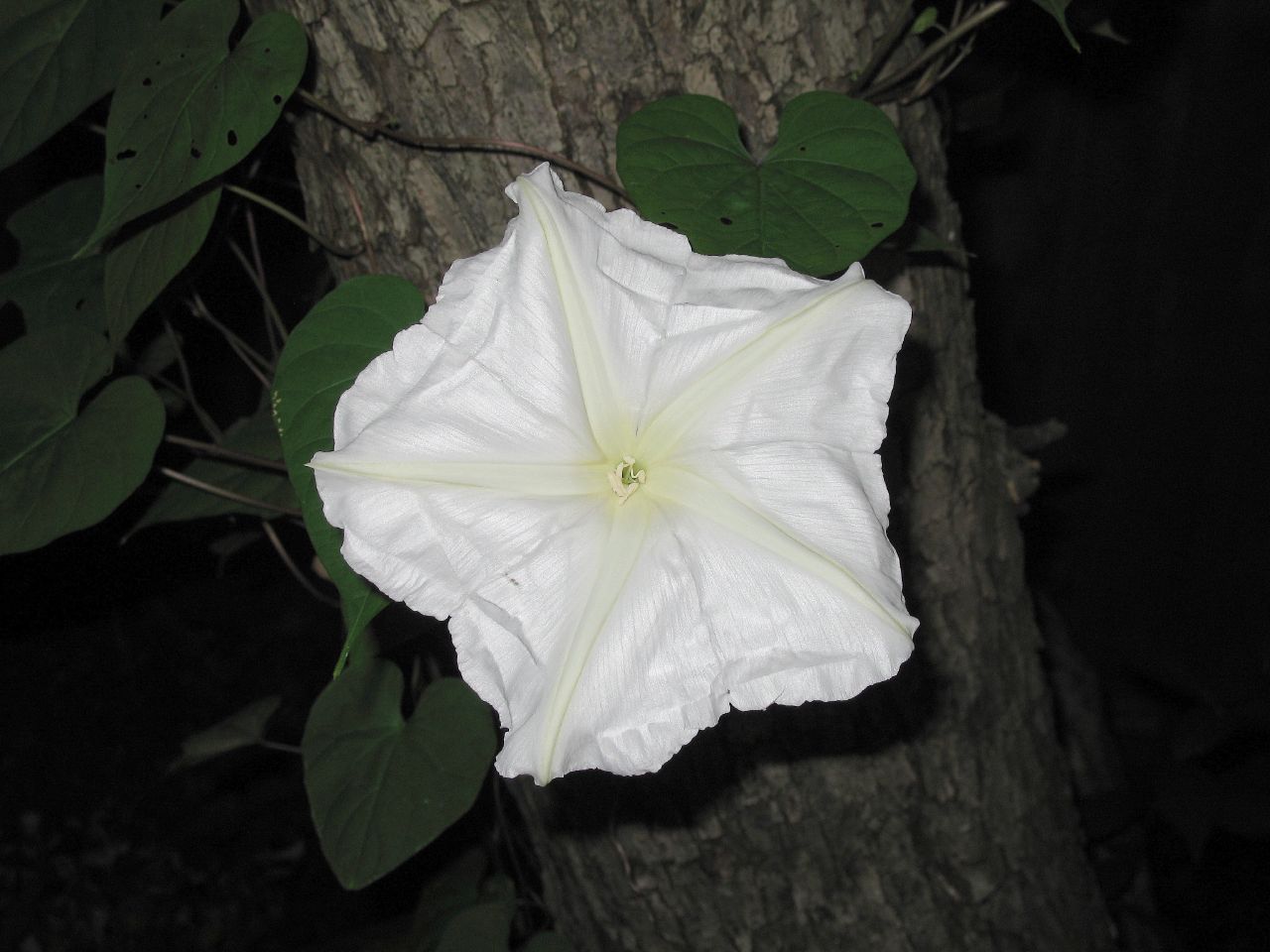
Moonflower
Ipomoea alba
☀️ Full Sun 💧 Moderate
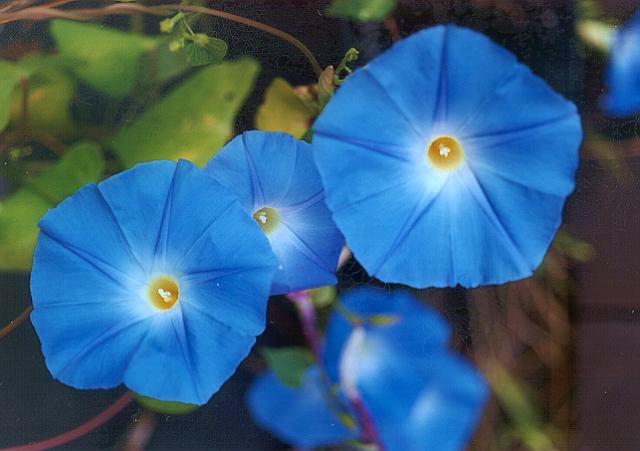
Morning Glory
Ipomoea tricolor
☀️ Full Sun 💧 Moderate

Common Morning Glory
Ipomoea purpurea
☀️ Full Sun 💧 Moderate

Japanese Morning Glory
Ipomoea nil
☀️ Full Sun 💧 Moderate

Water Spinach
Ipomoea aquatica
☀️ Full Sun 💧 Aquatic

Sweet Potato
Ipomoea batatas
☀️ Full Sun 💧 Moderate