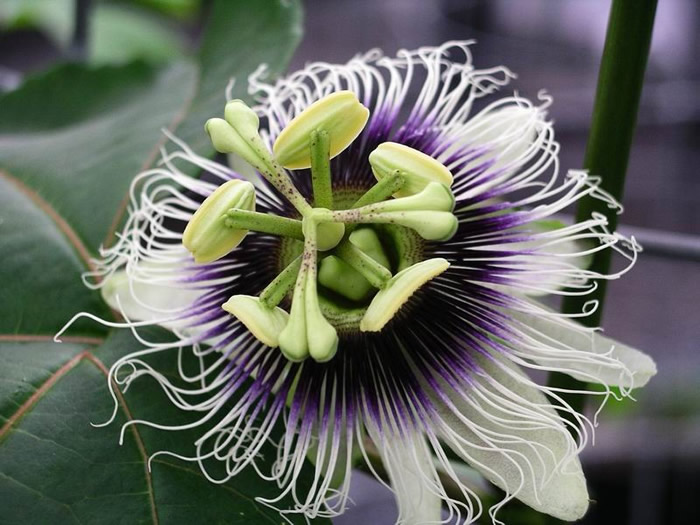
The Blue Passionflower (Passiflora caerulea) is a fast-growing, tendril-climbing vine native to South America, recognised by its complex, star-shaped flowers with blue and white filaments.
Many gardeners grow this plant for its striking blooms and rapid growth, either as an outdoor ornamental in warm climates or as a container plant indoors; providing adequate support for its climbing habit is key.
Key Facts
- Light: Full sun to bright indirect light
- Water: Keep soil consistently moist, but not soggy
- Soil: Well-drained, fertile potting mix
- Hardiness: USDA Zones 6-9 (can be grown as annual or container plant in colder zones)
- Growth: Fast-growing vine, needs support
- Toxicity: Leaves/roots mildly toxic; fruit is edible
Growing Blue Passionflower: What to Expect
Blue Passionflower is a vigorous climber that needs ample space and support to thrive, whether grown indoors or out.
This plant is known for its rapid growth, often reaching several meters in a single season. You will need a trellis, stake, or other structure for its tendrils to grasp.
It adapts well to container living, but requires consistent moisture and feeding to support its fast-growing nature. In colder climates, it is best grown in a pot and brought indoors for winter.
What Does Blue Passionflower Look Like?
The Blue Passionflower is easily identified by its distinctive, intricate flowers and deeply lobed leaves.
Its leaves are palmate, typically divided into five to seven finger-like lobes, dark green, and grow 10-18 cm (4-7 inches) wide. The stems are green and woody with tendrils that coil around supports.
The flowers are 8-10 cm (3-4 inches) across, featuring five white sepals and five white petals, topped by a corona of blue and white or purple filaments. They appear from summer into early autumn, followed by oval, orange-yellow fruits 4-6 cm (1.5-2.5 inches) long.
Light Requirements for Blue Passionflower
Blue Passionflower needs full sun to bright indirect light to produce abundant flowers and healthy growth.
Indoors, place it near a south or west-facing window where it can receive at least 4-6 hours of direct sunlight daily. If light is insufficient, the plant may grow leggy and produce fewer blooms.
Outdoors, choose a location with full sun for best flowering. It can tolerate some partial shade, especially in very hot climates, but flowering may be reduced.
Watering Blue Passionflower
You should water Blue Passionflower when the top 2.5-5 cm (1-2 inches) of soil feels dry to the touch, keeping the soil consistently moist but never waterlogged.
During active growth in spring and summer, this often means watering every few days. Reduce watering frequency in autumn and winter, allowing the soil to dry out a bit more between waterings.
Ensure your pot has drainage holes to prevent root rot. Overwatering is a common problem for this plant.
Soil and Humidity for Blue Passionflower
Blue Passionflower thrives in well-drained, fertile soil with a slightly acidic to neutral pH of 6.0-7.0.
A good potting mix for containers should include compost or other organic matter to retain moisture while allowing excess water to drain. You can use a general-purpose potting mix amended with perlite or sand for improved drainage.
This plant prefers moderate to high humidity, especially when grown indoors. You can increase humidity by misting the foliage regularly, placing the pot on a pebble tray with water, or using a humidifier.
Feeding and Pruning Blue Passionflower
Feed Blue Passionflower every 2-4 weeks during its active growing season (spring and summer) with a balanced liquid fertilizer.
Use a fertilizer slightly higher in phosphorus to encourage flowering, diluted to half strength. Reduce feeding in autumn and stop entirely in winter when the plant’s growth slows.
Prune Blue Passionflower in late winter or early spring to manage its size, encourage bushier growth, and promote more flowers. You can cut back stems by up to one-third, removing any dead, damaged, or weak growth. Hard pruning can rejuvenate an overgrown plant.
How to Propagate Blue Passionflower
Blue Passionflower is most commonly propagated from stem cuttings or seeds.
- Stem Cuttings: Take 10-15 cm (4-6 inch) cuttings from healthy, non-flowering stems in spring or summer. Remove lower leaves and dip the cut end in rooting hormone. Plant in a moist, well-draining potting mix and keep in a warm, humid environment.
- Seeds: Sow fresh seeds in spring after soaking them in warm water for 24 hours to improve germination. Plant them 0.5 cm (0.2 inches) deep in seed-starting mix. Germination can be slow and erratic, sometimes taking several weeks or months.
Common Blue Passionflower Problems
Blue Passionflower can face issues like yellowing leaves, lack of blooms, or pest infestations if care conditions are not met.
Yellow leaves often indicate overwatering or nutrient deficiency. Ensure proper drainage and a consistent feeding schedule. If the plant isn’t flowering, it may not be getting enough light or nutrients, or it might need pruning.
Common pests include spider mites, aphids, and whiteflies. Inspect your plant regularly and treat infestations with insecticidal soap or neem oil. Good air circulation helps prevent fungal issues.
Is Blue Passionflower Toxic?
The leaves and roots of Blue Passionflower are considered mildly toxic to humans and pets, containing cyanogenic glycosides.
Ingestion of these parts can cause mild digestive upset. While the plant is generally not lethal, it’s best to keep it out of reach of curious children and pets.
The ripe fruit, however, is edible, although it is often described as bland.
Blue Passionflower Fruit: Is It Edible?
Yes, the fruit of the Blue Passionflower (Passiflora caerulea) is edible when ripe, though it is not highly prized for its flavor.
The fruit is an oval, orange-yellow berry, typically 4-6 cm (1.5-2.5 inches) long. It contains a jelly-like pulp with small seeds.
While safe to eat, its taste is often described as mild or bland compared to other passionfruit varieties like purple passionfruit (Passiflora edulis). It can be eaten fresh or used in drinks.
Blue Passionflower Through the Seasons
| Spring | Increase watering and begin regular feeding with a balanced liquid fertilizer. Prune any dead or weak stems to encourage new growth. Provide a trellis or support for climbing. |
|---|---|
| Summer | Water frequently to keep the soil consistently moist, especially during hot periods. Continue feeding every 2-3 weeks to support flowering. Monitor for pests like spider mites and aphids. |
| Autumn | Gradually reduce watering frequency as temperatures drop. Decrease fertilizer applications and prepare to bring container plants indoors before the first frost if you live in a cold climate. |
| Winter | Water sparingly, allowing the top half of the soil to dry out completely between waterings. Stop fertilizing. Provide cooler temperatures (10-16 °C / 50-60 °F) if possible for indoor plants to encourage a rest period. |
Blue Passionflower Problems Explained
| What you see | Likely cause | What to do |
|---|---|---|
| Yellow lower leaves | Overwatering or nutrient deficiency | Check soil moisture; ensure good drainage and fertilize regularly during growth. |
| No flowers | Insufficient light, lack of nutrients, or improper pruning | Move to a brighter spot, use a phosphorus-rich fertilizer, and prune in late winter/early spring. |
| Leggy growth with sparse leaves | Lack of adequate light | Provide more direct sunlight, ideally 4-6 hours per day. |
| Leaves turning brown and crispy | Underwatering or low humidity | Increase watering frequency and mist foliage or use a pebble tray for humidity. |
| Small, distorted leaves or sticky residue | Pest infestation (aphids, spider mites) | Treat with insecticidal soap or neem oil, and improve air circulation. |
Popular Blue Passionflower Cultivars
- 'Constance Elliott' – pure white, fragrant flowers.
- 'Grandiflora' – larger flowers with more pronounced blue filaments.
- 'Lavender Lady' – deep lavender-purple flowers, vigorous growth.
- 'Incense' – a hybrid with large, fragrant, deep purple flowers.
Frequently Asked Questions
Is Blue Passionflower a perennial?
Yes, Blue Passionflower (Passiflora caerulea) is a perennial vine. In USDA Hardiness Zones 6-9, it can survive outdoors year-round, often dying back to the ground in winter and regrowing in spring. In colder zones, it is typically grown as an annual or as a container plant brought indoors for winter protection.
What are the benefits of blue passion flower?
Historically, some species of passionflower, including Passiflora caerulea, have been traditionally used in herbal medicine for their calming properties. They were used to help with anxiety, insomnia, and nervousness. Modern research is exploring these traditional uses, but it is not a substitute for medical advice.
What is the meaning of blue passionflower?
The Blue Passionflower's intricate bloom holds rich symbolism, often associated with the Passion of Christ due to its unique structure. The ten petals and sepals represent the ten faithful apostles, the corona filaments represent the crown of thorns, and the five stamens represent the five wounds. The tendrils are said to represent whips, and the three stigmas represent the three nails.
How do I manage vigorous Blue Passionflower growth?
To manage vigorous Blue Passionflower growth, provide a sturdy trellis or support structure for it to climb, and prune regularly. Hard pruning in late winter or early spring can help control its size and shape, cutting back stems by up to one-third. You can also prune throughout the growing season to remove unwanted tendrils or redirect growth.
Information about traditional or historical uses is provided for educational interest only and is not medical advice. Do not use any plant to treat a condition without speaking to a qualified professional.
Sources & Verification
Taxonomy and distribution are checked against the databases below. Care guidance is written for cultivated species only and reviewed by our editor. How We Build Plant Profiles →