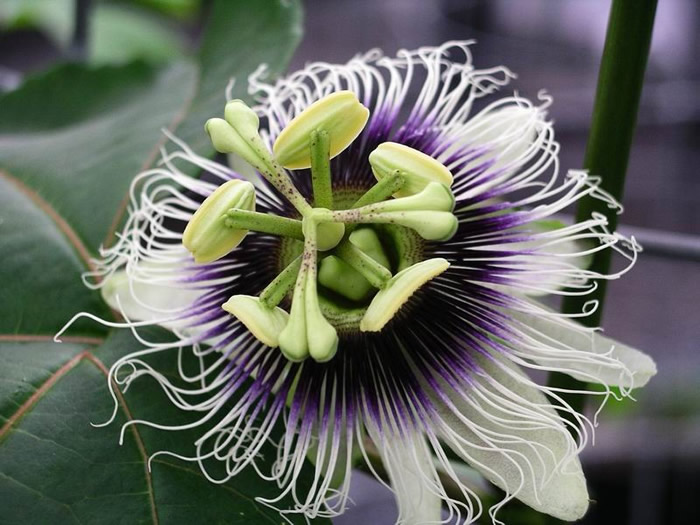
Giant Granadilla is a vigorous perennial climber from the Neotropics characterized by its unique square-shaped stems and massive fruit. Known scientifically as Passiflora quadrangularis, it produces heavy, melon-sized produce that can weigh up to 4 kg (9 lbs) on a single vine.
This species requires more vertical space and heat than the common passionfruit (Passiflora edulis) to reach maturity. You must provide a heavy-duty support structure to prevent the vine from collapsing under the weight of its own fruit during the humid summer months.
Key Facts
- Temperature: Thrives between 18-30 °C (65-86 °F)
- Fruit Size: Reaches lengths of 20-30 cm (8-12 in)
- Support: Requires a pergola capable of holding 50 kg+
- Pollination: Often requires hand-pollination for fruit set
Fitting Giant Granadilla into Your Garden
Giant Granadilla is best suited for large tropical gardens or expansive greenhouses where it has room to climb 15 m (50 ft). Because the fruit is significantly heavier than other passionflowers, a standard garden trellis is usually insufficient. You should plant this near a reinforced pergola, a sturdy fence, or a large tree that can withstand the weight of multiple 30 cm (12 in) fruits.
This vine is a heavy feeder and a thirsty plant, making it a poor choice for small containers or low-maintenance xeriscapes. It is native to regions like Brazil and Colombia, so it expects high humidity and consistent warmth. If you live in a region with frost, you must grow it in a heated conservatory to keep the roots from rotting in cold, damp soil.
Identifying Giant Granadilla: Leaves, Flowers, and Fruit
Giant Granadilla is distinguished by its four-angled, winged stems that feel square when held between your fingers. The leaves are broad and ovate, measuring up to 20 cm (8 in) long, with a smooth margin and a deep green colour. Unlike many other passionflowers with deeply lobed leaves, these are entire and heart-shaped at the base.
The flowers are large and complex, reaching 12 cm (5 in) in diameter with red or purple petals and a dense fringe of banded filaments. These filaments are typically striped with white and violet. The fruit is the most distinctive feature:
- Shape: Oblong or oval with a pale green to yellow skin
- Size: 20-30 cm (8-12 in) long
- Rind: Thick, white, and fleshy
- Pulp: Greyish-purple or translucent, containing many flat seeds
Ideal Growing Conditions for Passiflora quadrangularis
This vine requires full sun and high humidity to produce flowers and set fruit effectively. It performs best when temperatures remain above 15 °C (59 °F) at night and reach up to 30 °C (86 °F) during the day. In arid climates, the flower buds may drop prematurely if the air is too dry, so regular misting or a sheltered position is necessary.
The soil must be rich in organic matter and retain moisture without becoming swampy. A loamy mix with a pH between 6.1 and 7.5 is ideal for nutrient uptake. You should avoid heavy clay that restricts root growth, as the Giant Granadilla has a vigorous root system that needs oxygen to support its rapid 10-metre (33 ft) annual growth.
Sowing Giant Granadilla Seeds and Propagation
Seeds should be sown 1 cm (0.4 in) deep in a warm, moist seed-starting mix. For the best results, soak fresh seeds in warm water or orange juice for 24 hours to break the tough seed coat. Germination typically occurs within 14 to 28 days when kept at a constant temperature of 25 °C (77 °F).
Propagation from cuttings is often more reliable for maintaining specific fruit traits.
- Select a 15 cm (6 in) semi-hardwood cutting with at least two nodes
- Remove the lower leaves and dip the end in rooting hormone
- Place in a mix of perlite and peat moss
- Keep under high humidity for 4-6 weeks until roots establish
Watering and Feeding Your Passionfruit Vine
You should water the vine two to three times per week during the peak growing season to keep the soil consistently moist. Because the leaves are large, the plant loses water rapidly through transpiration, especially in direct sun. If the top 2.5 cm (1 in) of soil feels dry, it is time to irrigate, but ensure the water drains away from the root collar.
Apply a balanced liquid fertiliser every 2 weeks once the vine begins to climb. Switch to a high-potassium fertiliser, such as a tomato feed, when the first flower buds appear to encourage fruit development. Avoid over-applying nitrogen during the flowering stage, as this will result in lush green leaves but very few of the large fruits the species is known for.
When and How to Harvest Giant Granadilla
Harvest the fruit when the skin turns from bright green to a pale yellow-green and emits a sweet fragrance. The fruit will feel slightly soft when pressed gently with your thumb, indicating the internal pulp is ripe. Unlike common passionfruit, which often falls when ripe, Giant Granadilla should be cut from the vine with shears to avoid damaging the heavy fruit.
Expect your first harvest roughly 9 to 12 months after planting if grown from a cutting. A healthy vine can produce 15 to 30 fruits per season in tropical conditions. If the fruit stays on the vine too long, it may become mealy and lose the characteristic acidity that balances its sweetness.
Giant Granadilla Taste and Culinary Uses
The Giant Granadilla is unique because both the pulp and the thick rind are edible. The inner pulp is mildly sweet and acidic, similar to a diluted version of the common passionfruit, and is often used in juices, jellies, and smoothies. In many Caribbean cultures, the pulp is strained to make a refreshing drink known as Barbadine punch.
The fleshy white rind can be eaten raw in salads or cooked like a vegetable.
- Boil the rind with sugar and cinnamon to create a preserve
- Sauté the firm white flesh with spices as a side dish
- Eat the raw pulp directly with a spoon, including the crunchy seeds
- Use the green, unripe fruit as a substitute for squash in stews
Common Pests and Fruit Problems
The most frequent problem is poor fruit set due to lack of pollination. Because the flowers are large and heavy, they require large bees like Carpenter Bees (Xylocopa) to transfer pollen. If these are absent, you must hand-pollinate by rubbing the pollen-laden anthers onto the sticky stigmas in the early morning when the flowers open.
Watch for the larvae of the Gulf Fritillary butterfly (Agraulis vanillae), which can defoliate a vine in days. Aphids and spider mites may also attack the growing tips, causing the 4-angled stems to become stunted or distorted. Fungal leaf spot can occur if there is poor air circulation around the dense canopy, especially during rainy seasons.
Year-Round Care for Giant Granadilla
| Spring | Apply a 5 cm (2 in) layer of organic mulch and start high-nitrogen fertilisation. Prune back any dead wood from winter to encourage new shoots. |
|---|---|
| Summer | Hand-pollinate flowers in the morning. Increase watering to daily if temperatures exceed 32 °C (90 °F) and check for caterpillar infestations. |
| Autumn | Harvest ripe fruits as they turn yellow. Reduce fertilisation as growth slows and prune away excess vines that have finished fruiting. |
| Winter | In cooler zones, move containers indoors or provide frost blankets. Reduce watering significantly to prevent root rot in dormant plants. |
Why Is My Giant Granadilla Failing? Quick Diagnosis
| What you see | Likely cause | What to do |
|---|---|---|
| Flowers drop before fruit forms | Low humidity or lack of pollination | Mist the vine daily and hand-pollinate flowers at dawn. |
| Yellowing leaves with green veins | Magnesium or iron deficiency | Apply a chelated micronutrient spray or Epsom salts to the soil. |
| Fruit shrivelling on the vine | Irregular watering or drought stress | Maintain a consistent watering schedule and mulch the root zone. |
| Sticky residue on stems | Aphid or scale infestation | Spray the vine with insecticidal soap or neem oil. |
Selected Varieties of Passiflora quadrangularis
- ‘Macrocarpa’ – Known for exceptionally large fruits and very thick rinds.
- ‘Variegata’ – Features yellow-splashed leaves, primarily grown as an ornamental.
Frequently Asked Questions
What are the benefits of Passiflora quadrangularis?
The fruit is a significant source of Vitamin C, niacin, and dietary fiber. Traditionally, leaf infusions were used as a mild sedative or to treat asthma, though they contain toxic compounds and must be handled with care.
What does Giant Granadilla taste like?
The taste is mild and melon-like with a floral aroma. The pulp is less intensely tart than common passionfruit, while the rind is bland and crunchy when raw, becoming tender when cooked.
How is Giant Granadilla different from regular passionfruit?
The Giant Granadilla is much larger, often 10 times the weight of a regular passionfruit (Passiflora edulis). It also has a square stem and an edible fleshy rind, whereas the common passionfruit has a round stem and an inedible hard shell.
Is Passiflora quadrangularis toxic to dogs?
Yes, the leaves and unripe fruit of the Giant Granadilla contain cyanogenic glycosides which are toxic to dogs if ingested. Always ensure pets do not chew on the vine or eat fallen, unripe fruit.
Can you grow Giant Granadilla from seeds?
Yes, you can grow it from seeds, but they should be fresh for the best germination rates. Soak them in water for 24 hours before planting them in a warm, humid environment.
Information about traditional or historical uses is provided for educational interest only and is not medical advice. Do not use any plant to treat a condition without speaking to a qualified professional.
Sources & Verification
Taxonomy and distribution are checked against the databases below. Care guidance is written for cultivated species only and reviewed by our editor. How We Build Plant Profiles →