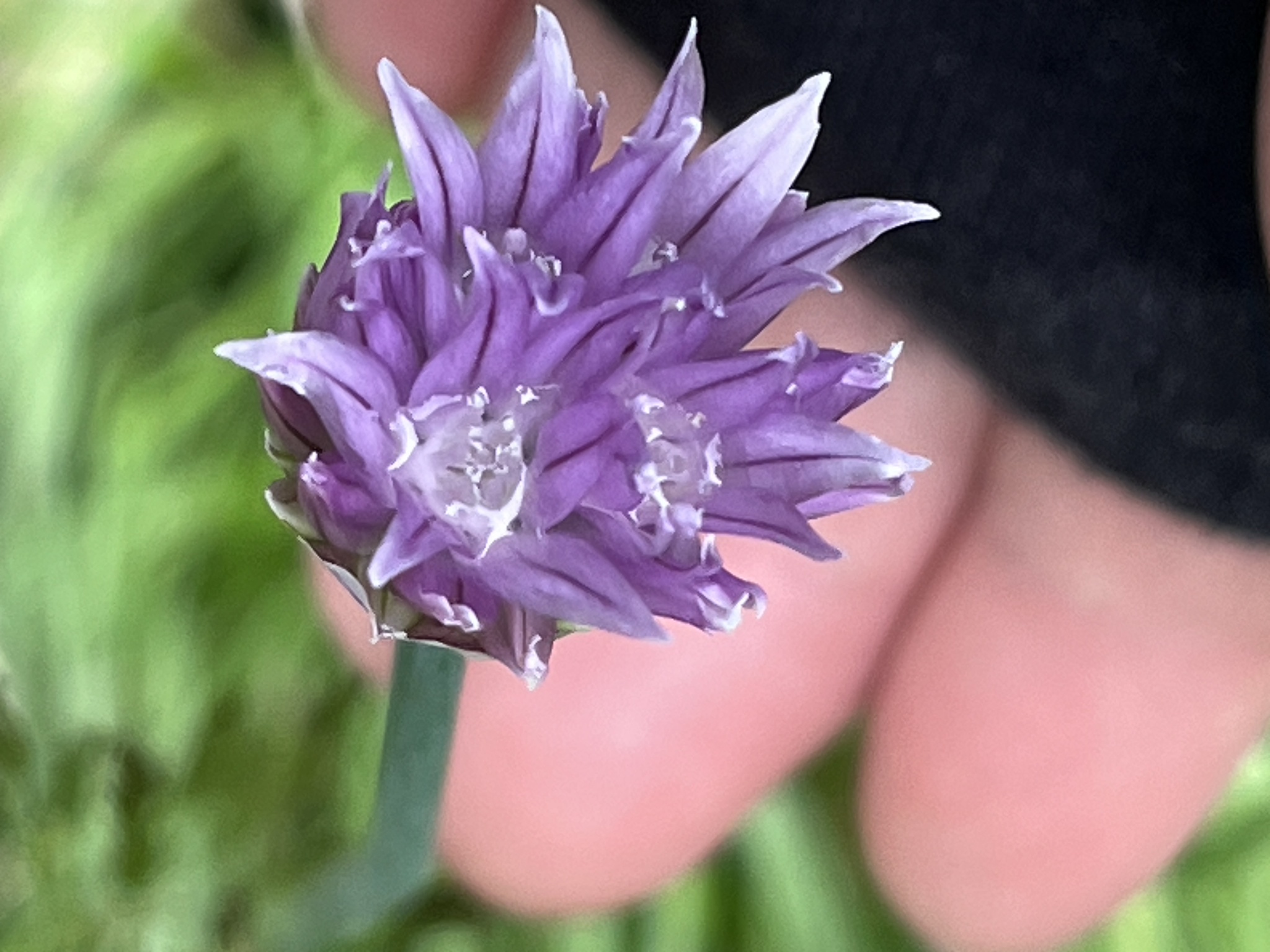
Field garlic (Allium oleraceum) is a bulbous perennial native to dry habitats across Europe and temperate Asia. It grows to heights of 20-50 cm (8-20 in), bearing distinctive pinkish-green flower clusters interspersed with aerial bulblets.
Unlike crow garlic (Allium vineale), this species produces both functional flowers and bulblets within the same head, encased by two long unequal spathe bracts. Crushing any part of the plant releases a sharp, characteristic onion aroma.
Key Facts
- Plant type: Bulbous perennial wildflower
- Height: 20-50 cm (8-20 in)
- Aroma: Strong garlic or onion scent when bruised
- Flowers: Pale green, pink, or brownish bell-shaped blooms
- Toxicity: Non-toxic to humans; toxic to dogs and cats
- Native range: Europe to Western Asia
Encountering Field Garlic in North America and Eurasia
Field garlic establishes easily in open, dry terrain, spreading via subterranean bulbs, aerial bulblets, and seeds. You will usually spot it growing in small clumps or scattered colonies among unmanaged grasses during late spring.
Unlike cultivated garlic (Allium sativum), field garlic remains slender and uncultivated in most landscapes. It persists in disturbed ground, field margins, and roadside banks where vegetation is sparse.
- Growth habit: Slender upright stem with narrow leaves
- Lifespan: Perennial growing from small underground bulbs
- Reproductive output: Produces up to 30 bulblets per flower head
How to Identify Field Garlic Flowers, Leaves, and Seeds
Field garlic grows to a height of 20-50 cm (8-20 in) with hollow or semi-cylindrical leaves that wither before flowering ends. The stem is smooth, solid, and upright, terminating in an umbel wrapped initially by two unequal, leaf-like spathe bracts that extend far beyond the flowers.
The flower head contains a mix of stalked, bell-shaped flowers measuring 6-7 mm (0.24-0.28 in) long and reddish-brown to greenish-purple aerial bulblets. The tepals are greenish-pink or pale purple with darker veins.
- Leaves: 2-4 narrow, grooved leaves attached to the lower half of the stem
- Spathe: Two long, unequal pointed bracts at the base of the umbel
- Flowers: Bell-shaped, pinkish to pale green on slender pedicels
- Seeds: Black, angled seeds produced in small 3-valved capsules
Field Garlic Habitat and Wild Growing Conditions
Field garlic colonizes dry, well-drained soils in full sun to partial shade across temperate zones. It thrives in soils with a pH between 6.0 and 7.5, often appearing on gravelly banks, chalk grasslands, and sandy fields.
It rarely survives in waterlogged or heavy clay soils that lack drainage. Instead, its bulb structure allows it to withstand summer dry spells by entering dormancy after seed and bulblet dispersal.
- Sun exposure: Full sun to light partial shade
- Soil texture: Sandy, loamy, or gravelly soils
- Moisture needs: Dry to moderately moist, well-drained ground
Field Garlic Reproduction and Wildlife Value
Field garlic reproduces through three distinct mechanisms: subterranean offset bulbs, aerial bulblets, and insect-pollinated seeds. The flowers bloom from June to August, producing nectar that attracts small bees, hoverflies, and beetles.
Aerial bulblets fall to the ground near the parent plant or get carried short distances by machinery and grazing animals. Underground bulbs form small clusters, creating dense patches over multiple seasons.
- Pollinators: Solitary bees, hoverflies, and small beetles
- Seed dispersal: Wind and gravity transport light black seeds
- Bulblet spread: Aerial bulblets root upon touching moist soil
Native Distribution and Conservation Status
Field garlic is native to most of Europe, extending eastward into Turkey, the Caucasus, and Western Siberia. It holds an IUCN status of Least Concern due to broad distribution and stable wild populations.
In parts of North America where it has been introduced, it occurs infrequently in grassy fields and disturbed sites without becoming a dominant invasive threat like crow garlic.
- Native continent: Eurasia (Europe and Western Asia)
- Conservation rating: Least Concern (LC)
- Habitat status: Native in dry grasslands and roadside verges
Is Field Garlic Edible and How Is It Used?
All parts of field garlic are edible for humans and possess a sharp onion or garlic flavor. Foragers harvest the leaves in early spring before they turn tough and yellow, using them like chives.
The small aerial bulblets and underground bulbs can be pickled or cooked in soups and savory dishes. Historically, herbalists used field garlic in traditional remedies similar to cultivated garlic, attributing antibacterial properties to its sulfur-containing compounds. Note that commercial food products like Field Roast garlic sausages or garlic field mushroom recipes refer to culinary flavorings rather than this wild plant species.
- Leaves: Harvested young in early spring for fresh seasonings
- Bulblets: Collected in midsummer for pickling or cooked dishes
- Bulbs: Small but edible, dug in autumn or early spring
Field Garlic vs Wild Garlic, Onion Grass, and Star-Of-Bethlehem
Field garlic is distinguished from ramsons or wild garlic (Allium ursinum) by its narrow, semi-cylindrical leaves, whereas A. ursinum features broad, flat, elliptical leaves measuring 3-5 cm (1.2-2.0 in) wide.
It differs from crow garlic or onion grass (Allium vineale) by having both flowers and bulblets in its head, framed by two long spathe bracts; A. vineale usually produces dense heads of reddish bulblets with few or no flowers and a single short spathe bract. Common chives (Allium schoenoprasum) form tight clumps of hollow leaves with showy purple flower heads lacking bulblets.
Care must be taken not to confuse non-blooming wild onions with toxic lookalikes such as Star-of-Bethlehem (Ornithogalum umbellatum). While O. umbellatum has narrow leaves with a white central stripe, it completely lacks the characteristic garlic scent when crushed.
- Field garlic (A. oleraceum): Narrow leaves, long spathe bracts, flowers and bulblets, strong garlic smell
- Ramsons / Wild garlic (A. ursinum): Broad flat leaves, white star flowers, garlic smell
- Crow garlic / Onion grass (A. vineale): Cylindrical hollow leaves, short single spathe, mostly bulblets
- Chives (A. schoenoprasum): Bright purple flower heads without bulblets, hollow foliage
- Star-of-Bethlehem (O. umbellatum): White stripe on leaf, white flowers, NO garlic smell (toxic)
Frequently Asked Questions
Is field garlic edible?
Yes, all parts of field garlic (Allium oleraceum) are edible for humans, including the leaves, aerial bulblets, and underground bulbs. They have a sharp garlic-onion flavor best used in fresh seasonings, soups, or pickles.
How do you tell field garlic apart from toxic Star-of-Bethlehem?
Crush a leaf; field garlic smells strongly of garlic or onion, while Star-of-Bethlehem (Ornithogalum umbellatum) has no onion smell and possesses a distinct white stripe along the top of each leaf. Never consume any wild onion lookalike that lacks a clear garlic scent.
What is the difference between field garlic and wild garlic or onion grass?
Field garlic has two long, unequal spathe bracts extending below a flower head containing both stalked flowers and bulblets. Crow garlic or onion grass (Allium vineale) typically features a single short bract and flower heads packed almost entirely with bulblets.
How does field garlic flower and produce seeds?
Field garlic flowers from June to August with pale green to pinkish bell-shaped blooms alongside purplish bulblets. It produces viable black seeds in small 3-valved capsules as well as vegetative bulblets that drop and root in surrounding soil.
Is field garlic toxic to dogs and cats?
Yes, field garlic contains thiosulfates that can cause toxic anemia in dogs and cats if ingested in significant amounts. Keep pets away from patches of wild Allium species.
Information about traditional or historical uses is provided for educational interest only and is not medical advice. Do not use any plant to treat a condition without speaking to a qualified professional.
Sources & Verification
Taxonomy and distribution are checked against the databases below. Care guidance is written for cultivated species only and reviewed by our editor. How We Build Plant Profiles →