
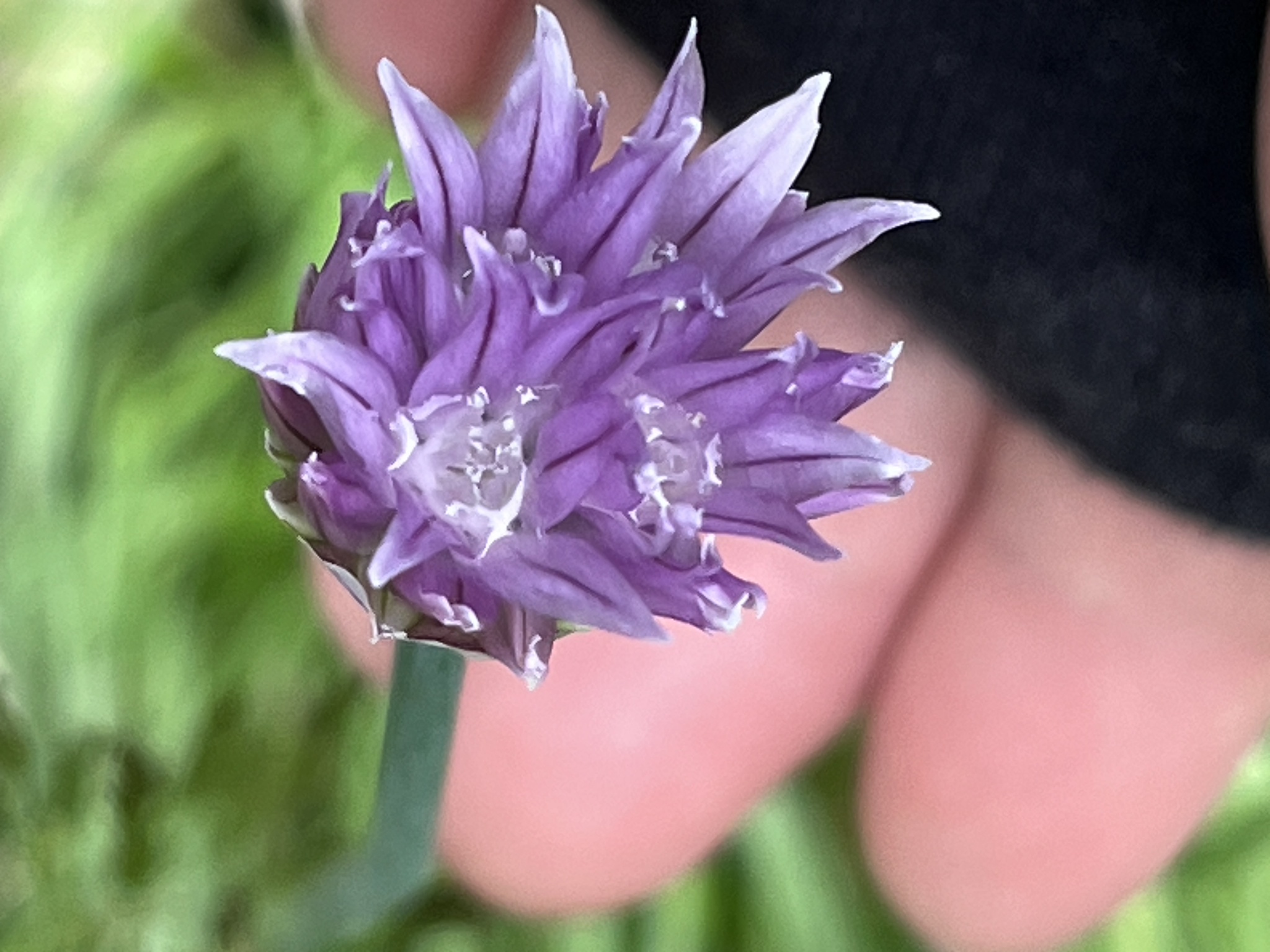
Chives (Allium schoenoprasum) are compact, clump-forming perennial herbs native across cool-temperate regions of Europe, Asia, and North America, producing dense tufts of hollow tubular leaves and globose lavender flowers. They are among the smallest and mildest members of the allium family, delivering a clean onion flavour from early spring until the first hard autumn frost.
Plants survive severe winter freezing down to -35 °C (-31 °F) without protection and return reliably each spring from underground bulbs. They struggle only in prolonged drought or waterlogged soil, making them suitable for kitchen containers, raised beds, and perennial borders alike.
Key Facts
- Light: Full sun to partial shade (4-6 hours direct sun daily)
- Water: Keep evenly moist; water when the top 2.5 cm (1 in) dries
- Mature Size: 30-45 cm (12-18 in) tall and wide
- Hardiness: USDA Zones 3-9
- Harvest: Cut outer leaves 5 cm (2 in) above the soil line
- Toxicity: Non-toxic to humans; toxic to dogs and cats
What It Is Like to Grow Chives
Chives are among the easiest culinary herbs to maintain because they tolerate freezing conditions, bounce back quickly after cutting, and require minimal daily attention once established. You can cultivate them in raised garden beds, kitchen window boxes, or direct garden soil without special equipment.
A single clump produces edible foliage from early April through October in temperate climates, yielding fresh greens for salads, soups, and garnishes. Because they form neat, non-invasive clumps that spread slowly via underground bulb offsets, they remain well-behaved in mixed vegetable patches and flower borders.
Identifying Chives and Their Flowers
Chives produce dense tufts of erect, cylindrical, completely hollow leaves measuring 20-40 cm (8-16 in) in length and 2-4 mm (0.08-0.16 in) in diameter. These slender tubular blades emerge directly from clusters of small, slender, conical bulbs anchored by shallow fibrous roots.
In late spring and early summer, rigid flower scapes rise slightly above the foliage, topped by dense, spherical umbels 2-3 cm (0.8-1.2 in) across. Each umbel contains 10 to 30 star-shaped florets ranging from pale lilac to deep rose-violet. Both the tubular leaves and the pom-pom blossoms release a distinctive, mild onion scent when crushed or cut.
Best Growing Conditions for Chives
Chives produce the fastest growth and densest foliage in full sun to partial shade with at least 6 hours of direct sunlight each day. While they tolerate as little as 4 hours of sun, stems grown in deeper shade become spindly, pale, and floppy.
Provide a rich, loamy soil with high organic content and a neutral pH between 6.0 and 7.0. Soil texture should drain excess moisture freely while retaining light moisture around the bulbs:
- Container potting mix: 2 parts all-purpose potting soil, 1 part compost, 1 part perlite
- Bed preparation: Dig in 5 cm (2 in) of aged garden compost into the top 15 cm (6 in) of native topsoil
- Temperature range: Ideal growth occurs at 15-21 °C (59-70 °F), though bulbs survive winter lows below -30 °C (-22 °F)
How to Sow and Plant Chives
Sow chive seeds indoors 6-8 weeks before the last spring frost, or direct sow outside as soon as the soil reaches 10 °C (50 °F). Chive seeds require complete darkness to germinate, which typically occurs within 10 to 14 days at 18-21 °C (65-70 °F).
When transplanting nursery starts or established divisions, set clumps 20-25 cm (8-10 in) apart at the same depth they were growing in their nursery pots. Water thoroughly immediately after planting to eliminate air pockets around the fibrous roots. If starting from seed outdoors, sow seeds 6 mm (0.25 in) deep in rows 30 cm (12 in) apart, thinning seedlings to clumps of 3-5 plants every 20 cm (8 in).
Chives Care: Watering, Feeding, and Potting
Water chives whenever the top 2.5 cm (1 in) of soil feels dry to the touch, providing approximately 2.5 cm of water per week through rain or irrigation. Potted chives dry out substantially faster than in-ground plantings, often requiring watering every 2-3 days during warm summer stretches.
Avoid heavy chemical fertilization, which weakens the onion flavour and encourages soft, floppy growth prone to pests. Feed plants in spring with a balanced liquid organic fertiliser diluted to half strength or top-dress the clump with 2 cm (0.8 in) of decomposed compost every spring. Always ensure containers have functional drainage holes to prevent the basal bulbs from rotting in standing water.
How and When to Harvest Chives
Harvest chives by using sharp shears to cut leaves 5 cm (2 in) above the soil level once foliage reaches 15 cm (6 in) in height. Leaving the base intact allows the plant to regenerate new stems rapidly, providing continuous flushes every few weeks throughout the growing season.
Harvest the outermost leaves first if taking small amounts for cooking, or cut back the entire clump uniformly to stimulate fresh, tender growth. Collect flower buds just as they open in late spring for use in salads, herb butters, and chive vinegar. Stop heavy cutting roughly 3-4 weeks before your region’s first expected autumn frost so the underground bulbs can store carbohydrate reserves for winter dormancy.
Culinary Uses and Chives vs Garlic Chives
Chives are traditionally used raw as a finishing herb stirred into omelettes, potato salads, compound butters, and broths just before serving to preserve their volatile aromatic oils. Cooking chives over prolonged heat destroys their mild flavour and turns the green leaves pale and slimy.
Gardeners frequently confuse common chives with garlic chives (Allium tuberosum), but the two species exhibit distinct botanical differences:
- Leaf shape: Common chives have hollow, round tubes; garlic chives have solid, flat, ribbon-like blades
- Flower colour: Common chive blossoms are lavender-purple spheres; garlic chives produce flat-topped clusters of pure white star flowers
- Bloom time: Common chives bloom in late spring; garlic chives flower in late summer to early autumn
- Flavour: Common chives taste of mild sweet onion; garlic chives deliver a distinct garlic punch
Common Chive Pests and Diseases
The most frequent problem affecting chives is allium leaf rust (Puccinia allii), which appears as small orange or yellow pustules on older leaves during warm, humid weather. Promptly cut infected foliage down to the base and dispose of it in the trash rather than your compost pile to arrest the fungal cycle.
Watch for these common issues in garden beds and containers:
- Onion thrips: Minute insects that leave silvery stippling and bleached streaks on the stems; dislodge with a steady spray of water
- Black onion aphids: Clusters of tiny dark aphids congregating on tender new shoots; treat with organic insecticidal soap
- Bulb rot: Soft, foul-smelling crowns caused by fungal pathogens in heavy, saturated soils; resolve by amending beds with grit or moving plants to raised planters
How to Store and Preserve Fresh Chives
Freshly cut chives keep best in the refrigerator wrapped in a damp paper towel inside a sealed container for up to 7-10 days. Wash stems under cold running water and pat them thoroughly dry before preparing them for storage.
Because drying causes chives to lose virtually all their signature aroma and turn straw-like, freezing is the superior method for long-term storage. Snip clean, dry stems into 3 mm (0.1 in) rings, spread them in a single layer on a parchment-lined baking sheet to freeze individually, and funnel the frozen rings into airtight glass jars or freezer bags for up to 6 months.
Chives Through the Seasons
| Spring | Top-dress clumps with 2 cm (0.8 in) of compost as new spears emerge. Divide overcrowded 3-year-old clumps when shoots reach 5-10 cm (2-4 in) tall. |
|---|---|
| Summer | Water containers regularly to prevent drying out. Deadhead spent purple flower heads promptly to prevent self-seeding and encourage fresh leafy regrowth. |
| Autumn | Take your final harvest in mid-autumn, leaving at least 5 cm (2 in) of leaf base. Mulch outdoor beds with 5 cm (2 in) of straw or shredded leaves in cold zones. |
| Winter | Allow outdoor foliage to die back completely; dormant bulbs require no irrigation. Move potted plants outdoors to a sheltered spot or bring a division inside to force greens on a sunny windowsill. |
Diagnosing Common Chive Problems
| What you see | Likely cause | What to do |
|---|---|---|
| Orange pustules on tubular leaves | Allium leaf rust fungus encouraged by high humidity | Cut the entire clump down to 3 cm (1.2 in) from the soil and destroy the affected foliage. |
| Yellow, dry leaf tips | Under-watering or root-bound container roots | Soak the root ball thoroughly and divide overgrown clumps into larger containers with fresh potting mix. |
| Floppy, pale, sprawling stems | Insufficient sunlight or excessive nitrogen fertiliser | Relocate the plant to an area receiving at least 6 hours of direct sun and cease heavy feeding. |
| Silvery flecks and white streaks on leaves | Onion thrips rasping plant cells | Spray leaves forcefully with clean water or apply organic insecticidal soap in early morning. |
Recommended Chive Cultivars
- ‘Forescate’ – larger rosy-pink flower umbels, vigorous leaf yield
- ‘Staro’ – thicker, robust tubular leaves suited for commercial processing
- ‘Prager Feinschnitt’ – very fine, slender leaves with delicate onion flavour
- ‘Corsican’ – dwarf alpine form reaching only 15 cm (6 in) tall
- ‘Album’ – creamy white flowers instead of classic purple
Frequently Asked Questions
What is the difference between chives and green onions?
Chives (Allium schoenoprasum) are small perennial herbs with thin, hollow, grass-like leaves and purple blossoms, harvested strictly for their foliage. Green onions, also called scallions (Allium fistulosum or immature Allium cepa), produce larger, thicker stems with distinct white blanched bulbs and a sharper, more pungent onion bite.
Do chives come back every year?
Yes, chives are fully hardy perennial plants that return reliably every spring in USDA Zones 3 through 9. The leaves die back completely to the ground after heavy autumn frosts, but the underground bulbs survive winter temperatures well below freezing.
How do chives spread in the garden?
Chives spread primarily by multiplying underground bulbs to form wider clumps, and secondarily by self-seeding when spent flower heads drop mature black seeds. You can control spread simply by snipping off the purple flowers as soon as they begin to fade.
Are chive flowers edible?
Yes, chive flowers are completely edible and carry a mild, peppery onion taste slightly stronger than the leaves. Break the spherical flower heads apart into individual florets to toss into fresh green salads, fold into soft cheeses, or infuse into white wine vinegar.
Are chives toxic to cats and dogs?
Yes, chives are toxic to cats and dogs because they contain organosulfoxides that break down into disulfides, which damage red blood cells and cause hemolytic anemia. Keep potted chives well out of reach of curious pets, and seek veterinary care if ingested.
What does the word chives mean?
The English word chive derives from the Old French cive, which traces back to the Latin word cepa, meaning onion. In Bengali, chives are commonly known as chive shak (শাইভ শাক) or described as thin spring onions (পেঁয়াজ পাতা).
Sources & Verification
Taxonomy and distribution are checked against the databases below. Care guidance is written for cultivated species only and reviewed by our editor. How We Build Plant Profiles →
- Kew Plants of the World OnlineTaxonomy, distribution, and native ranges for Allium schoenoprasum
- RHS GardeningCultivation, harvesting, and pest management guide
- NC State ExtensionBotanical traits, soil tolerances, and landscape use
- ASPCA Animal Poison ControlToxicity profile and clinical signs for domestic pets
- GBIF — Global Biodiversity Information Facilitytaxonomy, synonyms, occurrence records
- Wikipediageneral reference


