
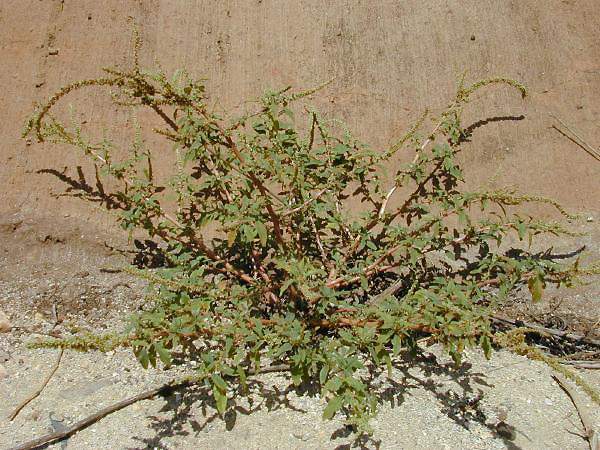
Spiny amaranth (Amaranthus spinosus) is an annual or perennial herbaceous wild plant native to the tropical Americas. It is widely recognized by the sharp, paired spines located at the base of each leaf stem.
This aggressive species thrives in disturbed soils, abandoned fields, and crop borders worldwide. Livestock owners must manage it carefully because the plant accumulates nitrates that are toxic to grazing animals.
Key Facts
- Type: Annual or short-lived perennial herb
- Origin: Tropical Americas
- Identification: Paired spines at leaf nodes
- Toxicity: Nitrate-accumulating weed toxic to livestock
- Distribution: Global tropical and warm temperate zones
Why Spiny Amaranth Suits Tough Landscapes
Spiny amaranth suits disturbed, neglected patches of ground where few other plants survive the heat. Growing up to 100 cm (39 inches) tall, this resilient weed establishes rapidly in poor soils and handles heavy foot traffic and compaction.
You will often find it colonizing dry ditch banks, overgrazed pastures, and construction margins. Its deep taproot allows it to endure prolonged dry spells without wilting. Gardeners and land managers must pull it early before the sharp thorns harden and seeds scatter.
How to Identify Spiny Amaranth
You can identify spiny amaranth by the distinct, sharp 1 cm (0.4 inch) spines flanking every leaf node along the main stem. The alternate leaves are lance-shaped to ovate, measuring 3 to 12 cm (1.2 to 4.7 inches) long, often featuring a whitish V-shaped watermark.
- Stems: Green to reddish-purple, branching upright, smooth except for the nodal spines.
- Flowers: Tiny, greenish spikes clustered in dense axillary axils and long terminal panicles.
- Roots: A thick, reddish-pink taproot that anchors the plant firmly in the earth.
- Seeds: Smooth, shiny, jet-black capsules measuring about 1 mm across.
Habitat and Natural Range
Spiny amaranth occupies waste areas, roadsides, riverbanks, and tropical agricultural fields globally. Native to the tropical Americas, it has naturally colonized or been introduced to warm regions across all continents except Antarctica.
It functions as an aggressive agricultural weed, frequently choking out food crops like rice in Asian paddy margins. The plant prefers high nitrogen levels and full sun exposure, rarely establishing beneath dense forest canopies.
Ecology and Weed Dynamics
Spiny amaranth dominates disturbed ecosystems through prolific seed production and rapid early growth. A single mature plant can drop up to 100,000 seeds that remain viable in the soil for years.
- Seed dispersal: Seeds hitchhike on animal fur, agricultural equipment, and floodwaters.
- Allelopathy: The root exudates can suppress the germination of surrounding native seedlings.
- Pollination: Flowers rely on wind and insects for cross-pollination during mid-summer.
Conservation Status
Spiny amaranth has no special conservation status because it is one of the most widespread weeds on Earth. Classified as least concern or invasive, its populations are expanding rather than declining due to human-induced habitat disturbance.
Land management agencies generally focus on eradication rather than protection. Its sheer adaptability ensures it persists without conservation intervention.
Traditional Uses of Bledo Plant
Traditional herbalists across the Caribbean and Latin America used bledo plant preparations for various ailments. Healers brewed the leaves and roots to treat internal inflammation, dysentery, and skin rashes.
In some indigenous cultures, the tender young leaves were harvested before the spines hardened and boiled as a potherb, known locally as prickly callaloo. Modern science cautions against heavy consumption due to high oxalate and nitrate accumulation.
Similar Weeds to Spiny Amaranth
Spiny amaranth resembles several other members of its genus that lack defensive armaments. You can separate it from smooth amaranth (Amaranthus hybridus) and redroot pigweed (Amaranthus retroflexus) by checking the leaf nodes for sharp thorns; the other two species are entirely spineless.
- Smooth pigweed: Features hairy stems and lacks the sharp axillary spines of spiny amaranth.
- Palmer amaranth (Amaranthus palmer): Displays diamond-shaped leaves with distinct long petioles and no thorns.
- Slender amaranth (Amaranthus viridis): Produces wavy leaf margins and unarmed stems.
Frequently Asked Questions
What is bledo planta and how is it used?
Bledo planta is the Spanish common name for spiny amaranth, traditionally used in herbal teas and cooked greens across Latin America. It serves as both a wild medicinal remedy and a traditional potherb in regions like Cuba and the Dominican Republic.
Is bledo plant edible?
Yes, young bledo plant leaves are edible after thorough boiling, but older plants develop tough fibrous stems and sharp spines. The leaves contain vitamins and minerals but should be consumed in moderation due to oxalates and nitrates.
What are the health benefits of bledo planta?
Tradition attributes anti-inflammatory and diuretic properties to bledo planta when brewed into teas or infusions. Scientific studies do not officially endorse these health claims for treating medical conditions.
How do you control spiny amaranth in gardens?
You control spiny amaranth by hand-pulling young specimens wearing heavy gloves before they set seed. Mowing fails because the plant easily resprouts from its hardy taproot.
Information about traditional or historical uses is provided for educational interest only and is not medical advice. Do not use any plant to treat a condition without speaking to a qualified professional.
Sources & Verification
Taxonomy and distribution are checked against the databases below. Care guidance is written for cultivated species only and reviewed by our editor. How We Build Plant Profiles →
More in Amaranthus

Thunberg’s Amaranth
Amaranthus thunbergii
☀️ Full Sun 💧 Moderate
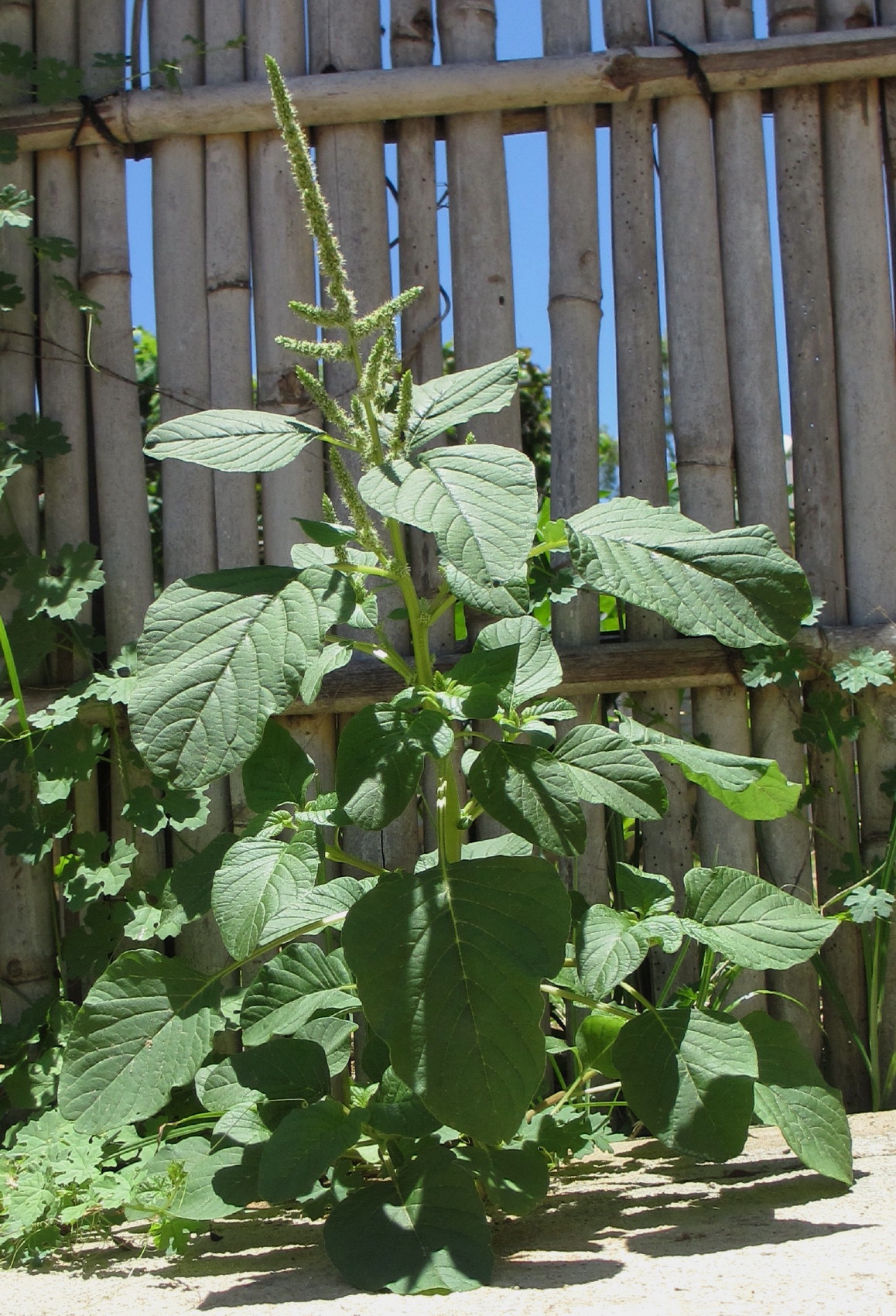
Purple Amaranth
Amaranthus blitum
☀️ Full Sun 💧 Moderate

Tumble Pigweed
Amaranthus albus
☀️ Full Sun 💧 Low

Red Amaranth
Amaranthus cruentus
☀️ Full Sun 💧 Moderate
Mat Amaranth
Amaranthus blitoides

Slender Amaranth
Amaranthus viridis
☀️ Full Sun 💧 Moderate