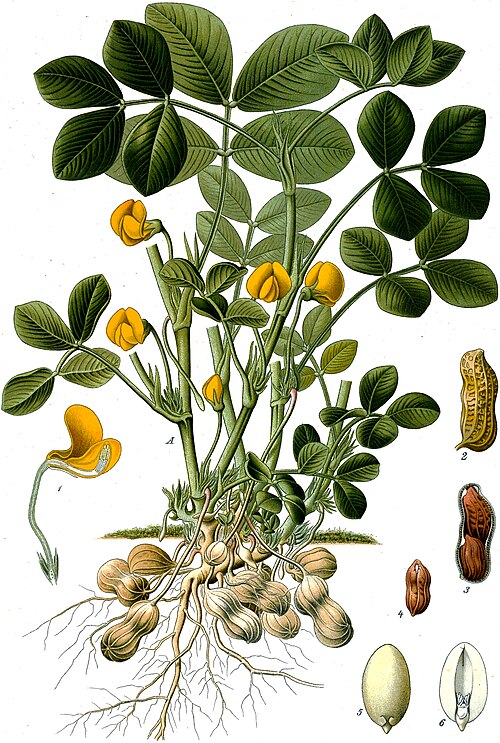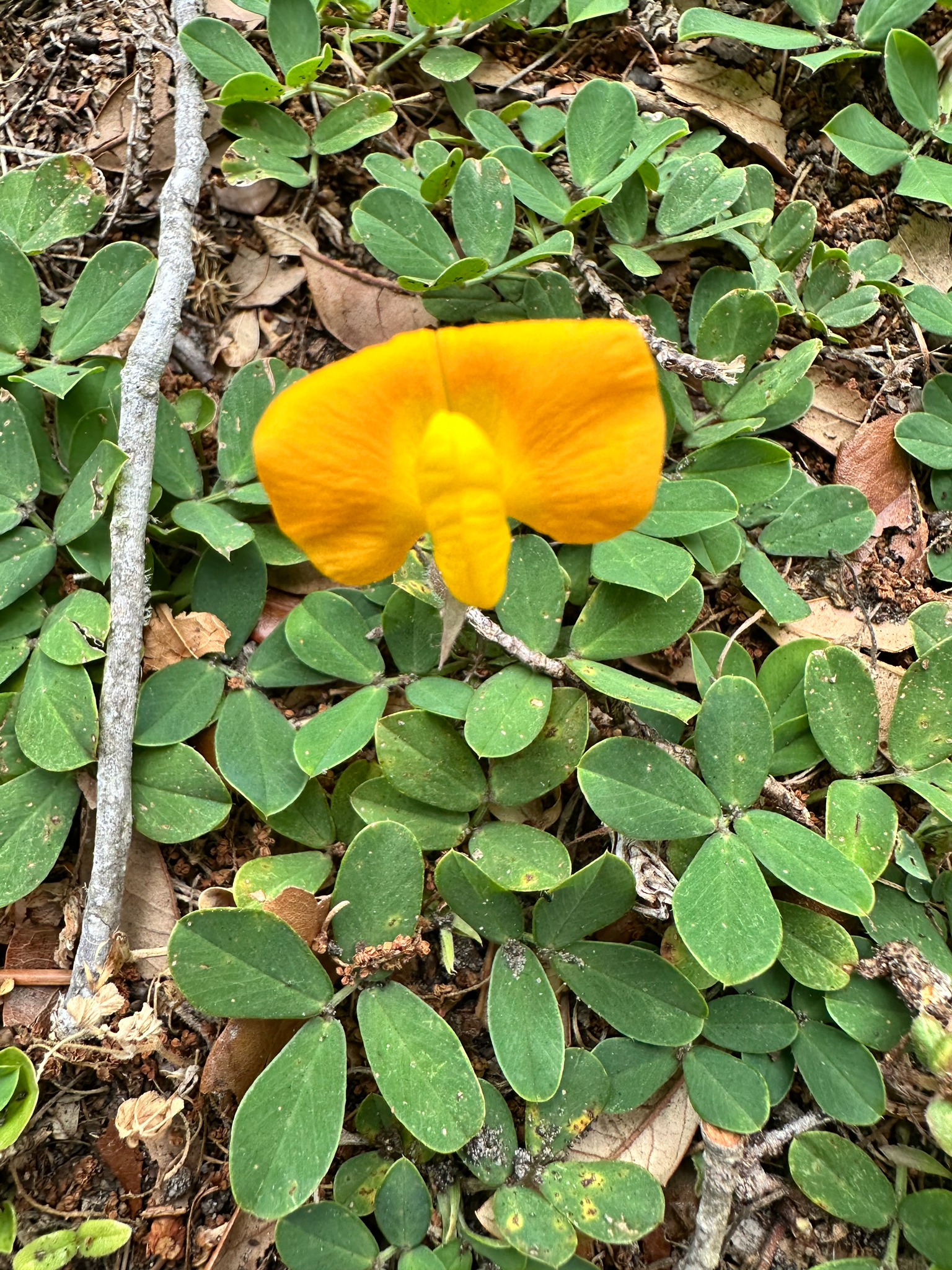
Rhizoma peanut (Arachis glabrata) is a long-lived, mat-forming legume native to Brazil, Paraguay, and Argentina that produces edible golden-yellow flowers all summer. It belongs to the Fabaceae family and forms a dense root system of interconnected underground stems.
Because the species does not produce viable commercial seed, every planting starts from vegetative rhizome sprigs or nursery sod. Once established, it replaces traditional turfgrass across USDA zones 8b to 11 while demanding zero synthetic nitrogen fertilizer.
Key Facts
- Light: Full sun to light afternoon shade (minimum 6 hours daily)
- Water: 2.5 cm (1 in) weekly during rooting; drought-tolerant thereafter
- Soil: Sandy, well-drained ground with pH 5.0 to 7.5
- Propagation: Underground rhizome sprigs or sod mats only
- Mowing: Every 3 to 4 weeks at 5–10 cm (2–4 in)
Is Rhizoma Perennial Peanut Right for Your Lawn?
Rhizoma perennial peanut functions as a permanent, drought-proof lawn replacement that never requires supplemental nitrogen. It thrives in open, baking sun where conventional turfgrasses like St. Augustine grass (Stenotaphrum secundatum) succumb to chinch bugs and drought stress. You will not get a golf-green finish, but you will get a carpet of deep green foliage and edible yellow blossoms from May through October.
This plant suits homeowners who want to slash their water and fuel consumption. It tolerates moderate foot traffic, dogs, and road salt spray along coastal driveways. However, it goes completely dormant and turns brown after the first hard freeze, remaining bare or straw-colored until spring soil temperatures warm up.
Identifying Foliage, Stems, and Flowers
Rhizoma peanut forms a dense ground mat 10 to 38 cm (4 to 15 in) tall consisting of four-parted pinnate leaves and slender herbaceous stems. Each compound leaf carries two pairs of oblong, dark green leaflets measuring 2 to 4 cm (0.8 to 1.6 in) long with smooth margins and no spines. Unlike creeping weeds, its shoots emerge from thick, fibrous rhizomes buried 5 to 15 cm (2 to 6 in) underground.
The flowers resemble miniature sweet peas, measuring 2 to 3 cm (0.8 to 1.2 in) across in shades of bright saffron-yellow to deep gold with delicate orange veining at the throat. They open at dawn, last a single day, and emerge directly from leaf axils without setting seed pods. Underground, you will find knotty, starch-rich rhizome networks containing pinkish nitrogen-fixing nodules, but no harvestable peanut shells.
Sun and Soil Requirements for Arachis glabrata
Plant Arachis glabrata in full sunlight for at least 6 to 8 hours daily to maintain thick growth and dense flowering. While it survives in partial shade beneath open tree canopies, low light causes stems to stretch upward, thinning the mat and reducing weed resistance. Deep shade causes the crown to thin out and eventually die back.
Soil drainage determines success more than soil fertility. This species evolved in the nutrient-poor, acid sands of South America and thrives across standard garden soils with clear parameters:
- Prefers loose, well-draining sand, loamy sand, or rocky loam
- Tolerates acidic to neutral conditions with a pH range of 5.0 to 7.5
- Fails rapidly in heavy, poorly drained clay or standing water
- Withstands seasonal soil salinity and marine sea breezes
How to Plant Rhizoma Peanut Sprigs and Sod
Establish plantings by burying rhizome sprigs 4 to 5 cm (1.5 to 2 in) deep or laying cut sod directly onto bare, weeded soil. Spring, specifically from March to May once soil reaches 18 °C (65 °F), provides the ideal planting window. Laying mature nursery sod creates an instant lawn, while planting bulk rhizome sprigs requires 12 to 24 months to reach full canopy closure.
Follow this sequence when establishing a new plot from sprigs:
- Clear all perennial weeds using solarisation or mechanical cultivation
- Scatter sprigs at a rate of 2 to 3 bushels per 90 sq m (1,000 sq ft)
- Pack soil firmly using a lawn roller to ensure direct root-to-soil contact
- Keep the top 5 cm (2 in) of soil consistently damp for the first 28 days
Watering Schedule and Fertilizer Needs
Apply 2.5 cm (1 in) of water weekly during the first 6 to 8 weeks after planting, then suspend regular watering entirely once roots anchor. Established stands survive months of heat and drought without supplementary irrigation by tapping deep subsoil moisture with their rhizomes. If prolonged summer dry spells cause foliage to fold closed during midday, a single deep soak restores full turgor.
Never apply high-nitrogen turf fertiliser to rhizoma peanut. As a legume, it partners with Bradyrhizobium soil bacteria to fix all its own nitrogen from the atmosphere. Adding synthetic nitrogen only encourages aggressive weeds like crabgrass (Digitaria sanguinalis) to outcompete the peanut mat. If soil tests show extreme depletion, apply a zero-nitrogen formula like 0-10-20 with trace minerals once in early summer.
Mowing and Maintenance Routine
Set your lawnmower blade to a height of 7.5 to 10 cm (3 to 4 in) and mow every 3 to 4 weeks during the active summer surge. Mowing is optional; left unmown, ornamental lawns level out at 20 to 30 cm (8 to 12 in) with a relaxed pasture texture. However, periodic clipping produces a tidier appearance and forces lateral rhizome expansion.
Weed management requires vigilance throughout the first growing season before the canopy knits shut. Hand-pull broadleaf invaders while the soil is moist from rain. Edge the perimeter of your planting twice a year with a sharp spade or string trimmer, because underground rhizomes will spread 30 to 60 cm (12 to 24 in) annually into neighboring garden borders if left unchecked.
Why You Cannot Buy Rhizoma Peanut Seeds
You cannot purchase true seed for this plant because commercial Arachis glabrata cultivars are sterile and produce virtually no viable seed. While the plant flowers continuously all summer, its floral pegs rarely penetrate the soil or form mature seed pods. Any online retailer advertising packets of perennial rhizoma peanut seed is either selling annual seed or mislabelled pinto peanut.
Propagation relies exclusively on vegetative divisions. To multiply your own patch, dig a shovel-full of sod in late winter, wash the dirt away, and cut the woody underground stems into 10 to 15 cm (4 to 6 in) sections with at least two visible dormant buds. Replant these root cuttings immediately into moist ground or potting trays kept at 21 °C (70 °F).
Winter Dormancy and Cold Tolerance
Rhizoma peanut shoots freeze to the ground at 0 °C (32 °F), but the root system survives winter temperatures down to -10 °C (14 °F). It is reliably winter-hardy across USDA zones 8b through 11. In the upper end of its range, frost burns off the green canopy, leaving a brown mat that guards the dormant crowns beneath.
Leave the dead, frosted foliage undisturbed throughout the winter months to insulate the rhizomes against severe freezes. Once daytime temperatures consistently hit 20 °C (68 °F) in late March or April, mow the frosted thatch down to 5 cm (2 in) and rake away the debris to let sunlight warm the bare soil. Bright green shoots will sprout from the rhizomes within two to three weeks.
Pests, Diseases, and Hay Production
Rhizoma peanut exhibits exceptional natural resistance to plant diseases, insects, and root-knot nematodes that devastate other groundcovers. It has no major insect pests in residential landscaping. In humid climates, prolonged overcast rains may cause minor leaf spot (Cercospora spp.), which manifests as tiny black speckles on lower leaves but disappears once dry sun returns.
Beyond residential landscaping, agricultural growers harvest the plant as rhizoma peanut hay. This premium forage matches alfalfa (Medicago sativa) in feed quality, delivering 13 to 17 percent crude protein and 60 to 70 percent digestible nutrients for horses and beef cattle. Because the plant lacks the blister beetles associated with alfalfa, equine facilities across the southeastern United States prize it as an alternative forage crop.
Seasonal Care for Rhizoma Peanut
| Spring | Mow down frosted winter thatch to 5 cm (2 in) in early spring to expose soil to sunlight. Plant new rhizome sprigs once soil temperatures reach 18 °C (65 °F) and water weekly until established. |
|---|---|
| Summer | Mow every 3 to 4 weeks at 7.5 to 10 cm (3 to 4 in) to promote lateral growth. Hand-pull opportunistic weeds before they set seed while the groundcover establishes. |
| Autumn | Taper off any supplementary irrigation as growth slows. Edge borders with a clean trench to prevent rhizomes from invading adjacent flowerbeds over winter. |
| Winter | Leave frosted, brown foliage in place through cold snaps to insulate the underground crowns. Avoid walking heavily on frosted, dormant groundcover during sub-zero freezes. |
Diagnosing Common Rhizoma Peanut Problems
| What you see | Likely cause | What to do |
|---|---|---|
| Broadleaf weeds crowding out new shoots | Incomplete canopy cover during the first year of sprigging | Hand-pull weeds and mow to 7.5 cm (3 in) every 3 weeks to trigger rapid rhizome spread. |
| Yellowing leaves with green veins (chlorosis) | Iron deficiency in high-pH or calcareous soils | Apply a chelated iron soil drench or foliar micronutrient spray to restore deep green leaf tone. |
| Foliage dies back and turns brittle brown overnight | Freezing winter temperatures below 0 °C (32 °F) | Do nothing until spring; roots remain alive underground and will resprout once warm weather returns. |
| Thin, leggy growth with few to no flowers | Excessive shade from overhead trees or structures | Prune back tree canopies to provide at least 6 hours of direct sun daily. |
Proven Rhizoma Peanut Cultivars
- ‘Florigraze’ – high-yielding forage cultivar with rapid underground spread
- ‘Ecoturf’ – lower-growing ornamental selection with dense flowering mats
- ‘Arblick’ – early-season blooming cultivar with high grazing resilience
- ‘Brooksville 67’ – cold-hardy selection tolerating northern zone 8b winters
Companion Plants for Perennial Peanut
Pair rhizoma peanut with drought-hardy native perennials and structural ornamental grasses that can compete with its dense underground root network. Shallow-rooted, delicate annuals will be overwhelmed and swallowed by the running rhizomes within two seasons. Choose companions that thrive in full sun, lean sandy soil, and hot summers.
Excellent landscape companions include:
- Gulf muhly grass (Muhlenbergia capillaris) – provides pink autumn plumes rising above the low yellow peanut blooms
- Lanceleaf coreopsis (Coreopsis lanceolata) – matches the golden floral show on sandier sites
- Blanket flower (Gaillardia pulchella) – offers contrasting red-and-yellow petals and identical drought tolerance
- Coontie (Zamia integrifolia) – adds prehistoric, dark green architectural foliage in coastal borders
Frequently Asked Questions
Does rhizoma peanut produce edible peanuts?
No, Arachis glabrata does not produce harvestable underground peanuts like the garden peanut (Arachis hypogaea). However, its small yellow flowers are edible, crisp, and carry a sweet, nutty flavour that tastes like raw snap peas.
Can you grow rhizoma peanut from seeds?
No, commercial cultivars of rhizoma peanut cannot be grown from seed because the plant is sterile and reproduces almost entirely via underground rhizomes. Be wary of online seed packets, which are universally mislabelled.
What is the difference between Arachis glabrata and Arachis pintoi?
Arachis glabrata spreads underground through thick, freeze-hardy rhizomes down into USDA zone 8b, whereas pinto peanut (Arachis pintoi) spreads aboveground via surface stolons, produces true seed, and dies when exposed to frost.
Why is rhizoma peanut hay fed to horses?
Rhizoma peanut hay offers crude protein and digestible nutrient levels equivalent to alfalfa (Medicago sativa), making it an exceptional feed. Furthermore, it naturally avoids blister beetle contamination, which can be fatal to horses consuming commercial alfalfa.
How fast does rhizoma peanut spread in a lawn?
From sprigs spaced 45 cm (18 in) apart, rhizoma peanut takes between 18 and 24 months to achieve full canopy closure. Planting mature nursery sod gives immediate coverage, while established patches spread outwards 30 to 60 cm (12 to 24 in) per year.
Sources & Verification
Taxonomy and distribution are checked against the databases below. Care guidance is written for cultivated species only and reviewed by our editor. How We Build Plant Profiles →
- University of Florida IFAS ExtensionRhizoma Perennial Peanut Guide
- USDA PLANTS DatabaseArachis glabrata Benth. classification
- Kew Plants of the World OnlineTaxonomy and native distribution
- GBIF — Global Biodiversity Information Facilitytaxonomy, synonyms, occurrence records
- Wikipediageneral reference