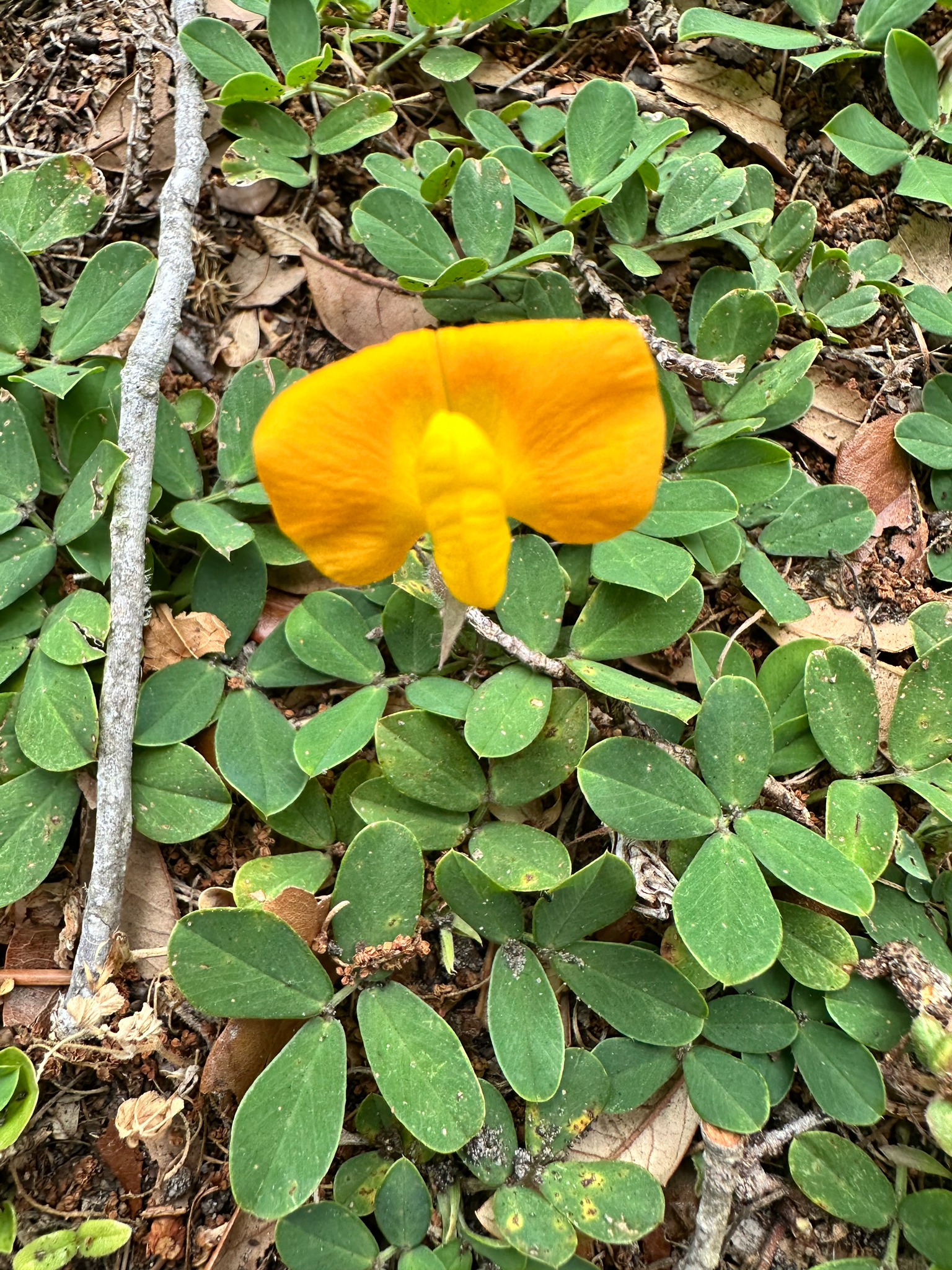
Peanut (Arachis hypogaea) is a warm-season annual legume native to South America, known for burying its own fertilized flowers into the earth to mature edible seeds inside subterranean pods.
A successful crop depends on a continuous warm window of 120 to 150 frost-free days and loose, friable soil so the elongating pegs can push underground without snapping.
Key Facts
- Growing season: 120-150 warm, frost-free days
- Soil need: loose, sandy loam to let pegs penetrate
- Soil temperature: minimum 18 °C (65 °F) to germinate
- Water: 25-50 mm (1-2 in) per week
- Harvest sign: foliage yellows and inner pod hulls darken
- Calcium: essential at pegging stage to prevent empty pods
Growing Peanuts in Home Gardens
Growing peanuts requires a long, uninterrupted growing season of at least 120 days with daytime temperatures consistently above 20 °C (68 °F). If you garden north of USDA Zone 7, you will need to start seeds indoors under grow lights 4 weeks before the last expected frost.
Peanuts do not climb like pole beans (Phaseolus vulgaris). Instead, they develop either as compact, erect bushes (Spanish and Valencia types) or low, spreading mats (Runner and Virginia types) that take up significant bed width.
A home crop is well suited to raised beds or large, shallow containers of at least 40 cm (16 in) diameter. Dense, unworked clay will stop your harvest before it starts, because developing seed stems cannot penetrate hard ground.
Peanut Plant Appearance and Flower Biology
Peanut plants display pinnately compound leaves with four oval leaflets and produce brief, self-pollinating yellow flowers that open for only a single morning.
The plant grows 30-50 cm (12-20 in) tall, sporting bright green foliage with paired oval leaflets measuring 3-6 cm (1.2-2.4 in) long. Solitary or clustered pea-like blooms with bright yellow or orange-striped petals emerge from the leaf axils roughly 30 to 40 days after seedlings sprout.
Once pollination finishes by midday, the flower wilts and a specialized botanical structure called a peg (an elongated ovarian stem) develops:
- Peg initiation: The base of the ovary elongates downward toward the ground over 7 to 10 days.
- Soil penetration: The peg drives 2-5 cm (1-2 in) directly beneath the surface.
- Pod formation: Once underground, the peg tip turns horizontal and swells into a fibrous, reticulated pod holding 1 to 4 seeds.
Ideal Growing Conditions
Peanuts demand full sun for at least 8 hours daily alongside warm, open soil with a pH between 5.8 and 6.5.
Cold ground stalls vegetative growth and delays flowering, while heavy shade leads to weak stems and zero peg development. Light, gritty soils warmed by direct sunlight allow both deep rooting and effortless pod penetration.
Key site requirements include:
- Sunlight: Unobstructed southern or western exposure without shading from taller crops like sweetcorn (Zea mays).
- Soil texture: Loose, stone-free sandy loam or amended potting mix; avoid heavy clay.
- Soil nutrients: Moderate potassium and phosphorus, but low nitrogen to avoid excessive, barren leafy growth.
- Available calcium: Ample gypsum in the top 8 cm (3 in) of soil for direct uptake by the swelling pegs.
How to Sow Peanut Seeds
Sow peanut seeds directly in the garden only when soil temperatures stay reliably above 18 °C (65 °F), usually 2 to 3 weeks after your final spring frost.
Plant raw, unroasted peanuts that remain inside their papery red skins; you can crack the hard outer hull carefully to speed germination, but leaving the seeds unbruised is critical. In short-season areas, start them indoors in biodegradable peat or paper pots 3 to 4 weeks early to prevent taproot shock during transplanting.
Follow these planting steps for outdoor beds:
- Depth: Plant seeds 4-5 cm (1.5-2 in) deep in raised, friable ridges.
- In-row spacing: Space seeds 15-20 cm (6-8 in) apart.
- Row spacing: Leave 60-90 cm (24-36 in) between rows to accommodate sprawling lateral stems.
- Watering: Moisten the bed thoroughly after sowing, then keep the soil evenly damp until sprouts appear in 7 to 14 days.
Peanut Plant Care and Hilling
Provide 25 to 50 mm (1 to 2 in) of water each week until the final month of the season, when moisture must be reduced to deter pod rot.
Once the yellow flowers fade and pegs begin extending toward the dirt, apply a light, loose mulch of clean straw or finely shredded leaves. Alternatively, gently hoe fine soil around the base of the plant—a practice called hilling—to shorten the distance pegs must travel to bury themselves.
Top-dress the root zone with agricultural gypsum (calcium sulphate) at a rate of 30 to 50 g per square metre right as blooms appear. Peanuts absorb calcium directly through the pod hull in the soil, and a deficiency here results in empty shells, known as “pops”. Avoid high-nitrogen fertilizers; like other legumes such as soybean (Glycine max), peanuts fix atmospheric nitrogen through root nodules.
How and When to Harvest Peanuts
Harvest peanuts when the lower foliage turns yellow and dry, typically 130 to 150 days after sowing.
Check maturity before pulling the entire bed by gently digging up two or three trial pods from the perimeter of a plant. Crack the test shells open: mature peanuts have dark, veined inner hull surfaces and plump seeds with tight seed coats, whereas immature pods remain pale, watery, and white inside.
Harvest using these steps on a dry day:
- Loosen the bed: Sink a garden fork 15-20 cm (6-8 in) away from the crown to loosen soil beneath the pod cluster.
- Lift the vines: Pull firmly from the base of the main stem to lift the entire root system with pods attached.
- Shake free: Gently shake loose excess dirt clinging to the pods.
- Pre-cure: Lay the inverted plants in the sun or under a rain shelter for 2 to 3 days so the stems begin to wilt.
Curing and Storage
Cure freshly dug peanuts in a warm, well-ventilated space for 2 to 4 weeks until moisture drops below 10 percent.
Never eat or store freshly dug peanuts without curing, because the high moisture level invites Aspergillus flavus, a fungus that generates dangerous aflatoxins. Hang whole plants upside down in a shaded shed, porch, or garage with good airflow at temperatures between 21 and 30 °C (70-86 °F).
Peanuts are cured when the kernels rattle freely inside the dry hulls and snap cleanly between your teeth. Strip the cured pods from the vines and store them in mesh bags or wooden crates in a cool, dry room at 10-15 °C (50-60 °F) for up to 9 months, or freeze shelled raw seeds in airtight jars for up to 2 years.
Common Peanut Plant Problems
The most frequent threats to a peanut crop are burrowing rodents, leaf-spot fungi, and soil-borne pod rots.
Mice, squirrels, and voles will locate buried pods long before you harvest; protect vulnerable backyard plots with hardware-cloth cages sunk into the trench before planting. Fungal leaf spot causes circular brown lesions with yellow halos on older leaves during spells of humid summer heat.
Manage crop health with these cultural controls:
- Crop rotation: Do not plant peanuts in the same ground where cowpea (Vigna unguiculata) or common bean grew within the last three years.
- Drip irrigation: Water at ground level early in the day to keep the leaf canopy dry.
- Drainage improvement: Form raised planting beds to stop standing water around submerged pods.
- Clear debris: Remove fallen foliage in autumn to eliminate overwintering fungal spores.
Culinary Uses and Preparations
Harvested peanuts can be boiled green in brine, dry-roasted in their shells, or ground into smooth nut butter.
In the American South, uncured freshly harvested “green” peanuts are simmered in salted water for 4 to 8 hours until soft and beany. For classic roasted nuts, spread dry-cured pods in a single layer on a baking sheet and roast at 175 °C (350 °F) for 20 to 25 minutes.
The seeds contain roughly 25 percent protein and 45 to 50 percent vegetable oil, making them an important global source of cooking oil alongside sunflower (Helianthus annuus). Processing roasted kernels in a food processor with a pinch of salt yields homemade peanut butter within 5 minutes as the natural oils release.
Peanut Plant Care by Season
| Spring | Start seeds indoors in biodegradable pots 4 weeks before the last frost, or direct-sow into warmed beds of at least 18 °C (65 °F). Loosen the top 20 cm (8 in) of soil and work in gypsum. |
|---|---|
| Summer | Keep beds weed-free and deliver 25-50 mm (1-2 in) of water weekly. As yellow flowers fade, lightly hill loose soil around stems to assist peg burial, then add light straw mulch. |
| Autumn | Withhold irrigation 2 to 3 weeks before digging to prevent pod rot. Lift whole plants when foliage turns yellow, shake off dirt, and hang vines in a ventilated area for 2-4 weeks to cure. |
| Winter | Strip cured pods from dry vines and discard any mouldy shells. Store sound pods in breathable mesh bags in a cool, pest-proof room, or shell kernels for the freezer. |
Troubleshooting Common Peanut Plant Problems
| What you see | Likely cause | What to do |
|---|---|---|
| Shells are formed but contain no seeds (“pops”) | Calcium deficiency in the upper soil layer during peg development | Work gypsum into the top 8 cm (3 in) of soil at flowering time. |
| Brown circular spots with yellow halos on foliage | Early or late leaf spot fungal infection | Switch to drip irrigation and space plants 20 cm (8 in) apart for air circulation. |
| Pods rot, soften, or turn black underground | Waterlogged soil or excessive late-season watering | Grow on raised ridges and cease irrigation 2 weeks before harvest. |
| Yellow, stunted foliage throughout the row | Poor root nodulation or soil temperature below 15 °C (59 °F) | Apply a commercial rhizobium inoculant specific to peanuts at sowing time. |
| Pegs fail to penetrate the soil surface | Compacted, heavy clay soil crust | Loosen the top layer around crowns with coarse sand or fine compost before flowering. |
Popular Peanut Cultivars to Grow
- ‘Tennessee Red’ – Valencia type with sweet, bright red kernels, 110-day maturity
- ‘Early Spanish’ – compact bush, high oil content, 105-day season
- ‘Virginia Jumbo’ – extra-large pods suited for roasting in shell, 130-140 days
- ‘Bailey’ – Runner-type Virginia cultivar with strong resistance to fungal leaf spot
- ‘Georgia-06G’ – high-yielding commercial runner type, widely grown in the southern United States
Frequently Asked Questions
How long do peanuts take to grow from seed to harvest?
Peanuts take between 110 and 150 days from sowing to harvest depending on the cultivar. Valencia and Spanish cultivars mature quickest in roughly 110 days, while larger Virginia and Runner types require 130 to 150 days of warmth.
What is the difference between a peanut plant and a peanut cactus?
Peanut (Arachis hypogaea) is an edible annual legume with flat green leaves and subterranean pods, whereas peanut cactus (Echinopsis chamaecereus) is a ribbed, spiny succulent from Argentina grown strictly as an ornamental houseplant with orange-red blooms.
Can you grow peanuts from raw store-bought peanuts?
Yes, you can sprout raw, unroasted, unsalted peanuts bought at the grocery store if the red seed skins remain intact. Roasted, salted, or chemically treated peanuts are dead and will not germinate.
Why do peanut plants bury their own flowers?
Peanut plants bury their fertilized ovaries—a process called geocarpy—to protect developing seeds from heat, surface herbivores, and drying winds. Underground, the seeds absorb soil moisture and calcium directly through their swelling shells.
Can you grow peanuts in containers?
Yes, peanuts grow well in containers that measure at least 40 cm (16 in) wide and 30 cm (12 in) deep. Use a loose potting mix cut with perlite or coarse sand so the pegs can push beneath the surface without meeting hard boundaries.
Sources & Verification
Taxonomy and distribution are checked against the databases below. Care guidance is written for cultivated species only and reviewed by our editor. How We Build Plant Profiles →