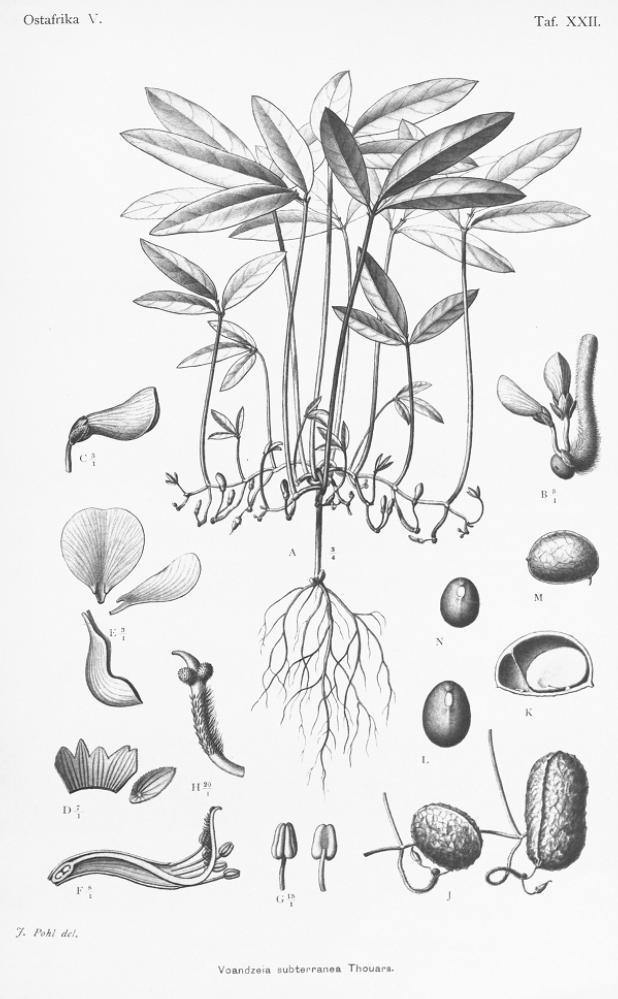
Cowpea is a warm-season annual legume native to West Africa, recognised by its trifoliate leaves, pale flowers, and cylindrical pods packed with speckled or dark-eyed seeds of Vigna unguiculata.
This crop thrives in hot summer weather that stalls common bean (Phaseolus vulgaris), setting pods reliably once soil temperatures top 21 °C (70 °F).
Key Facts
- Soil temperature: Sow when ground reaches at least 18 °C (65 °F)
- Sunlight: Requires 6-8 hours of direct, unfiltered sun daily
- Days to harvest: 60 days for snaps, 90 days for dry seed
- Pod yield: 1-2 kg (2.2-4.4 lb) per 3 m (10 ft) row
- Edibility: Leaves, tender green pods, and dry seeds are edible
Is Cowpea Right for Your Garden?
Cowpea suits warm-climate plots, raised beds, and arid zones where hot summers cause standard garden beans to drop their blossoms. If your summer temperatures routinely climb above 30 °C (86 °F), this heat-adapted annual fills harvest gaps effortlessly.
You can choose between compact bush forms that reach 40-60 cm (16-24 in) and vigorous climbing vines that run past 2 m (6.5 ft). The climbing selections require trellising or strong netting, while bush forms fit into tight vegetable rows without support.
Because the roots associate with Bradyrhizobium bacteria, cowpeas fix atmospheric nitrogen directly into the earth. They perform well in sandy soils with low fertility, making them suitable for garden renovations and rotation beds.
What Does a Cowpea Plant Look Like?
A cowpea plant displays alternate, trifoliate leaves with smooth, oval to rhomboid leaflets measuring 5-12 cm (2-5 in) in length on green or purplish stems. Plants show either an upright bush architecture or long, twining green runners depending on the subspecies.
Flowers emerge in clusters of two to four at the ends of long peduncles rising above the canopy. Each bloom measures 2-3 cm (0.8-1.2 in) across, featuring a standard pea shape in shades of white, pale yellow, dull mauve, or violet.
After pollination, pendant cylindrical pods develop rapidly:
- Pod lengths range from 10 to 30 cm (4 to 12 in) in standard forms, and up to 90 cm (35 in) in yardlong subspecies.
- Pods ripen from light green to straw-yellow, parchment-tan, or dark purple.
- Each pod contains 8 to 20 kidney-shaped or globose seeds.
- Seeds show an off-white coat marked with a distinct dark oval patch surrounding the white hilum.
Growing Conditions and Sun Exposure
Cowpea plants require full direct sunlight for at least six to eight hours per day to set blossoms and produce filled pods. Shaded locations result in weak, leggy vines and heavy leaf production with few flower trusses.
The plant adapts to nutrient-poor ground and handles a soil pH range from 5.5 to 7.0. Heavy, waterlogged clay leads to root rot and poor nodulation, so amend tight ground with coarse grit or plant into elevated mounds.
Temperature controls development pace. Growth stalls when temperatures dip below 15 °C (59 °F), and prolonged exposure to cold mud causes newly planted seeds to decay.
How to Plant Cowpeas
Sow cowpea seeds directly outdoors 2 to 4 weeks after the last spring frost once soil has warmed to at least 18 °C (65 °F). Direct field sowing outperforms indoor seedling trays because root disturbance stalls young taproots.
Follow these steps to establish a healthy planting stand:
- Treat seeds with a cowpea-specific Bradyrhizobium inoculant powder before burying.
- Plant seeds at a depth of 2.5 cm (1 in) into damp, cultivated soil.
- Space bush varieties 10-15 cm (4-6 in) apart in rows set 60-75 cm (24-30 in) apart.
- Space vining varieties 15-20 cm (6-8 in) apart along a sturdy fence or A-frame trellis.
- Moisten the bed gently; seeds emerge within 4 to 8 days in warm soil.
Watering and Ongoing Crop Care
Water cowpea crops deeply with 25 mm (1 in) of water per week during flowering and pod development, allowing the top 5 cm (2 in) of soil to dry out between applications. The deep taproot tolerates intermittent dry spells far better than common pole beans.
Avoid synthetic fertilizers high in nitrogen. Supplying heavy nitrogen encourages excess foliage production, delays flowering, and inhibits the plant’s natural root nodule formation.
Keep the planting bed clear of weeds during the first four weeks of growth using a shallow scuffle hoe. Once plants spread, their dense leaf canopy naturally shades the soil surface, suppressing emerging weed seeds and conserving moisture.
When and How to Harvest Cowpea Pods
Harvest immature green pods for snap use starting 60 to 70 days after planting, or wait 90 to 100 days for mature, dry shelling peas. Regular picking of tender green pods stimulates the vines to keep blooming over several weeks.
Harvest timing depends on how you intend to consume the crop:
- Tender green leaves: Pluck young top leaves and shoots at 30-40 days for steaming like spinach.
- Snap pods: Snap off crisp green pods while seeds are still small and pods snap cleanly in half.
- Shelly peas: Pick swollen pods when the seeds are fully rounded but the pod remains supple and pale green.
- Dry storage peas: Gather pods when they turn dry, brittle, and papery brown on the vine.
Cooking and Eating Cowpea Leaves, Pods, and Seeds
You can eat cowpea seeds by simmering soaked dry peas for 45 to 60 minutes in seasoned broth or water until tender. Unlike many hard legumes, they cook relatively quickly without losing their shape or developing a mushy exterior.
Culinary preparations draw across global food traditions. In the American South, black-eyed peas cook down with smoked meats and aromatics; in West Africa, soaked, pureed seeds fry into crispy fritters called akara; and across East Africa, young leaves stew with tomatoes and onions alongside staple porridge.
Dry cowpeas provide approximately 24% crude protein by dry weight along with dietary fibre, folate, iron, and potassium. In traditional dietary patterns across sub-Saharan Africa and Asia, the whole plant has long served as a staple source of protein and carbohydrates during lean seasonal windows.
Cowpea Problems, Pests, and Diseases
Prevent fungal outbreaks and insect attacks by maintaining wide row spacing and watering directly at the soil level rather than over the top leaves. Crowded, humid microclimates invite foliar blights and sap-sucking insects.
Watch for these common field pressures:
- Cowpea aphids: Dense clusters of small black insects gather on new shoot tips; wash them away with a sharp water spray or apply insecticidal soap.
- Cowpea curculio: Small black weevils puncture green pods and leave larvae inside the developing seeds; handpick adults early in the morning.
- Fusarium wilt: Causes yellowing foliage, stunted growth, and dark vascular discolouration inside stems; choose resistant cultivars and rotate ground away from legumes for three seasons.
- Bacterial blight: Water-soaked spots on foliage that turn into necrotic brown blotches with yellow rings; remove infected debris and avoid handling wet plants.
How to Store Cowpeas
Store thoroughly dried shelled cowpeas in airtight glass jars or sealed buckets in a cool, dark room at 10-18 °C (50-64 °F) for up to two years. Shell the seeds when pods crack open under light finger pressure.
To protect stored dry peas against the cowpea weevil (Callosobruchus maculatus), freeze the cleaned, shelled seeds at -18 °C (0 °F) for 72 hours before placing them in airtight jars. This freezing step eliminates any microscopic insect eggs that may have settled on the pods during harvest.
Fresh snap pods and unshelled green peas keep in a perforated produce bag inside the refrigerator crisper drawer at 4 °C (39 °F) for five to seven days. For long-term preservation, blanch shelled green peas in boiling water for two minutes, chill in an ice bath, and freeze in sealed bags.
Seasonal Tasks for Growing Cowpeas
| Spring | Test soil temperatures, install trellising for climbing varieties, and direct sow seeds once soil warms consistently past 18 °C (65 °F). |
|---|---|
| Summer | Water deeply during flowering, monitor foliage for black aphids, and harvest young snap pods regularly to maintain continuous blooming. |
| Autumn | Gather mature dry pods as shells turn brown, freeze dried seeds for 72 hours to eradicate weevils, and cut spent vines at soil level to preserve root nitrogen. |
| Winter | Order certified disease-resistant seeds, inventory airtight pantry jars, and plan three-year crop rotations away from prior legume beds. |
Troubleshooting Common Cowpea Crop Issues
| What you see | Likely cause | What to do |
|---|---|---|
| Yellowing foliage with brown vascular streaks inside cut stems | Fusarium wilt infection | Remove and discard diseased vines immediately, then rotate planting beds away from legumes for three years. |
| Holes in mature dry seeds inside stored pantry jars | Cowpea weevil infestation | Freeze freshly harvested shelled seeds at -18 °C (0 °F) for three days prior to airtight jar storage. |
| Blossoms drop off without setting green pods | Overfertilisation with nitrogen or brief chilling temperatures below 15 °C (59 °F) | Cease nitrogen feeding and wait for warm, stable weather above 21 °C (70 °F). |
| Sticky leaves covered in black sooty mould | Cowpea aphid feeding | Rinse colonies from shoot tips with a pressurized water jet and treat heavy infestations with horticultural insecticidal soap. |
Cowpea Varieties and Cultivars for Home Plots
- ‘California Blackeye No. 5’ – high-yielding bush type with black-eyed seeds
- ‘Queen Anne’ – compact bush cultivar suited to small gardens
- ‘Pinkeye Purple Hull’ – purple pods with cream-coloured pink-eyed seeds
- ‘Red Ripper’ – sprawling, heat-tolerant vine with reddish-brown seeds
- ‘Mississippi Silver’ – drought-tolerant bush with silver pods and brown peas
Frequently Asked Questions
What is cowpea and is it the same as a black-eyed pea?
Cowpea is the common name for the cultivated legume Vigna unguiculata, and the black-eyed pea is simply the most common variety characterised by a pale seed coat with a dark central eye. Other varieties include pinkeye purple hull, crowder, and cream peas.
Can you eat cowpea leaves?
Yes, young tender cowpea leaves and shoot tips are completely edible and widely cooked like spinach in African and Asian cuisine. Harvest the topmost two or three leaves from healthy stems, leaving the main plant to produce flowers and pods.
How long does it take to cook dried cowpeas?
Dried cowpeas cook in 45 to 60 minutes on the stovetop when soaked beforehand, or in 60 to 75 minutes without soaking. In an electric pressure cooker, soaked seeds reach tenderness in about 12 to 15 minutes at high pressure.
Is cowpea good for health and weight management diets?
Cowpeas are rich in vegetable protein, soluble dietary fibre, and complex carbohydrates with a low glycemic index, which helps promote fullness and steady digestion. They also deliver notable quantities of iron, folate, and magnesium.
How do cowpeas differ from common garden beans?
Cowpeas belong to the genus Vigna, tolerate intense heat and poor sandy soils, and drop few flowers during midsummer heat spikes. Common beans (Phaseolus vulgaris) originate in the Americas and often drop blossoms or fail to set pods when temperatures exceed 32 °C (90 °F).
Information about traditional or historical uses is provided for educational interest only and is not medical advice. Do not use any plant to treat a condition without speaking to a qualified professional.
Sources & Verification
Taxonomy and distribution are checked against the databases below. Care guidance is written for cultivated species only and reviewed by our editor. How We Build Plant Profiles →
- Kew Plants of the World OnlineTaxonomic baseline, distribution, and synonymy
- NC State ExtensionPlant characteristics and cultivation notes
- USDA PLANTS DatabaseEcological status and growth data
- GBIF — Global Biodiversity Information Facilitytaxonomy, synonyms, occurrence records
- Wikipediageneral reference