
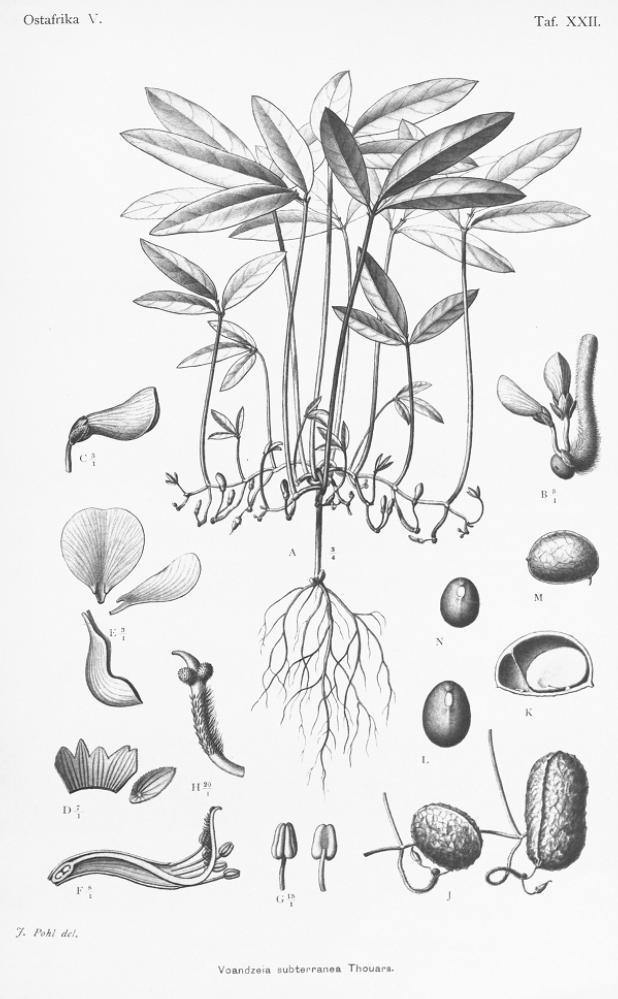
Bambara groundnut (Vigna subterranea) is a traditional legume crop in Africa, producing edible seeds within pods that mature underground, similar to peanuts.
This resilient plant is valued for its nutritional content and ability to thrive in poor soils and dry conditions, making it an important food security crop in many regions.
Key Facts
- Light: Full sun
- Water: Moderate, drought-tolerant
- Harvest: 90-150 days after sowing
- Soil: Well-drained, sandy loam
- Edible: Seeds, pods
What Is Bambara Groundnut Like to Grow?
Bambara groundnut is a low-maintenance annual crop that thrives in hot, dry conditions, making it suitable for regions with unreliable rainfall. It is a good choice if you are looking for a resilient food crop that can tolerate poor soils and requires minimal intervention.
This legume is known for its ability to fix nitrogen in the soil, which can improve soil fertility for subsequent crops. Its growth habit is bushy and prostrate, spreading across the ground as it matures.
What Does a Bambara Groundnut Plant Look Like?
A Bambara groundnut plant typically has a bushy, prostrate growth habit, reaching 15-30 cm (6-12 inches) in height and spreading 30-60 cm (1-2 ft) wide. Its leaves are trifoliate, meaning they consist of three leaflets, and are typically dark green.
The plant produces small, inconspicuous, pea-like flowers that are usually yellow or cream in colour. After pollination, the flower stalk elongates and pushes the developing pod into the soil, where the seeds mature underground, similar to common peanuts (Arachis hypogaea).
Each spherical or oval pod contains one to three seeds. The seeds themselves vary in colour, often appearing cream, red, brown, or speckled, depending on the variety.
Ideal Growing Conditions for Bambara Groundnut
Bambara groundnut requires full sun for optimal growth and yield, needing at least 6-8 hours of direct sunlight daily. It is a warm-season crop that is highly sensitive to frost.
The plant thrives in warm temperatures, ideally between 20-30 °C (68-86 °F). Temperatures below 18 °C (65 °F) can inhibit growth and pod development.
For soil, the Bambara groundnut prefers well-drained, sandy loam with a slightly acidic to neutral pH range of 5.0-6.5. Heavy or waterlogged soils can lead to poor pod formation and increased disease risk.
How to Sow Bambara Groundnut Seeds
Sow Bambara groundnut seeds directly into the ground after the last frost, once soil temperatures are consistently above 18 °C (65 °F). This ensures optimal germination and early plant vigour.
- Prepare a seedbed by loosening the soil to a depth of 15-20 cm (6-8 inches).
- Sow seeds 2-5 cm (1-2 inches) deep.
- Space individual seeds 10-20 cm (4-8 inches) apart within rows.
- Allow 30-60 cm (1-2 ft) between rows to give plants room to spread.
- Lightly water the soil after sowing to settle the seeds and initiate germination.
Some growers find that soaking the seeds in water for 12-24 hours before planting can improve germination rates, especially for older or harder seeds.
Caring for Bambara Groundnut Plants
Water Bambara groundnut plants regularly after sowing to help them establish, then shift to a moderate watering schedule. While drought-tolerant once established, consistent moisture, especially during flowering and early pod development, will support better yields.
The plants are legumes and fix their own nitrogen, so they require minimal nitrogen fertiliser. However, applying a balanced fertiliser with adequate phosphorus and potassium can significantly benefit pod development and overall plant health. Apply fertiliser before sowing or early in the growing season.
Weeding is important, particularly during the first 4-6 weeks of growth, to reduce competition for nutrients and water. Once the plants form a dense canopy, they will naturally suppress most weeds.
When and How to Harvest Bambara Groundnuts
Harvest Bambara groundnuts approximately 90-150 days after sowing, when the leaves begin to yellow and dry out, indicating the pods underground are mature. The exact timing depends on the specific variety and local growing conditions.
To harvest, carefully dig up the entire plant, being gentle to avoid damaging the underground pods. Shake off excess soil.
After harvesting, the pods should be dried for several weeks in a shaded, well-ventilated area to prevent mould and ensure proper curing. Once thoroughly dry, the seeds can be shelled from their pods.
Uses and Nutritional Value of Bambara Groundnuts
Bambara groundnuts are a highly nutritious food source, offering a balanced combination of protein, carbohydrates, and fibre. They are consumed in various forms, making them a versatile ingredient in many cuisines.
Common preparations include boiling the fresh or dried seeds, roasting them as a snack, or grinding them into flour. The flour is often used to make porridges, cakes, or thicken stews. The nuts can also be incorporated into stews and soups.
Nutritionally, Bambara groundnuts are considered a complete food, providing essential amino acids, iron, potassium, and B vitamins. Their high fibre content contributes to digestive health and helps regulate blood sugar. This makes them a healthy addition to many diets.
Common Problems with Bambara Groundnut
While Bambara groundnuts are generally resilient, they can face certain issues, particularly in less-than-ideal conditions. Stunted growth is often a sign of cold temperatures, poor soil conditions, or an underlying pest problem.
Pests like aphids, pod borers, and nematodes can affect plant health and yield. Regularly inspect your plants for signs of infestation, such as distorted leaves or damaged pods. Diseases such as leaf spot, rust, and fusarium wilt can occur, especially in humid environments or poorly drained soils.
Ensuring good air circulation and proper soil drainage can help mitigate fungal diseases. Crop rotation also helps prevent soil-borne diseases and pest build-up specific to legumes.
How to Store Bambara Groundnuts
Proper storage of Bambara groundnuts is crucial to maintain their quality and prevent spoilage. Once harvested and shelled, the seeds must be thoroughly dried before storage. This prevents mould growth and insect infestation.
Store the dried, shelled seeds in airtight containers in a cool, dry, and dark place. This protects them from moisture, light, and pests. If stored correctly, Bambara groundnuts can remain viable and edible for several months, sometimes up to a year.
You can also store unshelled pods, ensuring they are equally dry and kept in a well-ventilated area to prevent moisture accumulation.
Bambara Groundnut Through the Seasons
| Spring | Prepare the seedbed by loosening soil and incorporating any necessary amendments. Sow seeds directly into warm soil after all danger of frost has passed, ensuring soil temperatures are above 18 °C (65 °F). Water lightly after sowing. |
|---|---|
| Summer | Monitor young plants for early weed competition and remove as needed. Provide moderate watering, especially during dry spells and the flowering period, to support pod development. Inspect plants for any signs of pests or diseases. |
| Autumn | Allow pods to mature underground; reduce watering as plants naturally begin to senesce and leaves turn yellow. Harvest plants by digging them up carefully when the foliage has largely dried, typically 90-150 days after sowing. |
| Winter | Focus on post-harvest activities: thoroughly dry the harvested pods and seeds in a shaded, well-ventilated area. Shell the dried seeds and store them in airtight containers in a cool, dry place for future use. Prepare garden beds for the next growing season. |
Bambara Groundnut Problems Explained
| What you see | Likely cause | What to do |
|---|---|---|
| Poor pod development | Insufficient phosphorus or potassium, heavy soil, waterlogging | Amend soil with appropriate fertilisers; ensure good drainage by improving soil structure. |
| Yellowing leaves (prematurely) | Nutrient deficiency (not nitrogen), water stress (too little or too much) | Check soil nutrients and adjust fertilisation if needed; regulate watering to ensure consistent moisture without waterlogging. |
| Stunted plant growth | Cold temperatures, poor soil fertility, pest infestation | Ensure warm growing conditions; improve soil with organic matter; inspect plants for pests and address them promptly. |
| Pods rotting underground | Excessive moisture, heavy clay soil, fungal disease | Improve soil drainage; avoid overwatering, especially as pods mature; consider resistant varieties if available. |
Frequently Asked Questions
Is Bambara groundnut a legume?
Yes, Bambara groundnut (Vigna subterranea) is a member of the Fabaceae family, commonly known as the legume family. It shares characteristics with other legumes, including the ability to fix atmospheric nitrogen in the soil.
Is Bambara beans the same as chickpeas?
No, Bambara groundnuts are not the same as chickpeas (Cicer arietinum). While both are legumes, they are distinct species with different appearances, textures, and flavour profiles. Chickpeas are typically rounder and lighter in colour.
Is Bambara groundnut good for diabetics?
Bambara groundnut can be a beneficial food for diabetics due to its high fibre content and relatively low glycemic index. Fibre helps regulate blood sugar levels, making it a suitable part of a balanced diet for managing diabetes.
What are the benefits of eating Bambara groundnut?
Bambara groundnut is a nutritious food that provides a good source of protein, carbohydrates, and dietary fibre. It also contains essential minerals like iron and potassium, contributing to overall health, energy, and digestive well-being.
How do you cook Bambara groundnuts?
Bambara groundnuts can be cooked in various ways: they are often boiled until tender, roasted as a snack, or ground into flour for use in porridges and stews. Freshly harvested green pods can also be boiled and eaten like green peas.
Sources & Verification
Taxonomy and distribution are checked against the databases below. Care guidance is written for cultivated species only and reviewed by our editor. How We Build Plant Profiles →


