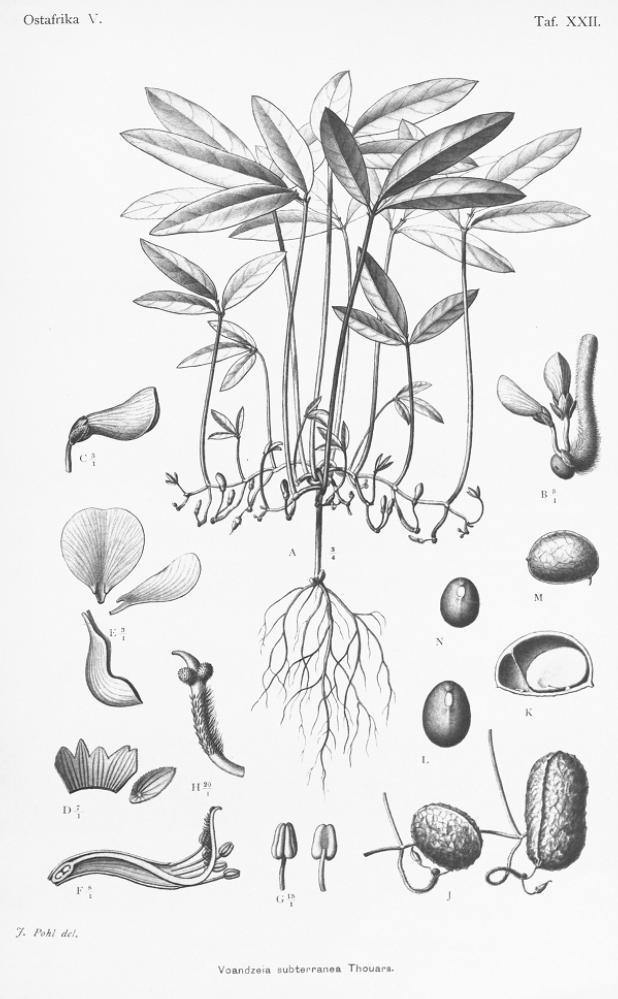
Moth bean (Vigna aconitifolia) is a drought-tolerant annual legume native to India and Pakistan, widely grown in semi-arid tropical regions for its high-protein seeds. The plant forms low, sprawling mats of deeply divided leaves and produces narrow pods containing small, yellow-brown to reddish seeds.
This warm-season pulse thrives in dry soil above 30 °C (86 °F) where standard dry beans fail, maturing in 75 to 90 days with under 500 mm (20 in) of annual rainfall.
Key Facts
- Crop type: Drought-tolerant annual legume pulse
- Protein content: 22–24% dry seed protein
- Soil temperature: Sow above 25 °C (77 °F)
- Days to harvest: 75 to 90 days from germination
- Plant size: 15–30 cm (6–12 in) tall, trailing 150 cm (5 ft)
Where Moth Bean Fits in Your Crop Plan
Moth bean suits warm, dry gardens and smallholdings where water is limited and summer heat regularly exceeds 35 °C (95 °F). It functions as a short-season summer pulse, green manure cover crop, or living mulch between taller crops like pearl millet (Pennisetum glaucum) or sorghum (Sorghum bicolor).
Because it forms low-lying dense growth close to the soil surface, it prevents wind erosion and suppresses weeds without competing heavily for deep soil moisture. The plant fixes atmospheric nitrogen through soil bacteria, reducing nitrogen fertilizer demands for subsequent crops.
How to Identify Moth Bean Plants
Moth bean is a sprawling annual herb that grows 15–30 cm (6–12 in) high with trailing branches spreading 50–150 cm (20–60 in) across the ground. The alternate leaves are trifoliate with deeply cleft, 3- to 5-lobed leaflets measuring 3–8 cm (1.2–3.1 in) long, giving the foliage a delicate, feathery appearance distinct from mung bean (Vigna radiata).
Small yellow pea-like flowers develop in clusters of 4 to 12 along short axillary stalks during late summer. Successful pollination yields slender, cylindrical pods measuring 2.5–5 cm (1.0–2.0 in) long, each holding 4 to 9 rectangular, smooth seeds that range from light brown and yellow to reddish-mottled green.
Soil and Climate Requirements for Moth Beans
Moth bean requires full sun and air temperatures between 25–38 °C (77–100 °F) during its active growing cycle. Frost kills the foliage instantly, and growth slows drastically below 20 °C (68 °F).
Soil selection requires free drainage above all else, as waterlogged conditions cause swift root decay.
- Soil type: Sandy loam, light clay, or gravelly arid soils.
- Soil pH: Prefers neutral to slightly alkaline conditions from 6.5 to 8.0.
- Drainage: High permeability; cannot tolerate standing water or heavy clay.
- Moisture: Requires 300–500 mm (12–20 in) total moisture per crop cycle.
How and When to Plant Moth Bean Seeds
Sow seeds directly into the soil when daytime soil temperatures reach at least 25 °C (77 °F), typically late spring or early summer after all frost risk has passed. Soak seeds in room-temperature water for 6–8 hours prior to planting to accelerate germination from 7 days down to 2–3 days.
Planting depth and spacing directly affect plant architecture and vine density.
- Sowing depth: Plant seeds 2–3 cm (0.8–1.2 in) deep in moist seedbeds.
- Row spacing: Space rows 30–45 cm (12–18 in) apart.
- Plant spacing: Thin emerging seedlings to 10–15 cm (4–6 in) apart.
- Seed rate: Use 10–15 kg of seed per hectare (9–13 lbs per acre) for monoculture crops.
Water and Fertilizer Needs for Moth Beans
Provide 15–25 mm (0.6–1.0 in) of water per week during seedling establishment, then reduce irrigation once vines begin spreading across the soil. Mature plants survive dry spells of 3 to 4 weeks by utilizing a taproot that extends over 60 cm (24 in) into the subsoil.
Over-fertilization reduces grain yield by encouraging excessive foliage growth. Apply 10–20 kg of phosphorus per hectare (9–18 lbs per acre) at planting to foster early root growth; supplemental nitrogen is rarely required due to efficient biological nitrogen fixation.
Harvesting Moth Bean Pods and Sprouts
Harvest green immature pods for fresh cooking 45 to 55 days after sowing, or allow pods to turn golden-brown for dry grain harvest at 75 to 90 days. Because individual pods ripen unevenly along trailing vines, gather dry pods in multiple hand pickings before they shatter open in direct sun.
To harvest sprouts indoors, submerge dried mature seeds in cold water for 8 hours, drain thoroughly, and keep them in a damp sprout jar at 22–26 °C (72–79 °F) for 36 to 48 hours until sweet, crisp sprouts reach 1–2 cm (0.4–0.8 in) in length.
Moth Bean Nutrition, Cooking, and Sprouting
Raw dried moth beans yield 22–24% protein, 60% carbohydrates, 1.5% fat, and rich amounts of iron, potassium, and calcium. In Indian cuisine, mature dry seeds are prepared as moth dal, added to vegetable curries, or sprouted to create the dish matki usal.
To cook whole dried moth beans on the stove, rinse 200 g (1 cup) of beans, cover with 600 ml (2.5 cups) of water, bring to a boil, and simmer gently over medium heat for 25 to 30 minutes until soft. Soaking beans overnight shortens the stove cooking time to 12–15 minutes.
Common Moth Bean Pests and Diseases
Inspect plants weekly for aphids and whiteflies, which vector the yellow mosaic virus during hot, dry spells. Keep foliage dry during overhead watering to limit leaf spot caused by fungal pathogens.
- Yellow mosaic virus: Leaf mottling and stunted vine spread; destroy infected plants immediately.
- Root rot (Rhizoctonia): Wilting stems near soil line; avoid poorly drained soil.
- Aphids: Clustered insects on young shoots; spray with soap solution or jet with water.
- Pod borers: Caterpillars feeding inside seed pods; handpick early in the morning.
How to Store Harvested Moth Beans
Store fully dried seeds at moisture levels below 10% in airtight glass jars or food-grade containers kept in a cool, dark room at 15–20 °C (59–68 °F). Dried seeds maintain culinary quality and sprouting viability for up to 2 years under these conditions.
Fresh green pods last up to 5 days in a sealed paper bag inside the refrigerator crisp drawer. Cooked moth bean dishes and sprouted beans should be refrigerated and consumed within 3 to 4 days.
Frequently Asked Questions
What is moth bean called in English?
Moth bean is commonly known in English as mat bean, dew bean, or matki. Its scientific name is Vigna aconitifolia.
How much protein is in moth beans?
Dried moth beans contain approximately 22 to 24 grams of protein per 100 grams of dry seeds, making them comparable to mung beans and lentils.
How do you sprout moth beans quickly?
Soak whole dry moth beans in lukewarm water for 6 to 8 hours, drain all liquid completely, and place them in a dark, warm space at 24–28 °C (75–82 °F). Short, crisp sprouts will emerge within 24 to 36 hours.
How do you cook moth beans on the stove?
Rinse 1 cup of dried moth beans, simmer them in 2.5 cups of water over medium heat for 25 to 30 minutes until soft, then drain and season with salt and spices.
What is the growing season for moth beans?
Moth bean is a warm-season crop planted in early summer after soil temperatures exceed 25 °C (77 °F) and harvested in late summer or autumn within 75 to 90 days.
Sources & Verification
Taxonomy and distribution are checked against the databases below. Care guidance is written for cultivated species only and reviewed by our editor. How We Build Plant Profiles →