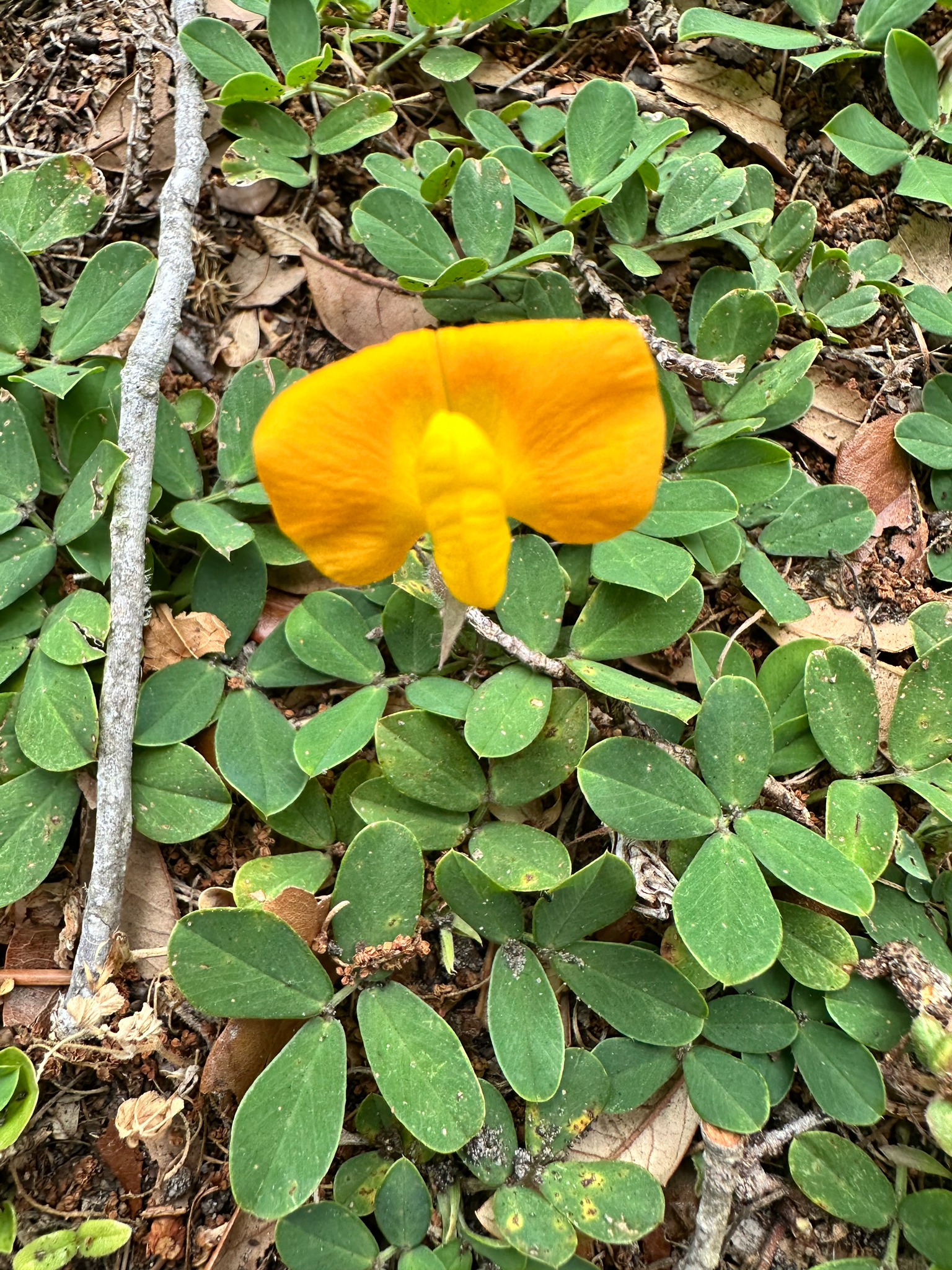
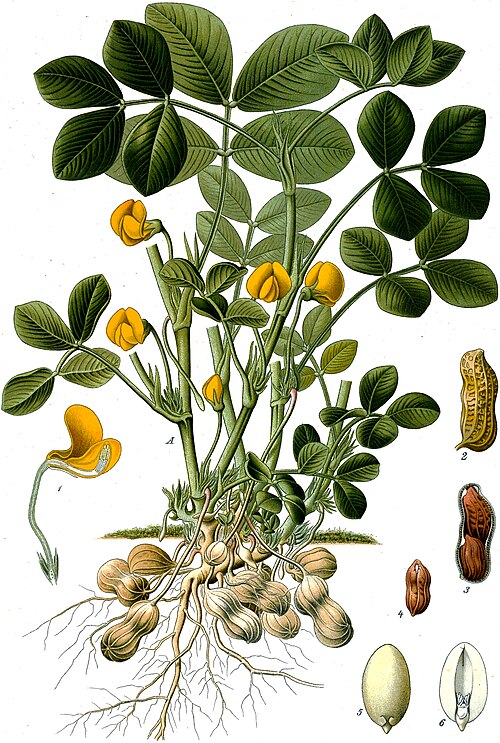
Pinto peanut (Arachis pintoi) is a creeping perennial legume native to the Cerrado region of Brazil, known for its dense carpet of bright yellow flowers and nitrogen-fixing root nodules. Botanist Geraldo Pinto first collected specimens along the Jequitinhonha River in 1954 before the species was formally described in 1994.
Stolons spread up to 2 m (6.5 ft) wide per plant, producing a lawn alternative that suppresses tropical broadleaf weeds. It thrives in USDA zones 9b through 11 where annual rainfall exceeds 1,000 mm (40 in).
Key Facts
- Growth Habit: Creeping perennial groundcover spreading to 2 m (6.5 ft)
- Sunlight: Full sun to partial shade (minimum 4 hours direct sun)
- Hardiness: USDA zones 9b–11; foliage freezes at 0 °C (32 °F)
- Soil pH: Tolerates acidic to neutral soils from pH 4.5 to 7.2
- Water: Needs 1,000 mm (40 in) annual rain; drought-tolerant when rooted
- Toxicity: Non-toxic to dogs, cats, cattle, and humans
Where Pinto Peanut Fits in Tropical Gardens
Pinto peanut serves as a low-maintenance lawn replacement and orchard groundcover in warm humid regions. Soil temperatures above 18 °C (64 °F) prompt stolons to fill open ground within 90 days of planting.
It grows beneath citrus, macadamia, and avocado trees without competing aggressively for shallow root moisture. Its low height reduces the need for frequent mowing compared to tropical turfgrasses like bahiagrass.
You can plant it on sloped banks to hold topsoil, as its stoloniferous roots anchor soil down to a depth of 30 cm (12 in). It suits property owners in frost-free regions seeking self-fertilizing ground cover.
Identifying Pinto Peanut Leaf and Flower Traits
Pinto peanut forms a dense mat 10 to 20 cm (4 to 8 in) tall with bright yellow pea-shaped flowers. Leaves are tetrafoliolate, each carrying four oval leaflets that measure 2 to 5 cm (0.8 to 2 in) long.
Leaflets display a smooth margin and fold upward along the petiole at night or during moisture stress. Bright yellow flowers measure 1.5 to 2 cm (0.6 to 0.8 in) across and held slightly above the leaves on thin floral pegs.
Following self-pollination, the flower peg elongates downward, driving the developing seed pod 2 to 5 cm (0.8 to 2 in) beneath the soil surface. Pods contain one or two light brown seeds measuring 8 to 12 mm (0.3 to 0.5 in) long.
Choosing the Best Site and Soil for Mani-Mani
Position mani-mani in full sun to partial shade in soils with a pH between 4.5 and 7.2. It tolerates acidic Cerrado clays, infertile sands, and weathered tropical loams.
Shade levels exceeding 50 percent reduce floral density and cause internodes to stretch, resulting in thin ground coverage. Choose open sites receiving at least 4 to 6 hours of unshaded sunlight daily.
Ensure the site drains freely after rain, as persistent standing water promotes soil-borne fungal pathogens. Raised beds or sloped terrain prevent root rot in high-rainfall zones.
How to Plant Pinto Peanut Slips and Seeds
Space vegetative cuttings or stolons 20 to 30 cm (8 to 12 in) apart during the early rainy season. Clear existing grass and broadleaf weeds before establishing new beds.
Use stem cuttings 10 to 15 cm (4 to 6 in) long with at least three nodes, burying two nodes beneath moist soil. Press the soil firmly around each slip to eliminate air pockets.
When establishing from unhulled seed pods, follow these seeding rates and guidelines:
- Lawn cover rate: 25 to 30 kg/ha (22 to 27 lb/acre) for full coverage in 12 weeks
- Pasture rate: 10 to 15 kg/ha (9 to 13 lb/acre) when mixed with grasses
- Sowing depth: 2 to 3 cm (0.8 to 1.2 in) into tilled soil
- Establishment water: Apply 15 mm (0.6 in) water daily until shoot emergence
Watering and Fertilizer Needs for Pinto Peanut
Provide 25 mm (1 in) of water weekly while root systems establish, after which mature plants withstand 3-month dry periods without supplemental irrigation. Leaves wilt during droughts but recover within hours of rainfall.
Roots associate with Bradyrhizobium soil bacteria to fix up to 150 kg of atmospheric nitrogen per hectare annually. Avoid synthetic nitrogen fertilizers, which encourage grass weeds to overgrow the legume.
Apply single superphosphate at 20 to 30 kg P/ha in low-phosphorus soils to support root nodulation. Watch for visual signs of nutrient stress:
- Phosphorus deficiency: Dark purpling along margins of older leaflets
- Potassium deficiency: Yellow leaf margins in sandy soils
- Molybdenum deficiency: Pale yellow leaves despite wet soil conditions
Mowing and Trimming Pinto Peanut Lawns
Mow established pinto peanut lawns to a height of 7 to 10 cm (2.8 to 4 in) every 4 to 6 weeks. High mower decks protect flower buds and maintain yellow blooms.
Cutting below 5 cm (2 in) damages stolon crowns and slows leaf regrowth by 14 to 21 days. Use sharp mower blades to avoid tearing the fleshy leaf petioles.
Edge garden borders with a string trimmer to stop creeping stolons from entering vegetable beds. Because it spreads by surface runners rather than deep rhizomes, edge control requires simple line trimming.
How to Propagate Pinto Peanut
Propagate pinto peanut using 10 to 15 cm (4 to 6 in) stem cuttings harvested from healthy stolons in warm weather. Cuttings root within 7 to 10 days in warm moist media.
Strip lower leaves from the stem sections and plant them directly into moist nursery beds or trays filled with equal parts sand and peat. Keep soil temperatures between 24 and 30 °C (75 and 86 °F).
Division of mature rooted mats provides another quick propagation method. Slice 10 cm (4 in) turf plugs with roots attached and transplant them into pre-dug holes spaced 30 cm (12 in) apart.
Cold Hardiness and Winter Care for Pinto Peanut
Foliage suffers frost burn when temperatures drop below 0 °C (32 °F), but crown roots survive soil freezes down to −3 °C (26 °F). Top growth turns brown after winter frosts in USDA zone 9b.
Stolons shoot again from subterranean nodes in late spring when soil temperatures stay above 18 °C (64 °F). In zone 9a, spread a 5 cm (2 in) layer of coarse organic mulch over dormant roots before winter freezes.
In USDA zone 8 and colder, pinto peanut functions as a warm-season annual or greenhouse groundcover. Move potted specimens indoors before nighttime lows reach 5 °C (41 °F).
Pinto Peanut Flowers and Companion Plants
Yellow pea blossoms open continuously from late spring to mid-autumn, peaking during hot summer spells. Bees visit the flowers daily for nectar and pollen.
Individual flowers open at dawn and wither by late afternoon after self-fertilization takes place. Fresh flowers emerge daily along growing stolon tips throughout the summer.
Combine pinto peanut with complementary warm-climate groundcovers and companion crops:
- Rhizoma peanut (Arachis glabrata) – taller rhizomatous legume suited to drier sandy sites
- Common peanut (Arachis hypogaea) – annual oilseed crop grown for edible nuts
- Sensitive plant (Mimosa pudica) – low creeping legume with pink spherical flowers
- Bahiagrass (Paspalum notatum) – pasture grass that uses nitrogen fixed by pinto peanut
- Signal grass (Urochloa decumbens) – tropical forage grass interseeded with pinto peanut
Frequently Asked Questions
Is Arachis pintoi edible for humans?
The underground seed pods of pinto peanut (Arachis pintoi) are non-toxic, but they are very small and tough, making them impractical as human food compared to common peanuts (Arachis hypogaea).
What is the difference between Arachis pintoi and Arachis glabrata?
Pinto peanut (Arachis pintoi) spreads via surface stolons and features wide oval leaflets, whereas rhizoma peanut (Arachis glabrata) spreads via thick underground rhizomes, has narrower leaflets, and survives colder winter temperatures in USDA zone 8.
What are the main benefits of growing pinto peanut?
Pinto peanut fixes atmospheric nitrogen, controls soil erosion on steep slopes, suppresses tropical broadleaf weeds, and forms a drought-tolerant flowering lawn replacement in warm regions.
How do you plant Arachis pintoi seeds?
Sow unhulled pinto peanut pods 2 to 3 cm (0.8 to 1.2 in) deep in weed-free moist soil at a seeding rate of 25 to 30 kg/ha (22 to 27 lb/acre) when soil temperatures exceed 18 °C (64 °F).
What is the local name for Arachis pintoi in Southeast Asia?
In the Philippines, Arachis pintoi is known locally as mani-mani or mani-manihan, while in Indonesia and Malaysia it is called kacang pintoi or kacang-kacangan.
Why do people search for Mani-Mani statue?
The search phrase "Mani-Mani statue" refers to an artifact in the 1994 video game EarthBound (Mother 2), which shares its name with the Philippine common name for the Arachis pintoi groundcover plant.
Sources & Verification
Taxonomy and distribution are checked against the databases below. Care guidance is written for cultivated species only and reviewed by our editor. How We Build Plant Profiles →