

Tuberous begonia (Begonia tuberhybrida) is a group of complex hybrids bred from South American species, characterized by their fleshy stems and large, symmetrical flowers. These plants grow from a thickened underground tuber which stores energy for their spectacular summer display.
Unlike fibrous-rooted varieties, these begonias require a period of total dormancy during the winter months. They are sensitive to high heat and low humidity, making them a specific choice for sheltered, partially shaded spots in temperate climates.
Key Facts
- Light: Bright indirect light or dappled morning sun
- Water: Keep soil moist but never waterlogged or soggy
- Temperature: Prefers a range of 15-24 °C (60-75 °F)
- Soil: Well-drained, peat-based or loamy potting mix
- Feeding: High-potassium liquid feed every 14 days
- Dormancy: Requires dry, frost-free storage during winter months
Is Tuberous Begonia Right for Your Garden?
Tuberous begonia is a specific choice for gardeners with shady balconies, patios, or north-facing beds. Because these plants have brittle stems and heavy flowers, they need a location protected from strong winds and heavy rain. They are not suitable for hot, arid regions unless you can provide high humidity and cooling mist.
You can grow these in the ground or in containers, but pots allow for easier management of their winter dormancy. If your garden lacks natural shade, you will need to provide artificial screening to prevent leaf scorch. They suit the following garden roles:
- Hanging baskets for trailing varieties like the Pendula group
- Window boxes in dappled light
- Mixed containers with other shade-loving foliage plants
- Formal bedding displays in temperate summer climates
Identifying Tuberous Begonia Colors and Flowers
The flowers of Begonia tuberhybrida can reach 20 cm (8 in) in diameter in some exhibition cultivars. The blooms appear in clusters, typically featuring one large male flower flanked by two smaller female flowers. Male flowers are often double and highly decorative, while female flowers are single and possess a three-winged ovary behind the petals.
The foliage is equally distinctive, with fleshy, succulent-like stems and asymmetrical, heart-shaped leaves. Leaf margins are usually serrated, and colors range from pale green to deep bronze. Identifying features include:
- Male flowers: Large, multi-petaled, and often rose-like
- Female flowers: Smaller, single, with visible seed pods
- Leaf shape: Oblique or lopsided base, typical of the genus
- Habit: Either upright and bushy or gracefully weeping
Choosing the Best Site for Tuberous Begonias
Place your plants in a spot that receives dappled sunlight or 4-6 hours of morning sun. Direct afternoon sun in midsummer will burn the leaves and cause the flower buds to drop before they open. If the light is too low, the stems will become leggy and may snap under the weight of the blooms.
Air circulation is vital to prevent fungal diseases, but avoid drafty corridors. In regions with low humidity, placing pots on gravel trays filled with water can help. Maintain a temperature above 15 °C (60 °F) for active growth, as they stop flowering when temperatures consistently exceed 30 °C (86 °F).
Planting Tuberous Begonia Tubers Correctly
Start tubers indoors about 8-10 weeks before the last frost. Place the tubers with the hollow, concave side facing upwards on the surface of moist potting soil. Do not bury them deeply; a light covering of 1-2 cm (0.5-0.75 in) of soil is sufficient once they begin to sprout.
Wait until all risk of frost has passed and night temperatures stay above 10 °C (50 °F) before moving them outdoors. If you are planting in garden beds, space the plants 25-30 cm (10-12 in) apart. Use a high-quality, peat-free compost mixed with perlite to ensure the drainage is sharp enough to prevent tuber rot.
Watering and Feeding Tuberous Begonias
Water the soil only when the top 2 cm (0.8 in) of the mix feels dry. Avoid getting water on the leaves or into the central crown of the tuber, as this is the primary cause of rot and powdery mildew. During peak summer heat, you may need to water daily, but always check the soil moisture first.
Feed the plants every two weeks with a balanced liquid fertilizer until the first flowers appear. Once blooming begins, switch to a high-potassium feed, such as tomato fertilizer, to sustain the floral display. Stop feeding entirely by late summer to allow the plant to prepare for its natural dormancy period.
How to Deadhead Tuberous Begonias for More Blooms
Remove spent flowers by snapping the flower stem off near the main branch. This prevents the plant from wasting energy on seed production and keeps the display looking tidy. Regular deadheading also reduces the risk of grey mold (Botrytis) developing on decaying petals that fall onto the leaves.
If the plant becomes too heavy or lopsided, use small bamboo stakes to support the stems. Tie them loosely with soft twine to avoid cutting into the succulent tissue. For the best floral show, some growers remove the smaller female flowers to allow the plant to put all its energy into the large male blooms.
How to Propagate Tuberous Begonias
Propagate these plants by taking stem cuttings in spring or by dividing large tubers. Stem cuttings should be 8-10 cm (3-4 in) long and taken from the base of the plant with a small piece of the tuber attached if possible. Place them in a propagator at 18-21 °C (65-70 °F) with high humidity until roots form.
Alternatively, you can divide large tubers that have multiple growing points (eyes). Use a sterilized knife to cut the tuber into sections, ensuring each piece has at least one healthy bud. Dust the cut surfaces with sulfur powder and let them callous for 24 hours before replanting in fresh compost.
Tuberous Begonia Care in Winter
Lift the tubers for storage after the first light frost or when the foliage begins to yellow in autumn. Cut the stems back to about 5 cm (2 in) and allow the tubers to dry in a cool, airy place for several days. Once dry, the remaining stem will naturally detach from the tuber.
Store the cleaned tubers in a box of dry sand, peat, or vermiculite. Keep them in a dark, frost-free location with a temperature between 5-10 °C (41-50 °F). Check them monthly during the winter and discard any that show signs of soft rot or shriveling.
Year-Round Tuberous Begonia Care
| Spring | Start tubers indoors in March or April at 18 °C (65 °F). Increase watering as sprouts appear and move outdoors only after the last frost. |
|---|---|
| Summer | Water regularly to keep soil moist. Apply high-potassium fertilizer every 14 days and deadhead spent blooms to encourage new growth. |
| Autumn | Reduce watering as temperatures drop. Lift tubers after the first frost, dry them thoroughly, and remove dead foliage before storage. |
| Winter | Store tubers in dry vermiculite at 5-10 °C (41-50 °F). Inspect monthly for rot and ensure the storage area remains dark and frost-free. |
Common Tuberous Begonia Problems Explained
| What you see | Likely cause | What to do |
|---|---|---|
| Yellowing leaves and mushy stems | Overwatering or poor drainage | Reduce watering frequency and ensure the pot has adequate drainage holes. |
| White powdery spots on leaves | Powdery mildew | Improve air circulation and avoid wetting the foliage when watering. |
| Flower buds falling off | Heat stress or dry air | Move the plant to a cooler, shadier spot and increase local humidity. |
| Tall, spindly growth | Insufficient light | Move the plant to a brighter location with indirect sunlight. |
Popular Tuberous Begonia Cultivars
- ‘Nonstop’ Series – compact plants that bloom continuously all summer
- ‘Illumination’ Series – trailing habit perfect for hanging baskets
- ‘Roseform’ – flowers that closely resemble large hybrid tea roses
- ‘Picotee’ – petals featuring a contrasting color on the edges
- ‘Fimbriata’ – petals with heavily fringed or ruffled margins
Companion Plants for Tuberous Begonia
Choose companions that share a preference for shade and moist soil. Foliage plants provide a structural backdrop for the large, colorful begonia blooms. Avoid aggressive spreaders that might crowd out the begonia’s root system or block its light.
- Fuchsia (Fuchsia magellanica) – shares similar light and water needs
- Coral Bells (Heuchera americana) – provides colorful year-round foliage
- Busy Lizzie (Impatiens walleriana) – fills gaps with low-growing color
- Lobelia (Lobelia erinus) – trails over the edges of containers
- Hostas (Hosta sieboldiana) – offers large, contrasting leaf textures
Frequently Asked Questions
What is the difference between male and female tuberous begonia flowers?
Male flowers are the large, showy, often double blooms, while female flowers are smaller, single, and have a visible seed pod (ovary) behind the petals. Most growers keep both, but some remove females to encourage larger male blooms.
Can tuberous begonias grow indoors?
Yes, they can grow as houseplants if placed in a very bright spot with indirect light and high humidity, but they still require a dormant winter period. Without a cool rest, the tuber will eventually exhaust itself and die.
Why is my begonia not flowering?
The most common reasons are too much shade, over-fertilizing with nitrogen, or extreme heat. Ensure the plant gets bright indirect light and switch to a high-potassium fertilizer once the plant is established.
How long do tuberous begonias last?
A healthy tuber can live and bloom for several years, often 5 to 10 years, if properly overwintered. The tubers gradually grow larger each season, allowing for more stems and flowers.
Are tuberous begonias toxic to dogs?
Yes, they are toxic to dogs and cats because they contain calcium oxalate crystals. Ingestion typically causes oral irritation, drooling, vomiting, and difficulty swallowing.
Sources & Verification
Taxonomy and distribution are checked against the databases below. Care guidance is written for cultivated species only and reviewed by our editor. How We Build Plant Profiles →
More in Begonia

Hardy Begonia
Begonia grandis
☀️ Partial Shade 💧 Moderate

Wax Begonia
Begonia cucullata
☀️ Bright Indirect 💧 Moderate
Rex Begonia
Begonia rex
☀️ Bright Indirect 💧 Moderate
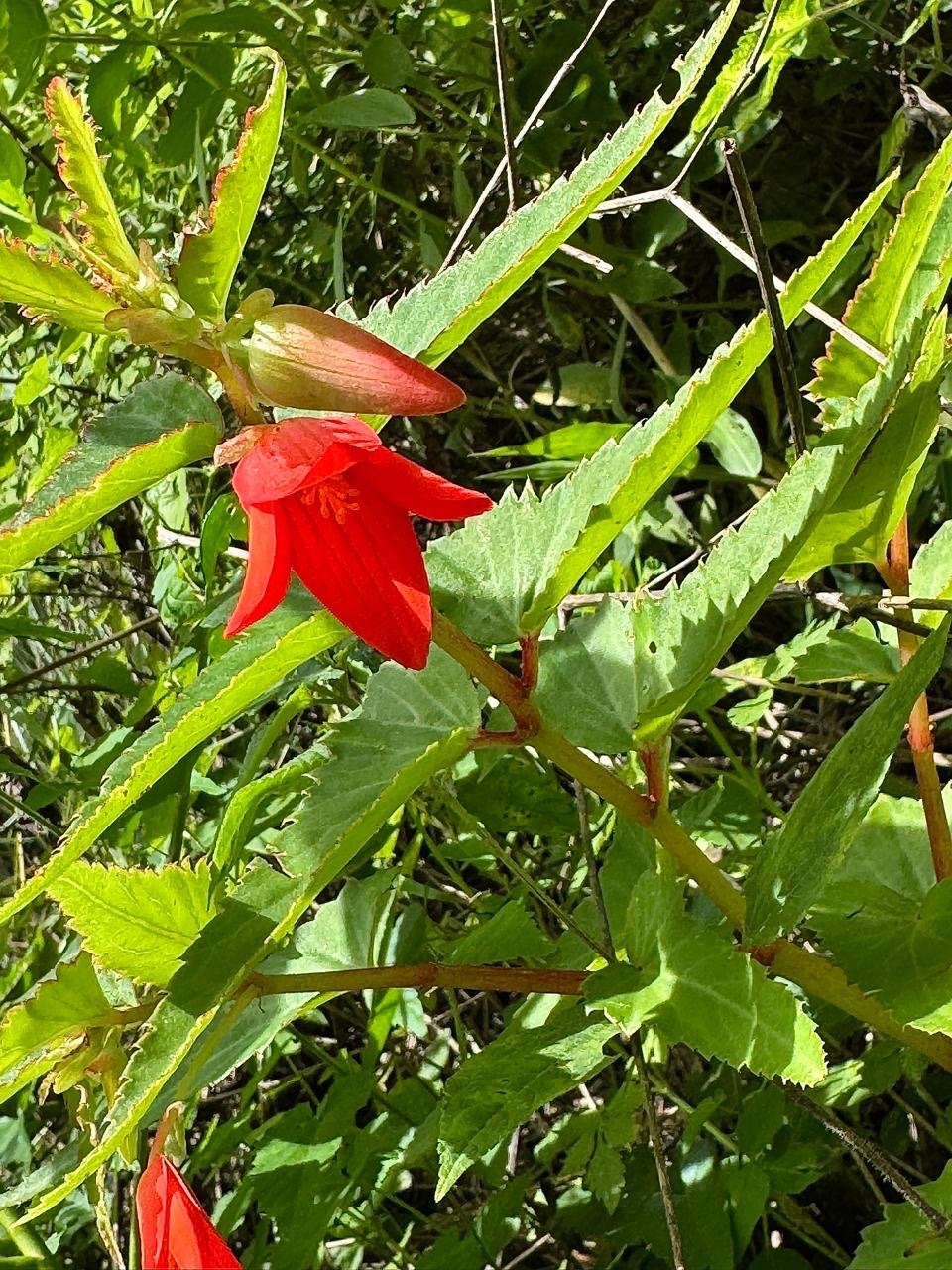
Bolivian Begonia
Begonia boliviensis
☀️ Partial Shade 💧 Moderate
Polka Dot Begonia
Begonia maculata
☀️ Bright Indirect 💧 Moderate