
Begonia rex, commonly known as the king begonia, is a rhizomatous perennial native to the tropical forests of Assam, India, where it grows in the shaded understory. It is primarily grown for its large, patterned leaves that feature metallic silvers, deep purples, and rich greens.
Unlike the common wax begonia (Begonia × semperflorens-cultorum), this species grows from a thick, creeping rhizome that sits just at the soil surface. It requires a specific balance of high humidity and moderate watering to prevent its delicate foliage from crisping or rotting.
Key Facts
- Light: Bright indirect light; avoid direct midday sun
- Water: When the top 2 cm (1 in) of soil is dry
- Humidity: High levels above 50% are essential
- Temperature: Maintain 15–24 °C (60–75 °F) year-round
- Toxicity: Toxic to cats and dogs if ingested
Is the Rex Begonia Right for Your Home?
The Rex Begonia is an ideal choice for indoor gardeners who want architectural foliage but have limited space for large floor plants. Because it rarely exceeds 45 cm (18 in) in height and width, it fits well on side tables or in terrariums where humidity is easier to control. It is not a “set and forget” plant; it demands consistent attention to moisture levels and air quality.
You should note that while people often search for a “Rex Begonia Vine,” true Begonia rex does not climb or trail. The plant often confused with it is the Rex Begonia Vine (Cissus discolor), which belongs to the grape family. True begonias of this species grow in a mounding habit from the base.
- Best for intermediate keepers who can monitor humidity.
- Perfect for north or east-facing windowsills.
- Suited for large glass terrariums or Wardian cases.
Identifying Rex Begonia and Its Unique Look
Rex Begonia is identified by its asymmetrical, heart-shaped leaves that can grow up to 20 cm (8 in) long. The leaf surfaces are often textured with puckers, hairs, or a metallic sheen that reflects light in shades of silver, burgundy, and emerald. Stems are usually succulent, reddish, and covered in fine hairs.
The plant grows from a rhizome, a thick modified stem that grows horizontally along the soil surface. In many cultivars, the leaf base spirals inward, creating a snail-shell appearance. While it does produce small pink or white flowers on tall stalks, they are often considered secondary to the dramatic foliage.
How Much Light Does a Rex Begonia Need?
Provide your Rex Begonia with bright, indirect light for at least 6 to 8 hours a day. Direct sunlight, especially during the afternoon, will scorch the thin leaves and cause the metallic colours to fade or turn brown. A spot about 1 m (3 ft) away from a south-facing window or directly in an east-facing window is usually sufficient.
If the plant does not receive enough light, the leaf stems will become elongated and “leggy” as they stretch toward the source. In low-light rooms, you can use a broad-spectrum LED grow light kept 30 cm (12 in) above the foliage. Rotate the pot 90 degrees every week to ensure the mounding habit remains symmetrical and full.
Watering Rex Begonia Indoors
Water the soil only when the top 2 cm (1 in) of potting mix feels dry to the touch. This species is highly susceptible to rhizome rot if the soil remains saturated for too long. Use room-temperature water to avoid shocking the root system, which can lead to sudden leaf drop.
When watering, avoid getting any liquid on the leaves or the crown of the plant. Water trapped on the fuzzy leaf surfaces often leads to fungal issues like powdery mildew or botrytis. Many growers prefer bottom-watering by sitting the pot in a tray of water for 15 minutes to keep the foliage dry.
- Never let the plant sit in standing water.
- Reduce watering frequency by half during the winter months.
- Use filtered or rainwater if your tap water is very hard.
Humidity and Temperature Requirements
Maintain a humidity level of at least 50% to prevent the leaf edges from turning brittle and brown. In typical heated homes, humidity often drops to 20%, which is fatal for this species. Using a pebble tray filled with water or a dedicated room humidifier is the most effective way to keep the air moist.
Avoid misting the leaves directly, as the trapped moisture encourages leaf spot diseases. Temperature is equally important; the plant will stop growing if temperatures drop below 13 °C (55 °F). Keep it away from cold draughts near doors or the dry heat produced by radiators and air conditioning vents.
The Best Soil and Fertilizer
Use a porous, peat-based potting mix that retains some moisture but allows excess water to drain away rapidly. A mix consisting of equal parts potting soil, perlite, and orchid bark or coco coir works well. Because the rhizomes grow horizontally, a wide, shallow pot is often better than a deep, narrow one.
Feed your Rex Begonia every two weeks during the spring and summer with a balanced liquid fertilizer diluted to half-strength. Excessive fertilizing can lead to salt build-up in the soil, which burns the sensitive roots. Stop all feeding during the winter dormant period when the plant’s metabolic rate slows down.
How to Propagate Rex Begonia
You can propagate Rex Begonia most effectively using leaf cuttings rather than seeds. A single leaf can produce multiple new plantlets if you cut the main veins on the underside and pin the leaf flat against moist compost. Alternatively, a whole leaf with its petiole (stem) can be placed in a jar of water until roots form.
Water propagation is popular because it allows you to see the roots developing, but the transition to soil can be difficult. For best results, use a humidity dome or a clear plastic bag over your cuttings to maintain 100% humidity while the new roots are establishing. New plantlets usually appear at the site of the vein cuts within 4 to 6 weeks.
- Select a healthy, mature leaf for cuttings.
- Use a sterilized blade to prevent infection.
- Keep cuttings in a warm spot with bright, indirect light.
Common Rex Begonia Problems
The most frequent issue is powdery mildew, which appears as white, flour-like spots on the leaves. This is usually caused by poor air circulation and wet foliage. If you spot it, isolate the plant and treat it with a neem oil spray or a fungicide specifically labelled for begonias.
If the leaves are drooping despite the soil being wet, the rhizome has likely begun to rot. Remove the plant from its pot immediately, cut away any mushy, brown sections of the rhizome, and repot the healthy firm parts in fresh, dry soil. Mealybugs and spider mites are the primary pests; check the undersides of the leaves and the crevices of the fuzzy stems regularly.
Year-Round Care for Rex Begonia
| Spring | Resume feeding with half-strength fertilizer every 14 days. Repot the plant if the rhizome has reached the edge of the container. |
|---|---|
| Summer | Monitor soil moisture daily as evaporation increases. Move the plant further from windows if the leaves show signs of sun scorch. |
| Autumn | Gradually reduce watering and stop fertilizing as light levels drop. Check for pests before bringing plants inside from porches. |
| Winter | Keep the plant in a room above 15 °C (60 °F). Water only when the top 3 cm (1.2 in) of soil is dry to prevent rot during dormancy. |
Rex Begonia Leaf and Growth Problems
| What you see | Likely cause | What to do |
|---|---|---|
| Crispy brown leaf edges | Low humidity | Place the pot on a pebble tray or use a humidifier to raise levels above 50%. |
| Yellowing leaves and mushy stems | Overwatering or rhizome rot | Allow soil to dry out completely and prune away any soft, rotted tissue. |
| White powdery spots on leaves | Powdery mildew | Improve air circulation and avoid getting water on the foliage during watering. |
| Small leaves and leggy stems | Insufficient light | Move the plant to a brighter location with more indirect sunlight. |
Popular Rex Begonia Cultivars
- ‘Escargot’ – leaves spiral inward like a snail shell
- ‘Silver Limbo’ – compact variety with solid metallic silver leaves
- ‘Fireworks’ – silver leaves with purple centres and dark margins
- ‘Red Kiss’ – bright red metallic leaves with a black centre
- ‘Stained Glass’ – ruby red leaves with silver borders
Frequently Asked Questions
Why is my Rex Begonia dying?
The most common causes of death are overwatering leading to rhizome rot or extremely low humidity causing the leaves to desicate. Ensure the top of the soil is dry before watering and keep the air moist.
Can you propagate Rex Begonia in water?
Yes, you can place a leaf with a 5 cm (2 in) stem into a glass of water. Roots will usually appear in 3-4 weeks, though the plant may struggle when moved to soil.
Is there a Rex Begonia vine?
No, true Rex Begonias are mounding plants. The 'Rex Begonia Vine' is actually Cissus discolor, which has similar leaf patterns but is a climbing plant in a different family.
How do I get my Rex Begonia to flower?
Flowering usually occurs in winter or early spring when the plant experiences slightly cooler temperatures and shorter days. However, many growers remove the flowers to keep the energy focused on leaf production.
Are Rex Begonias toxic to cats?
Yes, they contain insoluble calcium oxalates which cause intense oral irritation, drooling, and vomiting in cats and dogs. The rhizome contains the highest concentration of these toxins.
Sources & Verification
Taxonomy and distribution are checked against the databases below. Care guidance is written for cultivated species only and reviewed by our editor. How We Build Plant Profiles →
More in Begonia

Wax Begonia
Begonia cucullata
☀️ Bright Indirect 💧 Moderate
Polka Dot Begonia
Begonia maculata
☀️ Bright Indirect 💧 Moderate

Hardy Begonia
Begonia grandis
☀️ Partial Shade 💧 Moderate
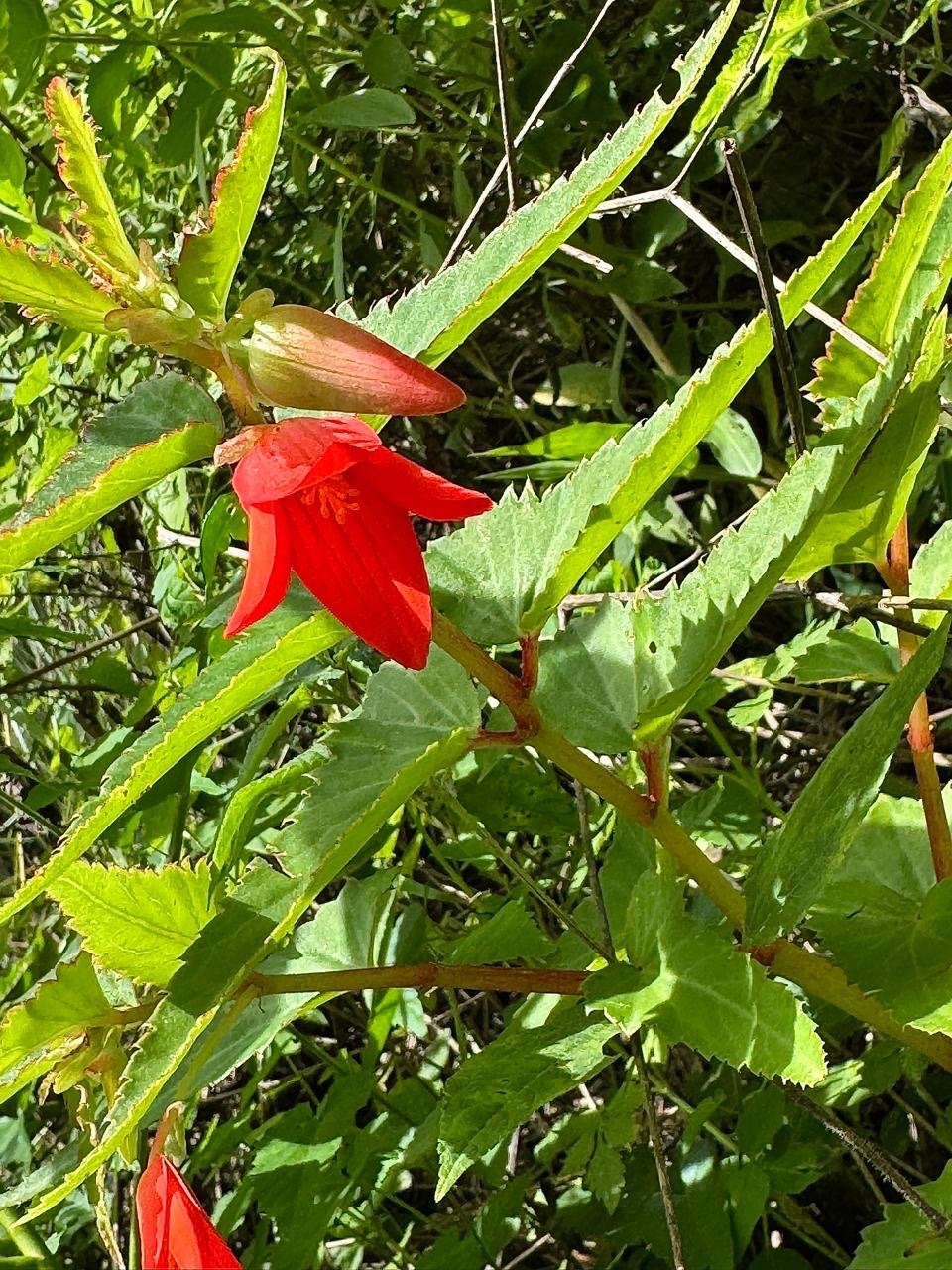
Bolivian Begonia
Begonia boliviensis
☀️ Partial Shade 💧 Moderate

Tuberous Begonia
Begonia tuberhybrida
☀️ Partial Shade 💧 Moderate