

Hardy begonia (Begonia grandis) is a tuberous, shade-dwelling perennial native to China and Japan, recognised for its asymmetric olive-green leaves with vivid red undersides and branching sprays of pink blossoms.
Unlike tropical bedding begonias that perish at the first frost, this species survives winter temperatures down to -20 °C (-4 °F) in USDA Zone 6 when sheltered by a layer of organic mulch.
Key Facts
- Hardiness: USDA Zones 6–9, reliably cold-tolerant to -20 °C (-4 °F)
- Water: Keep soil evenly moist; never allow to dry completely
- Light: Dappled sunlight to full shade; avoids scorching midday rays
- Mature Size: 45–60 cm (18–24 in) tall and wide
- Deer Resistance: Highly resistant; rarely browsed by woodland mammals
- Toxicity: Toxic to cats and dogs due to soluble calcium oxalates
Is Hardy Begonia Right for Your Garden?
Hardy begonia suits moist, shaded garden beds where most colourful bedding annuals fail to thrive. It requires consistently moist, humus-rich soil and protection from intense afternoon heat.
Gardeners in cold-winter regions value this perennial because it returns reliably every spring from dormant subterranean tubers. However, it emerges exceptionally late in spring—often late May or early June—so you must mark its location to prevent accidental disturbance with a garden fork.
Identifying Begonia grandis: Foliage and Form
Hardy begonia forms a bushy mound reaching 45 to 60 cm (18 to 24 in) in height and spread with succulent, arching red stems. The alternate, obliquely ovate leaves measure 10 to 20 cm (4 to 8 in) long and display an asymmetrical, heart-shaped base characteristic of the genus.
Upper leaf surfaces show a soft olive-green tone, while the lower surfaces feature prominent crimson venation and wine-red flushing. In autumn, the foliage takes on translucent golden hues before dying back completely to the ground following a hard freeze.
Best Sunlight and Site for Hardy Begonia
Hardy begonia thrives in partial to full shade, requiring protection from direct midday and afternoon sun. Foliage rapidly scorches, bleaches, and wilts when exposed to unbuffered sunlight for more than two hours daily.
Situate plants under deciduous woodland canopies, along north-facing walls, or inside shaded courtyards sheltered from drying winds. The soil must remain rich in organic matter and retain moisture without becoming stagnant, waterlogged muck.
How to Plant Hardy Begonia
Plant hardy begonia tubers in spring after the danger of frost has passed, burying them 5 to 8 cm (2 to 3 in) deep with the concave side facing upward. Space individual tubers or potted nursery stock 30 to 45 cm (12 to 18 in) apart to give foliage ample airflow.
To establish healthy root systems, incorporate a 5 cm (2 in) layer of leaf mould or compost into the planting hole. Firm the backfilled soil gently with your hands and water deeply to settle the surrounding medium.
Watering and Feeding Routine
Give hardy begonia 2.5 cm (1 in) of water weekly during the active growing season to keep the root zone evenly moist. The fleshy stems and thin foliage collapse rapidly during dry spells, which halts flower bud production.
Apply balanced organic nutrition to sustain late-season flowers:
- Apply a 5 cm (2 in) layer of shredded leaf mulch in spring to retain moisture
- Feed with a balanced liquid fertiliser diluted to half strength once every four weeks from June through August
- Cease all fertilisation by September to allow stems to mature ahead of winter dormancy
Pruning and Seasonal Maintenance
Cut collapsed stems back to soil level in late autumn only after frost has turned the foliage black. Delaying cleanup until frost allows the plant to transfer carbohydrates back into the underground tubers.
Take care not to scrape away the tiny aerial bulbils that fall around the base of the plant during autumn cleanup. Raking roughly through the crown will dislodge these reproductive units and eliminate natural self-sowing colonies.
How to Propagate Hardy Begonia
Hardy begonia propagates most easily by gathering the small, pea-sized bulbils that form in the leaf axils in late summer. These bulbils drop naturally in autumn and produce mature blooming plants within two seasons.
Follow these steps to expand your planting:
- Collect mature bulbils in September or October when they detach easily with a gentle touch
- Press bulbils into moist potting compost in shallow trays, covering them with barely 3 mm (0.1 in) of grit
- Overwinter the flat in a cold frame or unheated greenhouse kept between 2 and 7 °C (35 and 45 °F)
- Divide large tuber clumps in spring just as new pink shoots break the soil surface
Hardy Begonia Bloom Season and Flowers
Hardy begonia produces fragrant, nodding flowers from late July through October, continuing until the first severe frost kills top growth. The blooms appear in loose, dichotomously branching cymes held well above the leafy canopy on slender pink stalks.
Individual blossoms measure 2.5 cm (1 in) across and feature two showy petaloid tepals surrounding bright yellow centres. Following pollination by bees and hoverflies, the female flowers develop distinctive three-winged green and pink seed capsules.
Common Hardy Begonia Pests and Leaf Problems
Hardy begonia suffers primarily from powdery mildew and slug damage when air circulation is poor or ground remains overly saturated. Slugs and snails frequently rasp irregular holes through young emerging foliage in late spring.
Watch for these distinct warning signs:
- White powdery coating on foliage: Powdery mildew caused by poor air circulation; thin crowded clumps and avoid wetting leaves
- Translucent, rotting stem bases: Fungal tuber rot caused by heavy, compacted clay or poor drainage; amend soil with coarse grit
- Bleached, crisp brown margins: Sun scorch; relocate the plant to denser shade
- Chewed spring shoots: Slugs; place iron phosphate bait pellets around emerging stems
Winter Hardiness and Cold Care
Hardy begonia survives winter conditions down to USDA Zone 6 (-20 °C / -4 °F) when insulated properly against ground freezes. In Zone 6 and colder parts of Zone 7, open ground requires protection from freeze-thaw cycles that heave shallow tubers.
Spread an 8 to 10 cm (3 to 4 in) layer of shredded bark, pine needles, or dry leaves over the dormant crown immediately after cutting down frosted stems. Remove this protective blanket gradually in mid-spring to let warming sun penetrate the soil and initiate root activity.
Year-Round Care for Hardy Begonia
| Spring | Wait patiently for late shoots to emerge in May. Pull back heavy winter mulch once soil warms, and apply a 2.5 cm (1 in) layer of fresh compost around emerging crowns. |
|---|---|
| Summer | Maintain consistent moisture with 2.5 cm (1 in) of water weekly. Apply half-strength balanced liquid fertiliser monthly and watch for powdery mildew during humid weather. |
| Autumn | Collect axillary bulbils for propagation if desired. Allow the first frost to blacken the stems naturally before cutting foliage back flush with the ground. |
| Winter | Cover dormant crowns with an 8–10 cm (3–4 in) blanket of dry shredded leaves or bark mulch. Mark tuber positions with garden stakes to avoid digging into them. |
Hardy Begonia Troubleshooting and Diagnostics
| What you see | Likely cause | What to do |
|---|---|---|
| No signs of growth in April or early May | Natural delayed emergence schedule | Wait until late May or early June, as soil temperatures must reach 15 °C (60 °F) before tubers wake up. |
| Bleached patches turning crispy brown on leaf centres | Sun scorch from excessive direct light | Move the plant to full shade or plant taller companion species to screen harsh afternoon sun. |
| White talc-like powder coating leaf surfaces | Powdery mildew infection in stagnant air | Thin out surrounding plantings to boost ventilation and water exclusively at soil level. |
| Water-soaked, collapsed stems at the soil surface | Stem rot from overwatering or poorly draining soil | Reduce watering frequency and incorporate coarse grit and compost into surrounding soil. |
Hardy Begonia Cultivars to Consider
- ‘Alba’ – crisp white flowers and pale green stems
- ‘Heron’s Pirouette’ – profuse deep pink flowers on reddish stems
- ‘Bellissima’ – compact habit with intensely patterned foliage
Best Companion Plants for Shade Gardens
Pair hardy begonia with late-season woodland perennials that thrive in damp, filtered light and balance its bold, broad foliage. Because the begonia emerges late in spring, early bulbs and spring ephemeral wildflowers fill the empty spaces seamlessly.
Excellent garden companions include:
- Japanese painted fern (Athyrium niponicum), whose silvery fronds highlight the begonia’s red leaf undersides
- Plantain lily (Hosta sieboldiana), providing contrasting heavy-textured blue-green foliage
- Black cohosh (Actaea racemosa), which offers tall, architectural white flower spires in midsummer
- Barrenwort (Epimedium grandiflorum), supplying dense ground cover while begonia tubers remain dormant
Frequently Asked Questions
Is hardy begonia deer resistant?
Yes, hardy begonia is rarely browsed by deer or rabbits due to bitter oxalic acid crystals concentrated in its fleshy stems and foliage.
Is hardy begonia invasive?
Hardy begonia is not formally classified as invasive, but it naturalises freely in moist woodland beds via prolific aerial bulbils that fall from the leaf axils.
Is hardy begonia native to North America?
No, hardy begonia is native to eastern Asia, specifically southern and eastern China and Japan, where it grows in damp mountain ravines and forested slopes.
Can you grow hardy begonia indoors?
You can grow hardy begonia indoors in bright indirect light, but it requires a compulsory winter dormancy period in cool conditions below 10 °C (50 °F) to survive long term.
Is hardy begonia hardy in the UK?
Yes, hardy begonia is fully hardy throughout most of the UK (RHS H5 hardiness rating), provided it sits in well-drained soil covered with autumn mulch to shed excessive wet.
Sources & Verification
Taxonomy and distribution are checked against the databases below. Care guidance is written for cultivated species only and reviewed by our editor. How We Build Plant Profiles →
- RHS GardeningCultivar performance and hardiness rating
- Missouri Botanical GardenBotanical morphology and cultural care
- NC State ExtensionLandscape use and toxicity profile
- GBIF — Global Biodiversity Information Facilitytaxonomy, synonyms, occurrence records
- Plants of the World Online (Kew)accepted name, native range
- Wikipediageneral reference
More in Begonia
Polka Dot Begonia
Begonia maculata
☀️ Bright Indirect 💧 Moderate
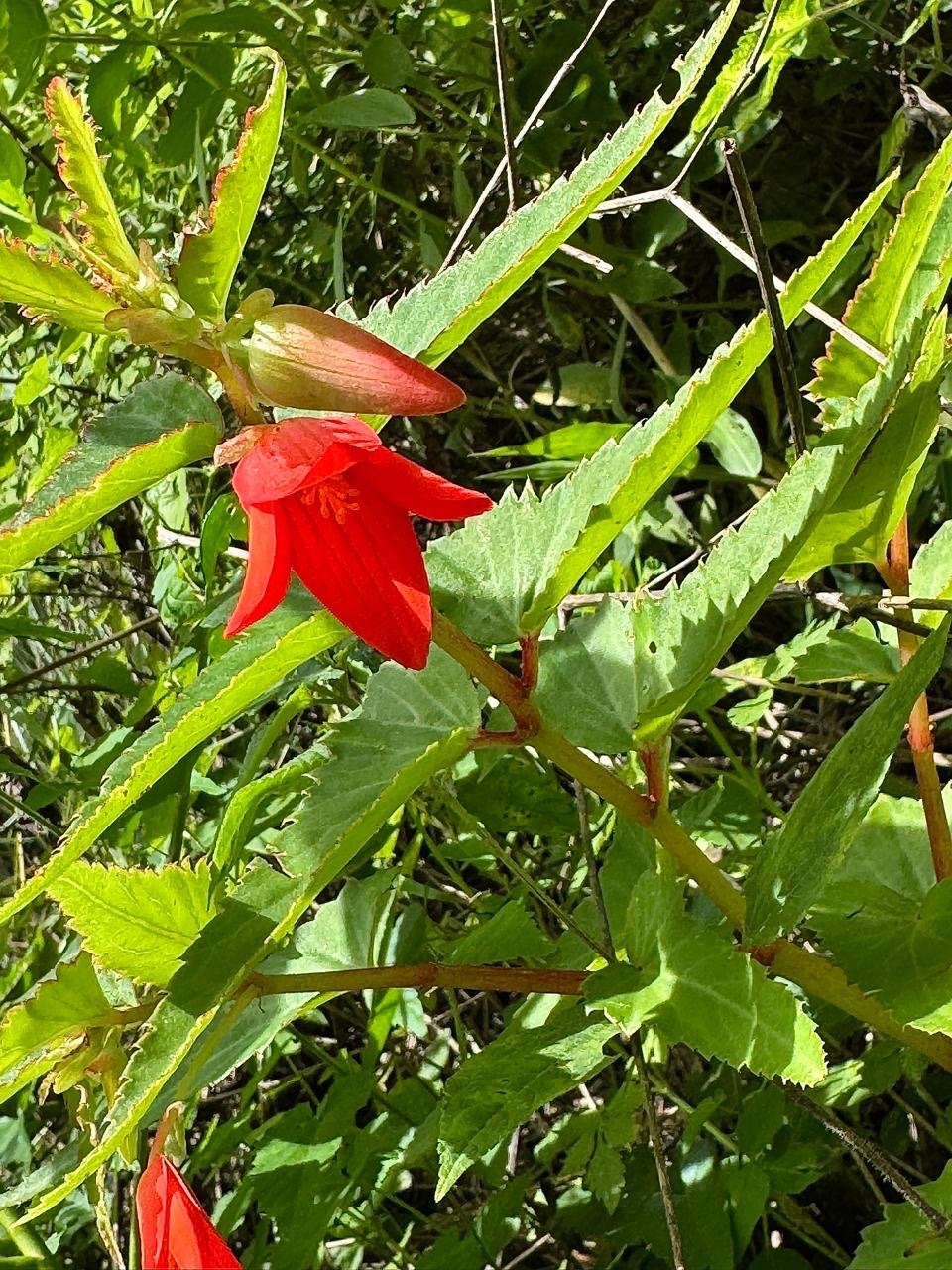
Bolivian Begonia
Begonia boliviensis
☀️ Partial Shade 💧 Moderate

Wax Begonia
Begonia cucullata
☀️ Bright Indirect 💧 Moderate

Tuberous Begonia
Begonia tuberhybrida
☀️ Partial Shade 💧 Moderate
Rex Begonia
Begonia rex
☀️ Bright Indirect 💧 Moderate