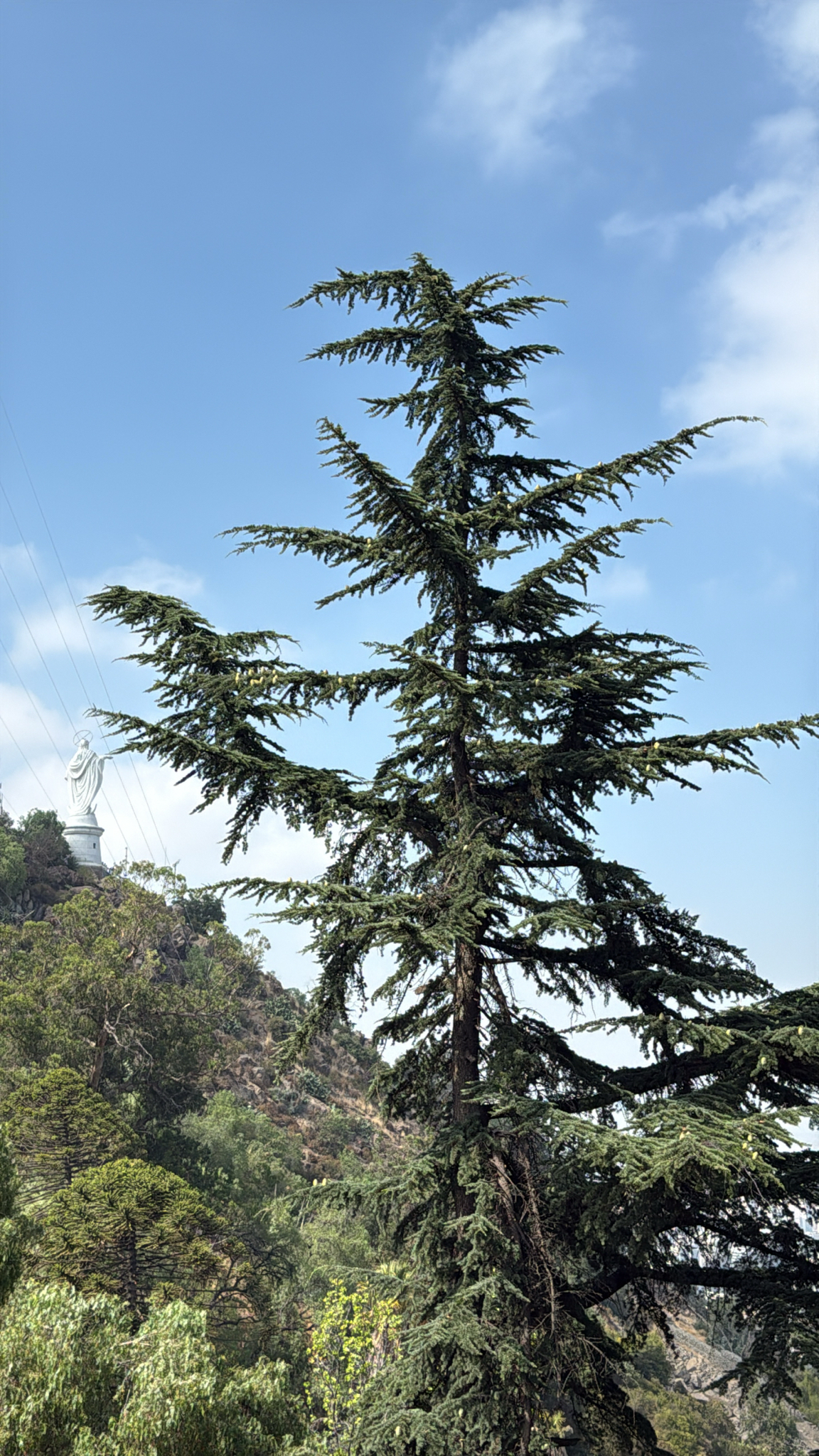
Atlas cedar (Cedrus atlantica) is a massive, long-lived evergreen conifer native to the Atlas Mountains of Morocco and Algeria, distinct for its whorled needle clusters and barrel-shaped upright cones.
This species requires an expansive site away from buildings, demanding at least 9 m (30 ft) of horizontal clearance to accommodate its wide, tiered branches as it matures.
Key Facts
- Light: Full sun, minimum 6 hours direct daily
- Mature height: 18–35 m (60–115 ft) in landscapes
- Water: Low once established; deep monthly soak during prolonged drought
- Hardiness: USDA Zones 6–9
- Soil: Deep, sharply drained loams; intolerant of standing water
Is Atlas Cedar Right for Your Garden?
Atlas cedar is strictly suited for large open properties, acreage, and public parks that can accommodate its 30-metre (100-foot) eventual canopy. Small suburban yards will be quickly overwhelmed by its wide horizontal branches and dense root plate.
You must give this tree deep, undisturbed soil. It creates substantial year-round shade beneath its limbs, shedding needles and woody cone scales that suppress lawn grass underneath.
- Requires a minimum perimeter of 10 m (33 ft) clear from houses and foundations
- Thrives on windy, open slopes where air circulation is high
- Unsuitable for small suburban plots or small courtyard gardens
Identifying Atlas Cedar: Needles, Bark, and Cones
Atlas cedar is distinguished by stiff needles measuring 10–25 mm (0.4–1.0 in) grouped in dense clusters of 19 to 45 on short woody spurs. The needle colour ranges from dark green in wild type forms to distinct silvery powder-blue in the popular Glauca group.
Crushed needles and fresh cut wood release an aromatic, warm, woody scent driven by naturally occurring terpenes. The bark begins smooth and silvery grey, developing dark fissures, thick plates, and scaly ridges with age.
Female cones sit strictly upright on upper branches like small barrels, reaching 5–8 cm (2–3 in) in length. They mature from light green or violet-purple to a warm chestnut brown over two seasons before breaking apart directly on the branch to release winged seeds.
Mature Size and Growth Rate
You should expect a standard seedling to grow 30–60 cm (12–24 in) per year under open garden conditions. Early growth is pyramidal with an upright leader, but mature trees develop a broad, flat-topped crown spanning 9–18 m (30–60 ft) across.
Trees reach 12–15 m (40–50 ft) within their first thirty years, ultimately topping out at 18–35 m (60–115 ft) depending on soil depth and water availability.
- Years 1–10: Narrowly pyramidal, reaching 3–6 m (10–20 ft)
- Years 10–30: Heavy lateral limb development; expands to 8–12 m (26–40 ft) wide
- Maturity (50+ years): Flattened or tiered crown with heavy, horizontal scaffolding
Best Sun and Soil Conditions
Atlas cedar requires full sun all day and rapidly thins out if shaded by neighbouring hardwoods like English oak (Quercus robur). Dense shade causes lower interior shoots to die back permanently, creating bare hollow limbs.
Sharply draining ground is mandatory. While it tolerates nutrient-poor, gritty soils and dry chalky slopes, it will quickly develop root disease in heavy, saturated clay basins.
- Sun exposure: Minimum 6–8 hours of unfiltered sunlight
- Soil texture: Gritty loams, gravelly substrates, or sandy soils
- Drainage test: Water in a 30 cm (12 in) test hole must drain completely within 2 hours
How to Plant an Atlas Cedar
Plant container-grown or balled-and-burlapped specimens in autumn or early spring before active root flushes occur. Dig a hole three times as wide as the root ball but no deeper than the height of the root plate.
The root flare must remain precisely level with or slightly higher than the surrounding soil surface. Burying the flare leads to basal stem rot and collar suffocation within a few seasons.
- Position the tree upright and backfill exclusively with unamended native soil.
- Tamp gently to eliminate air pockets without compacting wet dirt.
- Spread a 7–10 cm (3–4 in) layer of organic woodchips around the root perimeter, keeping it 15 cm (6 in) away from the trunk.
- Stake young trees loosely for only the first year if planted on exposed, high-wind ridges.
Watering and Ongoing Care
Provide 20–40 litres (5–10 gal) of water weekly during the first two summers while the taproot and lateral network establish. Once established after year three, rainfall alone is usually sufficient across temperate zones.
Mature trees rarely need supplemental fertilizer; excessive nitrogen generates weak, spindly limbs vulnerable to storm damage. A light topdressing of compost under the dripline every three years provides all necessary micronutrients.
- Water established specimens deeply once every 3–4 weeks during extreme summer droughts
- Avoid overhead irrigation that wets the canopy repeatedly
- Never place lawn sprinklers where spray strikes the trunk
Pruning and Bonsai Training
Limit structural pruning to late winter while dormant, removing only competing co-dominant leaders, dead wood, or damaged limbs. Never top an Atlas cedar, as this destroys the central axis and invites fungal heartwood rot.
This species is widely trained as a bonsai subject, valued for its rough bark and needle density. To maintain compact pads, pinch back emerging spring candles by half before needles fully extend.
- Disinfect shears using 70% isopropyl alcohol between major cuts
- Leave the branch collar intact; avoid flush cuts that tear trunk bark
- For bonsai styling, apply aluminium wire in autumn when branch sap flow decreases
Atlas Cedar Pests, Diseases, and Needle Drop
The giant cedar aphid (Cinara cedri) is the most destructive pest, extracting sap and coating lower needles in sticky honeydew that fosters black sooty mould. Heavy infestations cause widespread inner canopy yellowing in late spring.
Sirococcus blight (Sirococcus conigenus) causes needle tips on young spring shoots to turn pinkish-brown, crook downward, and drop. Copper fungicides applied in early spring help protect newly emerging foliage in wet microclimates.
- Honey fungus (Armillaria): White fungal mycelium beneath bark at the base; requires tree removal and soil clearing
- Phytophthora root rot: Needle chlorosis and canopy thinning triggered by standing water
- Seasonal needle cast: Two- to three-year-old inner needles naturally yellow and drop every autumn
Winter Hardiness and Cold Protection
Mature trees easily withstand temperatures down to -18 °C (0 °F) without injury once woody branch bark matures. However, wet, heavy snowfalls can split massive, wide-spreading lateral branches.
Young nursery specimens under five years old suffer foliage burn from desiccating sub-zero winter winds. Erecting a burlap windbreak on the windward side prevents winter dehydration on exposed sites.
- Gently sweep heavy, wet snow accumulations off accessible horizontal branches using a broom
- Maintain an even mulch ring to insulate the root zone from deep ground frost
- Avoid late-summer nitrogen applications that prevent shoots from hardening before first freeze
Atlas Cedarwood Essential Oil and Landscape Uses
Steam distillation of the wood yields commercial Atlas cedarwood essential oil, traditionally used in perfumery as a woody base note and in soaps as an aromatic repellent against clothes moths. The raw heartwood contains natural cedrol, which protects timber from insect boring and rot.
In broad landscapes, Atlas cedar is planted as a standalone specimen or windbreak alongside towering conifers like European larch (Larix decidua) and Lebanon cedar (Cedrus libani). Dwarf and weeping forms suit rockeries, gravel gardens, and large terrace planters.
Seasonal Tasks for Atlas Cedar
| Spring | Inspect newly expanding needle candles for giant cedar aphids and shoot blight. Apply a 7 cm (3 in) layer of woodchip mulch around the dripline, keeping it clear of the trunk. |
|---|---|
| Summer | Soak young plantings deeply every 10–14 days during periods of zero rainfall. Monitor weeping cultivars on stakes to ensure structural ties are not girdling swelling branches. |
| Autumn | Rake up heavy debris if needle drop smothers low companion plants. Plant new bare-root or potted specimens into well-drained soil while root temperatures remain mild. |
| Winter | Prune crossing, broken, or dead branches while the tree is dormant. Brush heavy snow accumulations off long horizontal scaffold branches to avoid limb breakage. |
Atlas Cedar Leaf and Growth Problems Explained
| What you see | Likely cause | What to do |
|---|---|---|
| Inner needles turn yellow and shed in autumn | Natural seasonal shedding of two- to three-year-old interior needles | No action needed if outer branch tips remain blue-green and vigorous. |
| Sticky foliage covered in dark sooty film | Giant cedar aphid infestation | Spray active colonies with insecticidal soap or a strong jet of water in late spring. |
| Young shoot tips curl, turn pink-tan, and wither | Sirococcus needle and shoot blight | Prune out infected tip growth during dry weather and apply copper fungicide at bud burst. |
| Foliage turns dull grey-brown across the entire canopy | Phytophthora root rot from waterlogged soil | Divert standing water immediately and cease supplemental irrigation. |
Atlas Cedar Cultivars and Garden Varieties
- ‘Glauca’ – intense powder-blue needles, classic large tree form
- ‘Glauca Pendula’ – weeping habit, requires staking for upright height
- ‘Horstmann’ – semi-dwarf form, reaching 2.5–3 m (8–10 ft)
- ‘Aurea’ – golden-yellow young needles maturing to pale green
- ‘Fastigiata’ – narrow, columnar branch structure suited to tighter boundaries
Frequently Asked Questions
What does atlas cedar smell like?
Atlas cedarwood has a warm, rich, camphoraceous scent with balsamic and sweet undertones. The aroma comes from natural sesquiterpenes concentrated in the heartwood and resin.
How to grow atlas cedar from seed?
Collect seeds from mature cones in late autumn and cold-stratify them in damp sand at 2–4 °C (35–40 °F) for 30–60 days. Sow stratified seeds 6 mm (0.25 in) deep in gritty, free-draining compost and maintain steady moisture in a sunny cold frame.
How fast does blue atlas cedar grow?
Blue atlas cedar grows roughly 30–60 cm (12–24 in) annually once established in full sun. Growth is modest in the first two years after planting before accelerating.
What are the traditional benefits of atlas cedarwood essential oil?
Steam-distilled atlas cedarwood oil was traditionally used in North Africa and southern Europe for chest salves, steam inhalations, and as a natural moth repellent. Modern commercial applications are largely confined to fine fragrance and topical cosmetics.
How do you care for a weeping blue atlas cedar?
Stake the main stem of 'Glauca Pendula' firmly to your desired height, allowing side shoots to cascade naturally downward. Plant in full sun with sharp soil drainage and prune stray upward growth every winter.
Information about traditional or historical uses is provided for educational interest only and is not medical advice. Do not use any plant to treat a condition without speaking to a qualified professional.
Sources & Verification
Taxonomy and distribution are checked against the databases below. Care guidance is written for cultivated species only and reviewed by our editor. How We Build Plant Profiles →
- Kew Plants of the World OnlineTaxonomy and native distribution
- RHS GardeningCultivation and hardiness
- IUCN Red List of Threatened SpeciesConservation status
- Missouri Botanical Garden Plant FinderLandscape dimensions and cultivars
- GBIF — Global Biodiversity Information Facilitytaxonomy, synonyms, occurrence records
- Wikipediageneral reference