
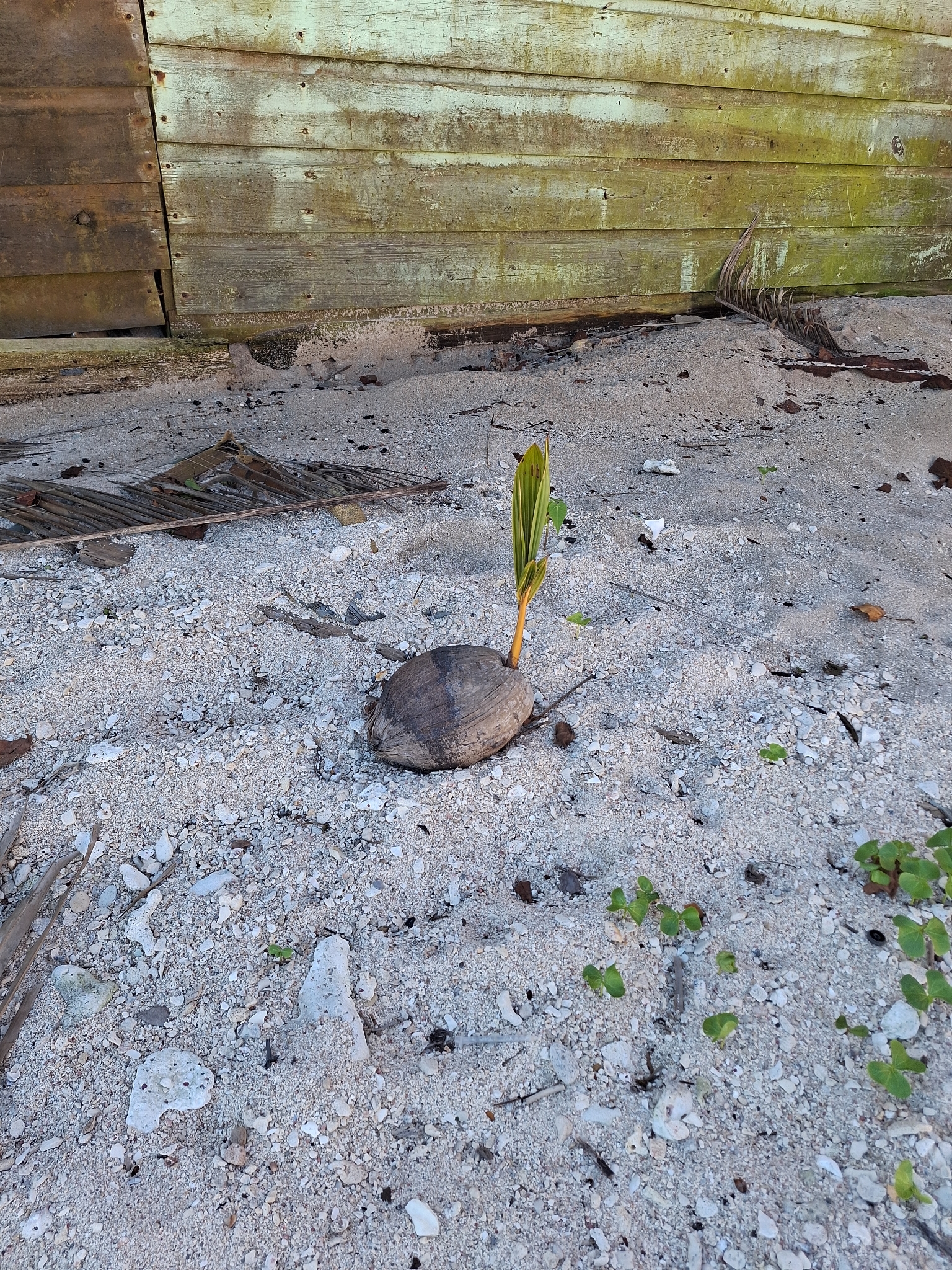
The coconut palm (Cocos nucifera) is a tall tropical palm tree native to the coastal regions of Southeast Asia and the Western Pacific. It is recognizable by its ringed trunk, feathery fronds, and large fibrous drupes that float across ocean currents.
Growers cultivate this palm in tropical climates for fruit production and shade. Successful growth requires consistent heat above 21 °C (70 °F), high humidity, and direct sunlight.
Key Facts
- Light: Full sun, minimum 6 hours daily
- Water: 25-50 mm (1-2 in) per week
- Hardiness: USDA zones 10b to 12
- Mature height: 15-30 m (50-100 ft)
- Soil: Sandy, deep, well-draining soil
- Toxicity: Non-toxic to dogs, cats, and humans
Growing Coconut Palms: Fit for Outdoor Landscapes
Growing a coconut palm outdoors requires a frost-free tropical climate with temperatures staying above 18 °C (64 °F) year-round. This palm suits large coastal gardens, public parks, and agricultural plantations where space permits a crown spread of 8 m (26 ft).
Attempting to grow this species indoors as a long-term houseplant usually fails once the seed nut exhausts its endosperm reserves after 12-18 months. Indoor air lacks the light intensity and 70% relative humidity required for mature frond development.
- Requires 1,500-2,500 mm (60-100 in) of annual rainfall
- Tolerates salt spray and high winds along ocean shorelines
- Unsuited for regions with winter temperatures below 10 °C (50 °F)
How to Identify the Coconut Palm
The coconut palm is identified by its single smooth, light-grey trunk measuring 30-40 cm (12-16 in) in diameter with prominent horizontal leaf scars. The dense crown consists of 25-35 pinnate fronds measuring 4-6 m (13-20 ft) in length.
Inflorescences emerge from leaf axils, bearing yellow male and female flowers on the same branch. The fruit is a fibrous drupe measuring 20-30 cm (8-12 in) long, containing a hard endocarp (shell), white endosperm (meat), and clear liquid endosperm (water).
- Leaflets measure 60-90 cm (24-35 in) long on sturdy petioles
- Fruits turn from green or yellow to brown at maturity
- Roots form a fibrous adventitious mat within the top 1.5 m (5 ft) of soil
Coconut Tree Height and Canopy Size
Tall coconut varieties reach mature heights of 20-30 m (65-100 ft) within 20-40 years, while dwarf varieties grow to 8-12 m (25-40 ft). The horizontal canopy canopy requires a clearance diameter of at least 8 m (26 ft) from surrounding structures.
Growth rate averages 30-50 cm (12-20 in) of vertical trunk height per year under optimal tropical conditions. Fronds naturally drop every 3-4 weeks as new central spear leaves expand.
- Tall cultivars: live 80-100 years, canopy width 8-10 m (26-33 ft)
- Dwarf cultivars: live 40-60 years, canopy width 4-6 m (13-20 ft)
- Root spread extends up to 10 m (33 ft) laterally from the trunk base
Sunlight and Soil Requirements for Coconut Palms
Coconut palms need full sun exposure with 6 to 8 hours of direct sunlight daily for health and fruit production. Shaded palms develop weak, elongated fronds and fail to produce flowers.
Soil must be deep, highly permeable, and sandy to prevent waterlogging around the root crown. While tolerant of saline coastal soils, the palm prefers a pH range of 5.5 to 7.0.
- Substrate: deep coarse sand, sandy loam, or weathered volcanic soils
- Soil drainage: rapid; stagnant water causes root rot within 14 days
- Salinity tolerance: high; tolerates brackish groundwater up to 1% salt concentration
How to Plant a Sprouted Whole Coconut
Plant a fully mature coconut with its husk intact by placing it horizontally in soil with one-third of the nut exposed above the surface. Planting is best conducted at the start of the rainy season when soil temperatures exceed 27 °C (80 °F).
Prepare a planting hole measuring 1 m (3.3 ft) wide and 1 m deep, backfilling with a 1:1 mixture of native sand and compost. Space tall varieties 8-9 m (26-30 ft) apart and dwarf varieties 5-6 m (16-20 ft) apart.
- Select fresh seed nuts that contain audible water when shaken
- Position the flat side of the nut downward in the pit
- Water deeply twice weekly during the first 6 months of establishment
Coconut Tree Care, Water, and Fertilizer Requirements
Established palms require 25 to 50 mm (1 to 2 in) of water per week through rainfall or deep drip irrigation. Nutrient shortages quickly manifest as foliar yellowing or reduced frond production.
Apply a high-nitrogen, high-potassium palm fertilizer (14-1-14-2Mg ratio with micro-nutrients) four times per year. Chlorine is a beneficial macronutrient for this species; application of sodium chloride (table salt) at 1 kg (2.2 lb) per tree per year improves copra yield in inland soils.
- Apply fertilizer across the root zone 1-3 m (3-10 ft) from the trunk
- Magnesium deficiency causes broad yellow bands on older fronds
- Boron deficiency causes unexpanded spear leaves and crumpled leaflets
Pruning and Maintenance Rules for Coconut Palms
Only cut fronds that hang below the horizontal 9 o’clock and 3 o’clock plane relative to the trunk. Green fronds must remain attached to supply photosynthetic energy for fruit growth.
Remove heavy mature fruit clusters near pedestrian walkways to eliminate falling hazards. Self-cleaning cultivars drop dead fronds naturally, but manual removal of brown fronds reduces pest harboring sites.
- Never cut green fronds with upward or horizontal angles
- Sterilize pruning saws with 70% isopropyl alcohol between trees
- Avoid climbing spikes, which create entry wounds for fungal pathogens
Coconut Palm Pests and Disease Control
The lethal yellowing phytoplasma is the primary fatal disease, causing rapid leaf death and premature nut drop within 3-6 months. Plant resistant varieties like ‘Malayan Dwarf’ in high-risk areas.
Rhinoceros beetles (Oryctes rhinoceros) bore into the central spear leaf, resulting in V-shaped cuts on emerging fronds. Inspect the apical crown monthly for boring damage and frass.
- Lethal yellowing: treated prophylactically with oxytetracycline injections
- Red palm weevil (Rhynchophorus ferrugineus): causes trunk hollows and wilting
- Bud rot (Phytophthora palmivora): causes foul-smelling collapse of the central shoot
Temperature Limits and Cold Hardiness
Coconut palms sustain tissue damage when temperatures drop below 4 °C (40 °F) for more than 4 consecutive hours. Frost or temperatures below 0 °C (32 °F) cause severe foliar necrosis and crown death.
In marginal zones like South Florida (USDA Zone 10b), cold fronts below 10 °C (50 °F) trigger leaf chlorosis and growth stunting. Unlike the jelly palm (Butia capitata) or queen palm (Syagrus romanzoffiana), the coconut palm cannot adapt to temperate climates.
- Minimum sustained temperature limit: 18 °C (64 °F)
- Foliar chilling injury: occurs at prolonged exposures below 10 °C (50 °F)
- Root damage threshold: soil temperatures below 12 °C (54 °F)
Harvesting Coconut Water, Milk, Oil, and Products
Harvest green coconuts at 6 to 7 months for fresh water, or wait 11 to 12 months for mature nuts used to extract coconut milk and copra oil. A mature palm produces 30-75 nuts per tree annually under commercial cultivation.
Coconut water is the clear liquid from young fruits, rich in potassium and electrolytes. Coconut milk and cream are produced by grating and pressing the firm white endosperm (meat) of mature nuts with hot water.
- Coconut oil: extracted from dried endosperm (copra) by cold pressing or solvent extraction
- Oil pulling: traditionally used in Ayurvedic practice as an oral rinse
- Coconut wood: harvested from senescent palms over 60 years old for construction timber
Coconut Palm Care Through the Seasons
| Spring | Apply the first quarterly palm fertilizer (14-1-14-2Mg) at 1.5 kg per mature tree. Inspect the central spear leaf for rhinoceros beetle entry holes. Increase irrigation as temperatures rise above 25 °C (77 °F). |
|---|---|
| Summer | Ensure trees receive 50 mm (2 in) of water weekly during peak dry spells. Apply second quarterly fertilizer application. Harvest green 7-month-old nuts for coconut water. |
| Autumn | Apply third quarterly fertilizer application containing micronutrients (manganese and boron). Pruning dead, brown fronds hanging below the horizontal plane before seasonal storm winds. Harvest mature 12-month nuts. |
| Winter | Apply fourth quarterly fertilizer application in frost-free regions; suspend fertilizing if local temperatures fall below 15 °C (59 °F). Monitor crown for chilling damage following cold fronts. Maintain shallow organic mulch over the root zone. |
Diagnosing Common Coconut Palm Problems
| What you see | Likely cause | What to do |
|---|---|---|
| Yellowing of lower fronds spreading upward | Nitrogen or potassium deficiency | Apply a balanced palm fertilizer containing 14-1-14 formulation with magnesium. |
| Premature fruit drop and blackened inflorescences | Lethal yellowing phytoplasma infection | Inject trunk with oxytetracycline under guidance of a certified arborists. |
| V-shaped notch cutouts in emerging fronds | Rhinoceros beetle damage | Manually extract beetles from spear leaf entry holes using wire hooks. |
| Foul odor coming from central bud accompanied by leaf collapse | Phytophthora bud rot fungus | Apply copper fungicide spray directly into the central bud apex. |
| Broad yellow bands along margins of older leaves | Magnesium deficiency | Broadcast magnesium sulfate (Epsom salts) at 1-2 kg per tree over the root zone. |
Popular Coconut Varieties and Cultivars
- 'Malayan Dwarf' – orange, yellow, or green fruiting types resistant to lethal yellowing phytoplasma
- 'Fiji Dwarf' – compact growth with thick trunk and broad leaflets, highly resistant to lethal yellowing
- 'Panama Tall' – large heavy-yielding commercial tree with strong wind resistance
- 'King Coconut' – Sri Lankan variety with bright orange husk grown specifically for sweet nut water
- 'West Coast Tall' – long-lived traditional Indian cultivar producing high copra oil content
Frequently Asked Questions
How long does it take for a coconut tree to produce fruit?
Dwarf coconut cultivars produce fruit in 3 to 4 years after planting, while tall cultivars take 6 to 10 years. Full yield capacity is reached around 15 years of age.
Can you grow a coconut tree indoors?
Coconut trees cannot survive indoors long-term due to low light levels and low humidity. Sprouted coconut potted plants usually decline and die within 12 to 18 months once seed reserves deplete.
What is the difference between coconut milk and coconut water?
Coconut water is the naturally occurring liquid inside a young green coconut. Coconut milk is processed by liquid extraction from pressed, grated mature coconut meat mixed with warm water.
Are coconut palms toxic to dogs and cats?
Coconut palms and raw coconut meat are non-toxic to dogs and cats according to the ASPCA. However, ingested husk fibers can cause mechanical bowel obstructions.
What is coconut oil pulling and how is it done?
Coconut oil pulling is an Ayurvedic oral hygiene method involving swishing 1 tablespoon of virgin coconut oil in the mouth for 15-20 minutes before spitting it out.
What is a coconut crab?
The coconut crab (Birgus latro) is the world's largest terrestrial arthropod, native to Indo-Pacific islands, known for climbing coconut trees and cracking nuts with its large pincers.
Information about traditional or historical uses is provided for educational interest only and is not medical advice. Do not use any plant to treat a condition without speaking to a qualified professional.
Sources & Verification
Taxonomy and distribution are checked against the databases below. Care guidance is written for cultivated species only and reviewed by our editor. How We Build Plant Profiles →