
Kousa dogwood (Cornus kousa) is a small deciduous flowering tree native to Japan, Korea, and China that stands out for its pointed floral bracts and edible red autumn fruit.
Unlike the American flowering dogwood (Cornus florida), this tree leafs out before it blooms and shows high natural resistance to the fungal dogwood anthracnose that decimates native stands.
Key Facts
- Height: 6 to 9 m (20 to 30 ft) tall
- Light: Full sun to partial afternoon shade
- Hardiness: USDA Zones 5 through 8
- Fruit: Edible sweet autumn berries with knobby red rinds
- Soil: Moist, rich, acidic soil with reliable drainage
Is Kousa Dogwood Right for Your Garden?
Kousa dogwood fits small to medium residential yards requiring four full seasons of visual structure without outgrowing overhead utility lines.
You will enjoy multi-stemmed architectural branches, late-spring blooms that open well after harsh spring frosts pass, and crimson autumn foliage. The drop of soft, fleshy fruit in late August and September means you should place it away from paved walkways, stone patios, or driveway edges where fallen fruit can become slippery underfoot.
Identifying Kousa Dogwood Flowers, Bark, and Fruit
You can identify Cornus kousa by its tapered, pointed white bracts that sit directly above dark green, oval leaves with prominent curved veins.
True flowers are tiny, greenish-yellow clusters packed into a dense central button measuring 6 mm (0.25 in) across, surrounded by four large petal-like bracts spanning 5 to 8 cm (2 to 3.2 in). As the tree matures past ten years of age, the bark exfoliates into a distinct mosaic of tan, gray, and light brown patches resembling jigsaw puzzle pieces.
- Leaves: Opposite, simple, 5 to 10 cm (2 to 4 in) long, turning scarlet or purple in October.
- Bracts: Four pointed, creamy-white or blush-pink modified leaves lasting up to 6 weeks.
- Fruit: Spherical, compound drupe measuring 2 to 3 cm (0.8 to 1.2 in) across, turning from dull green to bumpy raspberry-red.
- Bark: Smooth gray in youth, forming mottled, flaking scales on mature trunks.
Kousa Dogwood Size and Growth Rate
A healthy kousa dogwood gains roughly 30 to 60 cm (12 to 24 in) of branch extension per growing season until maturity.
Expect an established specimen to top out between 6 and 9 m (20 and 30 ft) in height with an equal or slightly wider spread. Young saplings establish an upright, vase-shaped outline for their first five to seven years before the lower branches settle into wide, horizontal tiers that cast medium shade over lawn or understory beds.
Best Planting Location and Sun Exposure
Select a planting site that receives at least four to six hours of direct sunlight daily to encourage dense flowering and autumn colour.
In northern parts of its range (USDA Zones 5 and 6), full sun promotes the heaviest bloom count and compact branch spacing. In southern areas (USDA Zones 7 and 8), morning sun paired with filtered afternoon shade keeps the shallow root system cool and prevents leaf margin scorch during July and August heatwaves. Position the root ball well away from alkaline masonry runoff and compacted turf.
Kousa Dogwood Planting Guide
Plant your tree in early spring or mid-autumn while the canopy is dormant to allow fine feeder roots to establish before summer heat arrives.
Dig a hole three times as wide as the nursery container or root ball, but keep the depth identical to the container soil level so the root flare rests 2 to 3 cm (1 in) above grade. Backfill entirely with the native site soil rather than amended potting mixes to encourage outward root exploration into surrounding ground.
- Water the hole thoroughly halfway through backfilling to eliminate hidden air pockets.
- Apply a 7 cm (3 in) layer of shredded bark mulch out to the drip line, keeping it 10 cm (4 in) clear of the trunk.
- Stake only if the site experiences persistent open winds, removing all supports after one full growing season.
Watering and Fertilizer Needs
Provide 25 mm (1 in) of water weekly during the first two growing seasons whenever natural rainfall falls short.
Established trees tolerate brief dry spells but drop unripened fruit prematurely if drought lasts longer than three weeks. Apply a slow-release, acid-forming fertiliser formulated for camellias or azaleas in early spring if soil testing indicates a pH above 6.5 or a severe nitrogen deficit. Avoid applying high-nitrogen lawn fertilisers anywhere inside the drip line, as excess nitrogen forces weak leafy shoots at the expense of floral buds.
Kousa Dogwood Pruning Instructions and Timing
The best time for structural pruning is late winter while dormant, just before spring buds begin to swell.
Because this species produces a naturally balanced, horizontal branch structure, heavy cutting is unnecessary and spoils its form. Restrict your cuts to crossing stems, water sprouts that shoot vertically through the central canopy, and any dead or storm-damaged wood. Sanitize your bypass shears with 70% isopropyl alcohol between cuts to prevent transferring fungal spores.
- Remove competing central leaders early in the tree’s life to maintain a strong framework.
- Prune lower lateral branches flush with the branch collar if you need clearance for mowing.
- Avoid shearing branch tips, which strips away the dormant flower buds set the previous summer.
Kousa Dogwood Fruit: Is It Edible or Poisonous?
The fruit of the kousa dogwood is completely non-toxic and edible for humans and household pets.
Resembling a round, bumpy raspberry on a long stem, the interior contains a soft orange pulp with a sweet flavour reminiscent of persimmon, apricot, and mango. The exterior skin is tough, bitter, and gritty, so most people squeeze the ripe pulp straight into their mouths and spit out the skin along with the two to four hard inner seeds. You can simmer the strained pulp into jams, reduce it into dessert syrups, or ferment it into country wines.
Common Kousa Dogwood Problems and Diseases
While far more disease-resistant than American native dogwoods, this species occasionally encounters powdery mildew and leaf scorch under stressful conditions.
Maintain open air movement and avoid overhead sprinklers to keep fungal issues minimal. Pests rarely threaten the life of the tree, although dogwood borer can enter bark damaged by lawnmowers or weed trimmers.
- Powdery mildew: Grayish-white film covering leaves in humid late summers; treat by thinning inner branches to improve airflow.
- Marginal leaf scorch: Brown, crisp leaf edges resulting from intense afternoon heat paired with dry soil; resolved by deep weekly soaking.
- Dogwood borer: Larvae feeding under the bark causing sap leakage; prevent by protecting the trunk base from physical impacts.
- Septoria leaf spot: Small brown spots with purple halos appearing during wet years; rake and dispose of fallen leaves in autumn.
Winter Hardiness and Cold Protection
Kousa dogwood tolerates freezing temperatures down to -29 °C (-20 °F) without wood injury once properly hardened off in late autumn.
In USDA Zone 5, young saplings benefit from a cylinder of wire hardware cloth set around the lower trunk to deter rabbits and voles from chewing nutrient-rich cambium under deep snow. Stop supplemental fertilisation by mid-July so young autumn shoots have sufficient time to lignify before the ground freezes solid in November.
Frequently Asked Questions
Are kousa dogwood berries edible or poisonous?
Kousa dogwood berries are completely edible and safe for humans and pets. Squeeze the soft inner orange pulp out of the bitter, pebbled skin to eat it fresh or cook it into jam.
What is the difference between kousa dogwood and flowering dogwood?
Kousa dogwood (Cornus kousa) blooms after leaves appear with pointed white bracts and produces edible round red fruit, while flowering dogwood (Cornus florida) blooms on bare branches before leaves emerge with rounded, notched bracts and produces bitter, poisonous oval berries.
Why is my kousa dogwood not blooming?
The tree is usually either planted in too much shade or is simply too young. Seed-grown kousa dogwoods can take 7 to 10 years to produce their first blooms, and excess lawn nitrogen can suppress bud set.
How fast does a kousa dogwood tree grow?
Growth is slow to moderate, averaging 30 to 60 cm (12 to 24 in) of new shoot growth annually under good moisture and sun conditions.
When should I prune my kousa dogwood?
Prune your tree in late winter while it is fully dormant, just before spring growth resumes. This timing lets you inspect branch architecture clearly without removing the summer flower show.
Sources & Verification
Taxonomy and distribution are checked against the databases below. Care guidance is written for cultivated species only and reviewed by our editor. How We Build Plant Profiles →
- Kew Plants of the World OnlineTaxonomic confirmation and native distribution
- Missouri Botanical GardenCultivation parameters and mature dimensions
- NC State Extension Gardener Plant ToolboxSoil, site preference, and pest resistance data
- GBIF — Global Biodiversity Information Facilitytaxonomy, synonyms, occurrence records
- Wikipediageneral reference
More in Cornus

Asiatic Dogwood
Cornus officinalis
☀️ Full Sun 💧 Moderate

Bunchberry Dogwood
Cornus canadensis
☀️ Partial Shade 💧 Moderate
Cornelian Cherry
Cornus mas
☀️ Full Sun 💧 Moderate

Flowering Dogwood
Cornus florida
☀️ Partial Sun 💧 Moderate

Siberian Dogwood
Cornus alba
☀️ Full Sun 💧 High
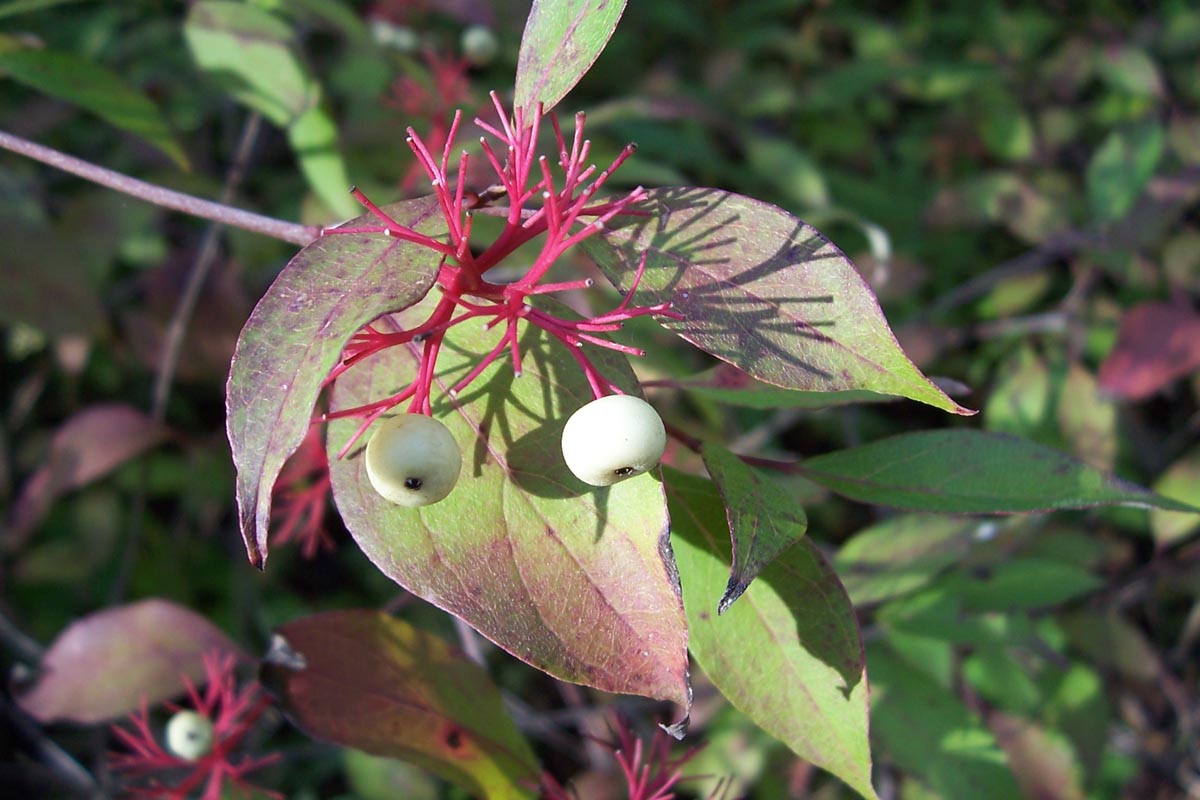
Red-Osier Dogwood
Cornus sericea
☀️ Full Sun 💧 High