

Flowering Dogwood (Cornus florida) is a small deciduous tree native to the eastern half of North America and parts of northern Mexico. You can recognize it by its four-pointed white or pink bracts that appear in mid-spring, followed by clusters of bright red fruit in the autumn.
This species naturally thrives at the edge of forests where it receives dappled sunlight. It is sensitive to drought and poor drainage, so success depends on mimicking its native woodland floor environment with consistent moisture and organic mulch.
Key Facts
- Light: Partial shade; morning sun with afternoon protection is best
- Water: 2.5 cm (1 inch) of water weekly during dry spells
- Soil: Rich, acidic, well-drained soil with high organic matter
- Zones: Hardy in USDA zones 5 through 9
- Size: Reaches 5-10 m (15-33 ft) in height and spread
Is a Flowering Dogwood Right for Your Garden?
Growing a Flowering Dogwood requires a commitment to consistent soil moisture and specific site selection. You should choose this tree if you have a spot with morning sun and protection from the harsh afternoon heat, which can scorch the foliage. It is a slow-to-moderate grower, often adding 30 cm (12 inches) of height per year until it reaches its mature size.
This tree is a better fit for large residential yards or parks than for narrow street-side plantings. It has a shallow root system that does not compete well with turf grass. You will need to maintain a clear, mulched area around the base to prevent competition and protect the thin bark from lawnmower damage.
- Best for USDA zones 5-9
- Requires acidic soil (pH 5.5-6.5)
- Needs protection from high winds
- Ideal as an understory tree
How to Identify Flowering Dogwood Leaves and Flowers
The identifying feature of Cornus florida is the four large, petal-like bracts that surround the tiny, true flowers. These bracts are 5-10 cm (2-4 inches) wide, usually white but sometimes pink or red, and feature a distinct notch at the tip of each lobe. The actual flowers are yellow-green and clustered in the center of the bracts.
The leaves are oval, 6-13 cm (2.5-5 inches) long, and arranged oppositely on the stems. You can identify them by their veins, which curve inward toward the leaf tip rather than running straight to the edges. In the autumn, the foliage turns a deep reddish-purple or burgundy color before falling.
- Bracts: 4 lobes with notched tips
- Leaves: Opposite arrangement, 6-13 cm long
- Bark: Deeply furrowed into square blocks (alligator-skin)
- Fruit: Clusters of 1 cm (0.4 inch) red drupes
Flowering Dogwood Size and Growth Rate
A mature Flowering Dogwood typically reaches a height of 5-10 m (15-33 ft) with a similar spread. In the wild, understory trees may stay smaller and more spindly, but in a garden setting with proper light, they develop a rounded or flat-topped crown. The branching pattern is horizontal and tiered, creating a layered silhouette that is visible even in winter.
The growth rate is moderate, usually slowing significantly once the tree reaches 15 or 20 years of age. Because it is a small tree, it rarely interferes with overhead power lines. However, you should give it at least 6 m (20 ft) of space from other large trees to ensure its canopy has room to expand without becoming lopsided.
Choosing the Best Planting Site
The best location for this tree is a sheltered spot with dappled shade, particularly in the southern parts of its range. While it can tolerate full sun in cooler northern climates, the leaves often curl and scorch if the soil is not kept perfectly moist. Avoid low-lying areas where water sits after rain, as this species is highly susceptible to root rot.
Soil quality is the primary factor in the tree’s health. It requires acidic soil that is rich in organic matter, such as leaf mold or compost. If your soil is heavy clay or highly alkaline, the tree will likely suffer from chlorosis (yellowing leaves) and stunted growth. Consider a site near larger deciduous trees like White Oak (Quercus alba) which provide the necessary shade and soil acidity.
Flowering Dogwood Planting Guide
You should plant Flowering Dogwood in early spring or late autumn when the tree is dormant. Dig a hole that is twice as wide as the root ball but no deeper than the root ball itself. It is vital to keep the root flare—the point where the roots meet the trunk—visible at the soil surface; planting too deep is a common cause of tree failure.
Follow these steps for successful planting:
- Remove all burlap and wire from the root ball
- Position the tree so the root flare is slightly above the soil line
- Backfill with native soil mixed with a small amount of compost
- Water deeply immediately after planting to settle the soil
- Apply a 5-10 cm (2-4 inch) layer of organic mulch, keeping it away from the trunk
Flowering Dogwood Tree Care and Watering
You must provide 2.5 cm (1 inch) of water weekly during the first two growing seasons. Flowering Dogwood has a shallow root system that dries out quickly, especially during July and August. If the leaves begin to wilt or the edges turn brown, the tree is under moisture stress. Use a soaker hose at the drip line rather than overhead sprinklers to keep the foliage dry.
Fertilizing is rarely necessary if the tree is mulched with organic matter. If you choose to fertilize, apply a slow-release, acid-forming fertilizer in early spring before the buds break. Avoid high-nitrogen lawn fertilizers near the tree, as these can promote excessive leaf growth at the expense of flowers and make the tree more attractive to pests like borers.
How to Prune Flowering Dogwood
Prune your tree in late winter or very early spring while it is still dormant. This species requires very little pruning to maintain its natural, tiered shape. Your primary goal should be the removal of the “three Ds”: dead, damaged, or diseased wood. If you prune in late spring or summer, you risk attracting the Dogwood Borer, which enters through fresh wounds.
When pruning, always make clean cuts just outside the branch collar. Avoid “topping” the tree or thinning the interior excessively, as the thin bark is easily damaged by sudden sun exposure. If you are growing a specific cultivar like ‘Cherokee Chief’, check for suckers growing from the base of the trunk and remove them promptly to maintain the graft.
Common Flowering Dogwood Problems and Diseases
The most serious threat to this species is Dogwood Anthracnose (Discula destructiva), a fungus that causes leaf spots, twig dieback, and eventually trunk cankers. To prevent this, ensure your tree has good air circulation and avoid wetting the leaves during watering. If you see tan spots with purple borders on the leaves in late spring, treat with a labeled fungicide immediately.
Powdery mildew is another common issue, appearing as a white dusty coating on the leaves in humid weather. While rarely fatal, it can weaken the tree over time. Other pests to watch for include:
- Dogwood Borer: Look for sawdust-like frass on the lower trunk
- Scale insects: Small bumps on twigs that suck sap
- Leaf miners: Serpentine trails inside the leaf tissue
- Aphids: Small green insects on new growth
Winter Care and Cold Hardiness
Flowering Dogwood is hardy to -29 °C (-20 °F), but young saplings need protection from winter desiccation. The thin bark of young trees can suffer from “sunscald” on bright winter days followed by freezing nights. You can protect the trunks of trees under three years old with a breathable tree wrap from November through March.
Ensure the tree is well-hydrated before the ground freezes. Dry soil in winter is a leading cause of bud death, resulting in a lack of flowers the following spring. Do not fertilize in late summer or autumn, as this encourages soft new growth that will be killed by the first hard frost.
Wildlife Value and Traditional Uses
Flowering Dogwood is a high-value species for wildlife, providing food for over 36 species of birds. The red berries are high in calcium and fat, making them a vital energy source for migrating birds like robins, thrushes, and cardinals in the autumn. The flowers also provide nectar for early-season pollinators including specialized mining bees.
Historically, the dense, hard wood was used to make tool handles, mallets, and golf club heads. Native American tribes and early settlers traditionally used the bark as a substitute for quinine to treat fevers and malaria. The roots were also used to produce a red dye for fabric and baskets.
Year-Round Care for Flowering Dogwood
| Spring | Apply a 5-10 cm (2-4 inch) layer of wood chip mulch. Fertilize young trees with an acid-based formula before leaves appear. Monitor for anthracnose spots as leaves unfurl. |
|---|---|
| Summer | Water weekly with 2.5 cm (1 inch) of water during dry spells. Check for Dogwood Borer holes in the lower trunk. Avoid pruning to prevent pest attraction. |
| Autumn | Clean up and dispose of fallen leaves to prevent fungal spores from overwintering. Plant new saplings. Ensure deep watering until the first hard frost. |
| Winter | Prune dead or crossing branches while dormant. Wrap the trunks of young trees to prevent sunscald. Protect from deer browsing if populations are high. |
Common Dogwood Problems and Fixes
| What you see | Likely cause | What to do |
|---|---|---|
| Leaves curling and brown at edges | Heat stress or drought | Increase watering and ensure a thick layer of mulch covers the root zone. |
| White powdery coating on leaves | Powdery mildew | Improve air circulation and apply a neem oil or fungicide spray. |
| Small holes in bark with sawdust | Dogwood Borer | Avoid mechanical damage to bark and consult an arborist for targeted insecticide. |
| Yellow leaves with green veins | Iron chlorosis from high pH | Apply chelated iron and work elemental sulfur into the soil to lower pH. |
Popular Flowering Dogwood Cultivars
- ‘Cherokee Chief’ – deep ruby-red bracts, very popular
- ‘Cloud 9’ – profuse white bracts, flowers at a young age
- ‘Appalachian Spring’ – white bracts, highly resistant to anthracnose
- ‘Cherokee Brave’ – reddish-pink bracts with white centers
- ‘Plena’ – unusual double white bracts, lasts longer
- ‘Variegata’ – leaves have creamy white margins
Frequently Asked Questions
Are flowering dogwood berries poisonous?
The berries are mildly toxic to humans and can cause nausea or vomiting if eaten, though they are a safe and important food for birds and squirrels.
Why is my flowering dogwood not blooming?
Common reasons include too much shade, nitrogen-heavy fertilizer, or pruning off the flower buds which form in the previous autumn.
How long do flowering dogwood trees live?
In a garden setting, they typically live 30 to 50 years, though they can reach 80 years in ideal wild conditions.
What is the difference between Cornus florida and Cornus kousa?
Flowering Dogwood (Cornus florida) blooms before leaves appear and has notched bracts, while Kousa Dogwood (Cornus kousa) blooms after leaves and has pointed bracts.
How fast does a flowering dogwood grow?
It has a moderate growth rate of roughly 30 cm (12 inches) per year, depending on soil moisture and light levels.
Information about traditional or historical uses is provided for educational interest only and is not medical advice. Do not use any plant to treat a condition without speaking to a qualified professional.
Sources & Verification
Taxonomy and distribution are checked against the databases below. Care guidance is written for cultivated species only and reviewed by our editor. How We Build Plant Profiles →
More in Cornus

Siberian Dogwood
Cornus alba
☀️ Full Sun 💧 High

Asiatic Dogwood
Cornus officinalis
☀️ Full Sun 💧 Moderate
Cornelian Cherry
Cornus mas
☀️ Full Sun 💧 Moderate

Bunchberry Dogwood
Cornus canadensis
☀️ Partial Shade 💧 Moderate
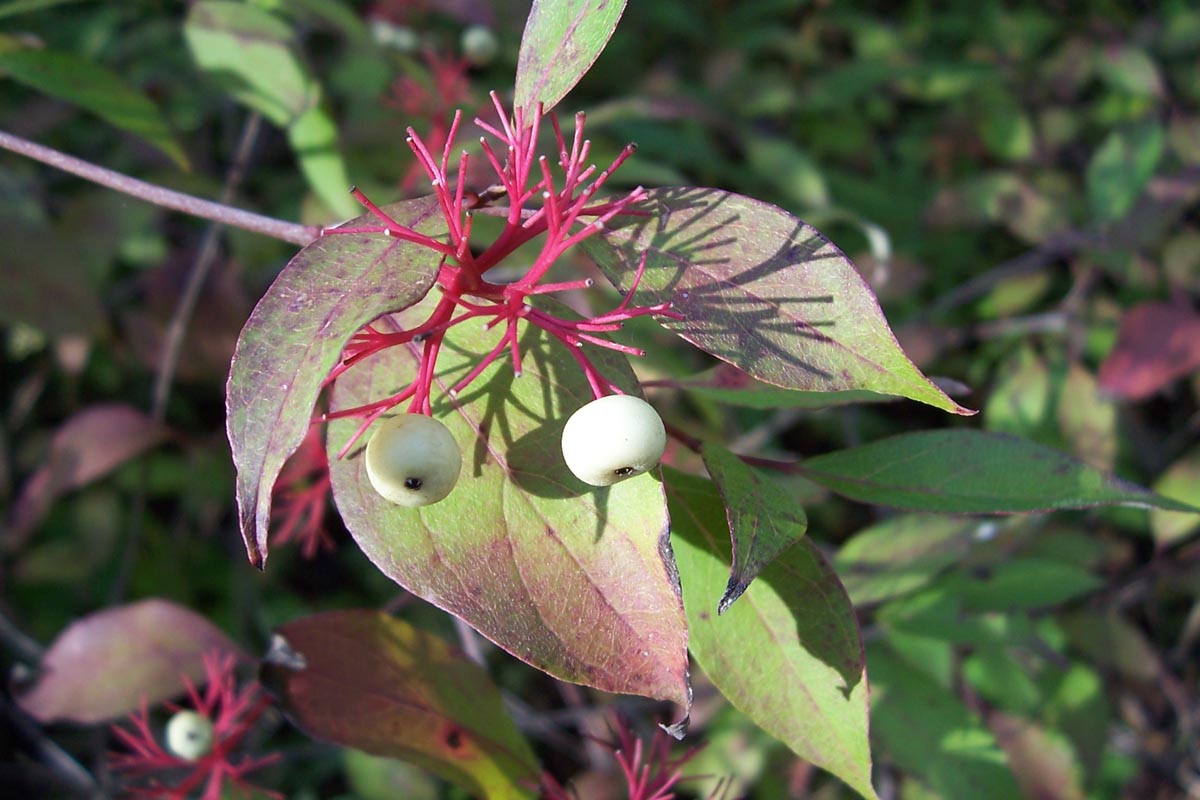
Red-Osier Dogwood
Cornus sericea
☀️ Full Sun 💧 High
Kousa Dogwood
Cornus kousa
☀️ Full Sun 💧 Moderate