

Bunchberry dogwood (Cornus canadensis) is a creeping herbaceous groundcover native to the boreal forests and montane woodlands of North America and eastern Asia, recognised by its whorl of leaves topped with four white flower bracts. It spreads by subterranean rhizomes to carpet cool, shaded forest floors.
This plant requires acidic, humus-rich soil and reliably cool summer temperatures, failing rapidly in regions with hot, humid summers or alkaline ground.
Key Facts
- Soil pH: 4.0 to 6.0 (strictly acidic)
- Hardiness: USDA Zones 2 to 6
- Light: Partial to deep woodland shade
- Mature height: 10–20 cm (4–8 in)
- Water: Consistently moist, never waterlogged
- Toxicity: Non-toxic to humans and dogs
Growing Bunchberry Dogwood in the Garden
Bunchberry dogwood suits cool-climate woodland gardens where the soil remains damp, acidic, and shaded throughout summer. It forms a slow-spreading carpet that does not become invasive or smother neighbouring herbaceous perennials.
You will struggle to keep this plant alive if summer daytime temperatures regularly exceed 30 °C (86 °F) or night temperatures remain above 20 °C (68 °F). Gardeners in USDA zones 7 and higher generally lack the prolonged winter chilling and cool summer soils this boreal species demands.
How to Identify Bunchberry Dogwood
Bunchberry dogwood forms an upright, unbranched stem 10 to 20 cm (4 to 8 in) tall topped by an apparent whorl of four to six leaves. The leaves are ovate, 3 to 8 cm (1.2 to 3.1 in) long, and display the curving veins characteristic of the dogwood family.
True flowers are minute, greenish, and clustered in a dense central head, surrounded by four prominent white petal-like bracts measuring 1 to 2 cm (0.4 to 0.8 in) across. In late summer, these flowers develop into tight clusters of round, bright red drupes measuring 6 to 8 mm (0.25 to 0.3 in) in diameter.
- Stems: Slender, green to reddish, rising from underground woody rhizomes
- Foliage: Deciduous to semi-evergreen, turning reddish-purple before dying back in late autumn
- Fruit: Compact cluster of 6 to 10 scarlet berries per stem
Site Selection and Sun Exposure
Plant bunchberry dogwood in dappled shade to partial shade beneath native conifers or deciduous trees. Direct afternoon sun scorches the thin leaves within hours, drying out the shallow root zone.
In cool coastal climates or northern latitudes such as Alaska or Scandinavia, plants tolerate open morning sun if the roots stay permanently cool. The native range spans northern forests from Alaska across Canada to Newfoundland, south into the northern United States, and westward into Greenland and eastern Asia.
Soil Preparation and Planting
Bunchberry dogwood requires a pH between 4.0 and 6.0 and will develop chlorosis and die in neutral or alkaline soil. Incorporate generous amounts of decomposed pine needles, leaf mould, or peat moss into the top 15 cm (6 in) of the planting bed.
The rhizomes sit very shallowly in nature, often creeping through the duff layer on top of decaying wood. Set nursery-grown plugs at the exact depth they sat in their containers, space them 25 to 30 cm (10 to 12 in) apart, and apply a 3 cm (1.2 in) layer of shredded bark or needle mulch over the surrounding ground.
Watering and Fertilizer Needs
Keep the soil consistently moist to a depth of 10 cm (4 in) from spring emergence through early autumn. Bunchberry lacks drought tolerance, and dry root runs cause wilting, leaf drop, and sudden death of rhizome tips.
Avoid heavy chemical fertilisation. If the soil contains high organic matter, this plant requires zero supplemental feeding; if soil is depleted, top-dress in early spring with a light 1 cm (0.4 in) layer of well-rotted conifer compost or an organic ericaceous feed applied at half strength.
Pruning and Maintenance
Bunchberry dogwood requires no routine pruning because stems naturally die back to the creeping rhizomes at the end of the growing season. Remove collapsed, dried stems in early spring before fresh shoots emerge from the soil.
Keep the ground free of deep leaf accumulations from large-leaved deciduous trees such as oaks, which can smother the low canopy. Gently rake away dense autumn debris while leaving a light mulch of fine needles or shredded leaves intact.
Propagating Bunchberry Dogwood
Divide established mats by rhizome cuttings taken in early spring just as the winter dormancy breaks. Cut rhizome sections at least 8 cm (3.1 in) long that contain at least one healthy bud and several fibrous root hairs.
Propagation from seed is slow and requires patience:
- Clean the pulp completely from ripe red berries in late summer
- Provide 60 to 90 days of cold, moist stratification at 1 to 4 °C (34 to 39 °F)
- Sow on a damp, acidic mix of fine peat and sand
- Expect germination to take from several months to two full seasons
Winter Care and Hardiness
Bunchberry survives winter temperatures down to -40 °C (-40 °F) under reliable snow cover, fitting USDA hardiness zones 2 through 6. The aerial shoots die down completely or turn purplish-brown after hard frost, while the underground network survives unaffected.
In snowless regions near the warmer edge of its hardiness zone, winter wind can desiccate the shallow rhizomes. Apply a loose 5 cm (2 in) layer of pine boughs or evergreen needles in late autumn to trap moisture and prevent repeated frost heaving.
Bunchberry Dogwood Flowers, Berries, and Traditional Uses
The flowering mechanism is famous among botanists for an explosive pollen release occurring in under 0.5 milliseconds, triggered when an insect brushes the flower antenna. This catapults pollen onto bumblebees and hoverflies to ensure cross-pollination.
The fleshy red berries ripen in August and are edible, with a mild, slightly sweet flavour and a distinct mealy texture caused by large interior stones. Indigenous peoples of North America traditionally consumed the berries fresh or mixed with grease, dried them for winter stores, and brewed leaf infusions traditionally used for respiratory ailments and body pains.
Bunchberry Dogwood Through the Seasons
| Spring | Rake off heavy leaf litter that fell over winter before shoots emerge. Top-dress with 1 cm (0.4 in) of pine needle mulch or acidic leaf mould, and take rhizome divisions if expanding the patch. |
|---|---|
| Summer | Water regularly to ensure the top 10 cm (4 in) of acidic soil never dries out. Inspect for slug and snail damage along new shoots, and maintain shade cover against hot sun. |
| Autumn | Harvest ripe red berries for seed propagation in late August or September. Collect fallen broad leaves off the low groundcover mats to prevent rot as the foliage turns burgundy. |
| Winter | In zones 5 and 6 with intermittent snow cover, lay pine boughs over the bed to shield shallow rhizomes from desiccation and frost heave. |
Diagnosing Bunchberry Growing Problems
| What you see | Likely cause | What to do |
|---|---|---|
| Yellowing leaves with green veins (chlorosis) | Soil pH is too high (alkaline soil) | Amend the soil with elemental sulphur or peat moss to lower pH below 6.0. |
| Brown, crispy leaf edges | Direct sun exposure or dry soil | Move to full or partial woodland shade and apply a pine mulch to retain moisture. |
| Sudden stem collapse and failure to spread | Summer heat stress or warm nights | Ensure the plant is sited in cool microclimates; cultivation fails in hot southern regions. |
| Irregular holes chewed in young leaves | Slugs and snails feeding in damp mulch | Apply iron phosphate bait around the perimeter of the bed in early spring. |
Companion Plants for Bunchberry
Combine bunchberry with plants that share its demand for cool, acidic, damp woodland conditions. Because it is slow-growing and small, pair it with companions that will not cast heavy low-level shade or spread via aggressive runners.
Excellent woodland planting partners include:
- Wintergreen (Gaultheria procumbens), matching its creeping habit and acid preference
- Twinflower (Linnaea borealis), an evergreen creeping perennial of boreal forests
- Maidenhair fern (Adiantum pedatum), providing light, feathery overhead contrast
- Bunchberry-scale dwarf conifers such as balsam fir (Abies balsamea)
Frequently Asked Questions
Are bunchberry dogwood berries edible?
Yes, bunchberry dogwood berries are edible to humans, though they have a mild, mealy texture and a large hard seed inside. They are traditionally eaten raw, cooked into sauces, or used to provide natural pectin for jams.
Is bunchberry dogwood toxic to dogs?
No, bunchberry dogwood is non-toxic to dogs, cats, and other domestic pets. Ingesting large volumes of berries could cause mild stomach upset from fruit bulk, but the plant contains no dangerous toxins.
Is bunchberry dogwood evergreen?
Bunchberry dogwood is not evergreen; it is a herbaceous perennial whose aboveground leaves turn wine-red to purple in autumn before withering away in winter. Fresh stems sprout anew from underground rhizomes each spring.
What is the difference between bunchberry and other dogwoods?
Bunchberry dogwood is an herbaceous groundcover under 20 cm (8 in) tall, unlike tree or large shrub dogwoods such as flowering dogwood (Cornus florida) or red osier dogwood (Cornus sericea). It shares the iconic four white petal-like bracts and veined leaves of its woody cousins on a dwarf perennial scale.
Is bunchberry dogwood invasive?
No, bunchberry dogwood is not invasive. It spreads slowly via slender subterranean rhizomes and forms polite woodland colonies that integrate well with other native forest plants.
Information about traditional or historical uses is provided for educational interest only and is not medical advice. Do not use any plant to treat a condition without speaking to a qualified professional.
Sources & Verification
Taxonomy and distribution are checked against the databases below. Care guidance is written for cultivated species only and reviewed by our editor. How We Build Plant Profiles →
- Kew Plants of the World OnlineTaxonomy, distribution, and native status verification
- USDA PLANTS DatabaseHardiness, native range, and growth habit
- North Carolina State Extension Gardener Plant ToolboxHorticultural culture, soil pH, and landscape uses
- Royal Horticultural SocietyPlant care and RHS Award of Garden Merit profile
- GBIF — Global Biodiversity Information Facilitytaxonomy, synonyms, occurrence records
- Wikipediageneral reference
More in Cornus

Common Dogwood
Cornus sanguinea
☀️ Full Sun 💧 Moderate

Siberian Dogwood
Cornus alba
☀️ Full Sun 💧 High
Cornelian Cherry
Cornus mas
☀️ Full Sun 💧 Moderate
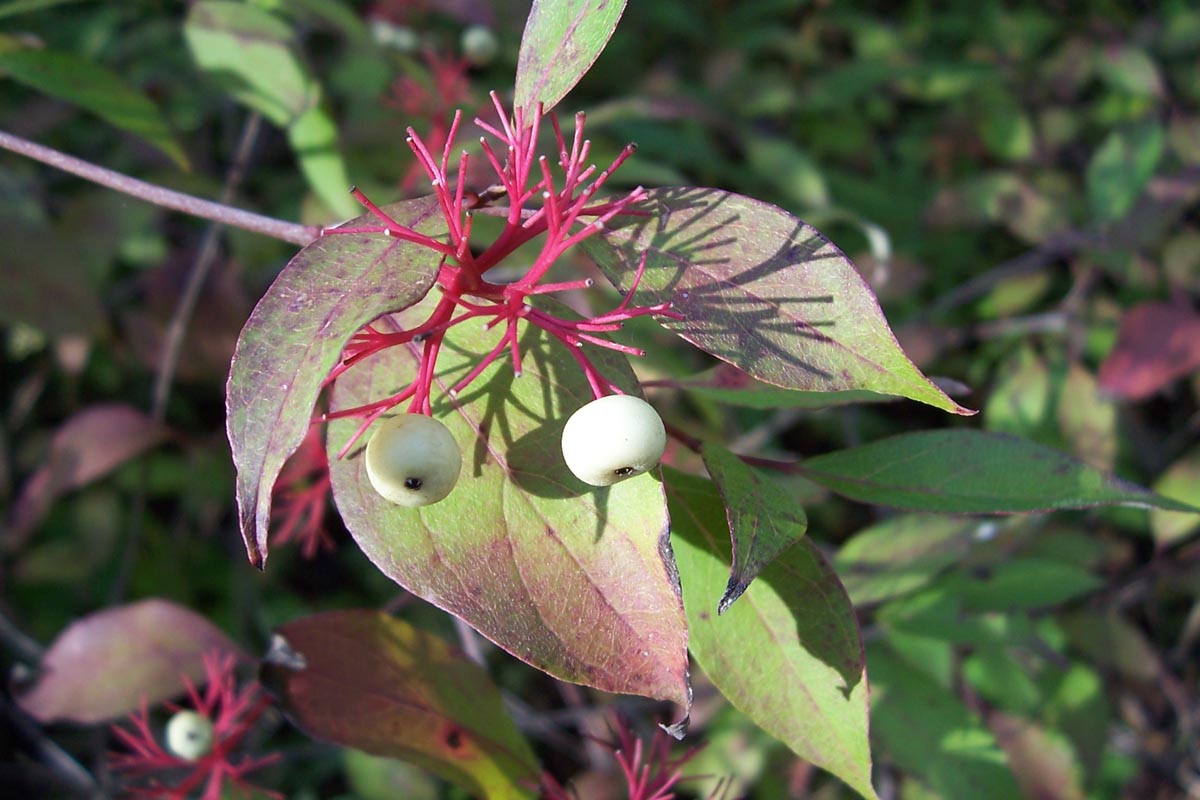
Red-Osier Dogwood
Cornus sericea
☀️ Full Sun 💧 High

Asiatic Dogwood
Cornus officinalis
☀️ Full Sun 💧 Moderate
Kousa Dogwood
Cornus kousa
☀️ Full Sun 💧 Moderate