
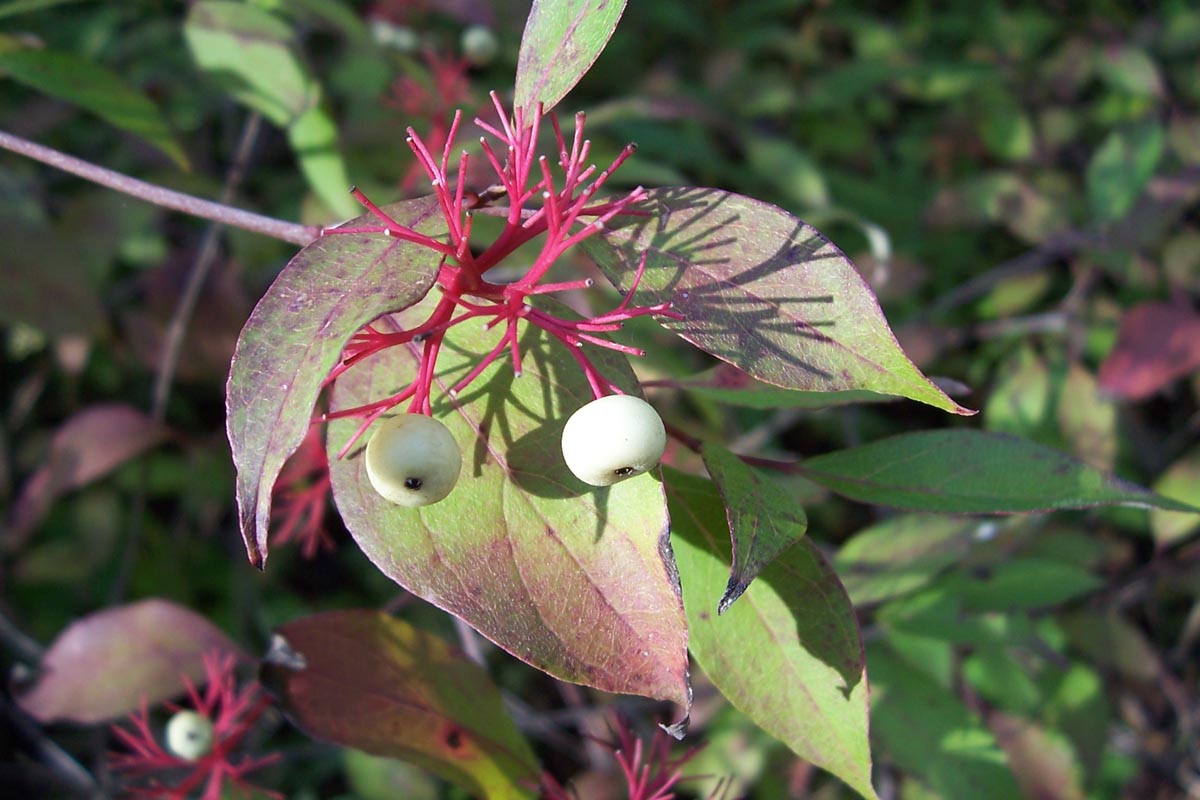
Red-osier Dogwood (Cornus sericea) is a thicket-forming deciduous shrub native across most of North and Central America, recognised immediately by its striking blood-red stems in winter. It grows rapidly in damp soils and naturally spreads through underground stolons to form dense colonies.
You will need to prune out older stems aggressively each spring to maintain the brightest red colour on the new growth. Without this regular cutting back, the lower portions of the shrub quickly turn brown and woody.
Key Facts
- Light: Full sun to partial shade
- Water: Prefers consistently moist soil
- Height: Up to 3 m (10 ft) tall
- Spread: Spreads indefinitely via suckers
- Hardiness: USDA Zones 2 to 8
Who Should Grow Red-Osier Dogwood
Red-osier dogwood suits gardeners who need a tough, fast-growing shrub to brighten up bleak winter landscapes or stabilise damp erosion-prone areas. You get intense stem colour when planted in full sun, though the plant tolerates partial shade easily. Give it plenty of room because the underground runners will form a wide thicket over time if left unmanaged.
- Ideal for rain gardens and pond edges where soil stays damp
- Works well as a large informal hedge or wildlife screen
- Not suited for tiny formal courtyards without root barriers
What Red-Osier Dogwood Looks Like
Red-osier dogwood is a multi-stemmed deciduous shrub that reaches heights of 1.5 to 3 m (5 to 10 ft) with an equal or greater spread. The leaves are opposite, oval, dark green above, pale underneath, and grow 5 to 10 cm (2 to 4 in) long before turning reddish-purple in autumn.
- Stems turn brilliant red in winter, especially on younger growth
- Flat-topped clusters of small white flowers appear in late spring
- Clusters of white to pale blue berries mature by late summer
Mature Size and Growth Habit
This shrub grows quickly to a mature height of 3 m (10 ft) and spreads indefinitely via underground stolons and tip-rooting branches. You can expect annual growth rates of 60 cm (2 ft) or more under optimal conditions.
- Forms dense thickets that suppress weeds once established
- Can be kept smaller with annual coppicing or heavy pruning
- Spreads outward rather than upward after reaching mature height
Where to Plant Red-Osier Dogwood
Plant red-osier dogwood in a location that receives at least 6 hours of direct sunlight daily for the brightest winter stem colour. It performs best in moist, organically rich soils, unlike flowering dogwood (Cornus florida) which demands well-drained upland sites.
- Tolerates occasional standing water and heavy clay soils
- Will grow in partial shade, though stem colour fades to dull green or yellow
- Survives winter temperatures down to -45 °C (-50 °F) in USDA Zone 2
How to Plant Red-Osier Dogwood
Dig a hole twice as wide as the root ball and just as deep, setting the bare-root or container-grown shrub in spring or autumn. Space multiple plants 1.5 m (5 ft) apart if you want to create a solid hedge quickly.
- Water thoroughly immediately after planting to settle the soil
- Apply a 7 cm (3 in) layer of wood mulch to retain soil moisture
- Cut back newly planted shrubs by one-third to encourage branching
Watering and Feeding Requirements
Water young red-osier dogwood weekly during its first growing season to establish a deep root system. Established plants tolerate brief dry spells near ponds, but drought stress will cause leaf scorch and reduce overall vigour.
- Provide extra water during hot summer dry spells
- Apply a balanced organic fertiliser or compost layer in early spring
- Avoid heavy high-nitrogen fertilisers which promote weak stem growth
How to Prune Red-Osier Dogwood
Prune red-osier dogwood annually in late winter before new buds swell by cutting one-third of the oldest stems right down to the ground. Older stems lose their vivid red colour and turn dull grey, so removing them encourages the plant to shoot out bright new red wands.
- Use sharp loppers to make clean cuts near the base of the plant
- Alternatively, coppice the entire shrub to ground level every 2 to 3 years
- Never prune in late autumn as frost can damage new shoots
Common Problems and Pests
Red-osier dogwood is generally tough, but environmental stress can invite occasional insect pests and fungal leaf spots. You can manage most minor issues by improving air circulation and cleaning up fallen autumn foliage.
- Scale insects cause sticky residue on leaves; treat with dormant oil in winter
- Powdery mildew appears as white dust on leaves during humid summers
- Stem borers can tunnel into wood; prune out and destroy affected stems
Winter Interest and Care
Winter is when red-osier dogwood shines brightest in the garden landscape, offering glowing red stems against snow. Leave unpruned through the coldest months so you can enjoy the colour before cutting back in late winter.
- Brush heavy wet snow off branches to prevent breakage
- Pair with yellow-twig dogwood cultivars for a striking colour contrast
- Inspect stems in January to plan which older wood to remove
Landscape Uses for Red-Osier Dogwood
Use red-osier dogwood for naturalising stream banks, stabilising erosion-prone slopes, or creating seasonal screens in large yards. Wildlife relies heavily on the shrub, with birds eating the berries and deer browsing the twigs.
- Plant along property borders as an informal privacy hedge
- Incorporate into rain gardens to handle heavy runoff
- Combine with conifers to make the red winter stems stand out
Red-Osier Dogwood Through the Seasons
| Spring | Prune out one-third of the oldest stems to the ground before new leaves emerge. Apply a layer of organic compost around the root zone. |
|---|---|
| Summer | Water deeply during extended dry periods to prevent leaf scorch. Monitor foliage for signs of powdery mildew or insect activity. |
| Autumn | Enjoy the reddish-purple fall foliage as the plant prepares for dormancy. Clear away fallen leaves if fungal issues were present. |
| Winter | Enjoy the brilliant red stems against the snow. Plan your annual pruning cuts for late winter before spring growth begins. |
Red-Osier Dogwood Problem Diagnosis
| What you see | Likely cause | What to do |
|---|---|---|
| Stems turning dull brown or grey | Stems are older than two years | Cut older stems down to ground level in late winter to stimulate bright new red growth. |
| White powdery coating on leaves | Powdery mildew fungus during humid weather | Thin out crowded branches to improve air circulation and clear away infected fallen leaves. |
| Brown crispy leaf edges | Drought stress or insufficient soil moisture | Increase watering frequency and apply organic mulch to retain soil moisture. |
Popular Red-Osier Dogwood Cultivars
- ‘Baileyi’ – compact form with dark red stems and fewer root suckers
- ‘Cardinal’ – exceptionally bright cherry-red winter stems
- ‘Flaviramea’ – bright yellow-green stems instead of red
- ‘Arctic Fire’ – dwarf cultivar reaching only 1.2 m (4 ft) tall
- ‘Kelseyi’ – ultra-dwarf mounding selection growing to 75 cm (30 in)
Frequently Asked Questions
What is the difference between American dogwood and Red-osier dogwood?
American dogwood usually refers to flowering dogwood (Cornus florida), a small tree with showy white flower bracts and upland needs, whereas red-osier dogwood (Cornus sericea) is a thicket-forming shrub grown for its bright red stems.
Are red-osier dogwood berries edible?
Yes, the white berries are edible for humans and wildlife, though they are bitter and usually used to make jams rather than eaten fresh.
How do you keep red-osier dogwood red?
You keep the stems bright red by cutting back one-third of the oldest stems to ground level every year in late winter.
Does red-osier dogwood attract ticks?
Like many dense shrubs in moist woodland edges, red-osier dogwood thickets can harbour ticks carried by deer and small mammals passing through.
How do I stop red-osier dogwood from spreading?
You can control its spread by installing underground root barriers or simply pulling up unwanted root suckers as soon as they appear in spring.
Sources & Verification
Taxonomy and distribution are checked against the databases below. Care guidance is written for cultivated species only and reviewed by our editor. How We Build Plant Profiles →
More in Cornus
Kousa Dogwood
Cornus kousa
☀️ Full Sun 💧 Moderate
Cornelian Cherry
Cornus mas
☀️ Full Sun 💧 Moderate

Bunchberry Dogwood
Cornus canadensis
☀️ Partial Shade 💧 Moderate

Common Dogwood
Cornus sanguinea
☀️ Full Sun 💧 Moderate

Siberian Dogwood
Cornus alba
☀️ Full Sun 💧 High

Flowering Dogwood
Cornus florida
☀️ Partial Sun 💧 Moderate