

Siberian dogwood is a deciduous shrub native to the cold regions of Siberia, northern China, and Korea, known for its striking red winter bark. Cornus alba forms a thicket of upright stems that turn deep crimson as the weather cools.
This shrub thrives in boggy areas where most garden plants struggle with root rot. To maintain the most intense bark color, you must commit to a heavy pruning schedule every spring before the leaves emerge.
Key Facts
- Water: High; thrives in consistently moist or wet soil
- Light: Full sun to partial shade for best color
- Growth Rate: Fast, up to 60 cm (2 ft) per year
- Hardiness: USDA zones 3 to 7
- Winter Interest: Bright red bark on young stems
Fitting Siberian Dogwood into Your Garden
Siberian dogwood is most effective when planted in damp or low-lying areas where other shrubs might fail. It is a utility plant for gardeners who need to stabilize a slope or fill a wet corner that remains soggy after rain.
Because the main appeal is the winter bark, you should place it where it can be seen from a window during the cold months. It works well as a background for smaller perennials or as a loose, informal hedge that provides privacy during the summer.
- Best for: Winter interest borders and rain gardens
- Spacing: Plant 1.5-2 m (5-6.5 ft) apart for a massed effect
- Soil Type: Tolerates heavy clay and seasonal flooding
What Does Cornus alba Look Like?
Siberian dogwood is a multi-stemmed shrub that typically reaches 3 m (10 ft) in height and spread. Its leaves are 4-10 cm (1.5-4 in) long, oval-shaped, and arranged oppositely along the stems, turning a subtle reddish-purple in the autumn.
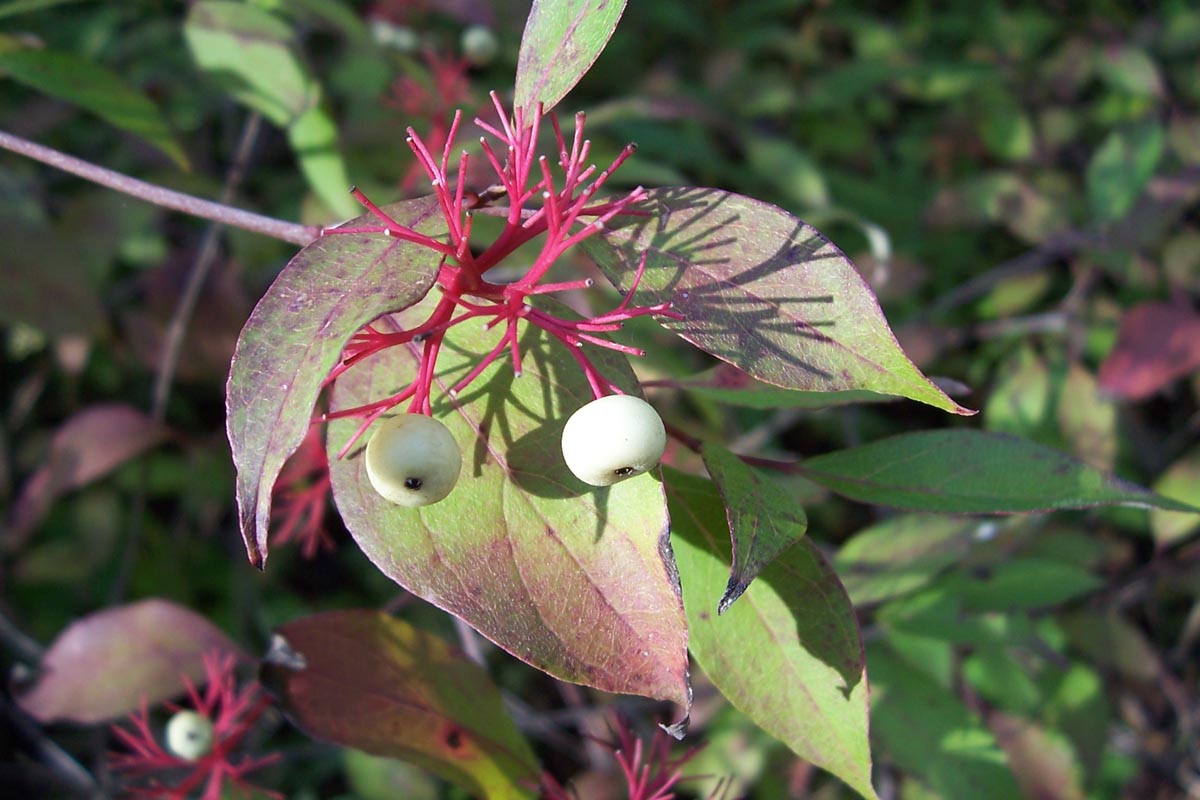
The flowers appear in late spring as flat-topped clusters of creamy-white blossoms, followed by small white berries. The bark on older wood is brown and unremarkable, but the new growth is a vivid coral-red.
- Bark: Bright red to crimson on stems less than two years old
- Fruit: Clusters of white or pale blue berries in late summer
- Foliage: Dark green leaves, sometimes variegated with white margins
Best Growing Site for Siberian Dogwood
Siberian dogwood requires full sun to partial shade to produce the most intense winter color. While it will grow in deep shade, the stems will likely remain green or dull brown rather than turning red.
This species is extremely cold-hardy, surviving temperatures down to -40 °C (-40 °F). It prefers cool summer climates and may struggle in the intense heat and humidity of the southern United States or similar tropical regions.
- Sunlight: At least 6 hours of direct sun for best bark color
- Exposure: Tolerates windy sites and urban pollution
- Climate: Best in USDA zones 3 through 7
How to Plant Siberian Dogwood Shrubs
The best time to plant is in early spring or late autumn when the shrub is dormant. This allows the root system to establish without the stress of supporting summer foliage or enduring extreme heat.
Dig a hole twice as wide as the root ball and just as deep. If your soil is very sandy and dry, incorporate organic matter like compost to help retain the moisture this plant craves.
- Depth: Plant at the same level it was in the nursery pot
- Mulch: Apply a 5-8 cm (2-3 in) layer of wood chips to retain moisture
- Initial Water: Soak the root zone thoroughly immediately after planting
Watering and Feeding Requirements
Siberian dogwood needs consistently moist soil and does not tolerate prolonged drought. If the soil dries out completely, the leaf margins will brown and the plant may drop its foliage prematurely in late summer.
Feeding is rarely necessary if the soil is rich in organic matter. A light application of a balanced fertilizer in early spring can encourage the vigorous new growth needed for a good winter display.
- Frequency: Water weekly during dry spells in the first two years
- Fertilizer: Use a 10-10-10 NPK mix in March if growth is slow
- Indicators: Wilting leaves suggest the soil is too dry
Pruning Siberian Dogwood for Bright Red Stems
To get the brightest red color, you must prune the stems to 5-10 cm (2-4 in) from the ground in late winter. This technique, known as coppicing, removes the older wood which naturally turns brown and loses its luster over time.
If you prefer a larger shrub, you can use a “one-third” rule instead. Every year, remove the oldest third of the stems at ground level to ensure there is always a mix of mature structure and fresh, colorful shoots.
- Timing: Prune in March before the leaf buds begin to open
- Tools: Use sharp loppers or a pruning saw for thick stems
- Frequency: Hard pruning every 1-2 years yields the best color
Identifying Common Siberian Dogwood Problems
The most frequent issue is Septoria leaf spot, which appears as small dark spots with purple borders on the foliage. This fungal disease usually occurs in humid summer weather and can be managed by improving air circulation.
Scale insects can also colonize the bark, appearing as small, waxy bumps that sap the plant’s energy. If an infestation is heavy, the affected stems should be pruned out and destroyed during the dormant season.
- Canker: Sunken areas on stems that can cause dieback
- Deer: Animals may browse the young stems in winter
- Leaf Curl: Often caused by aphids or extreme underwatering
Siberian Dogwood Winter Care and Display
The red bark of Siberian dogwood is a chemical response to cold temperatures, which trigger the production of pigments. The color is most intense on the side of the stem facing the sun, so avoid planting it in the shadow of tall evergreens.
In winter, the plant requires almost no maintenance. The red stems provide a high-contrast visual against white snow, making it a staple of winter landscape design in northern latitudes.
- Protection: No winter wrap is needed; it is fully cold-hardy
- Cleanup: Remove fallen leaves in autumn to prevent fungal spores from overwintering
- Display: Cut stems can be used in outdoor winter containers and urns
Year-Round Maintenance for Siberian Dogwood
| Spring | Prune stems back to 5-10 cm (2-4 in) in late March. Apply a balanced fertilizer and a fresh layer of mulch to retain moisture. |
|---|---|
| Summer | Monitor soil moisture closely during heatwaves. Water deeply if the top 5 cm (2 in) of soil feels dry to the touch. |
| Autumn | Rake and dispose of fallen leaves to prevent leaf spot diseases. This is an ideal time to plant new shrubs or transplant existing ones. |
| Winter | Enjoy the red stem display. In late winter, plan your pruning strategy and check for scale insect infestations on the bark. |
Solving Common Siberian Dogwood Issues
| What you see | Likely cause | What to do |
|---|---|---|
| Brown spots on leaves | Septoria leaf spot fungus | Improve air circulation and avoid overhead watering. |
| Stems turning brown/dull | Wood is too old | Prune the dull stems to the ground in late winter to stimulate new red growth. |
| Wilting or crispy leaf edges | Underwatering | Increase watering frequency and ensure a thick layer of mulch is present. |
Popular Siberian Dogwood Cultivars
- ‘Sibirica’ – Intense coral-red stems and faster growth.
- ‘Elegantissima’ – Variegated leaves with white margins; less vigorous than the species.
- ‘Ivory Halo’ – A compact variegated form reaching only 1.5 m (5 ft).
- ‘Kesselringii’ – Unusual dark purple, almost black winter stems.
- ‘Bud’s Yellow’ – A related cultivar often sold alongside for contrasting yellow stems.
Frequently Asked Questions
Is Siberian dogwood invasive?
Siberian dogwood is not considered a noxious invasive weed in most areas, but it does spread via underground suckers. You can control its spread by regularly pruning the outer stems or planting it in a spot where its spread is contained by lawn mowing.
Is Siberian dogwood poisonous to dogs?
The berries and leaves are considered mildly toxic to pets. Ingesting them can cause gastrointestinal upset, including vomiting or diarrhea, though it is rarely life-threatening.
Does Siberian dogwood flower?
Yes, it produces small, yellowish-white flowers in flat clusters during late spring. While the flowers are not as large as those of the flowering dogwood (Cornus florida), they are a good source of nectar for pollinators.
What is the difference between Siberian dogwood and red osier dogwood?
Siberian dogwood (Cornus alba) is native to Asia and tends to have a more upright habit. Red osier dogwood (Cornus sericea) is native to North America and spreads more aggressively via underground stolons.
How fast does Siberian dogwood grow?
Under ideal conditions with plenty of water, it can grow 60 cm (2 ft) or more in a single season. This fast growth rate is why it responds so well to hard pruning every year.
Sources & Verification
Taxonomy and distribution are checked against the databases below. Care guidance is written for cultivated species only and reviewed by our editor. How We Build Plant Profiles →
More in Cornus

Flowering Dogwood
Cornus florida
☀️ Partial Sun 💧 Moderate
Kousa Dogwood
Cornus kousa
☀️ Full Sun 💧 Moderate
Red-Osier Dogwood
Cornus sericea
☀️ Full Sun 💧 High
Cornelian Cherry
Cornus mas
☀️ Full Sun 💧 Moderate

Common Dogwood
Cornus sanguinea
☀️ Full Sun 💧 Moderate

Bunchberry Dogwood
Cornus canadensis
☀️ Partial Shade 💧 Moderate