

Balsam fir (Abies balsamea) is an evergreen conifer native to the boreal forests of eastern Canada and the northeastern United States. It develops a narrow, spire-like crown packed with flat, dark green needles that release a distinct pine-citrus aroma when crushed.
This tree requires cool summer temperatures and acidic, damp soil to succeed in managed landscapes. Planting it outside its northern climate boundary leads to heat stress, needle cast, and premature decline.
Key Facts
- Water: 2.5 cm (1 in) weekly for young trees
- Light: Full sun to partial shade
- Mature height: 14–20 m (46–66 ft)
- Soil pH: 4.5–6.0 (consistently acidic)
- Hardiness: USDA Zones 3–6
- Growth rate: 30 cm (12 in) annually once established
Is Balsam Fir Right for Your Yard?
Balsam fir suits large, cool-climate landscapes with acidic, damp soils and ample vertical clearance. It provides dense screening, wind protection, and strong winter structure for properties situated in USDA zones 3 through 6.
You should reconsider planting this tree if your property experiences prolonged summer temperatures above 30 °C (86 °F) or relies on alkaline city tap water. It has poor tolerance for road salt and compacted clay, making it unsuitable for narrow suburban street verges or urban parking lot borders.
How to Identify Balsam Fir
You can identify balsam fir by its flat, blunt needles attached via suction-cup bases and prominent horizontal resin blisters across the grey bark. Unlike spruces, the needles do not roll between your fingers and will not prick bare skin.
Key botanical characteristics include:
- Needles: 1.5–2.5 cm (0.6–1.0 in) long, dark green above with two distinct silver-white stomatal bands beneath.
- Needle arrangement: Spirally arranged along the twig but twisted into two flat horizontal rows on lower branches.
- Bark: Smooth and ash-grey on juvenile trees, dotted with raised resin pockets, turning scaly and reddish-brown on old trunks.
- Cones: Cylindrical, 4–8 cm (1.5–3.1 in) long, standing upright on top branches; they turn from violet to brown before disintegrating on the tree.
Balsam Fir Growth Rate and Mature Size
A healthy balsam fir grows 20 to 30 cm (8 to 12 in) per year after spending its first three seasons establishing roots. In cultivation, it typically tops out at 14–20 m (46–66 ft) tall with a base spread of 4.5–7.5 m (15–25 ft).
Wild forest specimens occasionally exceed 25 m (82 ft), but garden trees rarely reach that stature due to wind exposure and root competition. If you want a compact option for a rockery or small border, dwarf cultivars like ‘Nana’ stay under 1 m (3.3 ft) across after ten years.
Ideal Soil and Sun Exposure
This conifer thrives best in full sun to partial shade paired with moist, cool, highly acidic soil. While mature trees tolerate deep shade in native forest understories, garden trees develop sparser, leggier foliage when denied at least four hours of direct light daily.
Target a soil pH between 4.5 and 6.0. Heavy silt or sandy loam enriched with decayed organic matter works well, provided excess water drains freely away from the upper 30 cm (12 in) of the root zone.
Planting Balsam Fir
Plant container-grown or balled-and-burlapped saplings in early spring before bud break or in early autumn while soils remain warm. Dig a hole twice as wide as the root mass and match the depth precisely to the root collar.
Follow these steps during planting:
- Untangle circling root tips around the exterior of container stock to prevent future girdling.
- Set the tree so the basal flare rests 2.5 cm (1 in) above the surrounding grade to account for settling.
- Backfill using the native soil without adding synthetic amendments or rich potting composts.
- Apply a 7.5 cm (3 in) layer of shredded pine bark mulch, keeping it 10 cm (4 in) away from the trunk.
- Water with 20 L (5 gal) immediately to eliminate subsurface air pockets.
Watering and Fertilizer Needs
Balsam fir requires 2.5 cm (1 in) of water weekly during its initial two growing seasons whenever natural rainfall falls short. Established specimens manage on regional precipitation but need supplemental irrigation during extended summer dry spells lasting longer than fourteen days.
Avoid heavy chemical fertilization. If a soil test indicates severe nutrient depletion, apply a light dressing of an acidic, slow-release fertilizer formulated for conifers (such as a 10-8-6 mix) in early April at half the label rate.
Pruning and Shaping Balsam Fir
You should limit pruning to removing dead, broken, or diseased branches in late winter while the tree is dormant. Balsam fir naturally develops an even, conical silhouette and does not need structural thinning.
Commercial Christmas tree growers shear terminal shoots in midsummer to stimulate dense lateral budding. If you manage a young tree for this purpose, trim no more than 30% of the current season’s green growth using sharp hand shears, never cutting into leafless old wood.
Balsam Fir Pests and Diseases
The two primary insect threats are spruce budworm and balsam woolly adelgid, both of which can cause severe needle loss. Environmental stress from drought or compacted soil rapidly invites secondary fungal root pathogens.
Watch for these common landscape threats:
- Spruce budworm: Chewed new tips webbed together with brown silk in late spring; treat small trees with Bacillus thuringiensis.
- Balsam woolly adelgid: Tiny white cotton-like tufts on the trunk and swollen branch nodes; spray dormant horticultural oil in early spring.
- Needle rust: Yellow pustules on needle undersides in midsummer, often shared with companion plants like blueberry (Vaccinium corymbosum).
- Armillaria root rot: Honey-coloured mushrooms near the base and dying crown branches; improve site drainage and remove infected roots.
Winter Care and Cold Hardiness
Balsam fir tolerates extreme winter lows down to -40 °C (-40 °F) without suffering internal tissue freezing. Its sloping branches shed heavy snow loads efficiently, though wet spring snow can snap lower limbs if allowed to accumulate.
Young saplings planted near roadways need protection from de-icing salt sprays, which cause severe needle burn by March. Erect a burlap windscreen on the windward or roadside edge 1 m (3.3 ft) out from young specimens to block desiccating winter gales.
Traditional Uses and Essential Oil
The resin from bark blisters was traditionally used as an external salve by Indigenous peoples across eastern North America for burns, cuts, and chest ailments. Known commercially as Canada balsam, this resin served for decades as a standard optical cement for mounting microscope slides because its refractive index closely matches glass.
Today, processors steam-distil the needles and twigs to yield balsam fir essential oil, which features high concentrations of beta-pinene and bornyl acetate. The same fragrant foliage makes this tree the traditional standard for holiday wreaths and Christmas trees across New England and Atlantic Canada.
Frequently Asked Questions
How long does a cut balsam fir Christmas tree last indoors?
A freshly cut balsam fir lasts four to five weeks indoors if kept in a stand filled with fresh water. Check the reservoir daily, as a mature cut trunk can consume up to 3.8 L (1 gal) of water during its first 48 hours indoors.
How do you tell balsam fir apart from Fraser fir?
Look at the needle undersides and cones. Fraser fir (Abies fraseri) has cone scales with protruding bracts that fold downward, whereas balsam fir cone bracts are hidden or barely visible. Fraser fir also features slightly whiter needle undersides and tolerates warm southern mountain summers better.
Can you grow balsam fir as a bonsai?
Yes, dwarf balsam fir cultivars like 'Nana' make good bonsai subjects due to their short internodes and naturally compact needles. They must be kept outdoors year-round to experience a natural winter dormancy period.
How do you grow balsam fir from seed?
Balsam fir seeds require 28 to 30 days of cold, moist stratification at 1–4 °C (34–39 °F) before sowing. Plant stratified seeds 6 mm (0.25 in) deep in an acidic seedbed kept consistently damp in partial shade.
Why are my balsam fir needles turning brown and dropping?
Browning needles are typically caused by drought stress, root rot from poor drainage, or winter desiccation. Check the root zone moisture 10 cm (4 in) deep; if dry, water deeply, or examine lower twigs for tiny woolly adelgid egg sacs.
Information about traditional or historical uses is provided for educational interest only and is not medical advice. Do not use any plant to treat a condition without speaking to a qualified professional.
Sources & Verification
Taxonomy and distribution are checked against the databases below. Care guidance is written for cultivated species only and reviewed by our editor. How We Build Plant Profiles →
- Kew Plants of the World OnlineTaxonomy, native range, and botanical distribution.
- USDA Forest Service Silvics ManualSilvical characteristics, soil requirements, and ecological associations.
- Missouri Botanical GardenCultivation parameters, hardiness zones, and landscape cultivars.
- GBIF — Global Biodiversity Information Facilitytaxonomy, synonyms, occurrence records
- Wikipediageneral reference
More in Abies

Pacific Silver Fir
Abies amabilis
☀️ Partial Sun 💧 High

Giant Fir
Abies grandis
☀️ Partial Sun 💧 Moderate
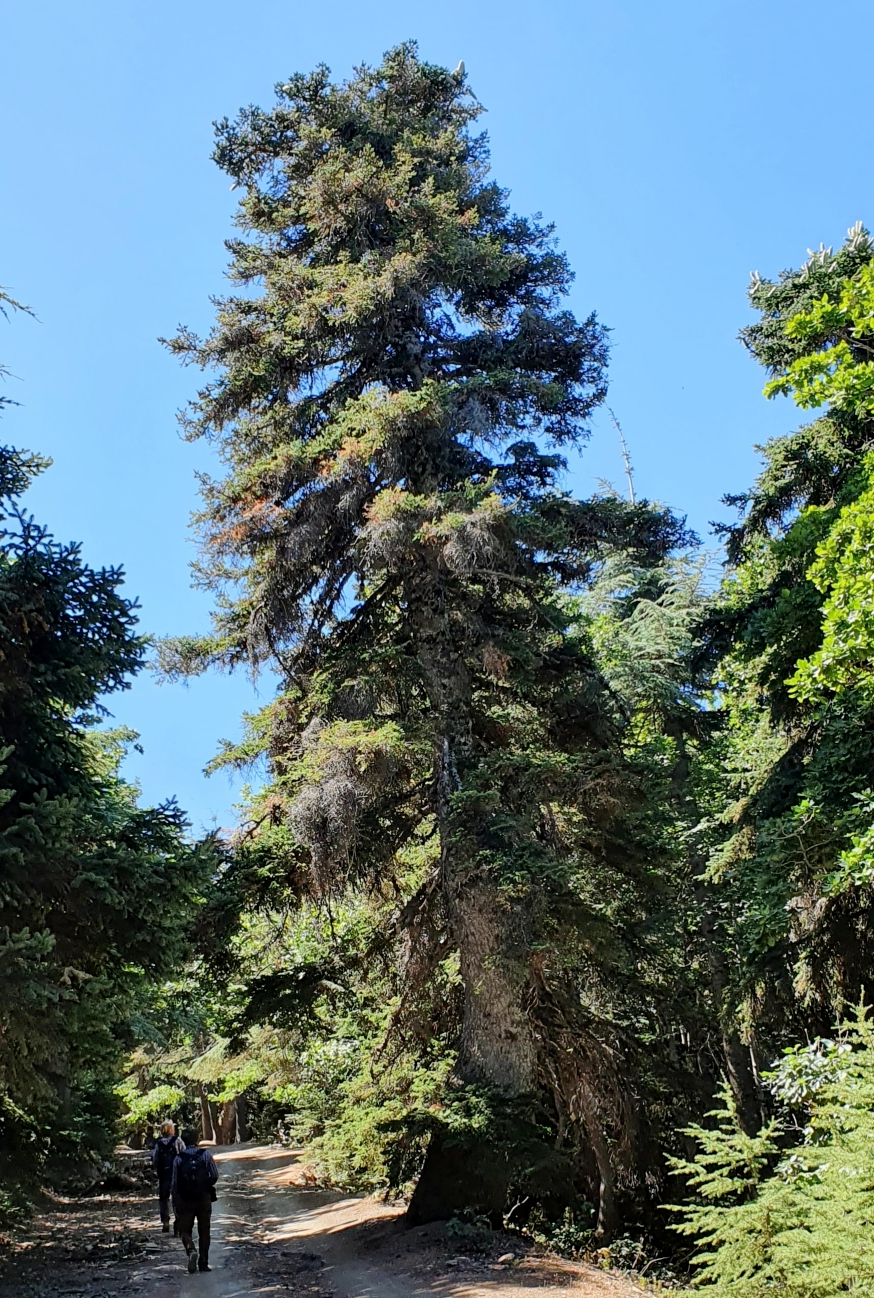
Algerian Fir
Abies numidica
☀️ Full Sun 💧 Moderate

Subalpine Fir
Abies lasiocarpa
☀️ Full Sun 💧 Moderate

Silver Fir
Abies alba
☀️ Partial Sun 💧 Moderate

Siberian Fir
Abies sibirica
☀️ Full Sun 💧 Moderate