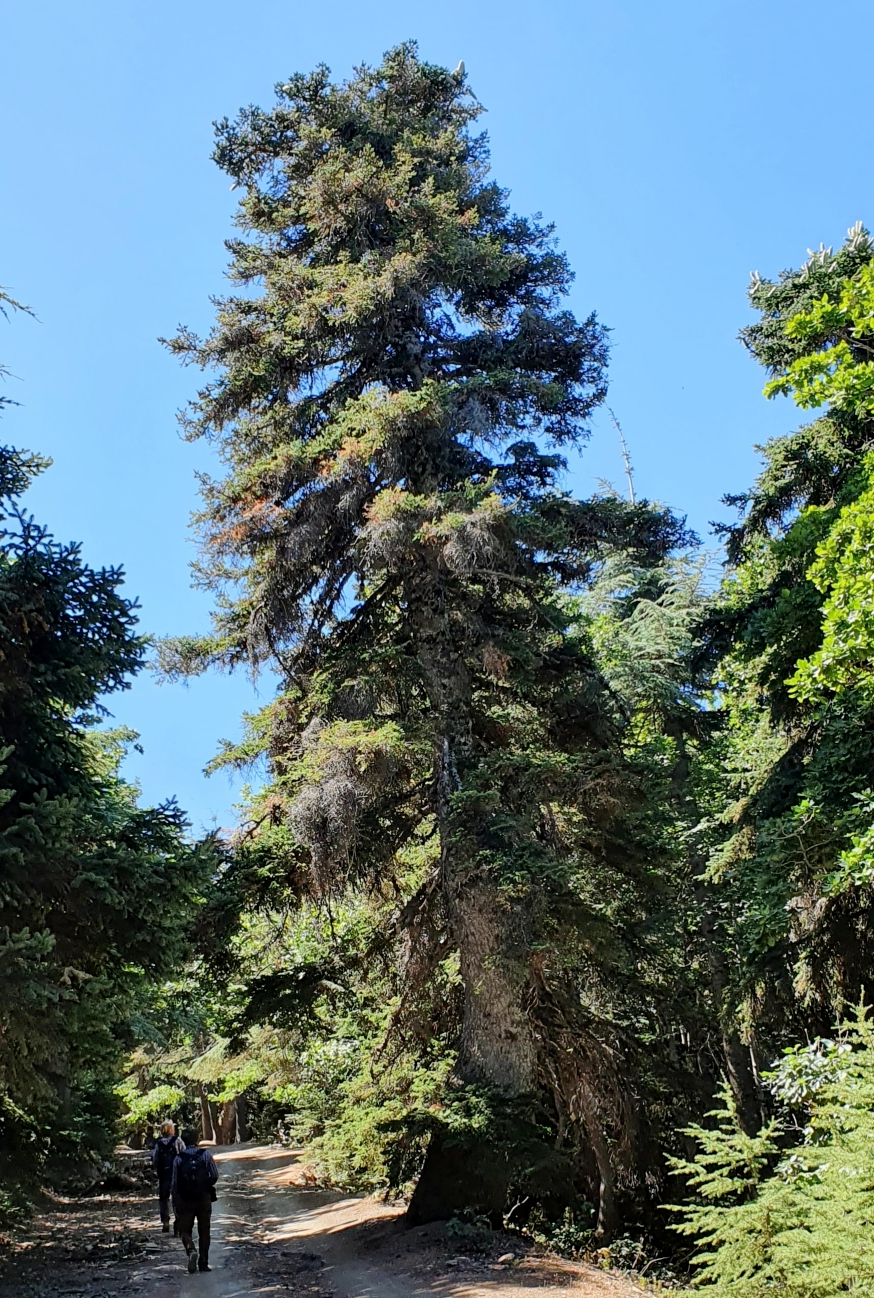
Siberian Fir (Abies sibirica) is a long-lived coniferous evergreen native to the vast taiga regions of Russia, Mongolia, and northern China. It is distinguished from other conifers by its smooth, resinous bark and highly aromatic needles that emit a sharp, refreshing scent when crushed.
This species is one of the most cold-tolerant trees on Earth, surviving temperatures as low as -50 °C (-58 °F). While it provides the world with bornyl acetate-rich essential oils, it frequently fails in urban gardens due to its intolerance of heat and atmospheric pollution.
Key Facts
- Hardiness: Extremely cold tolerant down to USDA Zone 1
- Height: Reaches 30-35 m (100-115 ft) in native habitats
- Soil: Prefers moist, acidic, well-drained loamy soils
- Oil: Primary source of Siberian fir needle essential oil
Is Siberian Fir Right for Your Climate?
Siberian Fir requires consistently cold winters and cool summers to survive. This tree is not a candidate for temperate or subtropical gardens, as it lacks the physiological mechanisms to cope with high nighttime temperatures or humidity. It performs best in regions where the ground remains frozen for several months of the year.
Before planting, consider the local air quality and summer peaks. This species is highly sensitive to sulfur dioxide and other industrial pollutants, which cause rapid needle desiccation. If your summer temperatures regularly exceed 25 °C (77 °F), the tree will likely suffer from heat stress and a shortened lifespan.
How to Identify Siberian Fir
Look for a narrowly conical crown and smooth, grey-green bark marked by prominent resin blisters. The needles are soft, flattened, and measure 2-3 cm (0.8-1.2 in) in length, featuring two light-grey stomatal bands on their undersides. Unlike spruce needles, which are sharp and roll between fingers, these fir needles are blunt and notched at the tip.
- Bark is smooth and thin, becoming slightly fissured only in very old specimens.
- Cones are upright, cylindrical, and 5-9 cm (2-3.5 in) long.
- Cones change from a bluish-purple tint to brown as they mature in autumn.
- Twigs are covered in fine, dense yellowish hairs.
Mature Size and Growth Habit
In its native taiga, Siberian Fir reaches a height of 30 to 35 meters (100 to 115 feet) with a trunk diameter of up to 1 meter (3.3 feet). The growth habit is strictly spire-like, with branches that often droop slightly under the weight of snow. In cultivation outside its native range, it rarely achieves these dimensions and often remains a smaller, decorative specimen.
The growth rate is moderate during the first twenty years, after which it slows significantly as the tree focuses on cone production. Because the root system is relatively shallow, mature trees are susceptible to windthrow in exposed sites. Providing a windbreak or planting in groups can help stabilize the trees as they reach their full height.
Ideal Site and Soil Requirements
Siberian Fir demands moist, well-drained acidic soil with a pH between 5.0 and 6.5. It will not tolerate waterlogged ground, which leads to root rot, nor will it survive in alkaline or chalky soils. The ideal site is a north-facing slope or a sheltered valley where the soil remains cool and damp throughout the growing season.
Full sun is required for the tree to maintain its dense, symmetrical shape. While it can tolerate partial shade in its youth, the crown will become thin and leggy without at least 6 hours of direct sunlight. Ensure the site has excellent air circulation but is protected from drying winter winds that can cause needle burn.
Planting Your Siberian Fir
Plant your tree in early spring just as the ground thaws but before the buds begin to swell. This timing allows the root system to establish in cool soil before the brief summer growing season begins. Dig a hole twice as wide as the root ball but no deeper, ensuring the flare at the base of the trunk sits exactly at the soil line.
- Remove any burlap or wire cages to prevent root girdling.
- Backfill with native soil; avoid adding heavy fertilizers to the planting hole.
- Water deeply immediately after planting to remove air pockets.
- Apply a 10 cm (4 in) layer of organic mulch to keep the roots cool.
Essential Care and Watering
Maintain consistent soil moisture during the first three years of growth to ensure the root system establishes deeply. Once established, the tree is moderately drought-tolerant in cold climates but will require supplemental watering if a dry spell coincides with summer heat. Apply water at the base of the tree rather than over the foliage to prevent fungal issues.
Fertilization is rarely necessary if the soil is naturally acidic and rich in organic matter. If growth appears stunted, apply a slow-release, acid-forming fertilizer in early spring. Avoid high-nitrogen feeds in late summer, as this encourages soft new growth that will be killed by the first hard frost.
Siberian Fir Essential Oil and Wood Uses
The essential oil is steam-distilled from the needles and twigs and is characterized by a high concentration of bornyl acetate. Traditionally used in Russian folk medicine, the oil was applied to support respiratory health and ease muscular discomfort. Today, it is a primary ingredient in aromatherapy for its grounding, forest-like scent and its use in candles and bath products.
The wood is lightweight, soft, and pale, making it suitable for pulp, paper, and light construction. In survivalist contexts, the ‘Siberian fire lay’ is a traditional campfire method using logs of this and similar conifers. This arrangement allows for a long-burning, self-feeding fire that provides heat throughout sub-zero nights in the taiga.
Common Pests and Tree Health Problems
The most significant threat to large stands is Siberian fires, which can devastate forests of this thin-barked species. In a garden setting, keep an eye out for the balsam woolly adelgid (Adelges piceae), which appears as white, cottony tufts on the trunk and branches. This pest can cause significant dieback by feeding on the tree’s sap.
- Needle cast fungi may occur if air circulation is poor or humidity is high.
- Root rot (Phytophthora) is common in heavy, poorly drained clay soils.
- Bark beetles may attack trees already weakened by heat or drought.
- Deer may browse the soft needles of young saplings during winter.
Surviving Extreme Winter Cold
Siberian Fir is naturally adapted to sub-zero dormancy and requires no special protection from the cold. In fact, it needs a significant period of freezing temperatures to properly break dormancy in the spring. Its flexible branches are designed to bend under heavy snow loads rather than snapping, which is a common problem for more rigid conifers.
The primary winter risk is actually desiccation from cold, dry winds rather than the temperature itself. If the ground is frozen and the sun is bright, the needles may lose moisture that the roots cannot replace. Ensuring the tree is well-watered throughout the autumn before the ground freezes is the best way to prevent winter needle burn.
Siberian Fir vs Douglas Fir
While both are used for essential oils, Siberian Fir is a true fir (Abies), whereas Douglas Fir (Pseudotsuga menziesii) is not. You can distinguish them by their cones: Siberian Fir cones stand upright on the branches and eventually fall apart, leaving a central spike. Douglas Fir cones hang downward and feature distinct three-pointed bracts that look like mouse tails.
The essential oils also differ in chemical profile and scent. Siberian Fir oil is often described as sweeter and more ‘pine-like’ due to its bornyl acetate content. Douglas Fir oil has a more complex, citrusy, and bright aroma. Additionally, Douglas Fir is much more tolerant of temperate climates and is a common sight in Pacific Northwest landscapes where Siberian Fir would perish.
Year-Round Care for Siberian Fir
| Spring | Apply a fresh 10 cm (4 in) layer of wood chip mulch to retain moisture. Check for new light-green growth at branch tips and monitor for adelgid pests. |
|---|---|
| Summer | Water deeply once a week if rainfall is less than 2.5 cm (1 in). Monitor for needle browning, which indicates heat stress or drought. |
| Autumn | Ensure the tree receives deep watering until the first hard freeze. This prevents winter desiccation when the ground is frozen. |
| Winter | Shake heavy, wet snow from young branches to prevent bending. No fertilization or pruning should be done during the dormant period. |
Common Siberian Fir Problems Explained
| What you see | Likely cause | What to do |
|---|---|---|
| Needle drop and branch dieback | Heat stress or pollution | Increase mulching and ensure the tree is not planted near industrial sites or heavy traffic. |
| Yellowing needles in a mosaic pattern | Alkaline soil (high pH) | Apply soil acidifiers like elemental sulfur or peat moss to lower the pH. |
| White cottony tufts on bark | Balsam woolly adelgid | Treat with horticultural oil or insecticidal soap during the crawler stage in spring. |
Siberian Fir Cultivars and Varieties
- ‘Glauca’ – features needles with a more pronounced silvery-blue tint.
- ‘Variegata’ – a rare form with occasional creamy-white needle splashes.
- ‘Monstrosa’ – a slow-growing, stunted variety used in specialized collections.
Frequently Asked Questions
Is Siberian fir a pine tree?
No, it is a true fir in the genus Abies. You can tell them apart because fir needles are attached singly to the branch, while pine needles grow in bundles called fascicles.
Is Siberian fir oil safe for dogs?
It is generally safe for dogs when diffused in a well-ventilated room, but it should never be applied undiluted to their skin. Always observe your dog for signs of lethargy or sneezing when introducing new scents.
Is Siberian fir oil safe for cats?
Use extreme caution with cats, as they lack the liver enzymes needed to process certain terpenes found in fir oils. Diffusion should be minimal, and cats must always have a way to leave the room to avoid respiratory irritation.
What is Siberian fir essential oil good for?
It is traditionally used to promote clear breathing and provide a sense of relaxation. Many people use it in aromatherapy to reduce stress or to create a fresh, forest-like atmosphere in the home.
How do you use Siberian fir essential oil?
The most common method is adding 3-5 drops to a water-based diffuser. It can also be diluted in a carrier oil for topical use or added to unscented candles and cleaning products for its natural fragrance.
Information about traditional or historical uses is provided for educational interest only and is not medical advice. Do not use any plant to treat a condition without speaking to a qualified professional.
Sources & Verification
Taxonomy and distribution are checked against the databases below. Care guidance is written for cultivated species only and reviewed by our editor. How We Build Plant Profiles →