

Fraser fir is a narrow, conical evergreen tree native to high elevations in the Appalachian Mountains of the southeastern United States. Known scientifically as Abies fraseri, it is distinguished by its dense, soft needles and a natural symmetrical shape that requires little intervention to maintain.
This species is a specialist of cool, moist climates and often fails in regions with hot, humid summers or heavy clay soils. While it is the most popular commercial Christmas tree in North America, it serves as a long-lived landscape specimen in temperate mountain or northern gardens.
Key Facts
- Growth Rate: 15-30 cm (6-12 inches) per year
- Soil: Requires acidic, well-drained, sandy loam
- Hardiness: Best in USDA zones 4 through 7
- Light: Full sun to very light partial shade
- Moisture: Needs consistent water; does not tolerate drought
Is Fraser Fir Right for Your Garden
Fraser fir requires cool summer temperatures and high humidity to thrive as a landscape tree. It is not a plant for the deep south or low-elevation urban areas where night temperatures remain high. You should choose this tree if you live in a mountainous region or a northern climate where summers are mild and rainfall is frequent.
Because it is a slow-growing species, it fits well in medium-sized gardens where a larger spruce or pine would eventually overwhelm the space. It is particularly valued for its fragrance, which is more intense than that of the balsam fir (Abies balsamea). Ensure you have the right microclimate before planting, as it will struggle and succumb to pests in dry, hot environments.
Identifying the Fraser Fir Look
This tree grows in a symmetrical, narrow pyramid reaching 10-15 m (33-50 ft) at maturity with a spread of 3-7 m (10-23 ft). The bark on young trees is smooth and grey with resin blisters, becoming scaly and reddish-brown as the tree ages. Its needles are the primary identifying feature for gardeners and homeowners.
- Needles: 1-2.5 cm (0.4-1 in) long, flat, and flexible with a notch at the tip.
- Colour: Dark green on top with two distinct silvery-white bands on the underside.
- Arrangement: Spirally arranged but twisted at the base to appear flattened or brushed upward.
- Cones: 3.5-6 cm (1.4-2.4 in) long, standing upright on branches, turning from purple to brown.
Choosing the Best Planting Site
The ideal site for a Fraser fir provides full sun and acidic soil with a pH between 4.5 and 6.0. While it can tolerate very light shade, the tree will lose its dense, conical form if it does not receive at least six hours of direct light. Avoid low-lying areas where frost pockets form in late spring, as new growth is sensitive to sudden freezes.
Soil drainage is the most critical site factor. This species will develop root rot rapidly in heavy clay or compacted soil that holds standing water. If your soil is heavy, plant on a slope or create a raised berm to ensure water moves away from the root ball. Protection from strong, drying winter winds is also beneficial to prevent needle desiccation.
How to Plant Fraser Fir Trees
Plant your tree in early spring or late autumn when the specimen is dormant and the soil is moist. Dig a hole twice as wide as the root ball but no deeper, ensuring the flare at the base of the trunk sits slightly above the soil line. For commercial Christmas tree spacing, growers use a 1.5 m (5 ft) grid, but landscape trees should be spaced at least 4-6 m (13-20 ft) apart.
Follow these steps for successful establishment:
- Remove all burlap and twine from the top third of the root ball.
- Backfill with native soil; do not add heavy amounts of peat or manure which can create a water-wicking effect.
- Tamp the soil lightly to remove air pockets without compacting it.
- Apply a 5-10 cm (2-4 in) layer of wood chip mulch, keeping it away from the trunk.
- Water deeply immediately after planting to settle the roots.
Watering and Feeding Requirements
Provide 2.5 cm (1 inch) of water per week during the first two growing seasons to establish a deep root system. Once established, the tree still requires consistent moisture; it does not have the drought tolerance of many pines. During dry spells in summer, deep soak the root zone every 7-10 days to prevent the needles from browning.
Fertilisation is rarely necessary if the soil is naturally acidic and rich in organic matter. If growth is stunted or needles appear pale, apply a balanced, slow-release fertiliser designed for acid-loving evergreens in early spring. Avoid high-nitrogen fertilisers in late summer, as this encourages soft growth that will be killed by the first hard frost of winter.
Pruning for Shape and Health
Prune Fraser fir in late spring or early summer after the new growth (candles) has fully expanded but before it hardens. For landscape trees, pruning is usually limited to removing dead, diseased, or crossing branches. If you are growing the tree for a Christmas tree shape, you may shear the outer tips to encourage denser foliage.
Never remove the central leader unless it is damaged, as this will destroy the tree’s natural pyramidal form. If two leaders develop, prune the weaker one back to the trunk. Unlike some deciduous trees, firs do not sprout from old wood, so never prune back into the bare, needle-less interior of a branch, as that branch will not regrow.
How to Propagate Fraser Fir
The most reliable way to propagate Fraser fir is by seed, which requires a period of cold stratification to germinate. Collect cones in early autumn before they disintegrate on the tree. Extract the seeds and store them in a sealed container in the refrigerator for at least 60 days to mimic a mountain winter.
Cuttings are notoriously difficult and rarely successful for home gardeners. Commercial nurseries often use grafting, joining a Fraser fir scion onto a more vigorous rootstock like Nordmann fir (Abies nordmanniana) to improve disease resistance. For the average gardener, purchasing a container-grown or balled-and-burlapped sapling is the only practical option.
Common Pests and Diseases
The balsam woolly adelgid is the most serious threat, an invasive insect that feeds on the sap and injects toxins into the tree. Look for white, cottony tufts on the trunk and branches; an infestation can kill a mature tree within a few years. In landscape settings, horticultural oils or systemic insecticides can manage small outbreaks if caught early.
Other issues include:
- Phytophthora Root Rot: Caused by poorly drained soil; results in rapid wilting and death.
- Spruce Spider Mites: Causes bronzing of needles in hot, dry weather.
- Needle Cast: Fungal diseases that cause older needles to turn brown and drop prematurely.
- Deer Browsing: While less preferred than other species, deer will eat new growth in winter.
Winter Care and Protection
Fraser fir is extremely cold-hardy, surviving temperatures down to -34 °C (-30 °F) without significant damage. However, young trees are susceptible to “winter burn,” where cold winds dry out the needles while the ground is frozen. To prevent this, ensure the tree is well-watered until the first hard freeze and apply a fresh layer of mulch in late autumn.
In areas with heavy snowfall, the flexible branches of the fir usually shed the weight without breaking. If you notice significant accumulation, gently brush the snow upward and off the branches with a broom. Avoid using de-icing salts near the tree’s drip line, as the runoff can increase soil salinity and damage the sensitive root system.
When Does Fraser Fir Bloom
As a gymnosperm, Fraser fir does not produce flowers but instead develops male and female cones on the same tree in late spring. Male cones are small, yellowish, and found on the underside of the previous year’s growth, releasing pollen into the wind. Female cones are larger, purple-blue, and grow upright on the topmost branches.
The cones reach maturity in a single season, usually by September or October. Unlike pine cones that fall to the ground intact, fir cones disintegrate while still on the branch, leaving behind only a central spike. This means you will rarely find a whole Fraser fir cone on the forest floor; you must look up into the canopy to see the scales falling away.
Year-Round Care for Fraser Fir
| Spring | Apply a balanced fertiliser before new growth begins. Plant new saplings once the soil is workable but before the heat of summer arrives. |
|---|---|
| Summer | Water weekly, providing 2.5 cm (1 inch) of moisture. Check for balsam woolly adelgid tufts on the bark and treat with horticultural oil if found. |
| Autumn | Renew mulch to a depth of 10 cm (4 inches). Water deeply until the ground freezes to prevent winter desiccation of the needles. |
| Winter | Protect young trees from deer using mesh cages. Brush heavy snow off branches to prevent bending or breakage during storms. |
Fraser Fir Problems and Solutions
| What you see | Likely cause | What to do |
|---|---|---|
| White cottony tufts on bark | Balsam woolly adelgid | Apply horticultural oil or a systemic insecticide in early summer. |
| Needles turning reddish-brown and dropping | Root rot or drought stress | Improve soil drainage or increase watering frequency during dry spells. |
| Yellowing of new growth | Iron chlorosis or high soil pH | Test soil pH and apply elemental sulphur to lower it if above 6.0. |
Fraser Fir Varieties for the Garden
- ‘Klein’s Seedling’ – a selection with a very dense, compact habit.
- ‘Prostrata’ – a rare, low-growing form that spreads horizontally.
- ‘Blue’ – a variant with more pronounced silvery-blue needle colour.
Companion Plants for Fraser Fir
Choose companions that share the acidic soil and moisture requirements of the Fraser fir. In its native Appalachian habitat, it is frequently found growing alongside the Red Spruce (Picea rubens). For a garden setting, look for plants that provide a contrast in texture or spring colour without competing for the same root space.
Recommended companions include:
- Catawba Rhododendron (Rhododendron catawbiense) for purple spring blooms.
- Mountain Ash (Sorbus americana) for berry interest and fine foliage.
- Highbush Blueberry (Vaccinium corymbosum) for edible fruit and red autumn colour.
- Ferns like the Christmas Fern (Polystichum acrostichoides) to cover the ground in shaded spots.
Frequently Asked Questions
How long does a cut Fraser fir last indoors?
A fresh-cut Fraser fir can last 4-6 weeks indoors if the base is kept in a reservoir of water at all times. It is famous for having the best needle retention of all Christmas tree species.
How fast does a Fraser fir tree grow?
It is a slow-growing tree, typically adding only 15-30 cm (6-12 inches) of height per year. It takes about 7-10 years for a tree to reach 2 metres (6-7 feet) in height.
What is the difference between Fraser fir and Balsam fir?
Fraser fir (Abies fraseri) has longer bracts that stick out from the cone scales, whereas Balsam fir (Abies balsamea) bracts are hidden; Fraser fir also has better needle retention in warm rooms.
Can I grow a Fraser fir in a pot?
You can grow a young Fraser fir in a large container for 2-3 years, but its large root system and need for consistent moisture make it difficult to maintain as a long-term potted plant.
Sources & Verification
Taxonomy and distribution are checked against the databases below. Care guidance is written for cultivated species only and reviewed by our editor. How We Build Plant Profiles →
More in Abies

Subalpine Fir
Abies lasiocarpa
☀️ Full Sun 💧 Moderate

Siberian Fir
Abies sibirica
☀️ Full Sun 💧 Moderate

Nordmann Fir
Abies nordmanniana
☀️ Full Sun 💧 Moderate

Pacific Silver Fir
Abies amabilis
☀️ Partial Sun 💧 High

Spanish Fir
Abies pinsapo
☀️ Full Sun 💧 Low
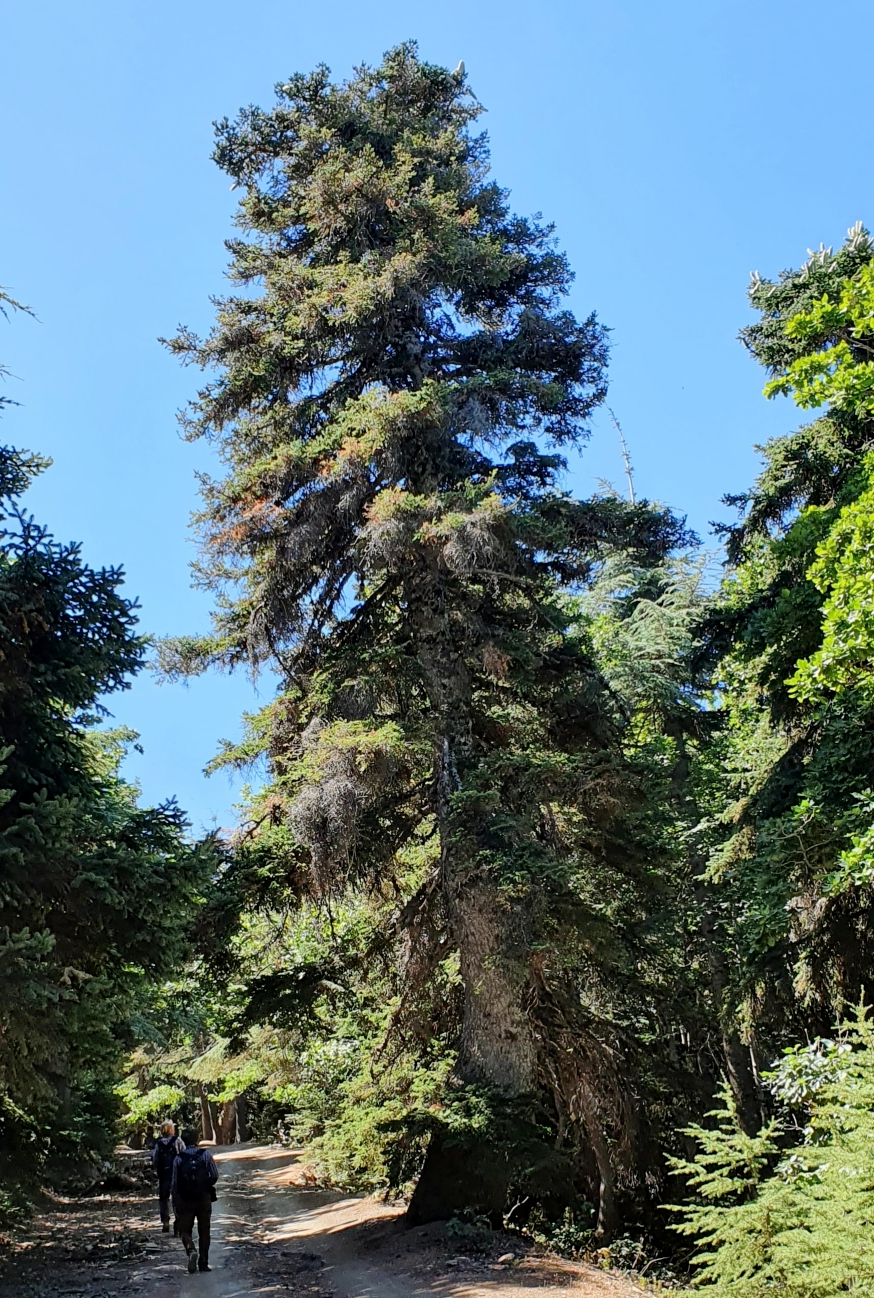
Algerian Fir
Abies numidica
☀️ Full Sun 💧 Moderate