

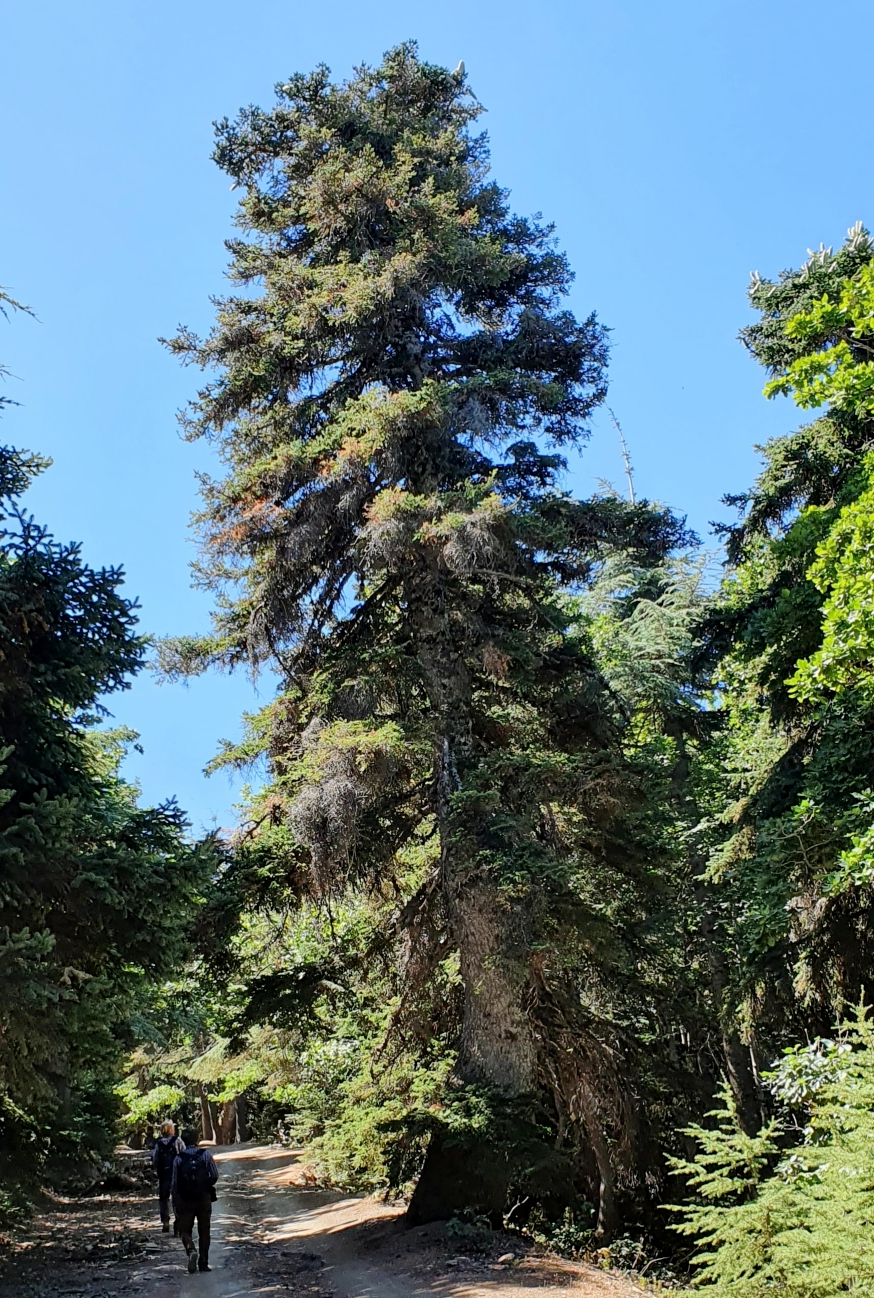
The subalpine fir (Abies lasiocarpa) is a narrow, conical evergreen tree native to the subalpine zones of western North America. It is characterized by its dense, spire-like form and silver-grey bark that remains smooth even on older specimens.
This tree requires cool, moist conditions and high-altitude environments to thrive in a landscape. It is not suitable for hot, humid climates where it frequently succumbs to root rot and heat stress.
Key Facts
- Hardiness: USDA zones 5 through 8
- Light: Full sun to partial shade
- Soil: Moist, well-draining, acidic, and rocky
- Form: Narrow, spire-like habit
- Growth: Slow to moderate rate
Why Grow Subalpine Fir
You should choose the subalpine fir if you have a cool, high-elevation garden with space for a vertical accent. It fits best in rock gardens or as a focal point in landscapes where other conifers struggle due to intense cold.
Unlike many other firs, this species maintains a very narrow, columnar shape as it matures. It provides a distinct architectural element to the landscape without spreading too wide. Ensure you have adequate drainage before planting, as this tree will not tolerate standing water.
How to Identify Subalpine Fir
You can identify the subalpine fir by its extremely narrow, spire-like crown and needles that are 2.5 to 4 cm (1 to 1.5 in) long. The needles are dark green with two distinct white bands of stomata on the underside, giving the foliage a silvery appearance.
- Bark: Smooth, grey, and thin with resin blisters.
- Cones: Upright, cylindrical, and 6 to 10 cm (2.5 to 4 in) long.
- Habit: Dense, symmetrical, and conical.
- Needles: Soft, blunt-tipped, and arranged spirally.
Site Requirements for Subalpine Fir
The subalpine fir requires a site with cool, moist, and well-draining soil to mimic its native mountain habitat. It performs best in regions with long, cold winters and short, moderate summers.
Avoid planting in heavy clay soils that hold moisture for too long, as this leads to root suffocation. It prefers an acidic soil pH between 5.5 and 6.5. If your garden has alkaline soil, you may need to amend it with organic matter to lower the pH.
Planting Your Subalpine Fir
You should plant your subalpine fir in early spring or late autumn when temperatures are cool. Dig a hole twice as wide as the root ball and just deep enough so the top of the root flare sits level with the surrounding soil.
- Space trees at least 3 to 4 m (10 to 13 ft) apart.
- Backfill with native soil mixed with a small amount of compost.
- Water thoroughly immediately after planting to settle the soil.
- Apply a 5 cm (2 in) layer of mulch to retain soil moisture.
Watering and Feeding Needs
Young subalpine firs require regular, deep watering during their first two years to establish a strong root system. Once established, they are moderately drought-tolerant but perform best with consistent moisture during dry summer months.
Feeding is rarely necessary if the soil is rich in organic matter. If growth appears stunted, apply a balanced, slow-release fertilizer in early spring. Avoid over-fertilizing, as this can lead to weak, rapid growth that is susceptible to pests.
Pruning and Maintenance
The subalpine fir requires little to no pruning because it naturally maintains a dense, symmetrical shape. You should only prune to remove dead, diseased, or damaged branches to maintain the health of the tree.
Use clean, sharp pruning shears for small branches and a pruning saw for larger limbs. Always make cuts just outside the branch collar to ensure proper healing. Perform this maintenance in late winter while the tree is dormant.
Common Problems with Subalpine Fir
The most common problems for the subalpine fir are root rot and needle cast diseases caused by poor drainage or high humidity. Monitor your tree closely during wet, humid summers for signs of stress or discoloration.
- Root Rot: Caused by waterlogged soil; ensure excellent drainage.
- Needle Cast: Fungal spots on needles; remove and destroy infected foliage.
- Balsam Woolly Adelgid: Small white cottony tufts; treat with horticultural oil.
- Bark Beetles: Bore holes in the trunk; keep trees healthy to resist attack.
Winter Care for Subalpine Fir
The subalpine fir is exceptionally cold-hardy and requires no special winter protection in its native range. It is well-adapted to heavy snowfall, which often helps insulate the root zone.
If you live in an area with extreme winter wind, consider installing a burlap screen to protect young trees from desiccation. Ensure the soil remains moist before the ground freezes in late autumn to prevent winter burn on the needles.
Subalpine Fir Through the Year
| Spring | Apply a light layer of organic mulch around the base. Check for signs of pests as new growth emerges. |
|---|---|
| Summer | Provide supplemental water during dry spells to keep the soil consistently moist. Monitor for needle cast symptoms. |
| Autumn | Ensure the tree is well-watered before the first frost. Remove any dead or damaged branches. |
| Winter | Monitor for heavy snow accumulation on branches and gently brush it off to prevent breakage. |
What Is Wrong With My Subalpine Fir
| What you see | Likely cause | What to do |
|---|---|---|
| Yellowing needles | Poor drainage or root rot | Improve soil drainage and avoid overwatering. |
| Cottony white tufts on bark | Balsam woolly adelgid | Apply dormant oil or insecticidal soap. |
| Needles dropping prematurely | Fungal needle cast | Remove infected needles and improve air circulation. |
Subalpine Fir Varieties Worth Knowing
- ‘Glauca Compacta’ – a dwarf, slow-growing form with silvery-blue foliage.
- ‘Arizonica’ – known as the corkbark fir, featuring thick, corky white bark.
Frequently Asked Questions
How long do subalpine fir trees live?
In their natural habitat, subalpine firs can live for 150 to 200 years, though environmental factors often limit their lifespan in managed landscapes.
Is Abies lasiocarpa the same as a balsam fir?
No, while they are related, the subalpine fir (Abies lasiocarpa) is a distinct species from the balsam fir (Abies balsamea) and is adapted to higher, drier mountain elevations.
Can you grow subalpine fir in a container?
It is generally not recommended as they require deep, cool root runs and consistent moisture that is difficult to maintain in a container environment.
What is the difference between subalpine fir and Colorado blue spruce?
The subalpine fir has soft, blunt needles and upright cones, whereas the Colorado blue spruce (Picea pungens) has sharp, pointed needles and hanging cones.
Sources & Verification
Taxonomy and distribution are checked against the databases below. Care guidance is written for cultivated species only and reviewed by our editor. How We Build Plant Profiles →
More in Abies

Balsam Fir
Abies balsamea
☀️ Full Sun 💧 Moderate

Silver Fir
Abies alba
☀️ Partial Sun 💧 Moderate

Nordmann Fir
Abies nordmanniana
☀️ Full Sun 💧 Moderate

Giant Fir
Abies grandis
☀️ Partial Sun 💧 Moderate
Algerian Fir
Abies numidica
☀️ Full Sun 💧 Moderate

Siberian Fir
Abies sibirica
☀️ Full Sun 💧 Moderate