Types of Fir Trees: Identification and Care Guide
10 plant profiles · Learn to identify and grow true fir trees (Abies), from the towering Giant Fir to the heat-tolerant Spanish Fir, with expert climate and soil advice.
True fir trees belong to the genus Abies and are distinguished from other conifers by their upright, candle-like cones and flat needles that leave a circular scar on the twig when removed. You will find these evergreen giants primarily in the cool temperate and boreal regions of the Northern Hemisphere, often at high altitudes. Unlike spruces (Picea) or pines (Pinus), fir cones do not fall to the forest floor intact; they shatter while still on the branch, leaving behind a central spike.
Choosing the right species depends on your local climate and available space. If you live in a Mediterranean-style climate with dry summers, the Spanish Fir (Abies pinsapo) is one of the few species that tolerates heat and alkaline soils. For those in colder, continental regions, the Siberian Fir (Abies sibirica) survives temperatures as low as -50 °C (-58 °F). If you are looking for a classic ornamental shape or a Christmas tree, the Nordmann Fir (Abies nordmanniana) and the Fraser Fir (Abies fraseri) are preferred for their dense foliage and needle longevity.
Size is a major factor for your garden, as some species reach massive proportions. The Giant Fir (Abies grandis) can grow over 70 m (230 ft) tall in its native Pacific Northwest habitat, while the Balsam Fir (Abies balsamea) remains smaller and is known for its strong resinous fragrance. When identifying them, look for the "suction cup" base where the needle meets the stem; this is a hallmark of the genus. Most firs require moist, well-drained, acidic soil to thrive and often struggle in heavy urban pollution or waterlogged ground.
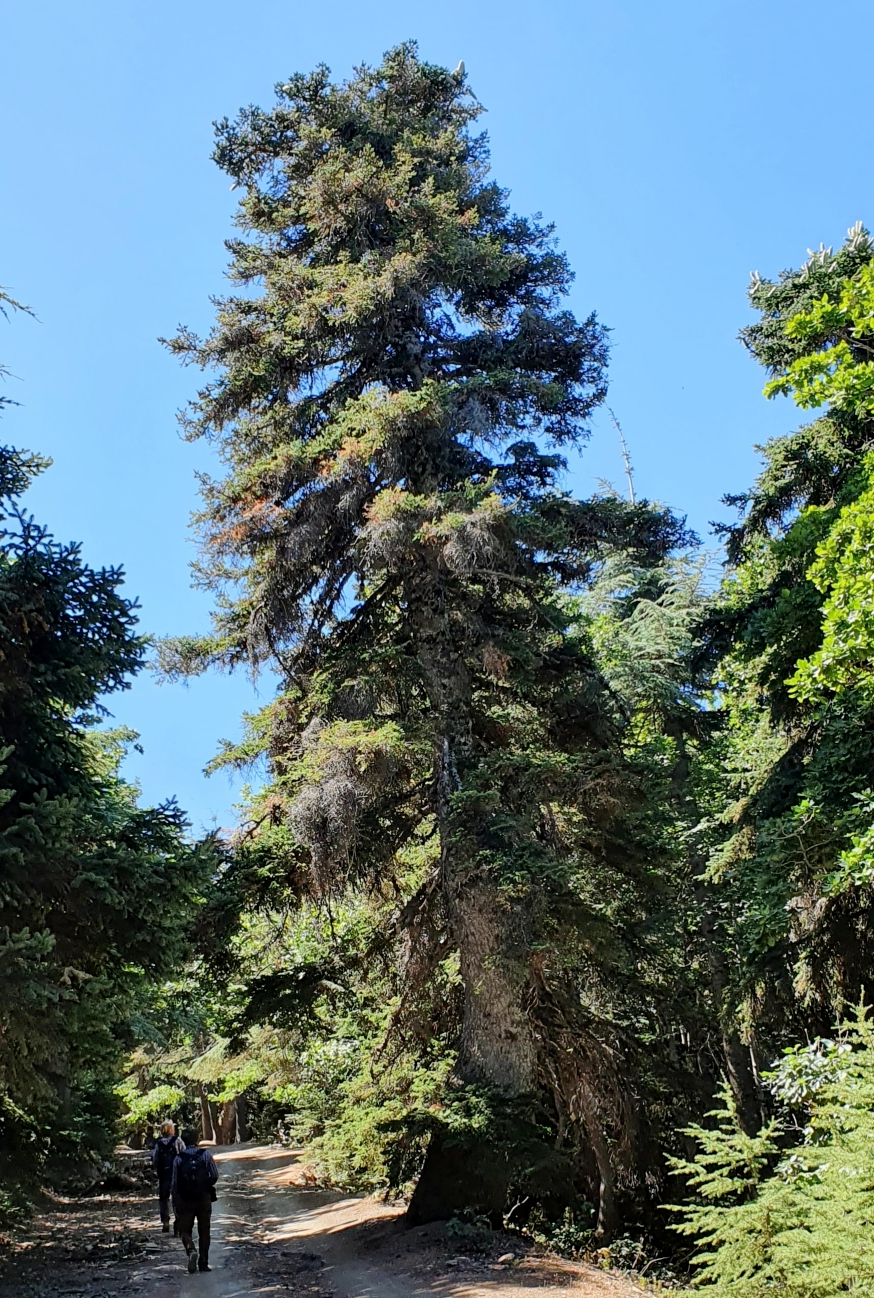
Algerian Fir
Abies numidica
☀️ Full Sun 💧 Moderate

Balsam Fir
Abies balsamea
☀️ Full Sun 💧 Moderate

Fraser Fir
Abies fraseri
☀️ Full Sun 💧 High

Giant Fir
Abies grandis
☀️ Partial Sun 💧 Moderate

Nordmann Fir
Abies nordmanniana
☀️ Full Sun 💧 Moderate

Pacific Silver Fir
Abies amabilis
☀️ Partial Sun 💧 High

Siberian Fir
Abies sibirica
☀️ Full Sun 💧 Moderate

Silver Fir
Abies alba
☀️ Partial Sun 💧 Moderate

Spanish Fir
Abies pinsapo
☀️ Full Sun 💧 Low

Subalpine Fir
Abies lasiocarpa
☀️ Full Sun 💧 Moderate
Common Questions
How do I tell a fir tree apart from a spruce?
Look at how the needles attach to the branch; fir needles have a flat, circular base that looks like a tiny suction cup, whereas spruce needles sit on small woody pegs.
Which fir tree is best for a small garden?
The Fraser Fir (Abies fraseri) is a suitable choice for smaller spaces because it maintains a compact, narrow pyramidal shape and grows more slowly than giants like the Silver Fir (Abies alba).
Do fir trees need full sun?
Most species require full sun to maintain a dense branch structure, though the Subalpine Fir (Abies lasiocarpa) and Pacific Silver Fir (Abies amabilis) can tolerate partial shade, especially during their first few years of growth.