
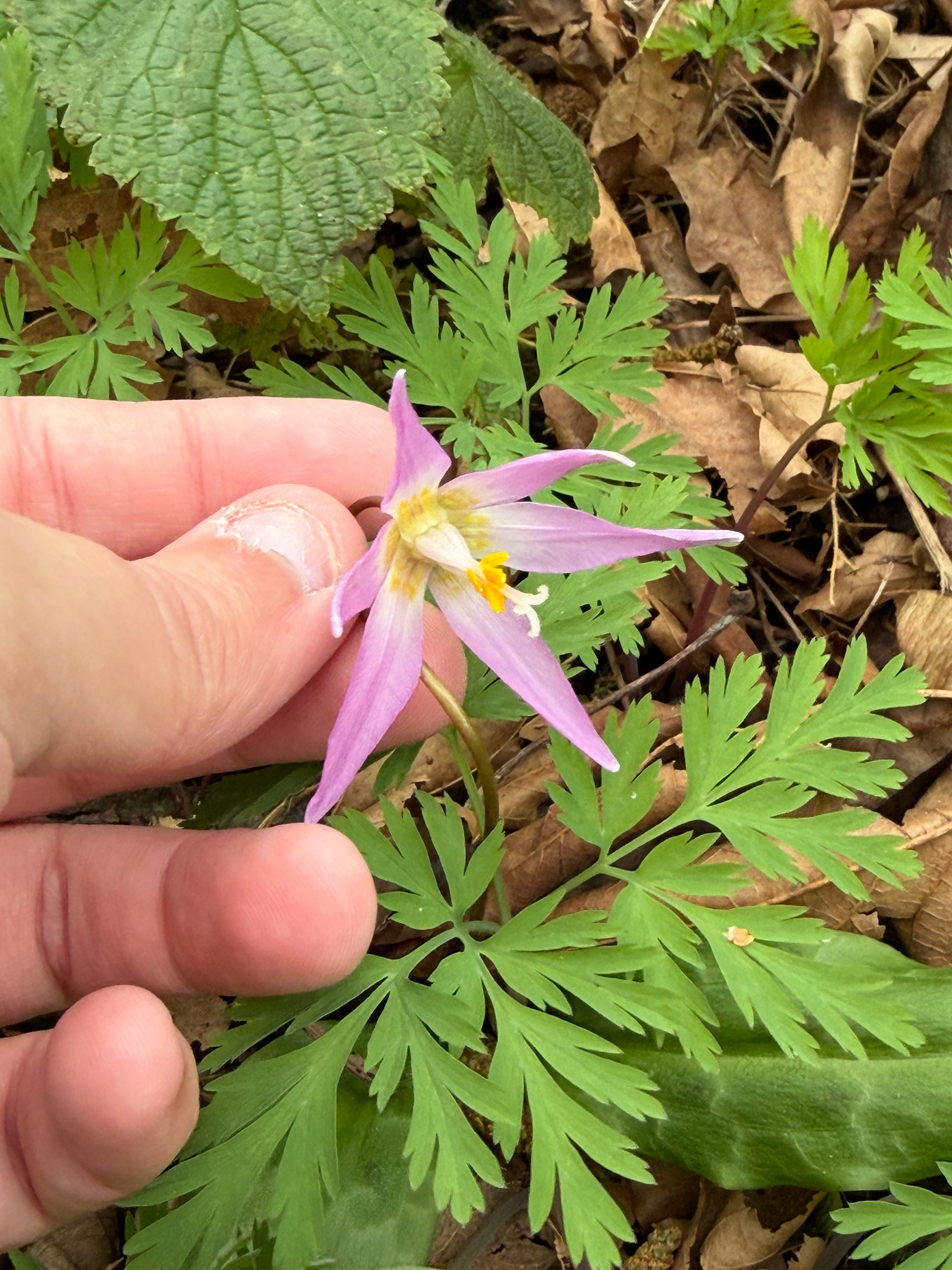
Erythronium revolutum is a spring-flowering bulb native to the moist coastal forests of the Pacific Northwest, ranging from British Columbia to northern California. It is recognized by its nodding pink flowers with swept-back petals and distinctive brown-mottled leaves that resemble the markings on a fawn.
This species thrives in cool, damp conditions where many other spring perennials fail due to shade or moisture. While it takes several years to reach flowering size from seed, established clumps provide a reliable display in woodland gardens before the summer canopy closes.
Key Facts
- Water: Keep soil consistently moist during spring growth
- Light: Dappled shade or cool morning sun
- Hardiness: USDA zones 5 to 8
- Height: Reaches 15–40 cm (6–16 in)
- Soil: Rich, acidic, and moisture-retentive
Is Coast Fawn Lily Right for Your Garden?
This plant is best for cool, damp woodland settings where the soil stays moist throughout the spring but never becomes stagnant. It suits gardeners with established deciduous trees or north-facing borders that provide protection from the drying heat of the afternoon sun.
Unlike the common dog’s tooth violet (Erythronium dens-canis), the coast fawn lily is more tolerant of wet winter soils found in coastal regions. It is a slow-spreading species that rewards patience, eventually forming a dense carpet of mottled foliage. It is an excellent choice for naturalizing in wilder parts of the garden where it can grow undisturbed for decades.
Identifying Erythronium revolutum
You can identify this lily by its deep pink, swept-back petals and leaves heavily blotched with mahogany or dark brown. The flowers appear singly or in small groups on slender stems that reach 15–40 cm (6–16 in) tall. Each bloom features six tepals that curve backwards to reveal prominent yellow anthers.
The basal leaves are elliptical, measuring 10–20 cm (4–8 in) long, and are often as decorative as the flowers themselves. These leaves typically disappear entirely by midsummer as the plant enters its dormant phase. In the wild, the degree of leaf mottling can vary significantly between individual plants and different forest populations.
Choosing the Best Site for Coastal Fawn Lily
Plant these bulbs in partial to full shade where they are shielded from direct, intense sunlight. The native range of the coast fawn lily includes stream banks and moist forest floors, so you should replicate these humid, sheltered conditions. Avoid windy spots that might snap the delicate flower stems during their brief blooming period.
The soil must be rich in organic matter, such as leaf mold or composted bark, to maintain the acidity and moisture levels the plant requires. A pH between 5.5 and 6.5 is ideal for nutrient uptake. If your garden soil is heavy clay, incorporate grit and plenty of organic material to ensure the bulbs do not rot during the wet winter months.
How to Plant Coast Fawn Lily Bulbs
Plant the elongated corms 8–10 cm (3–4 in) deep during the late summer or early autumn while they are dormant. Space the bulbs approximately 10–15 cm (4–6 in) apart to allow for natural clumping over several seasons. Because the bulbs lack a protective tunic, they are prone to drying out and should be planted immediately after purchase.
- Dig a hole twice the depth of the bulb itself.
- Add a handful of leaf mold or well-rotted compost to the bottom.
- Place the bulb vertically with the pointed end facing upward.
- Water the area thoroughly to settle the soil and remove air pockets.
Watering and Feeding Schedule
Provide regular water during the spring growth period, ensuring the soil never dries out while the flower buds are forming. Once the foliage begins to yellow and the plant enters dormancy in early summer, you can reduce watering significantly. However, the soil should remain slightly damp even in summer to prevent the bulbs from shriveling.
A light mulch of leaf mold applied in late winter provides enough nutrients for this slow-growing species. Avoid high-nitrogen chemical fertilizers, which can encourage leaf growth at the expense of flowers. If your soil is particularly poor, a weak dose of liquid seaweed fertilizer can be applied once the first leaves emerge in March.
Pruning and Post-Bloom Care
Never cut back the foliage until it has turned completely yellow and limp in early summer. The leaves are the plant’s primary energy source, allowing the bulb to store the nutrients required for next year’s bloom. Removing them too early will weaken the plant and may prevent flowering in the following season.
If you do not intend to collect seeds, you can snip off the spent flower heads at the top of the stem. This prevents the lily from diverting energy into seed production. Once the leaves have withered and dried, they can be gently pulled away by hand or left to decompose and enrich the soil naturally.
Growing Coast Fawn Lily from Seeds
Propagation is most successful by sowing fresh seed in autumn, though it requires 4 to 7 years for the seedlings to reach flowering size. Mature clumps can be divided, but the brittle bulbs resent being moved and may take a year to recover. If you must divide them, do so just as the foliage dies back in June.
- Collect seeds when the pods turn brown and begin to split open.
- Sow immediately in pots using a gritty, peat-free woodland compost.
- Leave the pots outdoors over winter to provide the necessary cold stratification.
- Expect germination the following spring, appearing as single grass-like leaves.
Common Pests and Problems
The most frequent issue for this species is slug and snail damage to the emerging spring shoots and flower buds. Check the plants at night or after rainfall when the leaves first appear in March. In poorly drained soil, the bulbs are highly susceptible to fungal rot, which often results in the plant failing to emerge at all.
If your lily produces leaves but no flowers, it may be due to excessive shade or the bulbs being planted too shallowly. Vine weevil larvae can sometimes attack the bulbs of container-grown specimens, causing the plant to wilt suddenly. Ensure pots have adequate drainage and use a loam-based compost to deter these pests.
Winter Protection and Dormancy
Coast fawn lily is hardy down to -15 °C (5 °F) and requires a distinct period of cold winter dormancy to trigger flowering. In regions with harsh winters, a 5 cm (2 in) layer of leaf mulch provides sufficient insulation for the underground corms. The plant is naturally adapted to the wet winters of the Pacific Northwest, provided the site is not waterlogged.
Do not attempt to dig up the bulbs for indoor winter storage, as they prefer to remain undisturbed in the ground. If you are growing them in pots, ensure the containers are frost-proof and kept in a sheltered, unheated spot. The dormancy period is essential for the bulb’s health and the development of the following year’s flower embryo.
Year-Round Care for Coast Fawn Lily
| Spring | Water regularly to keep soil moist. Apply organic slug control as soon as shoots emerge in March. Deadhead spent blooms unless saving seed. |
|---|---|
| Summer | Allow foliage to turn yellow and die back naturally. Keep the soil from drying out completely during dormancy. Mark the spot to avoid accidental digging. |
| Autumn | Plant new bulbs 10 cm (4 in) deep. Sow fresh seeds in pots. Apply a fresh layer of leaf mold mulch to the planting area. |
| Winter | Ensure the site remains undisturbed. Check that drainage is clear to prevent bulbs from sitting in stagnant water during heavy rains. |
Common Coast Fawn Lily Problems Explained
| What you see | Likely cause | What to do |
|---|---|---|
| Yellowing leaves in late May | Natural dormancy | Do nothing; the plant is entering its normal summer rest phase. |
| Holes in emerging leaves | Slugs or snails | Apply organic slug pellets or use copper tape around pots. |
| Leaves appear but no flowers | Bulbs too small or too deep | Allow the plant another year to mature or check planting depth in autumn. |
| Mottling fades to plain green | Too much shade | Move the plant to a spot with slightly more dappled morning light. |
Popular Erythronium revolutum Cultivars
- ‘Johnsonii’ – deep rose-pink flowers, very dark leaf mottling.
- ‘Knightshayes Pink’ – large, clear pink flowers on tall stems.
- ‘Pink Beauty’ – lavender-pink petals with a yellow center.
- ‘White Beauty’ – creamy white flowers, often considered a hybrid.
Best Companion Plants for Coast Fawn Lily
This lily grows well alongside other moisture-loving woodland plants that share its preference for dappled shade and acidic soil. Good matches include the western sword fern (Polystichum munitum) and trilliums (Trillium ovatum), which emerge around the same time. These companions provide a lush backdrop for the delicate pink flowers.
For a contrast in leaf texture, plant it near wild ginger (Asarum caudatum) or the delicate fronds of the western maidenhair fern (Adiantum aleuticum). These groundcovers help hide the fading foliage of the lily as it enters summer dormancy. Avoid planting near aggressive spreaders that might outcompete the slow-growing bulbs for space and nutrients.
Frequently Asked Questions
How is Erythronium revolutum different from Erythronium californicum?
Erythronium revolutum typically has pink to rose flowers, while the California fawn lily (Erythronium californicum) produces white to cream-colored blooms.
Can I grow coast fawn lily in a container?
Yes, use a deep pot with a mix of loam and leaf mold, ensuring it stays in a cool, shaded spot and never dries out.
How long does it take to grow from seed?
It usually takes between 4 and 7 years for a seedling to develop a large enough bulb to produce its first flower.
Is the coast fawn lily invasive?
No, it is a slow-growing native species that spreads gently via seeds and small bulb offsets rather than aggressive runners.
Are the bulbs of Erythronium revolutum edible?
Traditionally, some indigenous groups in the Pacific Northwest ate the bulbs after long periods of cooking, but they can cause gastric distress if eaten raw or in large quantities.
Information about traditional or historical uses is provided for educational interest only and is not medical advice. Do not use any plant to treat a condition without speaking to a qualified professional.
Sources & Verification
Taxonomy and distribution are checked against the databases below. Care guidance is written for cultivated species only and reviewed by our editor. How We Build Plant Profiles →
